
Ceferino Giménez Malla
Ceferino Giménez Malla, known as El Pelé, was a Spanish Romani, a member of the Third Order of Saint Francis, and a martyr of the Spanish Civil War, the first of his people to be beatified.
Contemporaries

Figures and markers around the normalized period for this entry.
Guided reading
5 reading sections
Biography
The nomadic youth of Ceferino Giménez Malla, his marriage to Teresa Jiménez Castro, and their settlement in Barbastro.
Ceferino Giménez Malla, affectionately nicknamed "El Pelé," was born probably on August 26, 1861 (some sources mention August 24, 1861). His exact birthplace is a subject of discussion between Fraga (in the province of Huesca) and Benavent de Segrià (in the province of Lleida), in Spain. He was baptized in Fraga on the very day of his birth. Coming from a very poor Gypsy (Roma) family, he spent the first forty years of his life in nomadism, traveling the roads and living from the manufacture and itinerant sale of wicker baskets. Around the age of twenty, he married Teresa Jiménez Castro according to the traditional customs of his people. The couple settled in Barbastro, in the province of Huesca. Having no children, they adopted and raised Pepita, Teresa's orphaned niece. In 1912, Ceferino and Teresa regularized their union before the Catholic Church by celebrating their religious marriage. Teresa passed away in 1922, leaving Ceferino a widower.
Life and work
His activity as a livestock trader, his reputation for honesty, and his religious commitment in Barbastro.
After settling in Barbastro, Ceferino Giménez Malla successfully launched himself into the horse and livestock trade. Despite his illiteracy, he demonstrated remarkable intelligence and a prodigious memory. He quickly acquired a reputation for absolute honesty in his business dealings, always refusing to deceive his clients. This integrity earned him the respect and esteem of both Gypsies and non-Gypsies (payos). He became a listened-to mediator and peacemaker, sought out to resolve conflicts and soothe tensions within his community and with the inhabitants of the region. His Catholic faith, deepened after his religious marriage, translated into a daily commitment. Although illiterate, he taught catechism to children on a voluntary basis, telling them biblical stories and teaching them basic prayers as well as respect for nature. In 1926, he entered the Third Order of Saint Francis (today the Secular Franciscan Order). He also became an active member of the Society of Saint Vincent de Paul to help the most destitute, participated in nights of Eucharistic adoration starting in 1931, and attended Mass daily.
Path to Holiness
His arrest during the Spanish Civil War for defending a priest and his execution at the Barbastro cemetery.
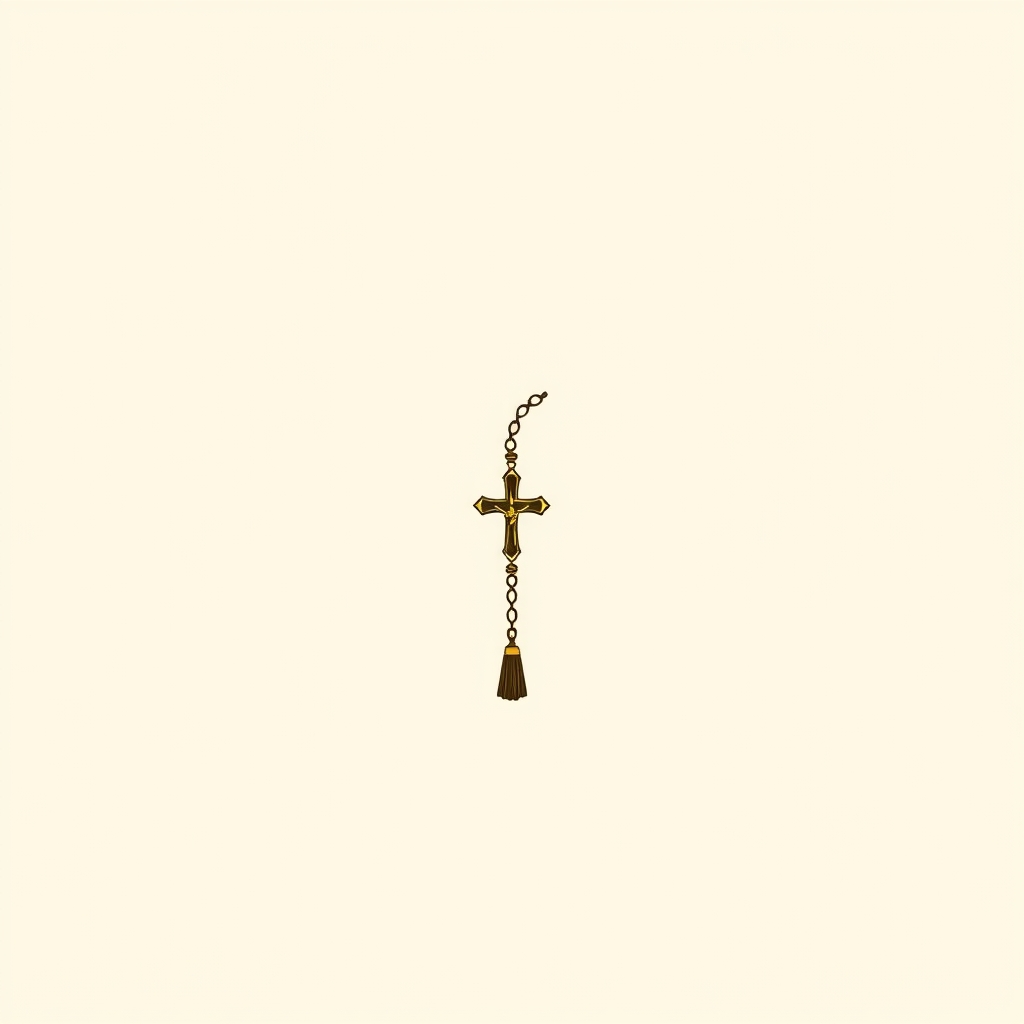
In July 1936, the Spanish Civil War broke out, triggering a violent religious persecution. In Barbastro, Ceferino witnessed the arrest of a young priest whom Republican militiamen were dragging unceremoniously through the streets. Listening only to his courage and his faith, he intervened to defend the priest, exclaiming: "Insolent ones! So many people to arrest one priest!". The militiamen arrested him immediately. During his search, they discovered a rosary on him. He was thrown into prison in a former requisitioned monastery, alongside hundreds of other detainees, including priests and religious. A militiaman who knew him offered to have him released on one condition: that he abandon his rosary and stop praying. Ceferino categorically refused this offer, preferring to remain in detention and continue to recite the rosary with fervor. On the night of August 8, 1936 (some sources indicate August 9), he was taken with other prisoners to the Barbastro cemetery to be shot. Facing the firing squad, he clutched his rosary in his hands and passed away shouting: "¡Viva Cristo Rey!" (Long live Christ the King!). His body was thrown into a mass grave and has never been found.
Beatification and canonization
The opening of his cause for martyrdom and his historic beatification by John Paul II in 1997.
The beatification process for Ceferino Giménez Malla was opened in the Diocese of Barbastro-Monzón. His cause was introduced under the title of martyrdom, which dispenses with the requirement of a miracle for his beatification. On May 4, 1997, Pope John Paul II solemnly proclaimed him blessed during a Mass celebrated in St. Peter's Square in Rome. Ceferino Giménez Malla thus entered history as the very first member of the Romani people to be raised to the altars of the Catholic Church. His liturgical feast is set for August 2 (the day inscribed in the Roman Martyrology) or May 4 (the anniversary of his beatification).
Spirituality and legacy
Ceferino's simple spirituality, his role as patron saint of the Gypsy people, and his legacy of reconciliation.
The spirituality of Ceferino Giménez Malla is based on a simple faith, nourished by the prayer of the Rosary, Eucharistic devotion, and the Franciscan spirit of poverty. Although illiterate, he knew how to embody the Gospel through his active charity, his keen sense of justice, and his role as a peacemaker. He is today recognized as the patron saint of the Gypsy people (Roma, Sinti, and Travelers). His legacy is a powerful symbol of reconciliation and integration, showing that holiness and the love of Christ transcend all cultural, ethnic, and social barriers. During his beatification, Pope John Paul II emphasized that he knew how to sow harmony and solidarity, becoming a model of Christian life for all.
Iconography
Signs and attributes
Frequently asked questions about Ceferino Giménez Malla
Who was Ceferino Giménez Malla?
Ceferino Giménez Malla, known as El Pelé, was a Spanish Romani, a member of the Third Order of Saint Francis, and a martyr of the Spanish Civil War, the first of his people to be beatified.
What is Ceferino Giménez Malla the patron saint of?
Patronage of Ceferino Giménez Malla: Peuple gitan, Romani people, Roms, Roma people, Sinti, Sinti, Gens du voyage and Travelers.
How is Ceferino Giménez Malla depicted in Christian art?
In iconography, Ceferino Giménez Malla is recognizable by: Rosary.
How did Ceferino Giménez Malla die?
Ceferino Giménez Malla suffered martyrdom for the Christian faith (20th century).
Which saints were contemporaries of Ceferino Giménez Malla?
Contemporaries include: Pauline of the Agonizing Heart of Jesus, Felipe de Jesús Munárriz and 50 companions, Mariano de Jesús Euse Hoyos and Teresa of Jesus of the Andes.
What are the other names of Ceferino Giménez Malla?
Other forms of the name: El Pelé.
Who are the relatives of Ceferino Giménez Malla?
Relatives of Ceferino Giménez Malla: Teresa Jiménez Castro (wife) and Pepita (adopted niece).
Annexes & related entities
Structured data for exploration: events, miracles, quotes, places, attributes, patronages, and important entities cited in the text.
Key Events
- Era / death: 1936
- Beatification in 1997 by John Paul II