
Blessed Gerard
Blessed Gerard (c. 1040-1120) is the founder of the Order of the Hospital of Saint John of Jerusalem, recognized for his heroic charity towards the sick and pilgrims.
Contemporaries

Figures and markers around the normalized period for this entry.
Guided reading
5 reading sections
Biography
Origins and youth of Gerardo Sasso, born around 1040 in Scala, and his departure for the Holy Land.
Blessed Gerardo Sasso (also known as Brother Gerard) was born around 1040 in San Pietro di Scala, a small village located on the heights of the Amalfi Coast, in the province of Salerno, Italy. Although some ancient historiographical traditions have sometimes suggested Provençal (notably in Martigues) or Piedmontese origins, contemporary historical research largely agrees on his Amalfitan origin. This affiliation is, moreover, symbolically reinforced by the adoption of the eight-pointed Amalfi cross as the emblem of the order he founded. In the second half of the 11th century, Gerardo left his native land to travel to the Holy Land. At that time, merchants from the Maritime Republic of Amalfi had obtained authorization from the Caliph of Egypt to rebuild a church, a Benedictine monastery (Saint Mary of the Latins), and a hospice (xenodochium) in Jerusalem intended to welcome and care for Christian pilgrims. Gerardo, a Benedictine monk endowed with a great sense of organization, was tasked with directing this pilgrim hospice.
Life and Work
The foundation of the Order of the Hospitalers of Saint John of Jerusalem and the papal bull of 1113.
The major work of Gerardo Sasso is intimately linked to the foundation and autonomy of the Order of the Hospitalers of Saint John of Jerusalem (today known as the Sovereign Military Order of Malta). During the siege of Jerusalem by the crusaders in 1099, Gerardo was inside the city. A famous legend recounts that he risked his life by throwing loaves of bread from the top of the ramparts to the starving Christian besiegers. Surprised by the Muslim guards, he was ordered to open his cloak, but the loaves had miraculously turned into stones, thus sparing him from being executed for treason. After the capture of the city by the crusaders, the hospice directed by Gerardo found itself overwhelmed with the wounded and the sick. Touched by his heroic charity, many crusader knights decided to lay down their arms to join his work of mercy. To structure this growing fraternity, Gerardo transformed it into an autonomous religious community dedicated to Saint John the Baptist. The major institutional turning point occurred on February 15, 1113. By the papal bull Piae postulatio voluntatis, Pope Paschal II officially recognized the community of the Hospitalers of Saint John of Jerusalem as an autonomous religious order. This bull placed the order under the direct protection of the Holy See, freed it from the jurisdiction of local bishops, and granted it the right to freely elect its superiors (the successors of Gerardo). Under his leadership, the order expanded rapidly beyond the Kingdom of Jerusalem, establishing hospices and hospitals in Italy and France, thus immediately acquiring a European dimension.
Path to Sainthood
Gerardo's active charity, his death in 1120, and the journey of his relics.
Gerardo's path to sainthood was manifested through a life entirely consumed by active charity and the care of the most destitute. He introduced an innovative spiritual vision for his time: he considered the sick and the poor as the "lords" (i signori poveri) of the order, while the members of the confraternity considered themselves their servants, bound by an obligation of absolute devotion. Gerardo also distinguished himself as a man of peace and dialogue, caring for the sick and welcoming pilgrims without distinction of race, ethnicity, or religion, in a region then torn by armed conflict. He died a natural death in Jerusalem on September 3, 1120. Immediately after his passing, he was considered a saint by his companions and by the faithful. His relics followed the peregrinations of the Hospitallers: first transferred to Acre after the fall of Jerusalem in 1187, they were then transported to Manosque in Provence. Although the greater part of his remains was destroyed during the French Revolution, his skull is today preciously preserved at the Monastery of Saint Ursula in Valletta (Malta).
Beatification and canonization
The official recognition of the cult of Gerardo Sasso by Pope John Paul II and the steps towards his canonization.
The cult of Blessed Gerardo Sasso was officially recognized by the Catholic Church in the modern era: * Confirmation of cult (1984): Pope John Paul II officially confirmed the historical cult of Gerardo Sasso in 1984, formally proclaiming him Blessed on the basis of the continuity of popular devotion towards him. * Concession of the Mass and Office (1987): By a decree of the Congregation for Divine Worship dated July 4, 1987, Pope John Paul II approved the inclusion of Blessed Gerardo Sasso in the proper liturgical calendar of the Sovereign Order of Malta, with the concession of the Mass and the Office. * Towards canonization: Although he is not yet canonized, Cardinal Silvano Maria Tomasi, then Special Delegate of the Pope to the Order of Malta, announced in September 2021, during the celebrations of the 900th anniversary of the Blessed's death in Scala, his intention to ask Pope Francis to consider his equipollent canonization (without the requirement of a miracle, on the basis of constant veneration).
Spirituality and legacy
The dual vocation of the order and the lasting legacy of the Sovereign Order of Malta.
The spirituality of Gerardo Sasso rests on the dual vocation he instilled in his order: the defense of the faith and the service of the poor (Tuitio Fidei and Obsequium Pauperum). He left his brothers a famous prophecy that summarizes the essence of his commitment: "Our confraternity will be eternal, for the ground in which this plant sinks its roots is the misery of the world; it will last as long as it pleases God that there be men desirous of relieving this misery and making suffering more bearable."
Gerardo's legacy is immense. The Order of the Hospitalers of Saint John of Jerusalem that he founded has traversed the centuries, becoming the Sovereign Military Order of Malta, which still pursues its humanitarian and medical mission throughout the world today. His model of selfless charity and unconditional care for the sick remains a major source of inspiration for caregivers and volunteers around the world.
Iconography
Signs and attributes
The supernatural in their life
The miracles of Blessed Gerard
Frequently asked questions about Blessed Gerard
Who was Blessed Gerard?
Blessed Gerard (c. 1040-1120) is the founder of the Order of the Hospital of Saint John of Jerusalem, recognized for his heroic charity towards the sick and pilgrims.
What is Blessed Gerard the patron saint of?
Patronage of Blessed Gerard: Souverain Ordre Militaire de Malte, Sovereign Military Order of Malta, Ordre des Hospitaliers de Saint-Jean de Jérusalem and Order of the Hospital of Saint John of Jerusalem.
What is Blessed Gerard invoked for?
Blessed Gerard is invoked for: Soin des malades, Care of the sick, Secours des pauvres, Relief of the poor, Accueil des pèlerins and Welcoming pilgrims.
How is Blessed Gerard depicted in Christian art?
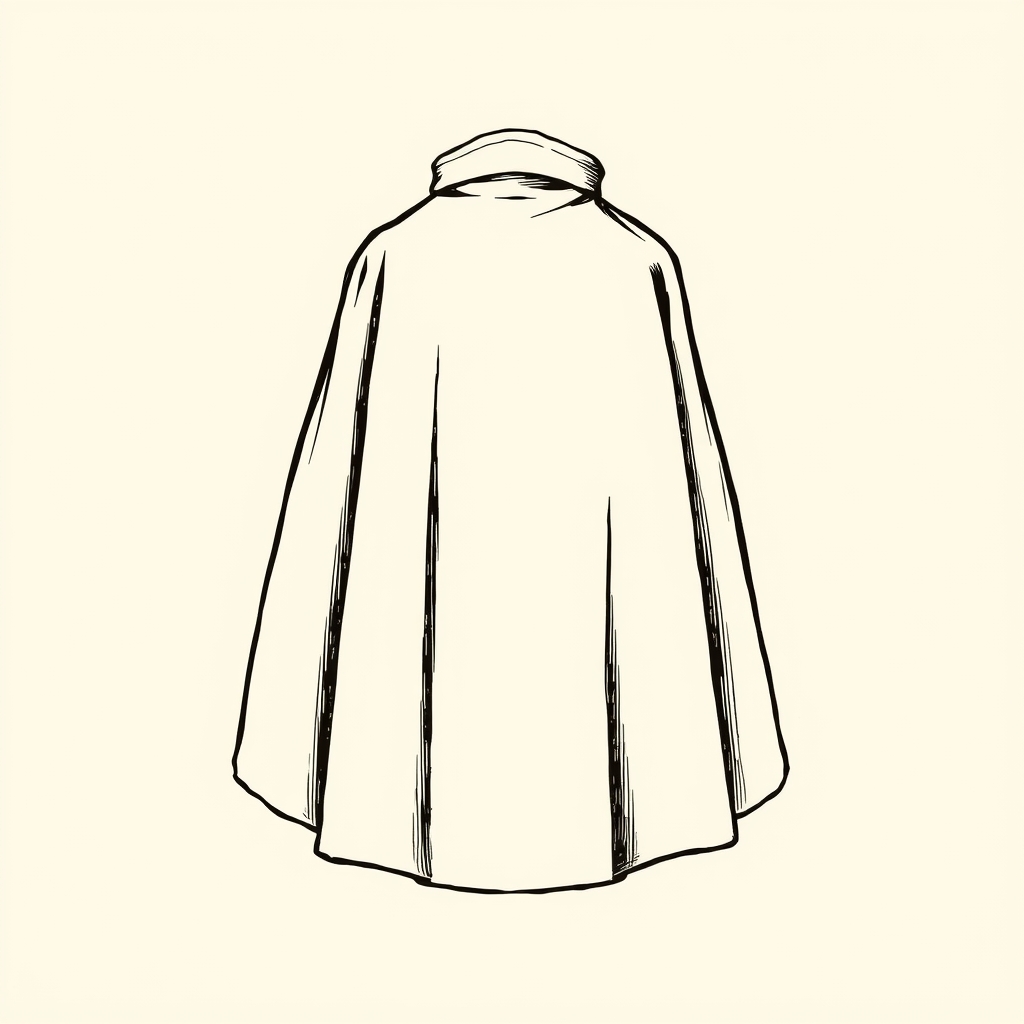
In iconography, Blessed Gerard is recognizable by: Eight-pointed Amalfi cross and Mantle.
What miracles are attributed to Blessed Gerard?
1 miracle are attributed to this saint, notably: Sign / wonder.
Which saints were contemporaries of Blessed Gerard?
Contemporaries include: Saint Norbert of Magdeburg, Saint Bernard of Clairvaux, Saint Stephen of Hungary and Saint Arthaud of Belley.
When did Blessed Gerard die?
Blessed Gerard died around 1120.
What are the other names of Blessed Gerard?
Other forms of the name: Frère Gérard and Gerardo Sasso.
Annexes & related entities
Structured data for exploration: events, miracles, quotes, places, attributes, patronages, and important entities cited in the text.
Key Events
- Era / death: 1120
- Beatification in 1987 by John Paul II
Quotes
-
Our confraternity will be eternal, for the soil in which this plant sinks its roots is the misery of the world; it will last as long as it pleases God that there be men desirous of relieving this misery and making suffering more bearable.
https://vertexaisearch.cloud.google.com/grounding-api-redirect/AUZIYQEbgmV4CDhZaB618dlct5j12zdlfijgJlnIMQVB1V2_umjkdMtj2gZ7J9w8ExaN65QcYbMtn7vK88PUAyu3dGOxBaZdkfX4Ga_xo5Vraiwa2fc2bbhZG9SHU_RzFbVSDn60G4QpsrLMKhXMS8WLMRazF75G