
Group of 103 Korean martyrs put to death during the persecutions of 1839, 1846 and 1866, canonized together by John Paul II in Seoul on May 6, 1984.
Contemporaries

Figures and markers around the normalized period for this entry.
Guided reading
5 reading sections
Biography
The Korean martyrs form a group of 103 Christians put to death between 1839 and 1866, during the great persecutions experienced by the young Korean Church.
Christianity was established in Korea at the end of the 18th century, introduced not by missionaries but by Korean scholars who discovered its writings in Beijing; the first baptized person, Yi Seung-hun, received the sacrament in 1784. This Church, born from a lay movement, developed despite the hostility of the Confucian power of the Joseon dynasty, which saw the Christian refusal of ancestor worship as a subversion of the social order. Three great waves of repression struck the faithful: the so-called Gihae persecution in 1839, the Byeongo persecution in 1846, and the even deadlier Byeongin persecution in 1866. It is estimated that several thousand Christians—according to sources, from eight thousand to more than ten thousand—were killed during the 19th century. Among this multitude, the Church has retained and recognized 103 martyrs at the end of rigorous canonical trials. The group brings together Koreans of all conditions—catechists, peasants, mothers, adolescents—and French missionaries from the Paris Foreign Missions Society who came clandestinely to support this community deprived of priests.
Life and Work
The group brings together three bishops, several French priests, the first Korean priest Andrew Kim Taegon, and numerous laypeople such as Paul Chong Hasang.
The 103 canonized saints include a large majority of laypeople alongside a few pastors. Among them are three bishops of the Paris Foreign Missions Society—Laurent Imbert, Siméon-François Berneux, and Antoine Daveluy—as well as several French priests from the same institute, including Pierre Maubant and Jacques Chastan, who were beheaded in Seoul in September 1839. The most famous figure is Andrew Kim Taegon (Kim Tae-gon), born in 1821 into a converted noble family whose father was himself a martyr. Sent to study in Macau with the Foreign Missions, he became in 1845, in Shanghai, the first Korean Catholic priest, ordained by Bishop Jean-Joseph Ferréol. Having returned clandestinely to organize the entry of other missionaries, he was arrested, tortured, and then beheaded on September 16, 1846, at about twenty-five years of age, near Seoul, on the banks of the Han River. Paul Chong Hasang, a layman and catechist, had for his part made numerous trips to Beijing to obtain priests; he perished during the persecution of 1839. All refused to abjure.
Journey toward holiness
Deprived of priests for a long time, Korean Christians lived out a faith sustained by lay catechesis and the witness of blood.
The holiness recognized in these martyrs stems first from the constancy of their faith in the face of a persecution that left them the choice of apostasy. Many were recent converts, instructed by lay catechists in the absence of clergy, and their fidelity unto death manifested the maturity of a Church that was nonetheless very young. In his final exhortation written in prison to his faithful, Andrew Kim Taegon called upon them to remain Christians not in name only but in truth, and to persevere in fraternal charity; this text, preserved in the mission archives, is read each year at the Office of Readings on September 20. The courage of these martyrs, some of whom were adolescents, and the serenity of their final moments struck witnesses and nurtured a reputation for holiness that only grew as the Korean Church emerged from clandestinity. Their blood was, according to the traditional formula, a seed of Christians.
Beatification and canonization
Beatified in two stages by Pius XI (1925) and then Paul VI (1968), the 103 martyrs were canonized together by John Paul II in Seoul on May 6, 1984.
Official recognition took place in stages. A first group of 79 martyrs, from the persecutions of 1839 and 1846, was beatified in Rome by Pope Pius XI on July 5, 1925. A second group of 24 martyrs, all victims of the persecution of 1866, was beatified by Blessed Paul VI on October 6, 1968. Both groups, totaling 103 people, were canonized collectively by Pope John Paul II during his apostolic journey to Korea on May 6, 1984, at Yeouido (Seoul). The ceremony held particular significance: it marked the bicentenary of the arrival of Christianity in Korea and constituted the first canonization celebrated by the Pope outside of Rome. The liturgical feast of Saints Andrew Kim Taegon, Paul Chong Hasang, and their companions, martyrs, is set for September 20 in the General Roman Calendar, as an obligatory memorial.
Spirituality and heritage
The Korean martyrs are venerated as the spiritual founders of the Korean Church; Andrew Kim Taegon is the patron saint of the country's clergy.
The testimony of the 103 martyrs is considered the foundation of the Catholic Church in Korea, which is today one of the most vibrant in Asia. Saint Andrew Kim Taegon, the first Korean priest, has become its emblematic figure and the patron saint of the Korean clergy; numerous parishes, seminaries, and institutions bear his name, both in Korea and in the diaspora. Shrines perpetuate their memory at the very sites of their martyrdom, notably at Saenamteo, on the banks of the Han River in Seoul, and at the Solmoe Shrine, the birthplace of Andrew Kim, as well as at Jeoldusan ('the hill of the severed heads') where many faithful perished in 1866. On September 20, their feast is celebrated by the universal Church. Beyond Korea, they have become a symbol of the faith of the laity and of persecuted Churches; Korean communities throughout the world honor them as their fathers in the faith.
Iconography
Signs and attributes
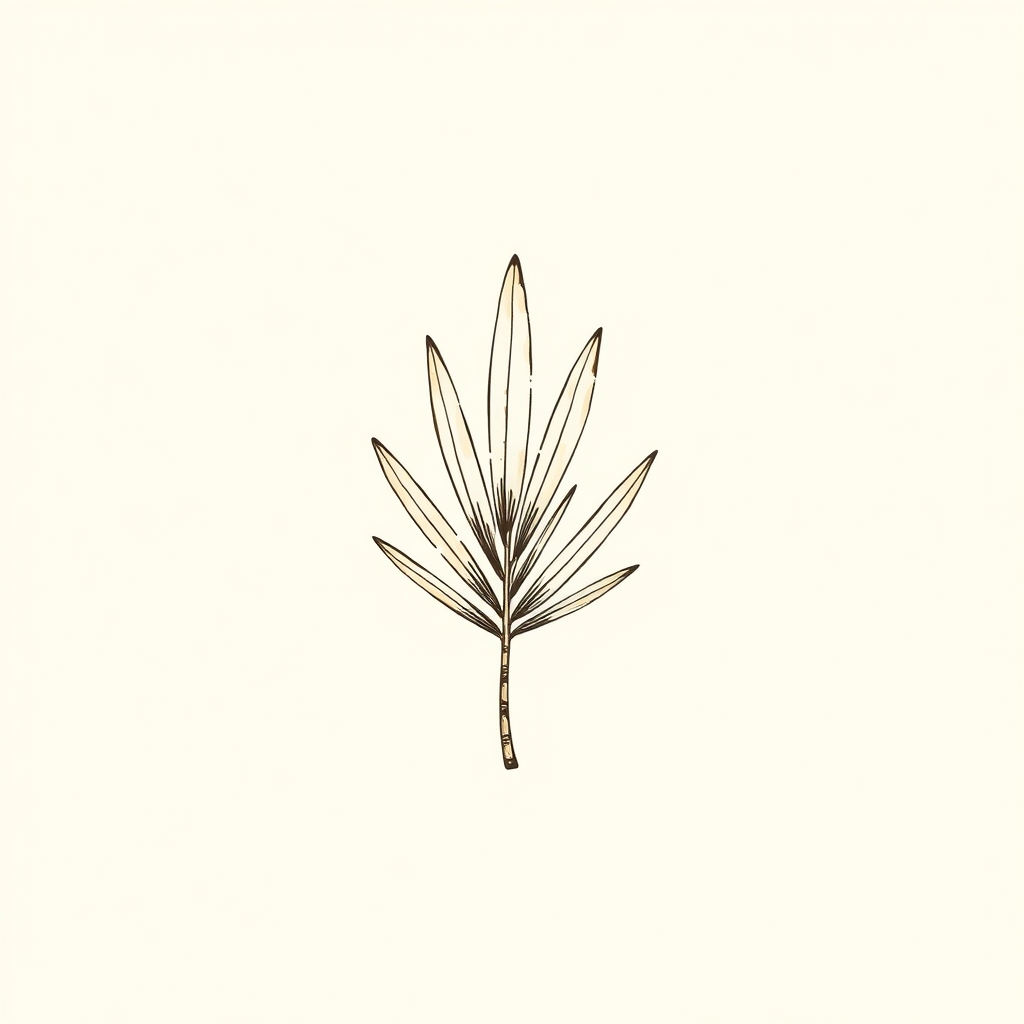
Frequently asked questions about Korean Martyrs (103)
Who was Korean Martyrs (103)?
Group of 103 Korean martyrs put to death during the persecutions of 1839, 1846 and 1866, canonized together by John Paul II in Seoul on May 6, 1984.
What is Korean Martyrs (103) the patron saint of?
Patronage of Korean Martyrs (103): Clergé coréen (saint André Kim Taegon), Korean clergy (Saint Andrew Kim Taegon), Corée and Korea.
How is Korean Martyrs (103) depicted in Christian art?
In iconography, Korean Martyrs (103) is recognizable by: palm of martyrdom.
How did Korean Martyrs (103) die?
Korean Martyrs (103) suffered martyrdom for the Christian faith (19th century).
Which saints were contemporaries of Korean Martyrs (103)?
Contemporaries include: Jesús María Echavarría Aguirre, Pauline of the Agonizing Heart of Jesus, Narcisa de Jesús and Juan de Jesús López y González.
What are the other names of Korean Martyrs (103)?
Other forms of the name: André Kim Taegon, Kim Tae-gon, Andrew Kim Taegon, Saints martyrs de Corée and Andrea Kim Taegon e compagni.
Annexes & related entities
Structured data for exploration: events, miracles, quotes, places, attributes, patronages, and important entities cited in the text.
Key Events
- Era / death: 1839-1846
- Canonized in 1984 by John Paul II
Quotes
-
We have come into this world by the grace of God; by this same grace we have received baptism, entry into the Church, and the honor of bearing the name of Christian. But what will this profit us if we are Christians in name only and not in reality?
Andrew Kim Taegon, final exhortation, read at the Office of Readings on September 20 (Liturgy of the Hours); text preserved in Pro Corea Documenta, Seoul-Paris, 1938 -
I embrace you all in love.
Andrew Kim Taegon, final exhortation, Office of Readings for September 20 (Liturgy of the Hours)