
Peter Julian Eymard
French priest (1811-1868), founder of the Congregation of the Blessed Sacrament (Sacramentines) and the Servants of the Blessed Sacrament, known as the apostle of the Eucharist.
Contemporaries

Figures and markers around the normalized period for this entry.
Guided reading
5 reading sections
Biography
Peter Julian Eymard was born in La Mure in 1811, into a modest family, and became a priest of the Diocese of Grenoble before joining the Marists.
Peter Julian Eymard was born on February 4, 1811, in La Mure, in the department of Isère, at the foot of the Dauphiné Alps. He grew up in a modest and devout family, his father working in a small trade, notably selling oil. Attracted to the priesthood from a very early age, he pursued his ecclesiastical studies after entering the seminary, and he was ordained a priest on July 20, 1834, for the Diocese of Grenoble. He first exercised his ministry as a curate and then as a parish priest in his home region. Aspiring to religious life, he entered the Society of Mary (Marists) in 1839, where he held various positions, including those of spiritual director and college superior. During these Marist years, his devotion to the Eucharist became more precise and deepened. In 1856, released at his request from his vows with the Marists, he moved toward a foundation centered on the Eucharistic mystery. With his health deteriorating in his final years, he died in La Mure on August 1, 1868, at the age of fifty-seven, from the complications of a cerebral hemorrhage.
Life and Work
In 1856 in Paris, he founded the Congregation of the Blessed Sacrament, then in 1858 the Servants of the Blessed Sacrament, both dedicated to Eucharistic adoration.
The major work of Peter Julian Eymard is the foundation of two religious institutes dedicated to the worship of the Eucharist. On May 13, 1856, in Paris, he founded the Congregation of the Blessed Sacrament, a community of priests and brothers dedicated to the adoration of the Blessed Sacrament and the promotion of Eucharistic devotion; its members are called Fathers of the Blessed Sacrament or Sacramentines. Two years later, in 1858, he founded with Marguerite Guillot the female branch, the Servants of the Blessed Sacrament, dedicated to perpetual adoration. Eymard actively promoted frequent communion and solemn exposition of the Blessed Sacrament, in a context where these practices were still not widespread. He devoted the last years of his life to organizing, structuring, and defending his young foundations, despite material difficulties and declining health. His Eucharistic apostolate, innovative for his time, would later earn him the title of "Apostle of the Eucharist." The congregations he founded subsequently spread beyond France.
Journey toward holiness
His holiness rests upon a spirituality entirely centered on the Eucharist, lived out in adoration, self-giving, and the acceptance of trials.
The spiritual figure of Peter Julian Eymard is entirely ordered toward the Eucharistic mystery, which he places at the center of both his interior life and his apostolate. His spirituality unites the adoration of the Blessed Sacrament with a call to holiness open to all the faithful, whom he invites to draw from communion the source of their transformation. Tradition attributes to him this exhortation: "One receives communion to become holy, not because one already is." A man of prayer and renunciation, he endured numerous material and physical trials during his foundations, which he accepted in a spirit of abandonment. He is credited with this prayer: "Give me the cross, Lord, provided that you also give me your love and your grace." His reputation for holiness, already perceptible during his lifetime due to his Eucharistic zeal and humility, strengthened after his death and led the Church to introduce his cause, recognizing in him a model of interior life anchored in the Real Presence.
Beatification and canonization
Beatified in 1925 by Pius XI and canonized in 1962 by John XXIII, he is celebrated on August 2; his cause was supported by healings deemed inexplicable.
The cause of Peter Julian Eymard reached its conclusion in two stages. He was beatified on July 12, 1925, by Pope Pius XI. According to the sources documenting his cause, his beatification was based on two healings recognized as miraculous: that of Lucinda Cifuentes, in Santiago, Chile, from stomach cancer, and that of Renée Fouchereau, in Angers, from tuberculosis of the knee. He was subsequently canonized on December 9, 1962, by Pope John XXIII, at the end of the nascent Second Vatican Council; two new healings, deemed medically inexplicable at the time, were accepted for this stage, including those attributed to Father Charles Verdier in France and Dora Bartels in Australia. His liturgical memorial is celebrated on August 2 in the Roman calendar. Pope John Paul II would later hail him as the "apostle of the Eucharist," a title that summarizes the scope of his mission and the reason for his recognition by the Church.
Spirituality and Heritage
His legacy continues through the congregations he founded and a lasting influence of Eucharistic spirituality and adoration.
The legacy of Peter Julian Eymard continues first in the two institutes he founded, the Congregation of the Blessed Sacrament (Sacramentines) and the Servants of the Blessed Sacrament, present in several countries and still dedicated to Eucharistic adoration. Beyond his congregations, he is considered one of the great modern promoters of devotion to the Eucharist, frequent communion, and perpetual adoration, contributing to the Eucharistic renewal of the 19th and 20th centuries. His body rests in Paris, in a chapel linked to his foundation, a place of memory for the faithful attached to his spirituality. His hometown of La Mure, in the Isère region, also preserves his memory. Recognized as the "Apostle of the Eucharist," he remains a spiritual reference for communities and movements centered on the adoration of the Blessed Sacrament, and his teaching on holiness nourished by communion continues to inspire Catholic Eucharistic piety.
Iconography
Signs and attributes
The supernatural in their life
The miracles of Peter Julian Eymard
Frequently asked questions about Peter Julian Eymard
Who was Peter Julian Eymard?
French priest (1811-1868), founder of the Congregation of the Blessed Sacrament (Sacramentines) and the Servants of the Blessed Sacrament, known as the apostle of the Eucharist.
How is Peter Julian Eymard depicted in Christian art?
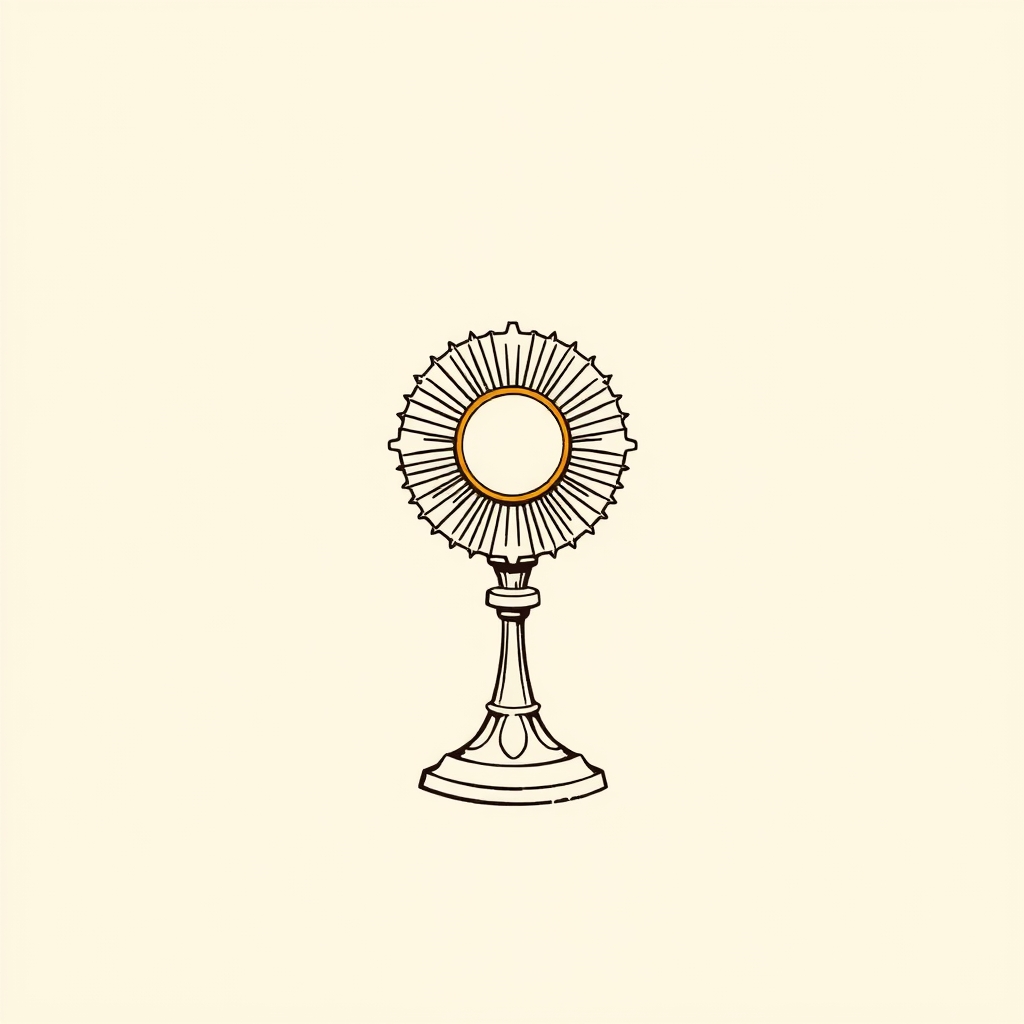
In iconography, Peter Julian Eymard is recognizable by: monstrance and Blessed Sacrament.
What miracles are attributed to Peter Julian Eymard?
2 miracles are attributed to this saint, notably: Healing.
Which saints were contemporaries of Peter Julian Eymard?
Contemporaries include: Jesús María Echavarría Aguirre, Pauline of the Agonizing Heart of Jesus, Narcisa de Jesús and Juan de Jesús López y González.
When did Peter Julian Eymard die?
Peter Julian Eymard died around 1868.
What are the other names of Peter Julian Eymard?
Other forms of the name: Pier Giuliano Eymard and Pedro Julián Eymard.
Annexes & related entities
Structured data for exploration: events, miracles, quotes, places, attributes, patronages, and important entities cited in the text.
Key Events
- Era / death: 1811-1868
- Canonized in 1962 by John XXIII
Quotes
-
Give me the cross, Lord, provided that you also give me your love and your grace.
Nominis (Catholic Church in France) — https://nominis.cef.fr/contenus/saint/1610/Saint-Pierre-Julien-Eymard.html