
Maximilian Kolbe
A Polish Conventual Franciscan friar, Maximilian Kolbe founded the Militia of the Immaculata and the friary of Niepokalanów, before dying at Auschwitz on August 14, 1941, by offering himself in place of a fellow prisoner.
Contemporaries

Figures and markers around the normalized period for this entry.
Guided reading
5 reading sections
Biography
Born in Poland in 1894, Rajmund Kolbe entered the Conventual Franciscans at a young age and became a priest, taking the name Maximilian Maria.
Maximilian Kolbe was born on January 8, 1894, in Zduńska Wola, in Poland, which was then part of the Russian Empire, and was given the name Rajmund (Raymond) at his baptism. Coming from a modest family of weavers, he manifested a deep Marian piety very early on. In 1907, with his older brother, he entered the Order of Friars Minor Conventual (Conventual Franciscans), continuing his formation at the minor seminary in Lwów. In 1910, he took the habit and the religious name of Maximilian, to which he later added that of Mary (Maria). Sent to study in Rome, he obtained a doctorate in philosophy there in 1915, followed by a doctorate in theology. Ordained a priest in 1918, he returned to Poland where he dedicated his ministry to the apostolate through the press and devotion to the Immaculate Conception. Afflicted by tuberculosis, which weakened him for a long time, he nevertheless deployed considerable activity until his arrest by the Gestapo in 1941. Deported to the Auschwitz concentration camp, he died there on August 14, 1941.
Life and Work
Kolbe founded the Militia of the Immaculata in 1917 and the great friary of Niepokalanów, a center for publishing and mission, before extending his apostolate to Japan.
The work of Maximilian Kolbe is centered on Marian devotion and the modern apostolate. On October 16, 1917, while still a student in Rome, he founded with a few companions the Militia of the Immaculata (Militia Immaculatae), a spiritual movement intended for the conversion of souls through consecration to the Virgin. Upon returning to Poland, he developed vast press activity, launching in 1922 the magazine Rycerz Niepokalanej ("The Knight of the Immaculata"), the circulation of which reached several hundred thousand copies. In 1927, he founded near Warsaw the friary of Niepokalanów ("City of the Immaculata"), which became one of the largest friaries in the world and an important publishing center. Driven by missionary zeal, he left in 1930 for the Far East and established in 1931, near Nagasaki in Japan, a friary named Mugenzai no Sono ("Garden of the Immaculata"). Having returned to Poland in 1936, he continued his work there, notably creating a radio station, until the outbreak of the Second World War.
Journey toward holiness
Marked by an intense Marian spirituality and heroic charity, Kolbe offered his life at Auschwitz to save that of a father of a family.
The holiness of Maximilian Kolbe is manifested in a radical Marian spirituality, which made total consecration to the Immaculate the heart of all conversion and all apostolate. His charity culminated in the extreme conditions of Auschwitz, where he was deported after a second arrest by the Gestapo on February 17, 1941, and registered as prisoner number 16670. At the camp, he continued to clandestinely exercise his priestly ministry, comforting his fellow prisoners. At the end of July 1941, following the escape of a prisoner, ten men were designated to die of starvation in reprisal. When one of them, Franciszek Gajowniczek, lamented the fate of his wife and children, Kolbe offered to take his place. Locked in the starvation bunker, he supported his companions through prayer. After two weeks, still alive, he was finished off by an injection of phenol on August 14, 1941, the eve of the Assumption. His sacrifice was interpreted as an act of heroic charity pushed to the point of the gift of life.
Beatification and canonization
Beatified as a confessor by Paul VI in 1971, Maximilian Kolbe was canonized by John Paul II on October 10, 1982, and proclaimed a "martyr of charity."
The beatification process for Maximilian Kolbe concluded on October 17, 1971, when Pope Paul VI proclaimed him blessed. He was then recognized as a confessor, as his death did not strictly fall under the classical definition of martyrdom out of hatred for the faith. Eleven years later, on October 10, 1982, Pope John Paul II—himself Polish—solemnly canonized him in Rome before a considerable crowd and chose to declare him a "martyr of charity," thereby highlighting the oblativity of his sacrifice. Franciszek Gajowniczek, the man whose place he had taken and who survived the war, attended the canonization ceremony. The Catholic Church celebrates his liturgical memorial on August 14, the anniversary of his death at Auschwitz. From the time of his beatification, his figure became a symbol of spiritual resistance to Nazi barbarism, as Kolbe was one of the first victims of the camps to be raised to the glory of the altars.
Spirituality and Heritage
A patron of the 20th century invoked for families, prisoners, and journalists, Kolbe leaves behind the legacy of the Militia of the Immaculata and the Niepokalanów friary, which remains active.
The legacy of Maximilian Kolbe is both spiritual and institutional. The Militia of the Immaculata that he founded remains a movement widespread in many countries, while the Niepokalanów friary remains a living Franciscan center and an important place of pilgrimage in Poland, housing a shrine dedicated to him. His spirituality, based on consecration to the Immaculata and the apostolic use of modern means of communication, has made him a saint particularly associated with the world of the press and radio. A figure of self-giving, he has become a patron invoked for families, political prisoners, journalists, as well as by people struggling with addiction. John Paul II saw in him a "patron of our difficult century." Numerous churches and institutions throughout the world bear his name, and his act at Auschwitz continues to be cited as a universal example of heroic charity, even beyond confessional boundaries.
Iconography
Signs and attributes

Frequently asked questions about Maximilian Kolbe
Who was Maximilian Kolbe?
A Polish Conventual Franciscan friar, Maximilian Kolbe founded the Militia of the Immaculata and the friary of Niepokalanów, before dying at Auschwitz on August 14, 1941, by offering himself in place of a fellow prisoner.
What is Maximilian Kolbe the patron saint of?
Patronage of Maximilian Kolbe: Familles, Families, Prisonniers politiques, Political prisoners, Journalistes, Journalists, Personnes dépendantes (toxicomanies) and People with dependencies (drug addiction).
What is Maximilian Kolbe invoked for?
Maximilian Kolbe is invoked for: Les familles, Les prisonniers, Prisoners, La lutte contre les dépendances and Fighting addictions.
How is Maximilian Kolbe depicted in Christian art?
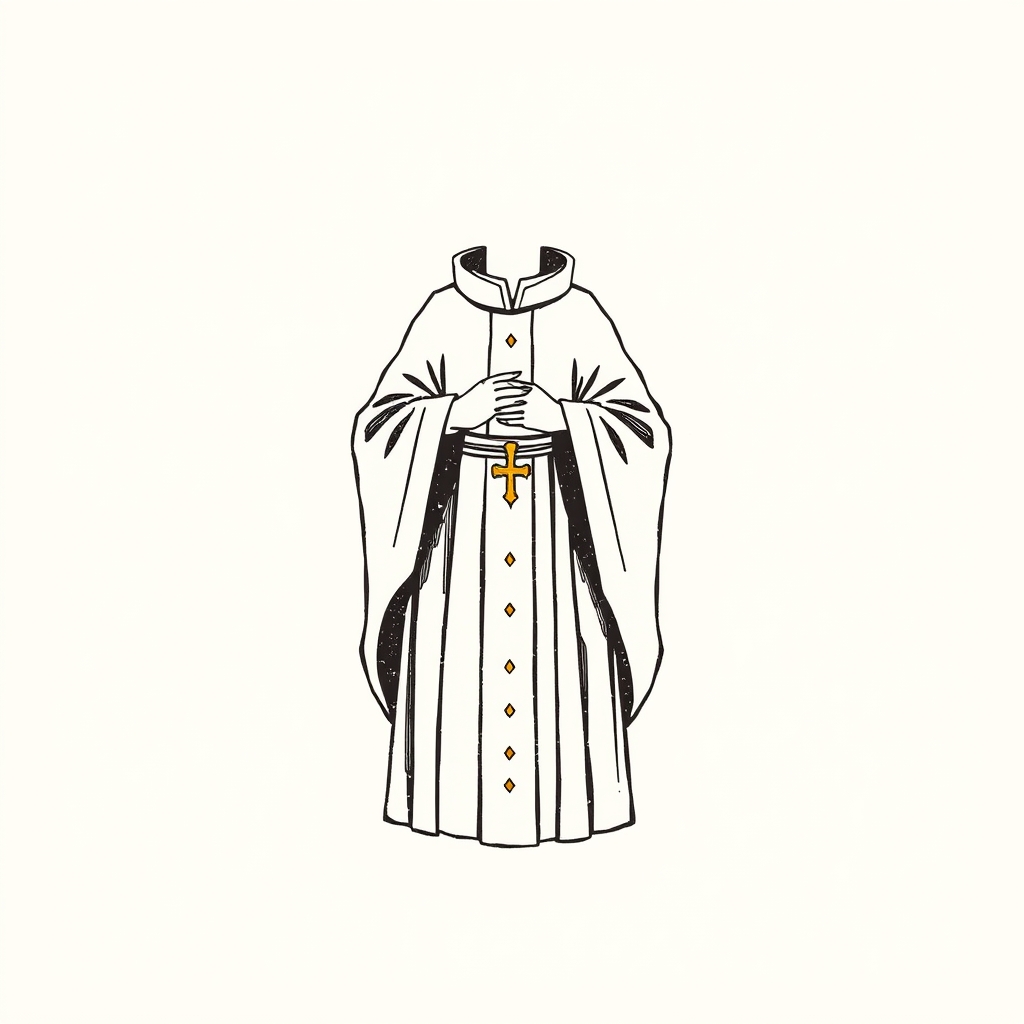
In iconography, Maximilian Kolbe is recognizable by: Franciscan habit, Striped Auschwitz prisoner uniform and Crown (of martyrdom).
How did Maximilian Kolbe die?
Maximilian Kolbe suffered martyrdom for the Christian faith (20th century).
Which saints were contemporaries of Maximilian Kolbe?
Contemporaries include: Pauline of the Agonizing Heart of Jesus, Felipe de Jesús Munárriz and 50 companions, Mariano de Jesús Euse Hoyos and Teresa of Jesus of the Andes.
What are the other names of Maximilian Kolbe?
Other forms of the name: Maksymilian Maria Kolbe, Massimiliano Maria Kolbe and Rajmund Kolbe.
Annexes & related entities
Structured data for exploration: events, miracles, quotes, places, attributes, patronages, and important entities cited in the text.
Key Events
- Era / death: 1941
- Canonized in 1982 by John Paul II