
Saint Urban I, Pope
Successor to Saint Callixtus in the 3rd century, Saint Urban I organized the administration of Church property and liturgical worship. Although his relics are the subject of historical debate between Rome and France, he remains the great patron of vintners, invoked for the protection of harvests on May 25.
Contemporaries

Figures and markers around the normalized period for this entry.
Guided reading
4 reading sections
SAINT URBAN I, POPE (222-230).
Origins and duration of the pontificate
Saint Urban, Roman by birth, succeeded Saint Callixtus and led the Church for nearly nine years in the 3rd century.
Saint Urban, a native of Rome, was the son of Pontianus and succeeded Saint Callixtus.
Reforms and decrees
The Pope established the inalienability of Church property intended for the poor and mandated the use of precious metals for sacred vessels.
This holy Pope established a constitution according to which the funds and inheritances given to the Church for the maintenance of priests and clerics, and for the assistance of the poor, were not to be sold, but were to remain inalienable: their revenues were to be used to provide for their needs, without it being permitted to use them for anything else, "because," he said, "these are the offerings of the faithful, the ransom of sins, and the patrimony of the poor."
He further ordered that the chalices, patens, and other sacred vessels intended for the holy sacrifice should be of silver, or even fine gold, enriched with precious stones. He declared that Christians should receive the sacrament of Confirmation from the hands of the bishop, and forbade that any excommunicated person be elected to the episcopate, even if his sentence had not been entirely just.
The question of relics and translations
A historical confusion exists between the relics of Pope Urban and those of a namesake bishop, involving translations to France and discoveries in Rome.
It is said that Pope Nicholas I, who ascended the chair of Saint Peter in the year 858, gave the body of Saint Urban to the monks of Saint-Germain d'Auxerre in the year 862. The translation took place the following year and was accompanied by many miracles. In 865, the monks of Saint-Germain gave their precious deposit to Erebzoré, Bishop of Châlons-sur-Marne, and this prelate placed it in the monastery he had built near Joinville (today in the diocese of Langres), which changed its name from the Holy Trinity to that of Saint-Urbain. It is today a town of nearly one thousand inhabitants. The parish church is very rich in holy relics: this is what is said. But this translation of the relics of Saint Urban, Pope, is anything but authentic. It would concern a Saint Urban, bishop, who took refuge in Rome and was martyred during the persecution of Marcus Aurelius and Commodus, and not the Pope, the first of that name. This is what Father Papebrock proved or attempted to prove at some length in his notes on the life of Saint Urban. Indeed, the Romans are convinced that the body of Saint Urban, Pope, is still entirely with them; for, in 1599, it was found in the church of Saint Cecilia, and Clement VIII had it replaced under the altar from which it had been taken, after having separated the head for the church of Notre-Dame d'Ara Coeli, and some fragments for other churches. "Thus, although Pope Nicholas intended to send the true body of Pope Urban to Auxerre," says Baillet, "it is believed that he was deceived in good faith, and that, unaware that Paschal I had transferred this body forty years earlier to the church of Saint Cecilia, he gave that of another under this name." Be that as it may, it is to Saint Urban, Pope, that the cult rendered to the relics brought to France related; it is he whom the faithful invoked as patron.
Cult and patronage of winemakers
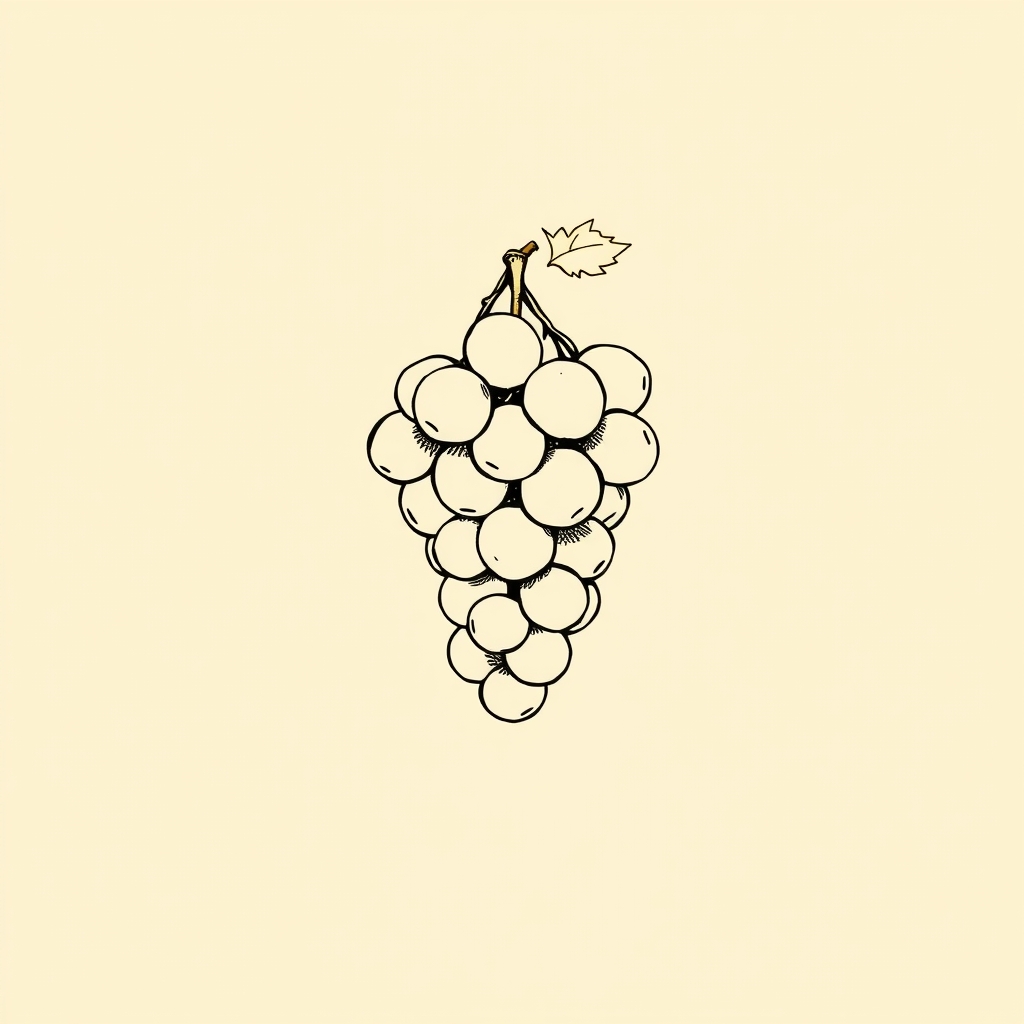
Invoked for the protection of vineyards due to his feast day on May 25, he is traditionally depicted with a bunch of grapes.
In several places, Saint Urban is invoked for the prosperity of the vine. The reason given for this patronage is that May 25 is the extreme limit of adverse influences and temperatures that can harm the vine. Hence, the need that was felt to place oneself under the protection of a Saint upon whom the salvation of the harvest depends. This patronage exists in Spain, as well as in Germany and France. For these reasons, Saint Urban is painted with a bunch of grapes.
*Acta Sanctorum; Baillet; Rossi, Roma sotterranea. — See the Supplement to this volume.*
Additional passages recovered from the sources
These passages from Les Petits Bollandistes supplement the entry. The references identify their context in the original volume.
Read the supplementary notes and passages (1)
Note on the martyrdom and personality of Saint Urban I, pope
Historical supplement from Les Petits Bollandistes, transcribed from the images of the 19th-century edition. The traditions, assessments, and expressions describing a "current" situation are those of the source in its time; they do not constitute a contemporary verification.
1. The Roman archaeologist Rossi undertook to demonstrate, in his famous work entitled: Subterranean Rome, that the Saint Urban who baptized Saint Tiburtius and Saint Valerian, husband of Saint Cecilia, is not the Pope who reigned from the year 222 to the year 230, but a bishop probably sheltered in Rome in the time of Marcus Aurelius and Commodus, around the year 177. Those who wish to take the trouble to follow the learned archaeologist's demonstration will perhaps, like us, be convinced that the martyrdom of Saint Cecilia does not belong under the reign of Alexander Severus, when there was no persecution, but under that of Marcus Aurelius and Commodus, and that, consequently, the Saint Urban who is spoken of in the famous Acts of Saint Cecilia is not the Pope of that name. It is one of two things: either we assign the pontificate of Saint Urban I to the reign of Marcus Aurelius and Commodus, around the year 177, or we keep his place in the generally adopted succession of Pontiffs, between the years 222 and 230. In the first hypothesis, the Saint Urban spoken of in the Acts of Saint Cecilia could be the Pope, the first of that name; but according to the best documents, he occupied the chair of Saint Peter from 222 to 230, and not under the reign of Marcus Aurelius. In the second hypothesis, it could not be him. It is this latter proposition that Mr. Rossi undertook to demonstrate in an indirect manner, by proving, in the course of his second volume, that Saint Cecilia was martyred around the year 177 and not around the year 230, in the IInd and not in the IIIrd century. We shall return, on November 22, to this question of the date of the martyrdom of Saint Cecilia, and consequently to the distinction between the two Urbans. There, after having given the text of the Acts, it will be easier for us to demonstrate clearly how little this text agrees with the reign of Alexander Severus and the pontificate of Saint Urban I, pope. The Roman Martyrology adds that Saint Urban died a martyr; but nothing is less certain. It cannot be repeated too often: the Church was not persecuted under Alexander Severus. Even assuming that a few provincial proconsuls, placed far from the master's eyes, could, under the shadow of ancient edicts, permit themselves arbitrary acts and sacrifice a few victims, it is difficult to admit that the prefect of Rome could have, under the eyes of the emperor himself and of his mother who was a Christian, sent the very head of the Christians to execution, along with such distinguished citizens as Tiburtius, Valerian, and Cecilia, and indulged, in a word, with impunity in the butchery described by the acts of Saint Cecilia and Saint Urban (the one who is passed off as the pope, first of the name). If, on the other hand, we admit that the Saint Urban of the Acts of Saint Cecilia is not the Pope of that name, the Acts given as being those of the martyrdom of Saint Urban cannot apply to him; the prefect of Rome who put Saint Cecilia to death, Almachius, being the same as the one named in the Acts of Saint Urban. The Liber Pontificalis speaks of his confession and not of his martyrdom. Ancient documents concerning Pope Urban are far from agreeing. For a long time, scholars have noted that traces of ambiguity appear in the writings dealing with this Pontiff. Instead of the solemn distinction that martyrologies and liturgical books usually make between confessors and martyrs, one perceives here a mixture of designations hardly consistent with ancient customs: sometimes Urban I is decorated with the title of martyr, and sometimes, to the exclusion of this title, he is officially called confessor. This important observation was enough to make several scholars suspect that a confusion of persons, of very ancient origin, had taken place, and that sound criticism should separate the individuality of Urban, at first reputed simple, and distinguish two personages: a martyr and a confessor. The famous Bollandist Du Sollier, after a rigorous examination, also leans toward this opinion. But the works of Mr. de Rossi have placed in our hands entirely new elements of judgment. Thanks to the very extraordinary restoration made by him of an important inscription, thanks to the sagacious examination of various martyrological and epigraphic manuscripts, the question has taken a great step forward. It is now certain that in the Vth century, two Saints named Urban were venerated on the Appian Way. One of them, who was believed to be the Pope, and the only one usually spoken of, was visited by pilgrims in the cemetery of Pretextatus; another, certainly also a bishop, rested in the cemetery of Callixtus. This latter fact was unknown, but it is not only established by written documents of incontestable authority: it has received a brilliant demonstration from monumental discoveries. Indeed, among the remains of sepulchral inscriptions found in the papal crypt of the IIIrd century, a fragment of an epitaph offers us the following letters: OYPBANOΣ Eπισκοπος, and thus gives a material confirmation to the existence of the two Urbans. — Cf. Rossi, op. cit.; Baillet, the Acta.
Paul Guérin, Les Petits Bollandistes, volume 6, p. 149, 150. Bibliothèque nationale de France: https://gallica.bnf.fr/ark:/12148/bpt6k30736h
Iconography
Signs and attributes
Entities
Narrative network
The names, places, and concepts most present in the entry, weighted by centrality in the text.
The supernatural in their life
The miracles of Saint Urban I, Pope
Frequently asked questions about Saint Urban I, Pope
Who was Saint Urban I, Pope?
Successor to Saint Callixtus in the 3rd century, Saint Urban I organized the administration of Church property and liturgical worship. Although his relics are the subject of historical debate between Rome and France, he remains the great patron of vintners, invoked for the protection of harvests on May 25.
What is Saint Urban I, Pope the patron saint of?
Patronage of Saint Urban I, Pope: winemakers and Saint-Urbain (town).
What is Saint Urban I, Pope invoked for?
Saint Urban I, Pope is invoked for: prosperity of the vineyard and protection of grape harvests against bad weather.
How is Saint Urban I, Pope depicted in Christian art?
In iconography, Saint Urban I, Pope is recognizable by: bunch of grapes.
How did Saint Urban I, Pope die?
Saint Urban I, Pope suffered martyrdom for the Christian faith (3rd century).
What miracles are attributed to Saint Urban I, Pope?
1 miracle are attributed to this saint, notably: Sign / wonder.
Which saints were contemporaries of Saint Urban I, Pope?
Contemporaries include: Saint Irenaeus of Lyon, Saint Ausonius of Angoulême, Saint Firmin of Pamplona and Saint Baudilus.
Who are the relatives of Saint Urban I, Pope?
Relatives of Saint Urban I, Pope: Pontien (father).
Annexes & related entities
Structured data for exploration: events, miracles, quotes, places, attributes, patronages, and important entities cited in the text.
Key Events
- Election to the pontificate after Saint Callixtus
- Establishment of a constitution on the inalienability of Church property
- Regulation on the use of gold and silver for sacred vessels
- Declaration on the sacrament of Confirmation by the bishop
- Occupied the Chair of Saint Peter for 8 years, 11 months, and 12 days
Quotes
These are the offerings of the faithful, the redemption of sins, and the patrimony of the poor
Constitution of Saint Urban on ecclesiastical goods