
Saint Mary Magdalene de' Pazzi
Born into an illustrious Florentine family, Mary Magdalene de' Pazzi entered the Carmel where she lived a life marked by mystical ecstasies and heroic sufferings. She is famous for her revelations dictated in ecstasy and her motto 'To suffer and not to die'. Her body, which remained incorrupt, testifies to her holiness after a life of rigorous penance.
Contemporaries

Figures and markers around the normalized period for this entry.
Guided reading
9 reading sections
SAINT MARY MAGDALENE DE' PAZZI, CARMELITE
Origins and pious childhood
Born in 1566 into an illustrious Florentine family, Catherine de Pazzi manifested from a very young age a precocious devotion and a taste for teaching Christian doctrine.
She loved her neighbor beyond all expression. She had formed the habit of not saying men, but the two.
Life of the Saint.
This Saint had for a father Camillo de' Pazzi, whose family was allied to that of the Medici, and for a mother Maria-Lorenza de B ondelmonte, whose blood was n o less illustrious. She was born on April 2, in the year 1566. She was named Catherine at baptism, in honor of Saint Catherine of Sien a, for whom she was always seen to have a tender devotion. As she advanced in age, she also increased in grace before God and before men; she was delighted when she could hear the word of God or pious conversations.
At the age of seven, having found in a book the symbol of Saint Athanasius, she read it with such pleasure that she ran immediately to show it to her mother: which proves that God was already giving her lights on the adorable mystery of the most Holy Trinity. Having learned, with admirable avidity, the Pater, the Ave, and the Credo, she repeated them very often and loved to teach them to the poor. When her father took her to the countryside, nothing pleased her as much as gathering young village girls to instruct them in Christian doctrine. One day, she was told that they had to leave the countryside to return to Florence; she was seized with a sharp pain and began to cry, bec ause she had begun to catechize a little girl of one of her father's farmers: she could only be appeased by taking the little girl with her to Florence so that she could finish instructing her.
Asceticism and entry into the Carmel
After a childhood marked by voluntary mortifications and a vow of virginity at twelve, she entered the Carmelites of Florence in 1582.
She applied herself early to prayer, with God Himself serving as her master in this, before she was of an age to be trained by directors; for this purpose, she sought the most solitary and peaceful places in the house; prostrated on the ground, she spent entire hours in this holy exercise; thus, to find her, one did not need to look anywhere other than in these small solitudes, where she occupied herself with the contemplation of divine things. It was in this way that she formed herself in the practice of virtues; she conceived such an ardent desire to please God that she could no longer taste the sweetness that the world seeks with such eagerness. She sometimes rose in the silence and darkness of the night to lie on a sack of straw, and often she withdrew into small, secluded corners to take the discipline without being seen. One day she made a crown of thorns, which she wore all night on her head with pain that cannot be expressed. But what is more admirable at such a tender age are the ardent desires that embraced her heart to receive the most holy Sacrament of the altar, and, because she was not yet granted this grace, she would approach her mother as closely as she could when she received Communion, and would not leave her side during the day; being near those who had participated in the holy Table, she tasted the same sweetness they had received there, and often much greater. Such rare fervor having obliged her confessor to permit her Communion at the age of ten, she received it as often as possible; but it was with such consolations that she would then spend entire days shedding tears in the presence of God. She made a vow of virginity at the age of twelve, and she was so faithful to it that in all her life she never had anything to reproach herself for in this matter.
The father of our Saint, being sent by the Grand Duke to the city of Cortona as governor, left his daughter as a boarder with the nuns of Saint John in Florence. She saw herself with joy separated from the world and practiced all the virtues of the cloister: every morning, she meditated for four hours on her knees.
When her father returned to Florence, he sought a match worthy of her; but he could not obtain her consent; she even asked him for permission to embrace the religious state: which was finally granted to her. She chose the Carmelite Order because they received Communion there almost every day. She entered it on the vigil of the Assumption of Our Lady; but after having been there for fift een days in secular dress, although she was entirely resolved never to leave, she saw herself compelled to do so by obedience, as her father wished it to test her further. After a trial of three months, she finally obtained permission to return, and, having received the blessing of her parents, she entered on the vigil of the first Sunday of Advent, in the year 1582, at the age of sixteen, the same year that Saint Teresa had left the earth to go to heaven, and the following Saturday, the day of the Immaculate Conception of Our Lady, she was unanimously received to be a nun.
Religious profession and first ecstasies
Under the name of Mary Magdalene, she made her profession prematurely due to a serious illness and began to experience daily ecstasies recorded by her sisters.
On January 30 of the following year, she took the holy habit of the religion, with the name of Mary Magdalene, and, when the crucifix was placed in her hand while the choir sang this antiphon: "God forbid that I should glory in anything save in the cross of Our Lord Jesus Christ," a seraphic ardor appeared on her face, and she felt herself inflamed with an ardent desire to suffer all her life for Jesus Christ. She said later that she never experienced such interior consolation.
After a most fervent novitiate, she was made to take her profession earlier than desired, and as she had predicted, because she fell dangerously ill; as she was believed to be at the point of death, they wished to procure for her the advantage of dying a religious. The ceremony took place before the altar of the most holy Virgin, on May 17, 1584, the feast of the Trinity. As her pains were very acute, a sister asked her how she could endure them without complaining; Catherine replied by showing her a crucifix: "See what the infinite love of God has done for my salvation; that is what gives me courage. Those who remember the sufferings of Jesus Christ and who unite their own to them, find them sweet and pleasant."
As soon as she was carried back to the infirmary, she was rapt in ecstasy, and her face appeared shi ning l ike a sun. She remained more than an hour in this state: which began again every morning, four days in a row, after holy communion. These were her first ecstasies, but not the last; they happened to her almost every day thereafter. The spirit of God then dictated to her things so elevated that the superiors assigned her two sister secretaries to write them down, and a large volume divided into four parts has been printed, approved by the local Ordinary and by the most learned men of Italy.
Rules of life and austerities
Christ dictates to her strict rules of conduct based on purity, obedience, and extreme physical mortification, including fasting on bread and water.
Our Lord, wishing to raise this Saint to a very high degree of perfection, cast into her heart, as a foundation, a great desire for mortification and a profound humility. Indeed, Madeleine, saying to Him one day, in a rapture, these words of Saint Paul: "Lord, what will You have me to do?" He made her know that on Sundays and feast days she could use Lenten fare, but that on other days she must nourish herself on bread and water, in order to do penance for the great sins that were committed in the world: she observed this abstinence exactly for the rest of her life, which was another twenty-five years. Another time, her divine Spouse commanded her to go always barefoot, and clothed only in a poor robe and a scapular: she undertook it with great courage. The superiors recognized that in all this she was following the will of God, for when she ate other things out of obedience, she could not keep them down, and when she put on shoes or wore other clothes, it was impossible for her to walk or to support herself on her feet.
Besides this, Our Lord prescribed for her admirable rules for the conduct of her life, the principal ones of which were:
"1. To have the same purity in all her words and in all her actions, as if they were the last of her life.
"2. To never give advice without having first consulted Jesus Christ attached to the cross.
"3. To always have a holy eagerness to show charity to others.
"4. To make no more account of her body than of the earth one treads underfoot.
"5. To never refuse anyone what she could grant.
"6. To have, as much as it would be possible for her, much condescension for others.
"7. To make as much account of these rules as if Jesus Christ Himself had given them to her.
"8. To offer often, from six o'clock in the evening until the time of communion, the Passion of Jesus Christ to His Father, and to offer also herself, and all creatures, in memory of the fact that He was separated from His holy Mother from His Passion until His Resurrection and, finally, to try to visit the most holy Sacrament by day and by night, up to thirty times, if charity or obedience did not take away the means from her.
"9. To be always, and in all her actions, transformed into Jesus Christ, through resignation to His will."
Supernatural Gifts and Prophecies
The saint manifested gifts of healing, bilocation, and prophecy, notably predicting the short pontificate of Alexander de' Medici.
God favored her with the gift of miracles and prophecy. She cast the demon out of a young girl's body by imperiously commanding it to leave. She healed a nun, who was sick to the point of death, by making the sign of the cross over her and presenting her with an image of Our Lady, while she herself, being in ecstasy, said these words: "May your will be done, O my God!" Having made her prayer and the sign of the cross out of obedience over a barrel of wine, she imparted such virtue to it that a sick nun, having drunk of it out of devotion, immediately found herself in perfect health. As for the gift of prophecy, here is a tangible proof: she predicted to Cardinal Alexander de' Medici, Archbi shop of Florence, wh o had come to visit her, that he would one day be Pope; she renewed her prediction when this cardinal, being sent as legate to France by Pope Clement VIII to King Henry the Great, said of him these words: "This prelate now possesses a great honor; but he will possess an even greater one: he will be raised to the sovereign Pontificate; but he will not enjoy this supreme dignity for long, for, when he wishes to embrace it, it will pass in an instant." Indeed, Alexander de' Medici was elected under the name of Leo XI in the year 1603, and survived his e lection by only twenty-six days.
What shall we now say of her raptures, which, far from weakening and exhausting her body, gave her, on the contrary, new strength? They did not prevent her from coming and going, from speaking and answering, nor even from doing needlework with as much perfection as if she had been in complete freedom and in perfect use of her senses. And as proof of this, three rochets and some images that she had worked on very neatly during the very time of her ecstasies were kept for a long time out of respect. Being sick to the point of death, she rose from her bed in a rapture, and, running to the infirmary altar, she embraced a crucifix, crying out with all her might: "O Love! O Love! no one knows you, no one knows you, no one loves you." Meeting a nun one day, she said to her, while squeezing her hand: "Come with me, my sister, and let us run together to call Love." Hearing it said that a sister had a great desire to accomplish the will of God, she replied that she was right, because there was nothing so lovable as doing the will of God. And thereupon, being caught up in ecstasy, she went throughout the convent, saying in a loud voice: "My sisters, O how lovable is the will of God!"
The cries and sighs that she often uttered in the midst of her ecstasies were evident proofs of the extreme pains she suffered therein, in conformity with Jesus Christ crucified, whom she wished to imitate in this state; these sufferings were so great that it would have been impossible for her to endure them without dying, had not the powerful hand of Him who wounded her with such love, at the same time, preserved her life. Indeed, one day, having heard it recalled that Jesus pronounced these words: "It is consummated!" and that, bowing his head, he expired, she fell completely stiff without giving any further sign of life.
But we pass to her revelations: as she was praying at the tomb of the venerable Mother Maria Bagnesi, she saw her all shining with glory on a throne enriched with precious stones; and it was made known to her that this throne was the virginity she had kept immaculate, and that the precious stones represented the souls that this nun had attracted to the service of God. She saw another nun transported into paradise, after having remained fifteen days in purgatory, because she had worked a little without necessity on feast days, because she had not warned the superior, according to her duties as a discreet Mother, of some disorder that was happening in the monastery; and, finally, that she had had an attachment too human for her relatives. She saw another, who had died in the reputation of sanctity, who appeared very radiant throughout her body; but she had black and altered hands, because, letting herself go to her liberal nature, she had made, without permission and with attachment, several small gifts to secular persons. Saint Magdalene saw in heaven Saint Aloysius Gonzaga all radiant with light, and she cried out in an ecstasy: "O what glory has Louis, son of Ignatius! I would never have believed it, if my Je sus had not shown it to me."
Not only did our Saint have these visions, but she was also seen herself, although still alive, in places from which she was very far away: for she appeared to Catherine de Rabatta, her sister, who had an eye ailment, and healed her by touching only her eyelid.
The Trial of the Lake of Lions
For five years, she traversed a period of spiritual desolation and violent temptations, which she overcame through humility and penance.
So many graces and consolations were not without some bitterness. In the year 1585, on the eve of Pentecost, she saw in spirit a place she called the Lake of Lions, in which there was a multitude of demons in frightful figures; and she heard a voice telling her that she would remain there for five years. This news astonished her extremely at first; but knowing it was the will of God, she submitted to it and abandoned herself to it with all her heart. Indeed, on the day of the Holy Trinity of the same year, she entered this lake through horrible temptations of pride, sensuality, despair, gluttony, and against the faith; they were so violent that Magdalene sometimes said, when she had a little respite: "No, I do not know if I am a reasonable creature or without reason: I see nothing in me that is good except a little good will to never offend the divine Majesty."
The weapons she used in these combats were prayer, during which she was often heard to utter these words: "Where are you, my God! where are you?" and devotion to the most holy Virgin, which she never abandoned: one day when she was extraordinarily tempted against purity, this most pure Virgin appeared to her, and, placing a white veil on her head, assured her that she would emerge victorious from this struggle. She also overcame her enemies through deep humility and great fidelity in giving an account of her interior and all her actions to her superiors. Finally, she employed penances and mortifications that were not common, for, besides that rigor which the Spouse of virgins had prescribed for her in her living and in her clothing, she wore a very rough hair shirt with a belt armed with iron spikes, and often took the discipline with chains of the same material. And when her sisters, astonished by these austerities, exhorted her to moderate them, she said to them, with a smiling and pleasant face: "Let me suffer for my sins, Jesus Christ wills it so." Feeling herself one day tempted more strongly than usual, she threw herself into brambles and thorns to make herself bleed, and by this means, she stopped the revolts of the flesh. Finally, God having sufficiently tested the courage of Magdalene and purified her virtue, caused this furious storm to cease at the end of five years, just as He had predicted to her; and, the sky appearing all serene to her, He abundantly restored her former lights.
Indeed, in the year 1590, as she was in the choir at Matins, she entered into ecstasy during the Te Deum; and, after the office, her face, which was previously pale as that of a dead person, became admirably beautiful; she squeezed with transports of extraordinary joy the hand of the mother prioress and the mistress of novices, inviting them to take part in her happiness: "The storm has passed," she told them; "help me to thank and bless my amiable Creator."
In this rapture, she saw all the saints to whom she had devotion, with her guardian angel; one placed a crown on her head, another a gold necklace around her neck, another clothed her in a very white robe; which made her say: "O my God, it seems to me that you wish to reward me for the offenses I have committed against your divine Majesty!"
One day when the demon was pressing her extraordinarily to leave the holy habit, she had recourse to Saint Albert, General of the Carmelites, whom she had chosen as one of her advocates in heaven; and, at that very hour, being rapt in ecstasy, she saw that this Saint, taking a white habit, with a scapular and a belt of the same color, from the side of Jesus crucified, clothed her with it, and that at the same time the Blessed Virgin placed a lighted candle and a crucifix in her hands, with a crown of flowers on her head, like those who make profession; after which the whole temptation vanished.
Religious Virtues and Apostolic Zeal
She distinguishes herself by her love of the rule, her horror of sin, and an ardent desire to see Divine Love recognized and loved by all.
Such graces are not granted to souls who are cowardly and lukewarm on the path of virtue: thus, Mary Magdalene was so fervent that she observed the smallest details of her Rule with the utmost exactitude. Her only desire was to do nothing except through obedience, and when it was represented to her, upon her entry into the monastery, that she would find less time for prayer there than she had had in the world, she replied "that she did not worry about that, knowing well that the smallest exercise done through obedience was as good as the longest prayer." She was so content to live in angelic chastity that she sometimes kissed the walls of her enclosure, because they contributed to preserving this precious treasure for her. Finally, her love for poverty was so great that, far from ever complaining that she lacked anything, she always said that she had too much, and asked for nothing better than to have nothing.
She lived in an admirable purity of heart, seeking only to please God alone and to glorify Him: this is what made her desire the fulfillment of His most holy will in all things; she was very glad when God did not grant her prayers, "because," she said, "I recognize by this that God does His will rather than mine." And she took such pleasure in uttering these words: "the will of God," that she repeated them continually, saying to her sisters: "Do you not feel how sweet a thing it is to name the will of God?" In order to become more exact in this, she made a day of retreat each month, where she examined herself on this point; after which she took the discipline, for the space of an hour, with iron chains, to expiate her negligences. She had such a great horror and apprehension of mortal sin that she could not hear it named without trembling with fear. And, fifteen days before her death, she said "that she was leaving the world without having yet been able to understand how a creature could resolve to commit a sin against her Creator."
25 MAY.
Her very presence, which, moreover, consoled the afflicted, was a torment for persons abandoned to crime. A libertine had come to the grille to speak to one of the sisters who was a novice: scarcely had he caught sight of the Saint in the company of this young nun, than he was quite troubled by it and felt forced to leave her presence. He nevertheless profited from this encounter, and, recognizing the poor state of his soul, he converted, did penance, and changed his life.
Magdalene guarded her eyes, her ears, and her tongue no less than her heart; not believing that a girl who takes pleasure in the grille can be truly religious, she said "that a sister never left the grille as she had entered it, because it took her a long time to recover the peace she had enjoyed before, and which secular conversations had stolen from her; that these kinds of conversations threw dust into the mind, and often even caused some harm to chastity."
Her zeal for regular observance was so great that she could not suffer the slightest relaxation of it, "because," she said, "it was offending the apple of God's eye." Thus, Our Lord one day showed her several religious souls who were in hell for having misused their time of recreation; which made her say these words: "O extreme misery! what is permitted to nuns for a holy diversion gives them the death of the soul and causes them torments that will never end." It was from this zeal that the transports and ardor she had for the salvation of souls proceeded, and which sometimes pushed her to cry out: "O Love! Love! give me a voice so strong that I may be heard from the Orient to the Occident and in all parts of the world, so that you may be recognized and loved everywhere, as the true Love." Seeing in spirit the soul of a sinner condemned to eternal flames upon leaving this world, she cried out: "You have then become a brand of hell, and the time past is changed into very cruel pains! O eternal God! men of the world do not consider these things."
Final sufferings and posthumous glory
She died in 1607 after long physical sufferings. Her body was found intact and she was canonized by Clement X.
But it is time to conclude this holy life with the happy death that ended it. It pleased the divine goodness to prepare her for it through unspeakable pains: her teeth fell out one after the other; she was stretched out on her bed like a statue, unable to move, and, if one touched her ever so slightly, it caused her no less pain than if she had been hacked with razor blows. Nevertheless, all these bodily pains were nothing in comparison to the spiritual ones she endured; for God abandoned her interiorly, so that she might suffer solely for love, without any relief or consolation, just as she had always desired. Indeed, her intention was to be entirely conformed to her spouse Jesus Christ, and to have a share in all the pains He had endured on the cross; when her confessor gave her hope of receiving some relief, she replied: "No, no, my father, it is not consolation that I seek, but pains; I desire to suffer until the last moment of my life." She usually said that what she wished for most was to suffer or to die, or rather to live longer to suffer more, and not to die so soon so as not to cease suffering so soon.
However, the doctors having declared to her that she could not live more than three days, she received this news with perfect submission. Her spirit, despite the pains of her illness, was always applied to God, and she had her eyes fixed on a crucifix that could never be taken from her hands; she listened attentively to the divine office that two nuns recited in her presence, and her lips, to use the terms of Scripture, distilled milk and honey through the words of edification that she spoke to all her sisters. Finally, she received the last Sacraments with admirable devotion and fervor, and, learning that the confessor, who was to go to a hermitage near Florence, feared not finding her alive, she assured him that he would have plenty of time to make his journey, and that she would not die before he returned: as indeed happened.
Seeing that the hour of her death was approaching, she had the mother prioress called, to whom she said many things concerning the government of her monastery, and then, taking leave of all the nuns, she gave this final advice: "My reverend mothers and my dearest sisters, here I am on the point of leaving you until eternity; I ask one thing of you in the name of Our Lord Jesus Christ, and it is the last grace that I will ask of you: That you love nothing but Him, that you place all your hope in Him, and that you be continually inflamed with the desire to suffer for His love." After which she happily rendered her soul to God, on May 13 of the year 1607, the day after the Ascension, at noon, aged forty-one years, two months and a few days, after having spent twenty-five in religion. Her face became so beautiful and so rosy that one could not tire of looking at it.
One cannot express the honors that were immediately rendered to her memory; but the miracles that took place before she was laid in the ground sufficiently indicated that she deserved even greater ones. We will content ourselves with reporting one very edifying one. As she had been placed in the church for the satisfaction of the laity, with her face turned toward the sacristy, it was noticed that she suddenly turned it to the other side, because there was in that place a debauched man whose gaze she could not endure, even after her death.
Her body, clothed in a tunic, a scapular, and a mantle of white taffeta, instead of that of wool, was buried behind the high altar, where, two years later, it was found as sound and as intact as the day it had been placed there; moreover, the body exhaled an admirable perfume, although it had been buried without a coffin, and without having been embalmed. Urban VIII declared her blessed, and Clement X canonized her, with an order to celebrate her office on the 27th of this month.
Iconography and literary legacy
The saint is traditionally depicted with a ring or a crown of thorns, and her life is the subject of numerous hagiographic accounts.
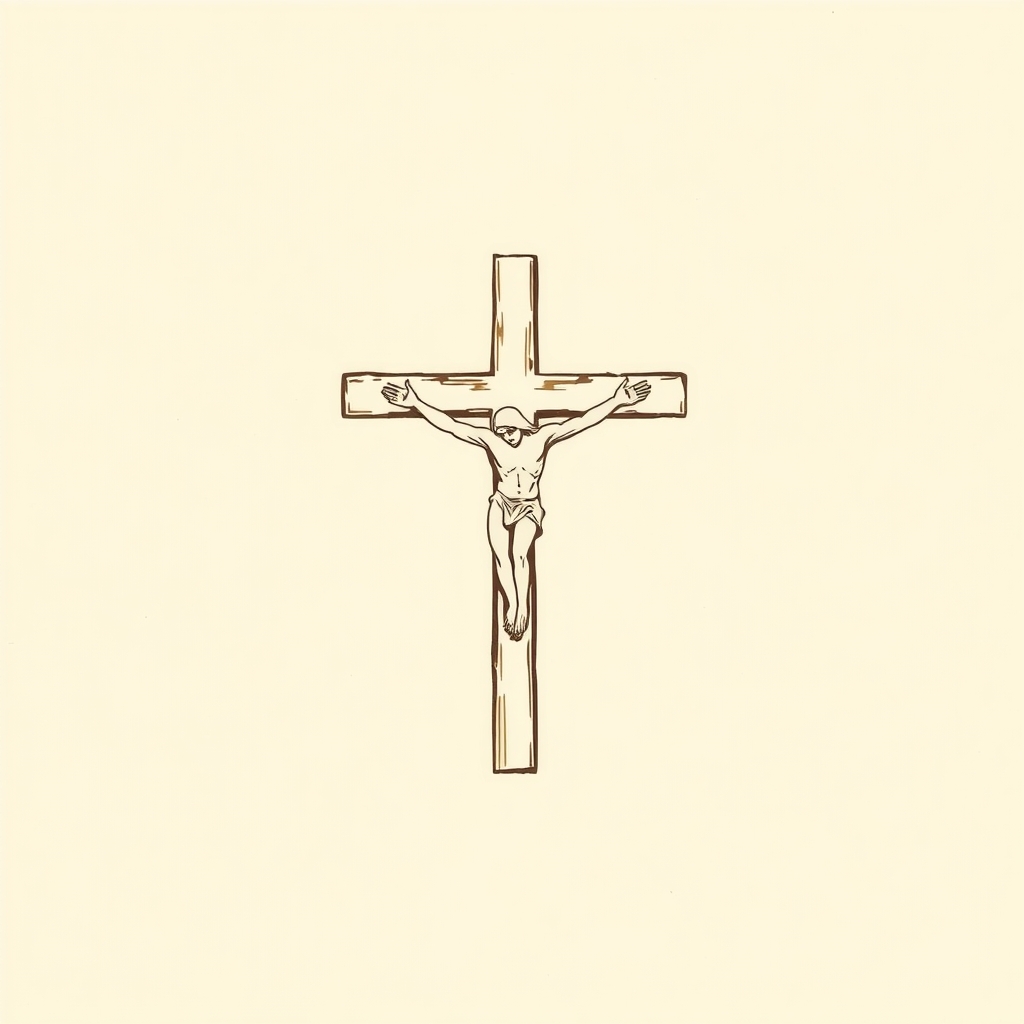
Saint Mary Magdalene de' Pazzi is ordinarily depicted with a ring on her finger. This ring recalls that while she was still a child, following her vow of virginity, Our Lord appeared to her to signify His acceptance by placing a ring on her finger. She received the same favor after her profession. This event took place in the presence of the Most Holy Virgin, Saint Augustine, and Saint Catherine of Siena. She is also depicted with the inscription: Pati, non mori: "To suffer and not to die"; or: Semper pati, nunquam mori: "Always to suffer, never to die"; — holding a flaming heart in her hand. This manner is not sufficiently characteristic, as it has been applied to a great number of other saints who were lovers of Jesus Christ. Our Lord places a crown of thorns on her head; she embraces the cross or receives from the hands of Our Lord the instruments of the Passion and the stigmata as an all-powerful remedy against temptations.
One of her relics is in the chapel of the Hôtel-Dieu in Abbeville.
The Life of this Saint was written in Italian and divided into six parts by Vincent Pupeloli, confessor of the monastery in the suburb of Saint-Évilde, in Florence; and the nuns of this convent dedicated it, in the year 1609, to Queen Marie de' Medici, wife of Henry the Great, of honorable memory. F ather Dominique de Jésus, a Discalced Carmelite, and Father Léon, of the Brittany Reform, also composed it, in addition to those who have written the history or the complete account of this Order. Her memory is marked with great honor in the Roman Martyrology, on the 25th and 27th of this month.
Iconography
Signs and attributes





Entities
Narrative network
The names, places, and concepts most present in the entry, weighted by centrality in the text.
The supernatural in their life
The miracles of Saint Mary Magdalene de' Pazzi
Frequently asked questions about Saint Mary Magdalene de' Pazzi
Who was Saint Mary Magdalene de' Pazzi?
Born into an illustrious Florentine family, Mary Magdalene de' Pazzi entered the Carmel where she lived a life marked by mystical ecstasies and heroic sufferings. She is famous for her revelations dictated in ecstasy and her motto 'To suffer and not to die'. Her body, which remained incorrupt, testifies to her holiness after a life of rigorous penance.
What is Saint Mary Magdalene de' Pazzi invoked for?
Saint Mary Magdalene de' Pazzi is invoked for: temptations, illnesses and conversion of sinners.
How is Saint Mary Magdalene de' Pazzi depicted in Christian art?
In iconography, Saint Mary Magdalene de' Pazzi is recognizable by: ring on her finger, flaming heart, crown of thorns, instruments of the Passion, stigmata and crucifix.
What miracles are attributed to Saint Mary Magdalene de' Pazzi?
4 miracles are attributed to this saint, notably: Healing, Multiplication / provision, Exorcism and Incorruptibility.
Which saints were contemporaries of Saint Mary Magdalene de' Pazzi?
Contemporaries include: Blessed John of Jesus-Mary, Ana de Jesús, Venerable Anne of Jesus and Saint Francis de Sales (Bishop and Prince of Geneva).
When did Saint Mary Magdalene de' Pazzi die?
Saint Mary Magdalene de' Pazzi died around 1607.
What are the other names of Saint Mary Magdalene de' Pazzi?
Other forms of the name: Catherine de' Pazzi and Maria Maddalena de' Pazzi.
Who are the relatives of Saint Mary Magdalene de' Pazzi?
Relatives of Saint Mary Magdalene de' Pazzi: Camille de' Pazzi (father), Marie-Laurence de Bondelmonte (mother) and Catherine de Rabatta (sister).
Annexes & related entities
Structured data for exploration: events, miracles, quotes, places, attributes, patronages, and important entities cited in the text.
Key Events
- Born in Florence on April 2, 1566
- Vow of virginity at the age of twelve
- Entered the Carmel in 1582
- Religious profession on May 17, 1584, during an illness
- Five-year period of extreme temptations (the Lion's Den) from 1585 to 1590
- Canonization by Clement X
Quotes
-
Pati, non mori
Iconographic tradition -
O Love! Love! no one knows you, no one loves you
Words in ecstasy