
A 7th-century locksmith from Lyon originally from Forez, Baldomer (or Galmier) was distinguished by his charity toward the poor and his piety. Noticed by Abbot Vivence, he entered the monastery of Saint-Just and was ordained a subdeacon despite his humility. He is famous for his constant expression 'Always thanks be to God'.
Contemporaries

Figures and markers around the normalized period for this entry.
Guided reading
4 reading sections
SAINT BALDOMER OR SAINT GALMIER,
Youth and life as a locksmith
A native of Forez, Galmier settled in Lyon as a locksmith, leading a life of evangelical poverty and active charity toward the most destitute.
Baldemer or Galmier, born in France, in the region of Forez, withdrew to Lyon in his youth, and served God there with great zeal and fidelity. He lived poorly and in great simplicity, always occupied with prayer and other good works, practicing the trade of a locksmith, always feeding some poor people with him from what the work of his hands produced, and sometimes giving them even his tools when he had nothing else.
The favorite word he had continually on his lips was: Always thanks be to God, encouraging all those with whom he had dealings to repeat it often with him to remain in perpetual gratitude toward God. He was upright, sincere, obliging, affable, prompt to do all the good that depended on him with an inviolable purity of soul and body. He was very applied to reading, especially that of the Holy Scripture, and he lived in a general mortification of the senses. This did not prevent him from being very cheerful in conversation, but always very edifying, fertile in ingenious ways to lead everyone to bless God continually, skillful in blaming vice without wounding the vicious, learned even and pleasant in his discussions: which appeared mainly after he had retired into a monastery.
Meeting with Abbot Vivence
Noticed for his piety by Abbot Vivence at the village of Ouvac, Galmier is invited to join the monastery of Saint-Just to dedicate himself to prayer.
Abbot Vivence, who then governed the monastery of Saint-Just in Lyon, and who was later bishop of that city, having gone one day to the village of Ouvac or Auditiac to pray in a church where there was some public devotion, saw our Saint there with an exterior so poor, yet at the same time so grave and recollected, that he did not wish to return without knowing and speaking with him. He had no difficulty in judging that he was a great servant of God; and, without allowing him to return to the forge, he took him with him and lodged him in his monastery of Saint-Just, so that he could attend with fewer distractions to prayer and the meditation of divine truths. Saint Galmier was not a burden to the house; but he lived there on the alms of pious people who had known his holiness in the world, and he was content with so little that he seemed to receive these charities only to distribute them to the poor.
The Subdiaconate
Despite his resistance out of humility, he was ordained a subdeacon by Bishop Gaudry, a rank he would hold for the rest of his life, illustrating it with miracles.
Bishop Gaudry, predecessor of Vivence, was so moved by the eminence of his virtue that, to procure a new ornament for his clergy, he made him a subdeacon and desired that he have a share in the ministry of the altars. The humility of our Saint had never before faced such a severe trial as on this occasion. He had recourse to tears and the most pressing supplications to oblige his bishop to leave him in the rank of the laity, of which he believed himself the last before God, just as he had always affected to be in the eyes of men. He was listened to by no one; but he took such just measures to prevent them from raising him any higher that they were obliged to leave him for the rest of his days in his subdiaconate, where God made known how pleasing he was to Him through the power of the miracles He communicated to him, and which He deigned to continue after his death, to confirm the opinion that had been held of his holiness during his life.
Death and fate of the relics
Dying around the middle of the 7th century, his relics were largely destroyed by the Huguenots in the 16th century, with the exception of an arm preserved in Saint-Galmier.
It is commonly believed that he died on the 27th of February, the day on which his name is marked in almost all the martyrologies that mention him. But the year is not precisely agreed upon, since it is generally believed that it was towards the middle of the 7th century, between 642 and 660. His body was buried in the church of Saint-Just, through the care of the abbot Vivence; and his relics were always held in very great veneration there by the people, until, in the 16th century, they were removed and scattered along with those of several other Saints by the Huguenots. So that there remains only an arm that had been detached from the body, and which was already kept at Saint-Galmier in Lyonnais, a town that bears his name, and which is a day's journey from Lyon, on the side of the Loire.
Baillet.
Additional passages recovered from the sources
These passages from Les Petits Bollandistes supplement the entry. The references identify their context in the original volume.
Read the supplementary notes and passages (1)
Variants of the name of Saint Baldomer or Saint Galmier
Historical complement to the Petits Bollandistes, transcribed from the images of the 19th-century edition. The traditions, assessments, and expressions describing a "current" situation are those of the source in its time; they do not constitute a contemporary verification.
1. Other variants: Waldimer, Garmier, Germier, Gaumier, Geaumier.
Paul Guérin, Les Petits Bollandistes, volume 3, p. 52. Bibliothèque nationale de France: https://gallica.bnf.fr/ark:/12148/bpt6k30733g
Iconography
Signs and attributes


Entities
Narrative network
The names, places, and concepts most present in the entry, weighted by centrality in the text.
The supernatural in their life
The miracles of Saint Baldomer (Galmier)
Frequently asked questions about Saint Baldomer (Galmier)
Who was Saint Baldomer (Galmier)?
A 7th-century locksmith from Lyon originally from Forez, Baldomer (or Galmier) was distinguished by his charity toward the poor and his piety. Noticed by Abbot Vivence, he entered the monastery of Saint-Just and was ordained a subdeacon despite his humility. He is famous for his constant expression 'Always thanks be to God'.
What is Saint Baldomer (Galmier) the patron saint of?
Patronage of Saint Baldomer (Galmier): locksmiths and Saint-Galmier (town).
How is Saint Baldomer (Galmier) depicted in Christian art?
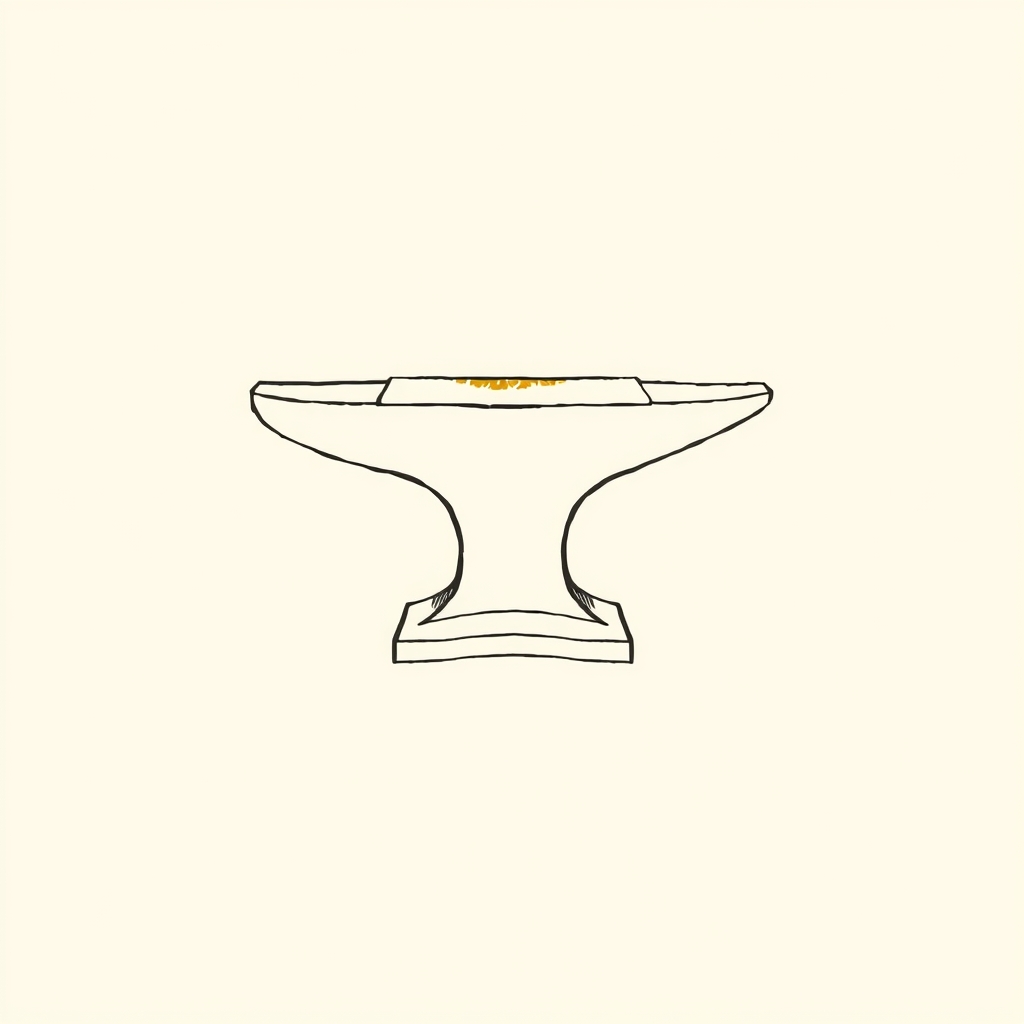
In iconography, Saint Baldomer (Galmier) is recognizable by: locksmith tools, anvil and keys.
What miracles are attributed to Saint Baldomer (Galmier)?
1 miracle are attributed to this saint, notably: Sign / wonder.
Which saints were contemporaries of Saint Baldomer (Galmier)?
Contemporaries include: Blessed John of Jesus-Mary, Ana de Jesús, Blessed Anne of Jesus and Saint Francis de Sales (Bishop and Prince of Geneva).
When did Saint Baldomer (Galmier) die?
Saint Baldomer (Galmier) died around 1600.
What are the other names of Saint Baldomer (Galmier)?
Other forms of the name: Galmier and Baldemer.
Annexes & related entities
Structured data for exploration: events, miracles, quotes, places, attributes, patronages, and important entities cited in the text.
Key Events
- Settled in Lyon in his youth
- Worked as a locksmith
- Meeting with Abbot Vivence at the village of Ouvac
- Entered the monastery of Saint-Just
- Ordination as subdeacon by Bishop Gaudry
- Died c. 660
- Dispersion of relics by the Huguenots in the 16th century
Quotes
Always thanks be to God
Oral tradition reported by Baillet