
Our Lady of the Ardents
In 1105, while Artois was ravaged by the epidemic of ergotism, the Virgin Mary appeared to two enemies, Itier and Norman. She gave them a miraculous candle whose water drops healed the sick. This miracle founded a centuries-old devotion in Arras, marked by the construction of a monumental pyramid to house the relic.
Contemporaries

Figures and markers around the normalized period for this entry.
Guided reading
6 reading sections
OUR LADY OF THE ARDENTS, IN ARRAS.
The epidemic of the burning sickness
In 1165, a terrible epidemic of 'burning fire' ravaged Artois, causing gangrene of the limbs and the death of many inhabitants.
In the year 1165, a frightful disease, known by the name of burning fire, which decimated a part of Europe, invaded Artois. Not a city, not a village, not a hamlet was spared. The limbs affected by this terrible fire became black as coal and crumbled into dust; the hand detached from the arm, the foot from the leg, and the inflammation spread from one limb to another. The sick, recognizing the finger of God in such a cruel scourge, had themselves carried to the church, confessed, and prayed with tears and groans. Lambert, Bishop of Arras, broken with grie f at this spectacle, came to pour out his prayers with his tears before the altar of Mary, and his prayer was answered.
Apparition and reconciliation
The Virgin Mary appears to two sworn enemies, Itier and Norman, ordering them to reconcile and go to the Bishop of Arras to receive a miraculous remedy.
On the night of May 21, the Blessed Virgin appeared successively to two men, Iti er an d No rman, the former living in Brabant, the latter residing at the castle of Saint-Pol-sur-Ternoise; both were sworn enemies of one another. She ordered them to go and find the Bishop of Arras, and to tell him on her behalf that he must keep vigil with them in the church throughout the night from the following Saturday to Sunday, and visit the sick who were suffering there; that there, at the first cockcrow, she would hand them a lighted candle; that they were to let drops from it distill into a vessel full of water; that they were to make the sick drink this water and sprinkle it upon their wounds; that those who received this remedy with faith would be healed, and those who refused it would be struck with death. As Itier and Norman feared they were the playthings of an illusion, they delayed their departure; but the Virgin, having returned the following night to declare that if they did not leave at once, they themselves would be struck by the burning fire, they set out. Norman, being less distant, arrived first and made his vision known to the Bishop, who did not believe it. Itier arrived in his turn and delivered his message. The Bishop pointed out to him that Norman had already come to tell him the same story, and that he feared they had conspired to deceive him. At this word, Itier became angry, venting a furious hatred against Norman, the murderer of his brother, to the point of being determined to kill him if he encountered him. The Bishop, through his gentle words, calmed this exalted soul and persuaded him to reconcile with his enemy. He brought them both into each other's presence, and had the joy of seeing them give one another the kiss of peace.
The Gift of the Holy Candle
Mary hands a lit candle to the bishop and the two visionaries; water mixed with the wax of this torch instantly heals 144 sick people.
The wonder of this reconciliation disposed the bishop to believe in the miracle of the vision; and consequently, after having his two visitors take a light meal around nine o'clock in the morning, he encouraged them to prepare themselves through prayer, and through fasting on bread and water, for the great marvel they were announcing. Indeed, Itier and Norman spent the whole day in prayer at the church; and, night having fallen, the bishop came to join them. All three vied in fervor and humility in prayer, when at the indicated hour, at the first cockcrow, they saw Mary descend gently from the vault of the choir; a lit candl e burned in h er hand: "Here," she said to them, "is a candle that I entrust to your care, and which will henceforth be a pledge of my mercy." She repeated to them in a few words the use to be made of this candle for the healing of the sick, and disappeared. Then, Itier, Norman, and the bishop let drops of this celestial torch fall into three vessels of water; and, advancing in three lines, they gave it to the sick to drink, and sprinkled their wounds with it; and all, numbering one hundred and forty-four, were healed; the one hundred and forty-fifth was dispatched, by death, for his incredulity.
Foundation of the confraternity and devotion
A pious association is created and the candle becomes a famous relic, visited notably by Saint Bernard in 1131.
After a solemn Te Deum of thanksgiving, and the depositing of the miraculous candle in the parish church of Saint-Aubert, a pious association was formed under the direction of Itier and Norman, which took the title of Charity of Our Lady of the Ardents.
The holy candle, esteemed as an illustrious as well as incontestable relic, became famous throughout the region; and the miraculous healings that it performed in the chapel of Saint-Nicolas, where it had been placed, attracted numerous pilg rims to it. S aint Bernard, passing through Arras around the year 1131, asked to see it; and after having contemplated with a holy curiosity, an ineffable rapture, this gift of Mary brought by herself, he thanked God and his holy Mother for the happiness he had experienced on this occasion. He even asked that a monument be erected in the place where such a favor had been granted to him. His request was granted and a cross was raised there. Alvise, successor of Robert to the see of Arras, took great care to preserve and increase the veneration of the faithful toward this holy candle, and he was the first to have its charter renewed.
The construction of the pyramidal monument
A monumental sanctuary in the shape of a Gothic pyramid is erected by the Counts of Flanders to house the relic under high security.
Around the year 1140, the influx of pilgrims who came from all directions to venerate the precious gift of the Blessed Virgin and to ask for their healing was so prodigious that the Co unts of Flanders felt compelled to yield a vast, level, and paved plot of land for the needs of a religious service that was developing so rapidly. A beam-chapel was built there for the holy offerings, a hall eighty feet long for the assemblies of the confreres, lodging for the guardians of the chapel and the Confraternity; and finally, several tents were set up for the horses of the men who took turns standing guard over the holy candle.
At the beginning of the thirteenth century, the Counts of Flanders did even more: they erected, at their own expense, a monument of the most delicate and graceful workmanship, intended to enclose the celestial torch. It was an elegant pyramid, forty feet high, in the most ornate ogival style, beneath which were a small chapel and a small sacristy. The holy candle was placed in the upper part, behind several successive doors, the last of which was made of iron and could only be opened with different keys. One of these keys was entrusted to one of the mayor-cantors, and the other to the honorary mayor. They could lower the holy candle into the chapel to show it to strangers, but never carry it outside without the assistance of the prince's principal officers; and things remained this way until '93, when this magnificent sanctuary was torn down.
Destruction and modern restoration
After the destruction of the monument in 1793, the relic was saved by a faithful man named Grimbert before being restored by Bishop Parisis in 1860.
Fortunately, before the demolition, the mayors of the confraternity were authorized to take away all the furniture and precious objects contained in the monument. A respectable lady first consented to be their custodian; then, at the time of the Terror, her son, fearing to be compromised by the mere fact of possessing these religious objects, threw the silver box containing the holy candle into a well. The next day, an individual, having retrieved this box while drawing water, brought it to the district administrators, who ordered its sale. A good Christian, named Grimbert, bought it, and in 1803, it was placed in the cathedral, in a niche near the chapel of the Blessed Virgin; and, from that time until our days, it has remained there without great honor. It was not until 1860 that Mgr Parisis, Bishop of Arras, guardian of the religious memories of his diocese, had the reliquary restored, placed a new candle in it, with a notable fragment of the old one, which bears this inscription: Sanctus cere us Atrebatensis, and enclos ed the whole under a Gothic spire, sparkling with gold and rich embroidery, imitating the top of the ancient pyramid. The canons of Arras, for their part, attentive to supporting the prelate's views, are currently having a pyramid rebuilt at their own expense, worthy of the ancient one, where the holy candle, for nearly seven centuries, was the object of the devotion of the whole country. May the Confraternity of Our Lady of the Ardents rise again and be rebuilt with the edifice that reminds the faithful of Arras of such beautiful memories. C. Notre-Dame de France.
Iconography
Signs and attributes

Entities
Narrative network
The names, places, and concepts most present in the entry, weighted by centrality in the text.
The supernatural in their life
The miracles of Our Lady of the Ardents
Frequently asked questions about Our Lady of the Ardents
Who was Our Lady of the Ardents?
In 1105, while Artois was ravaged by the epidemic of ergotism, the Virgin Mary appeared to two enemies, Itier and Norman. She gave them a miraculous candle whose water drops healed the sick. This miracle founded a centuries-old devotion in Arras, marked by the construction of a monumental pyramid to house the relic.
What is Our Lady of the Ardents the patron saint of?
Patronage of Our Lady of the Ardents: Arras, Artois and Confraternity of Charity of Our Lady of the Ardents.
What is Our Lady of the Ardents invoked for?
Our Lady of the Ardents is invoked for: Ergotism (holy fire), Healing of wounds and Reconciliation of enemies.
How is Our Lady of the Ardents depicted in Christian art?
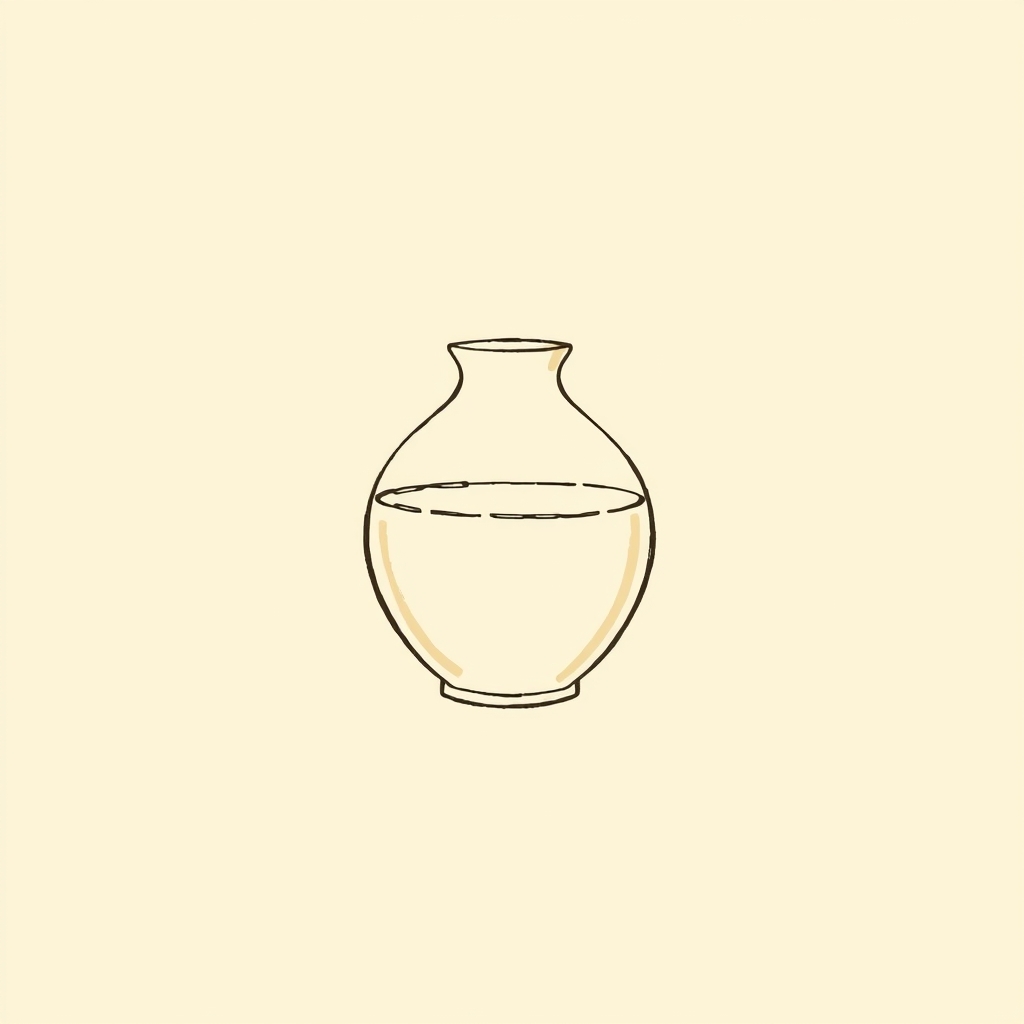
In iconography, Our Lady of the Ardents is recognizable by: Lit candle and Vessel of water.
What miracles are attributed to Our Lady of the Ardents?
4 miracles are attributed to this saint, notably: Vision / apparition, Healing, Sign / wonder and Conversion.
Which saints were contemporaries of Our Lady of the Ardents?
Contemporaries include: Saint Stephen of Hungary, Saint Norbert of Magdeburg, Saint Bernard of Clairvaux and Saint Arthaud of Belley.
When did Our Lady of the Ardents die?
Our Lady of the Ardents died around 1105.
What are the other names of Our Lady of the Ardents?
Other forms of the name: Marie and Sainte Vierge.
Annexes & related entities
Structured data for exploration: events, miracles, quotes, places, attributes, patronages, and important entities cited in the text.
Quotes
-
Here is a candle that I entrust to your care, and which will henceforth be a pledge of my mercy
Words of the Virgin Mary reported in the text -
Sanctus cereus Atrebatensis
Inscription on the reliquary