
Daughter of Pepin the Short and sister of Charlemagne, Saint Isbergue refused several royal alliances to dedicate herself to God. Struck by a miraculous leprosy to discourage her suitors, she was cured by eating an eel found near the body of her mentor, Saint Venant. She then founded a monastery in Aire where she lived for thirty years under the Rule of Saint Benedict.
Contemporaries

Figures and markers around the normalized period for this entry.
Guided reading
8 reading sections
SAINT ISBERGUE OR GISELLE, VIRGIN,
AND SAINT VENANT, MARTYR
Royal origins and baptism
Daughter of Pepin the Short, Isbergue (or Giselle) was baptized under the spiritual patronage of Pope Stephen II, symbolizing the alliance between the Carolingians and the papacy.
The respectable authorities and constant traditions upon which the learned biographer of Saint Isbergue relies, in the Legendary of the Morinie, give his account very great weight. One may draw from it with confidence to present a notice that makes known this patron saint of Artois.
Saint Isbergue is that c hild of blessin g whose birth served to tighten the bonds that already united Catholic France to the Holy See. As soon as she was born, Pepin the Short, her father, sent an embassy to the sovereign pon tiff Stephen II, begging him to serve as spiritual fat her to his daughter. The Pope accepted with joy this proposal made to him by the King of France, and immediately deputed one of the first dignitaries of his court to hold the child at the baptismal font in his name. It seems very probable that she was then given the name Ghirla, an abbreviation of the word Ghirlanda, which would have the same meaning as the word Stephen, in Latin *Stephanus*, and in Greek *Stephanos*, which means crown. From that day on, Pope Stephen gave Pepin in his letters the title of *compater* (co-father), which expresses this spiritual union contracted at the baptism of Saint Isbergue.
Thus, in the admirable views of Providence, the birth of an innocent little girl became a powerful means to accomplish through the Church its divine work in the whole world. It will therefore not seem astonishing that Saint Isbergue gave from her earliest age testimonies of a brilliant holiness.
Settlement in Aire-sur-la-Lys
The royal family settled in Aire, where Pepin had the castle of La Salle built near the church of Saint-Pierre, a central place in the saint's life.
Shortly after her birth, serious events taking place in Rome forced Pope Stephen to seek refuge in France with King Pepin. While still very young and before her age allowed her to exert any influence herself, young Isbergue became the link for the wise resolutions that were to bring about the good of the peoples and the peace of Christendom. Thus, as circumstances required the assistance of France to force the unjust enemies of the Holy See to make peace, Pope Stephen found in King Pepin a goodwill and eagerness that the thought of Giselle, the spiritual daughter of the Sovereign Pontiff, maintained and caused to grow day by day.
It is believed that upon his return from this expedition, King Pepin came with his family to live in the town of Aire, where he had a royal house. The locat ion of this town had pleased him. Situated on a plain, it is surrounded by several hills. Three rivers that water it and divide into several canals make its land extremely fertile. Pepin therefore went to Aire; he had a castle built there near the church of Saint-Pierre, which bore the name of La Salle. It is in these places, where the name of Saint Isbergue is so popular today, that this Saint lived with her family. It is perhaps from there that the linen used for her baptism was sent to Pope Paul I, when this Pontiff, successor to Step hen, wrote to King Pepin to announce his elevation to the See of Saint Peter and his desire to continue the good relations that had existed between him and his predecessor.
Spiritual direction of Saint Venant
Isbergue chose as her spiritual guide Saint Venant, a former soldier who became a hermit on the banks of the Lys, whom she met near a miraculous fountain.
However, the virtuous Isbergue grew in wisdom and age before God and men. Her heart, holily abandoned to the will of heaven, sought in all things only to fulfill them with fidelity: thus she often asked God that it might please Him to make known to her the one she should take as the guide for her conduct, in order to arrive more surely at the evangelical perfection toward which she felt strongly drawn. God heard her prayer and had her find a wise and enlightened director in the person of Saint Venant. A man of noble extraction (probably eve n a member o f the imperial and royal Carolingian family, and a relative of Saint Isbergue), Venant devoted himself in his youth to the exercise of arms. He loved above all, according to the custom of the time, to show his skill and valor in those festivals that were both military and civil, where men-at-arms, in the presence of a crowd of their companions and a large number of noble ladies, fought against one another with weapons that too often did not respect the character of these combats, and caused them to degenerate into murderous assaults. Venant was thus seriously wounded in the leg in one of these dangerous encounters, and, like Saint Ignatius of Loyola later, kept for a long time on a bed of pain, he had the leisure to look within himself and to meditate seriously on the end for which he was created. The conclusion of his salutary reflections was that henceforth, imitating his patron, Saint Venant of Bourges, he would follow a completely different way of life. Thus, as soon as he was healed, or nearly so, of his wound, he immediately left behind parents and friends and came to bury himself in a vast solitude that existed then on the banks of the Lys. There, toward the place where the small town that bears his name rises today, he built himself a small hut, which was thus quite close to the church of Saint-Pierre-la-Montagne, in Aire-sur-la-Lys.
The religious who served this church often saw this pious solitary come to adore the Lord in His temple and take part in the Sacraments. They spoke of his extraordinary virtues; soon the castle of La Salle resounded with the praises that were made of his holiness; everyone wanted to know him, and the pious Giselle, with views far superior to those of simple curiosity, or even passing edification, strongly desired to enter into communication with this great servant of God. She was already meditating on a way of life even more perfect than the one she had led until then; she sensed that this was the help that God was sending her to assist her in accomplishing her generous designs.
The first meeting of these two such holy souls took place about a quarter of a league from the church of Saint-Pierre of Aire, on the slope of the mountain, and near the fountain which, for a very long time, has borne the name of Fontaine Sainte-Isbergue.
Refusal of worldly alliances
Isbergue successively refuses marriage proposals from the son of the Emperor of Constantinople and a British prince to dedicate herself to God.
From that moment, the Saint advanced even more rapidly in the career of virtues. Her love for Jesus Christ developed more and more in her heart, and even inspired in her the desire to live for Him in perpetual virginity. The opportunity to manifest these dispositions in a striking manner soon presented itself. The Emperor of Constantinople, Constantine Copr onymus, informed of the brilliant qualities of the daughter of the King of the Franks, and wishing to contract an alliance with this prince, had Giselle requested in marriage for his eldest son, Leo. This proposal was indeed of a nature to flatter Pepin, and it did in fact make a great impression on his mind; but the opposition that the great men of the kingdom as well as the bishops showed to this alliance, the letters that the Sovereign Pontiff himself wrote to prevent it, and more than all that, no doubt, the fervent prayers of Saint Giselle, did not allow this project to be realized. The Saint, who had promptly communicated all her fears to Saint Venant, received the wisest counsel from him. It was even then that she made in his presence the solemn vow of chastity, in order to commit herself by this irrevocable act to the service of God.
Some time later, a noble prince from the country of Wales (others say a King of the Scots), having heard of the extraordinary beauty and other great qualities of the Saint, came in person to ask for her hand in marriage, and as he was a good Catholic (the historians of the country tell us), handsome, well-built, rich, and accomplished in every respect, he pleased the King, the Queen, and the entire court. Giselle alone was plunged into sadness. Pressed by her parents to consent to this marriage, she asked them for one night to think about it and had Saint Venant told to spend it on his side in prayer, in order to obtain from God the breaking of this second project and the removal of this new peril. As she knew what was the main cause that made her an object of desire for this prince, she asked God to take away from her this beauty which made her run so many dangers.
The miracle of leprosy and the martyrdom of Venant
To escape marriage, Isbergue obtains from God to be disfigured by leprosy. In retaliation, the spurned prince has Saint Venant murdered.
After praying for a long time, a burning fever seized her, and at the same time she was covered with a kind of leprosy so hideous that she became an object of horror to those who looked at her. Her parents did not doubt that this was a mark of heavenly intervention; they ceased speaking to her of marriage, and the prince from overseas, having seen her so ugly and disfigured, took leave of the king and returned to his own country. However, he had learned that it was through the advice and exhortations of Saint Venant that Giselle had been led to think and act as she had. He then loudly manifested his anger, and, from that moment, two of the men in his retinue began to seek ways to avenge him. The opportunity did not fail them. Indeed, they persuaded some scoundrels that Isbergue, in her mysterious visits, was bringing to Venant a multitude of precious objects, that all these treasures were hidden in the cell of this hermit, and immediately they resolved to kill the holy solitary, in order to make themselves masters of these supposed riches. And soon Saint Venant was killed by these impious men, and thus he received the palm of martyrdom, in reward for the wise counsel he had given to the princess.
Miraculous healing and discovery of the relics
Isbergue is healed by eating an eel found on the body of Saint Venant recovered from the Lys, which allows for the identification and glorification of the martyr.
However, Saint Isbergue continued to suffer from the illness she herself had requested as a grace. But the Lord, whose ways are always admirable, willed that this illness should serve both to save His faithful spouse from danger and to bring about the triumph of His servant Saint Venant.
A heavenly vision therefore appeared to the pious princess, and a mysterious voice told her that, to be healed, she had only to take as a remedy the first fish that would be caught in the nearby river, the Lys.
Immediatel y the king gave orders, but it was in vain that the fishermen cast their nets and made long efforts; their fishing was fruitless, and they were about to return, when suddenly, at a certain spot on the Lys, they noticed something floating on the surface of the water. They approached, they saw that it was a decapitated dead body, they took it into their boat, and, in the midst of the piled-up weeds covering the chest of the corpse, they found an eel which, in their simple and obedient faith, they hastened to bring to Saint Isbergue. The princess, doubting not at all the miraculous nature of this event, and full of confidence in God, did not hesitate to eat this fish that others would have rejected with repugnance, and immediately her fever ceased, the deformities with which she was covered disappeared, and the most perfect health was suddenly restored to her.
She no longer doubted then that the body found by the fishermen was that of her venerated guide, and soon the clearest proofs came to fully justify her. An old blind woman had often rendered charitable services to Saint Venant, by washing and dressing the wound he had on his leg, which was not yet perfectly healed when he came to retire into the wood of Wastelau. This woman was summoned, she came, felt the leg, immediately recognized the scar of the wound, and at the same time recovered her sight. Furthermore, the head of the Saint was found, doubt was no longer possible, new miracles occurred at the contact of these precious remains, and the king, filled with veneration and gratitude, ordered that the greatest honors be rendered to the holy Martyr. The holy body was solemnly carried to the church where he was accustomed to go to pray, that of Saint-Pierre, on the mountain (today Sainte-Isbergue), and he was buried there. The place where he had led his eremitic life subsequently became famous and, growing in size, formed a town that bore the name of the Saint and was called Saint-Venant .
Monastic life and end of life
After refusing a final Lombard marriage, she founded a Benedictine monastery in Aire where she lived for thirty years, receiving visits from her brother Charlemagne.
After the death of King Pepin, which occurred in 768, the blessed Giselle had to win a third victory similar to the two previous ones. This time, it was with a son of the King of the Lombards that her mother Berthe wished to unite her in the bonds of marriage. Once again, circumstances and above all the prayers of the Saint opposed this union, which Heaven itself seemed to disapprove of.
In order to put an end to these solicitations, as importunate as they were frequent, Saint Giselle resolved to embrace the religious life and to live under the wise Rule of Saint Benedict. She therefore founded a monastery at Aire, within the enclosure of the second city, and likely in the very castle of La Salle, where a large number of young women soon gathered under her guidance. For thirty years, the princess lived in this pious asylum, where she several times received visits from her illustrious brother Charlemagne . She continued to exert the most salutary influence around her, through her examples and inspirations, until the day she went to Heaven to be reunited with her celestial spouse. This blessed death occurred on the twenty-first day of the month of May in the year 806 or 808. Her body was transported with great pomp and deposited in the church of Saint-Pierre, on the mountain where she had wished to be buried. It is this place that subsequently bore the name of Ghisleberg or Isbergue.
Cult, fountain, and iconography
The cult of Isbergue remains vibrant in Artois, marked by pilgrimages to her fountain and specific iconography including the eel and the fleurs-de-lis.
The cult of Saint Isbergue has always been very dear to the populations of Artois and especially to the inhabitants of Aire and its surroundings. Many pilgrims have traveled every year for centuries to the fountain and the chapel that bear her name. Here is the description that a learned author has given of this fountain and this chapel.
"The fountain of Saint Isbergue is five or six minutes from the church, on the 'voyette' of Saint Isbergue, a small path traced halfway up the slope or almost at the bottom of the mountain on which the church is built, and which goes as far as the place still called Wastelau, the presumed site of the cave or hermitage of Saint Venant. The Aire to La Bassée canal today cuts this 'voyette', by which Giselle loved to travel from Aire to the church of Saint-Pierre, on the mountain, and to meet her spiritual father. A small chapel shaded by two great secular trees is above the fountain, to which one descends by a double staircase, whose steps, partly of earth, partly of stone, form with the fountain, situated at the very bottom behind the chapel, a semicircle around this same chapel. This fountain never runs dry. It is about one meter deep; it is surrounded by a very suitable circular wall, with an opening in the front, and in the back a small niche for a statue of the Saint. It is a delightful place of coolness and recollection, in the shade of the back wall of the chapel and the two great trees, at the source of a very small stream that escapes silently to the bottom of the slope. In front of the chapel is a beautiful lawn in the shape of a long square, where the people attend in great crowds the mass that is celebrated in the chapel during the novena of the feast of Saint Isbergue. In the chapel itself are several sticks and crutches, popular testimonies of the miracles and healings obtained by the invocation of the two Saints. Above the altar, to the right of the middle statue, are the statuettes of Saint Venant and Saint Francis of Assisi, subjects very suitably treated. To the left one sees that of Saint Isbergue and Saint Fiacre. Saint Venant is represented holding a book in his hand, in the attitude of a man who is reflecting deeply and who is giving explanations; he is a doctor who teaches. Saint Isbergue, on the other hand, is in the position of a person who listens with admiration and receives with avidity the sublime things that are transmitted to her. This statue is much less well executed than the first.
"In going from this fountain to the church of Isbergue, one perceives this church surrounded by the most beautiful belt of elms that one could see. These elms, arranged in the form of a double and in places a triple crown, are very high, all similar and of the same height. One cannot help but think of the noble daughter of the king, of the illustrious sister of the emperor, of the venerated Saint, when seeing this magnificent crown that rises so high, so majestic and so beautiful around the church that contains her venerable remains."
The chapel whose description we have just read has since been enlarged by Mr. Blondel, parish priest, with a very important construction featuring a charming bell tower and a delightful portal, all in an excellent flowery Romanesque style.
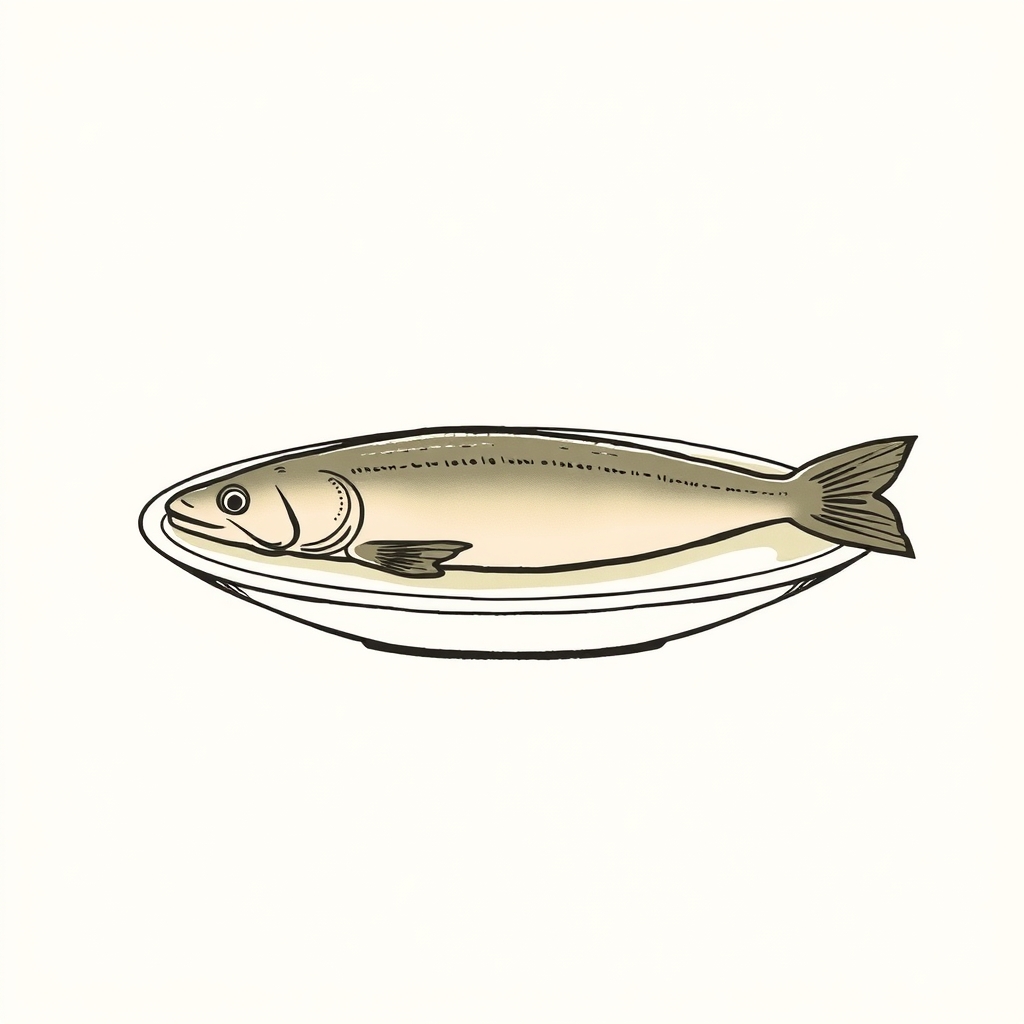
The images that have been made of Saint Isbergue are adorned with fleurs-de-lis, as are those of several great lords and ladies connected to the house of France, such as Saint Riquier and Saint Mauront. To the fleur-de-lis mantle, a crown is often added. But an attribute more proper to distinguish her from other Saints is the eel that she holds in her hand or that is placed on a dish. We have recounted the episode of the eel.
Saint Isbergue is invoked to obtain the healing of fever, skin conditions, and deformities.
Vie des Saints de Cambrai et d'Arras, by Abbé Destombes; Vie abrégée de saint Isbergue, by Mr. Van-Driral; Légendaire de la Morinie.
Iconography
Signs and attributes


Entities
Narrative network
The names, places, and concepts most present in the entry, weighted by centrality in the text.
The supernatural in their life
The miracles of Saint Isbergue (Giselle)
Frequently asked questions about Saint Isbergue (Giselle)
Who was Saint Isbergue (Giselle)?
Daughter of Pepin the Short and sister of Charlemagne, Saint Isbergue refused several royal alliances to dedicate herself to God. Struck by a miraculous leprosy to discourage her suitors, she was cured by eating an eel found near the body of her mentor, Saint Venant. She then founded a monastery in Aire where she lived for thirty years under the Rule of Saint Benedict.
What is Saint Isbergue (Giselle) the patron saint of?
Patronage of Saint Isbergue (Giselle): Artois, Aire-sur-la-Lys and Isbergues.
What is Saint Isbergue (Giselle) invoked for?
Saint Isbergue (Giselle) is invoked for: healing of fever, skin conditions and deformities.
How is Saint Isbergue (Giselle) depicted in Christian art?
In iconography, Saint Isbergue (Giselle) is recognizable by: eel on a dish, fleur-de-lis cloak and crown.
What miracles are attributed to Saint Isbergue (Giselle)?
3 miracles are attributed to this saint, notably: Sign / wonder, Healing and Vision / apparition.
Which saints were contemporaries of Saint Isbergue (Giselle)?
Contemporaries include: Saint Hidulph of Trier, Saint Ghislain (Guillain), Saint Lambert (Landebert) and Saint Amand of Maastricht.
When did Saint Isbergue (Giselle) die?
Saint Isbergue (Giselle) died around 800.
What are the other names of Saint Isbergue (Giselle)?
Other forms of the name: Giselle, Ghirla and Ghirlanda.
Who are the relatives of Saint Isbergue (Giselle)?
Relatives of Saint Isbergue (Giselle): Pépin le Bref (father), Berthe (mother), Charlemagne (brother) and Étienne II (Pape) (spiritual father).
Annexes & related entities
Structured data for exploration: events, miracles, quotes, places, attributes, patronages, and important entities cited in the text.
Key Events
- Baptism under the patronage of Pope Stephen II
- Settlement of the royal family in Aire
- Meeting with Saint Venant near a fountain
- Vow of chastity to escape marriage to the son of Constantine Copronymus
- Miraculous healing of leprosy by consuming an eel
- Foundation of a Benedictine monastery in Aire
- Directed the monastery for thirty years