
Egidio Bullesi
Egidio Bullesi (1905-1929) was a young Italian worker, member of the Third Order of Saint Francis and Catholic Action, declared Venerable by John Paul II.
Contemporaries

Figures and markers around the normalized period for this entry.
Guided reading
5 reading sections
Biography
Birth in Pola, family exodus during the First World War, and return to Istria as an apprentice carpenter.
Egidio Bullesi (whose original family name, Bullessich, was Italianized shortly before his death) was born on August 24, 1905, in Pola, a city in Istria then under the sovereignty of the Austro-Hungarian Empire (today Pula, in Croatia). He was the third of nine children of Francesco Bullesi, a technical draftsman at the Navy arsenal, and Maria Diritti.
In 1914, the outbreak of the First World War disrupted the family's life. As Pola was declared a war zone, the civilian population was evacuated. Egidio, his mother, and his siblings were forced into exile and became refugees, while his father remained to work in Pola. They stayed successively in Rovigno (Rovinj), then in Szeghedin in Hungary, and finally in Austria, in Wagna and Graz. During these years of deprivation, cold, and hunger, young Egidio showed early maturity. To help his family, he traveled on foot through the mountains of Styria with his older sister Maria to trade tobacco or clothing for food. It was during this exile that he received his first communion in Rovigno at the age of 10, and then his confirmation at the Graz Cathedral the following year.
After the end of hostilities, in 1919, the family was finally able to return to Pola, which was by then attached to the Kingdom of Italy. At only 13 years old, in September 1918, Egidio began working as an apprentice carpenter at the local shipyards. Despite a working environment strongly marked by anticlericalism and social tensions, he quickly distinguished himself by his diligence at work, his intelligence, and the courageous practice of his Christian faith.
Life and work
Involvement in Catholic Action, the Franciscan Third Order, scouting, the Royal Navy, and among the workers of Monfalcone.
The life of Egidio Bullesi is characterized by an intense lay commitment within several Church movements:
* **Catholic Action and the Franciscan Third Order:** On July 2, 1920, at the age of 15, he followed the example of his sister Maria and joined the Catholic Action Youth (Gioventù di Azione Cattolica). Shortly after, deeply moved by the preaching of the Franciscan friar Tito Castagna, he decided to follow the spirituality of Saint Francis of Assisi. On October 4, 1920, he was admitted into the Franciscan Third Order (today the Secular Franciscan Order) under the religious name of Ludovico. * **Scouting in Pola:** In 1921, Egidio was sent to Rome to represent the youth of his region at the National Congress celebrating the 50th anniversary of Catholic Youth. There, he discovered scouting, whose method of education through nature and service immediately appealed to him. Upon returning to Pola, he became one of the main promoters and founders of the city's Catholic scout group (the "Reparto San Michele"), founded in 1923. He dedicated all his free time to leading the youth. When the fascist regime decreed the dissolution of Catholic scouting between 1927 and 1928, Egidio accepted this trial with filial obedience to the Church, while urging his brother Giovanni to maintain the unity of the youth under other associative forms. * **Apostolate in the Navy:** In February 1925, Egidio was called to arms to perform his military service in the Italian Royal Navy. Embarked on the battleship Dante Alighieri, which had about a thousand sailors on board, he did not hide his faith. He organized prayer, catechesis, and reflection groups there. His joyful and consistent testimony transformed the lives of several of his comrades, notably that of Guido Foghin, then an atheist, who would convert and later become a priest and Franciscan missionary. Egidio completed his military service on March 15, 1927. * **Commitment in Monfalcone:** After his discharge from the Navy, he found a job as a technical draftsman at the shipyards of Monfalcone (Gorizia). He settled there and integrated into the Marcelliana parish, run by the Franciscan friars. He continued his apostolate among the workers and became actively involved in the Society of Saint Vincent de Paul, spending himself without counting the cost for the relief of the poor and the sick.
Journey toward holiness
Illness experienced with serenity, apostolate in the hospital, and holy death at the age of 23.
In August 1928, Egidio's health declined abruptly. Afflicted with a severe bronchitis that rapidly developed into pulmonary tuberculosis, he was hospitalized in Pola on August 29, 1928.
Far from rebelling, he welcomed the illness with heroic serenity and resignation, considering it a "gift from God" that allowed him to unite himself with the Passion of Christ. During his long months of hospitalization, alternating with brief stays with his family, he transformed his hospital room into a place of evangelization. He comforted other patients, edified the doctors and nurses with his patience and constant smile, and offered his sufferings for the Church and the missions.
Egidio Bullesi passed away holily on the morning of April 25, 1929, in Pola, at the age of 23. In accordance with his wish, he was vested in the Franciscan habit for his burial. His funeral was celebrated in the cathedral of Pola by his friend and spiritual director, Father Antonio Santin (future bishop of Trieste), before an immense crowd deeply enamored with the holiness of this young worker.
Beatification and canonization
Opening of the cause in Trieste, transfer of his remains to Barbana, and recognition of the heroic nature of his virtues by John Paul II.
Due to the Second World War and the subsequent geopolitical tensions—Istria being ceded to Yugoslavia in 1947, which caused the mass exodus of the Italian population (including Egidio's family)—the opening of the cause for beatification was long delayed.
The cause was officially opened in the Diocese of Trieste on May 6, 1974, by Bishop Antonio Santin, after obtaining the *nihil obstat* decree from the Dicastery for the Causes of Saints on August 23, 1973. The diocesan process closed on December 6, 1977, and the documents were transmitted to Rome.
In 1974, the mortal remains of Egidio Bullesi were exhumed from the cemetery of Pola and transferred to Italy, to the sanctuary of the Madonna di Barbana, located on the island of Barbana near Grado (Gorizia), where they now rest in a bronze urn.
On July 7, 1997, Pope John Paul II signed the decree recognizing the heroic nature of his Christian virtues, thus conferring upon him the title of **venerable**. In 2000, the Bishop of Trieste, Eugenio Ravignani, transmitted to the Congregation for the Causes of Saints the conclusions of the diocesan inquiry into an alleged miracle attributed to his intercession, which occurred in 1929 aboard the ship *Vulcania*.
Spirituality and legacy
A spirituality of trust and radiant joy, inspired by Saint Francis of Assisi and Saint Thérèse of Lisieux.
The spirituality of Egidio Bullesi rests on an absolute trust in God and a radiant joy, which he summarized as follows: "This life is so beautiful, so why be sad? Let us always be joyful, but in the Lord." Deeply marked by the figure of Saint Francis of Assisi and by the "little way" of Saint Thérèse of Lisieux, he conceived the Christian existence as a navigation guided by two stars: the Gospel and the Virgin Mary. He wrote in his diary: "To live by love is to sail, always spreading joy and laughter around me."
Egidio Bullesi remains today a model of lay holiness that is particularly relevant. He shows how a young worker, engaged in the realities of his time (factory work, military service, youth leadership), can live the Gospel in a radical and joyful way, transforming his environment into a space of charity and Christian witness.
Iconography
Signs and attributes
Frequently asked questions about Egidio Bullesi
Who was Egidio Bullesi?
Egidio Bullesi (1905-1929) was a young Italian worker, member of the Third Order of Saint Francis and Catholic Action, declared Venerable by John Paul II.
How is Egidio Bullesi depicted in Christian art?
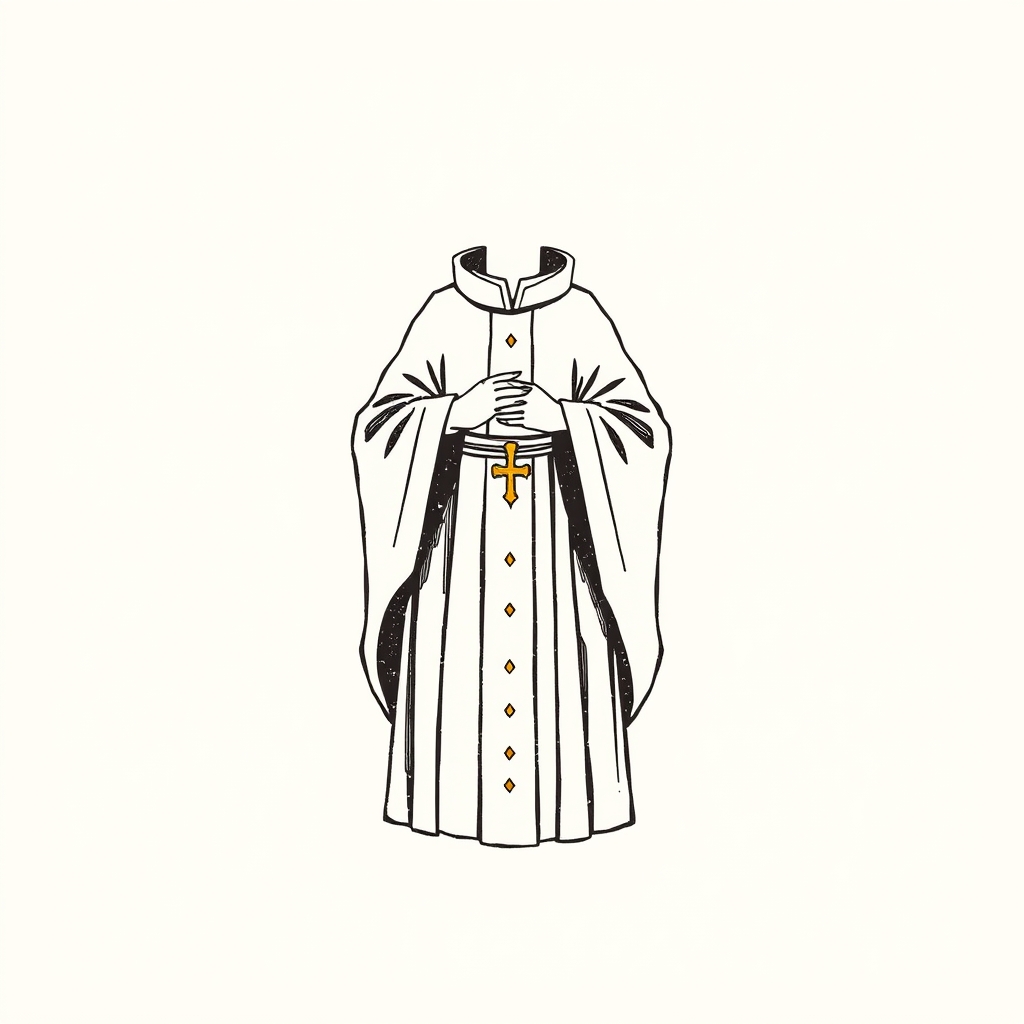
In iconography, Egidio Bullesi is recognizable by: Franciscan habit.
Which saints were contemporaries of Egidio Bullesi?
Contemporaries include: Pauline of the Agonizing Heart of Jesus, Felipe de Jesús Munárriz and 50 companions, Mariano de Jesús Euse Hoyos and Teresa of Jesus of the Andes.
When did Egidio Bullesi die?
Egidio Bullesi died around 1905.
What are the other names of Egidio Bullesi?
Other forms of the name: Egidio Bullessich.
Who are the relatives of Egidio Bullesi?
Relatives of Egidio Bullesi: Francesco Bullesi (father), Maria Diritti (mother), Maria Bullesi (sister) and Giovanni Bullesi (brother).
Annexes & related entities
Structured data for exploration: events, miracles, quotes, places, attributes, patronages, and important entities cited in the text.
Key Events
- Era / death: 1905-1929
- Decree of venerability by John Paul II
Quotes
-
This life is so beautiful, so why be sad? Let us always be joyful, but in the Lord.
https://vertexaisearch.cloud.google.com/grounding-api-redirect/AUZIYQHCz7UNlraDpQEu1bNnXpGkvhQSqMjzaOZBziXvYfXmrYgt78xjNjBS_UjQaVNSbGtv6-zPoEldkvZUXU5Krnv_l4YsSQIDbodmJRjYXq6QFJ_cRPvQ-rZ6jSAnAifqltIAxg== -
To live of love is to sail, always spreading joy and laughter around me.
https://vertexaisearch.cloud.google.com/grounding-api-redirect/AUZIYQHCz7UNlraDpQEu1bNnXpGkvhQSqMjzaOZBziXvYfXmrYgt78xjNjBS_UjQaVNSbGtv6-zPoEldkvZUXU5Krnv_l4YsSQIDbodmJRjYXq6QFJ_cRPvQ-rZ6jSAnAifqltIAxg==