
Vincenza Damato
The Venerable Vincenza Damato, in religion Sister Maria Chiara of Saint Thérèse of the Child Jesus, is an Italian Poor Clare who offered her life for priests.
Contemporaries

Figures and markers around the normalized period for this entry.
Guided reading
5 reading sections
Biography
Vincenza Damato, in religion Sister Maria Chiara of the Child Jesus, was an Italian Poor Clare born in 1909 in Barletta and died in 1948 in Bari, recognized for her spiritual offering.
Vincenza Damato was born on November 9, 1909, in Barletta, in the province of Bari, into a large family of which she was the eighth child [1.1.3]. Her parents, Luigi Damato and Maria Dell'Aquila, raised her in a solid Christian faith. From her childhood, she assiduously attended the Holy Family parish in Barletta, becoming actively involved in the Association of the Daughters of the Sacred Heart of Jesus and Catholic Action, where she distinguished herself as a zealous catechist. Despite the initial reluctance of her family and her parish priest, Father Sabino Cassatella, she felt a deep call to the contemplative life. On September 7, 1928, at the age of nineteen, she entered the monastery of the Farnesian Poor Clares of Castel Gandolfo (which would later be transferred to Albano Laziale). She took the habit there under the name of Sister Maria Chiara of the Child Jesus and pronounced her religious vows on November 1, 1930. Afflicted with pulmonary tuberculosis, she passed away on March 9, 1948, in Bari, at the age of thirty-eight.
Life and work
Sister Maria Chiara led a life of prayer and heroic charity, particularly tested by the bombings of the Second World War and illness.
Within her community of the Poor Clares of Albano Laziale, Sister Maria Chiara led a humble, hidden, and rigorous existence, marked by a deep friendship with Christ. Her charity was manifested in a heroic manner during the Second World War. On February 1, 1944, the monastery of the Immaculate Conception in Albano was severely hit by Allied bombing, causing the death of eighteen nuns. Although wounded and deeply affected by this tragedy, Sister Maria Chiara deployed admirable energy to rescue and comfort her surviving sisters. This ordeal considerably weakened her already fragile health. At the age of thirty-six, she contracted pulmonary tuberculosis. Forced to leave the enclosure to receive treatment, she was first admitted to the San Camillo sanatorium in Rome, then transferred to the Cotugno hospital in Bari. There, she lived her final months in painful isolation, deprived of the physical presence of her community, but continuously united to God through prayer.
Journey toward holiness
Inspired by Saint Thérèse of Lisieux, Sister Maria Chiara offers her life and sufferings for the sanctification of priests and the salvation of souls.
Spiritually guided by her former parish priest, Father Sabino Cassatella, Sister Maria Chiara took Saint Thérèse of Lisieux as her model, adopting her "little way" of trust and abandonment. Animated by an ardent love, she chose to offer her life, her prayers, and her physical sufferings for the sanctification of priests, priestly vocations, and the redemption of humanity. She even asked the Lord to share in the illness of the saint of Lisieux, accepting tuberculosis as a grace of identification with the suffering Christ. In her writings, particularly her letters to her brother Gioacchino, a Rogationist priest, she expressed her desire to become a "host" united to the Eucharistic sacrifice. Her heroic patience in the face of illness and her constant joy, despite the sufferings of her agony, deeply struck those around her. She died on March 9, 1948, the day and hour she had herself predicted, leaving behind an immediate reputation for holiness.
Beatification and canonization
Declared venerable by Pope Benedict XVI in 2011, the cause for the beatification of Sister Maria Chiara is progressing under the aegis of the Diocese of Bari-Bitonto.
After her death in the odor of sanctity, the cause for the beatification and canonization of Sister Maria Chiara was officially introduced. The Holy See granted its decree of non-objection (nihil obstat) on May 11, 1982. The diocesan process on the heroic nature of her virtues was opened in Bari by Archbishop Mariano Magrassi on November 29, 1983. Following the examination of her life and writings by the Congregation for the Causes of Saints, Pope Benedict XVI signed the decree recognizing the heroic nature of her virtues on April 2, 2011, thus conferring upon her the title of venerable. Her feast or local memorial is generally associated with the day of her birth into heaven, March 9. No miracle has yet been officially recognized for her beatification, but numerous favors and spiritual graces are attributed to her by the faithful who solicit her intercession.
Spirituality and heritage
The spiritual legacy of the Venerable Maria Chiara endures through the devotion of the faithful and the veneration of her relics at the monastery of Albano Laziale.
The memory of the Venerable Maria Chiara remains particularly alive in Italy, notably in her hometown of Barletta and at the Poor Clare monastery of Albano Laziale, where her body rests. Her tomb is regularly visited by pilgrims, and even received a visit from Pope Francis during his time at the Albano monastery. The faithful continue to leave prayer intentions and request relics, testifying to the relevance of her message of silent offering and fidelity to the small things of daily life. Her spirituality, centered on Eucharistic love and spiritual support for priests, still inspires many laypeople and consecrated persons today. She is a model of ordinary holiness, demonstrating that Christian perfection does not reside in extraordinary actions, but in the fulfillment of the divine will with total love.
Iconography
Signs and attributes
Frequently asked questions about Vincenza Damato
Who was Vincenza Damato?
The Venerable Vincenza Damato, in religion Sister Maria Chiara of Saint Thérèse of the Child Jesus, is an Italian Poor Clare who offered her life for priests.
What is Vincenza Damato invoked for?
Vincenza Damato is invoked for: la sanctification des prêtres, the sanctification of priests, les vocations sacerdotales and priestly vocations.
How is Vincenza Damato depicted in Christian art?
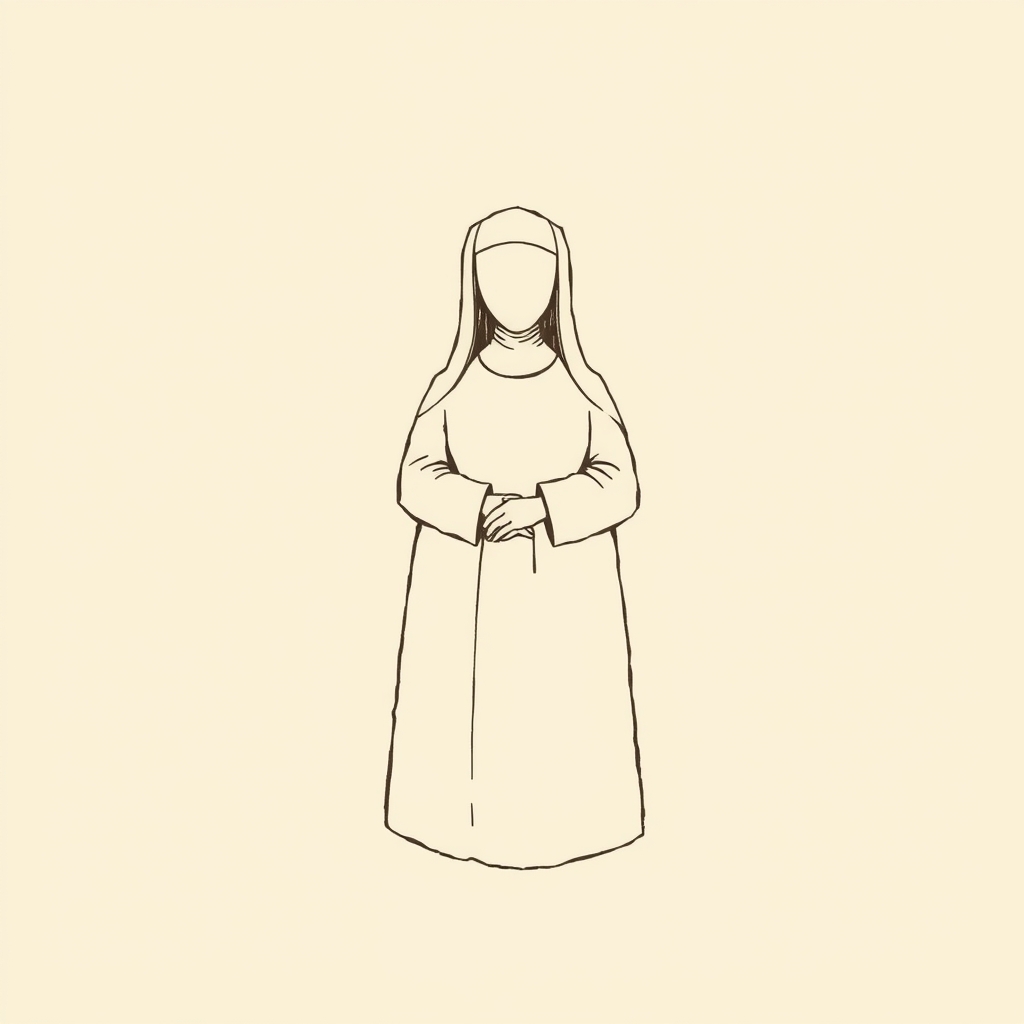
In iconography, Vincenza Damato is recognizable by: Poor Clare habit.
Which saints were contemporaries of Vincenza Damato?
Contemporaries include: Pauline of the Agonizing Heart of Jesus, Felipe de Jesús Munárriz and 50 companions, Mariano de Jesús Euse Hoyos and Teresa of Jesus of the Andes.
When did Vincenza Damato die?
Vincenza Damato died around 1948.
What are the other names of Vincenza Damato?
Other forms of the name: Maria Chiara di Santa Teresa del Bambino Gesù, Marie-Claire de Sainte-Thérèse de l'Enfant-Jésus and Cenzina Damato.
Who are the relatives of Vincenza Damato?
Relatives of Vincenza Damato: Luigi Damato (father), Maria Dell'Aquila (mother) and Gioacchino Damato (brother).
Annexes & related entities
Structured data for exploration: events, miracles, quotes, places, attributes, patronages, and important entities cited in the text.
Key Events
- Era / death: 1909-1948
- Decree of venerability by Benedict XVI