
Stilla of Abenberg
A 12th-century Bavarian virgin, Stilla of Abenberg dedicated her life to prayer, charity toward the poor, and founded St. Peter's Church in Abenberg.
Contemporaries

Figures and markers around the normalized period for this entry.
Guided reading
5 reading sections
Biography
Birth and origins of Stilla of Abenberg within the noble family of the Counts of Abenberg in the 12th century.
Blessed Stilla of Abenberg (Stilla von Abenberg) was born around the beginning of the 12th century (circa 1100) at Abenberg Castle (Burg Abenberg), located near Roth in Franconia (modern-day Bavaria, Germany). She belonged to the powerful and noble lineage of the Counts of Abenberg, a family of great influence during the Staufen era. The precise details of her life remain historically uncertain, as contemporary documents were largely destroyed during a flood in 1633 and a fire in 1675 at the Marienburg monastery. Her first written biography was not composed until the end of the 16th century by Wolfgang Agricola, Dean of Spalt. Tradition identifies her as the daughter of Count Rapoto of Abenberg (or Zelco, according to later legendary accounts). Among her brothers were Archbishop Saint Konrad I of Salzburg, who actively defended the rights of the Church during the Investiture Controversy, as well as Count Wolfram II of Abenberg. Stilla passed away around 1140 (some sources mention 1150) in her hometown of Abenberg.
Life and Work
Stilla's religious consecration, her life of prayer at home, her charitable works, and the founding of St. Peter's Church.
From her youth, Stilla chose to renounce the riches of her rank and the prospects of marriage to dedicate herself entirely to God. She took the vow of perpetual virginity (Jungfrauenweihe) in the presence of Saint Otto, Bishop of Bamberg. Refusing to enter an existing monastery, she lived as a nun within the family home, leading a secluded existence of prayer and contemplation in the company of three other pious women. Alongside her contemplative life, Stilla distinguished herself through active and tireless charity toward the destitute. She traveled the region to visit the sick, feed the hungry, and clothe the poor, whom, according to a later chronicle, she "fed, gave drink to, cared for, and served as a mother does for her children." In 1132, desiring to offer a place of worship to God, she had a church dedicated to Saint Peter erected at her own expense on the hill facing Abenberg Castle. This church was solemnly consecrated in 1136 by Bishop Saint Otto of Bamberg. Stilla also cherished the project of founding an adjacent monastery to retire to, but death overtook her before she could bring this work to completion.
Path to Holiness
The miraculous circumstances of her burial and the development of her popular pilgrimage.
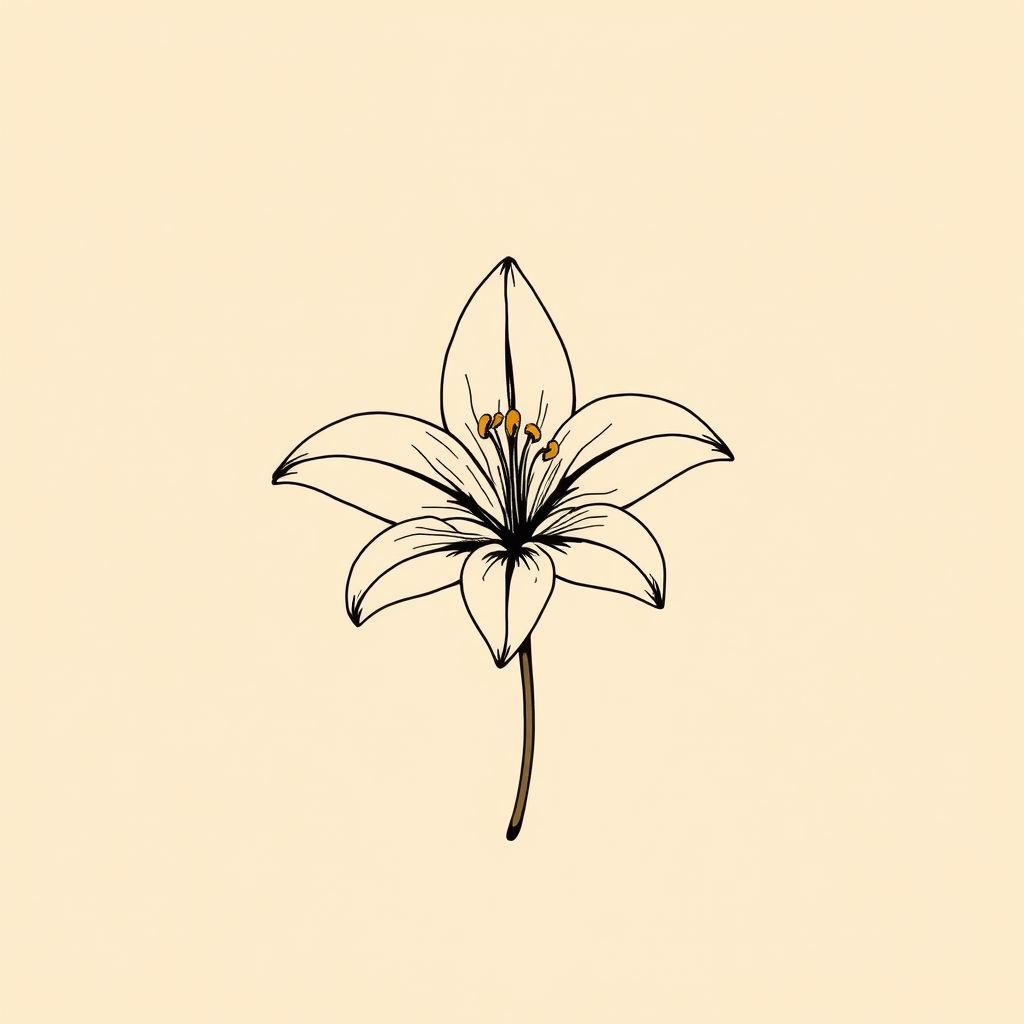
After Stilla's death around 1140, her family planned to inter her remains in the family necropolis of the Counts of Abenberg, located at the Cistercian abbey of Heilsbronn. However, tradition reports that the horses transporting her body stubbornly refused to head toward Heilsbronn. Left to their own devices, they spontaneously headed toward the Church of Saint Peter that she had founded, thus manifesting her desire to rest there. Another famous legend recounts that Stilla had thrown a glove (or a veil) from Abenberg Castle, declaring that she wished to be buried where it landed; the glove was found precisely at the site of the Church of Saint Peter. Very quickly, her tomb became a site of popular pilgrimage. Numerous unexplained healings and graces obtained through her intercession were reported there. A register of miracles (Mirakelbuch), documenting the favors obtained at her tomb, was kept continuously from 1488 to 1771. Her funerary monument (epitaph), sculpted around 1250 and depicting her holding a model of a church and lilies, testifies to the antiquity and fervor of her veneration.
Beatification and canonization
The process of official recognition of her cult, leading to her beatification by Pope Pius XI in 1927.
Although Stilla was venerated as a saint by popular fervor as early as the Middle Ages, the steps for the official recognition of her cult were not formally undertaken until the end of the 19th century. In 1893, Bishop Franz Leopold Freiherr von Leonrod of Eichstätt opened an informative process regarding the antiquity of her devotion. In 1897, this same bishop officially approved the cult at the diocesan level. After examination by the Congregation of Rites, Pope Pius XI solemnly confirmed her cult through an equipollent beatification on January 12, 1927. On this occasion, the Sovereign Pontiff affectionately referred to the Blessed as the "Morning Star" (Stilla Morgenstern). Her liturgical feast is inscribed in the Roman Martyrology on July 19. In the Diocese of Eichstätt, she is celebrated on July 21.
Spirituality and legacy
The spirituality of silence and service of Stilla, and the enduring nature of her cult in Abenberg.
The spirituality of Blessed Stilla is deeply rooted in silence (her name, of Old High German origin, meaning "the silent one" or "the tranquil one"), contemplative prayer, and the humble service of the poor. In Franconia, she is often considered the local counterpart to Saint Elizabeth of Thuringia due to her absolute devotion to the sick and the needy. Her legacy remains alive in Abenberg, of which she is the patron saint. The Saint Peter church that she founded (today the Church of Saint Peter and Saint Paul or Stillakirche) still houses her tomb and relics. The Marienburg monastery, built next to the church at the end of the 15th century, was taken over in 1920 by the Sisters of the Sorrowful Mother (Schwestern von der Schmerzhaften Mutter, SSM), who faithfully watch over her shrine. Each year, on the third Sunday of July, the town of Abenberg celebrates the "Stillafest" (Stilla's feast), a major religious and popular celebration that gathers many pilgrims who come to receive the blessing with her relics. Furthermore, a 24-kilometer hiking and pilgrimage trail, the "Stilla-Weg," connects Wolframs-Eschenbach to the Marienburg monastery in her honor.
Iconography
Signs and attributes


Frequently asked questions about Stilla of Abenberg
Who was Stilla of Abenberg?
A 12th-century Bavarian virgin, Stilla of Abenberg dedicated her life to prayer, charity toward the poor, and founded St. Peter's Church in Abenberg.
What is Stilla of Abenberg the patron saint of?
Patronage of Stilla of Abenberg: Abenberg and Abenberg.
How is Stilla of Abenberg depicted in Christian art?
In iconography, Stilla of Abenberg is recognizable by: church model, lily, glove and veil.
Which saints were contemporaries of Stilla of Abenberg?
Contemporaries include: Saint Norbert of Magdeburg, Saint Bernard of Clairvaux, Saint Stephen of Hungary and Saint Arthaud of Belley.
When did Stilla of Abenberg die?
Stilla of Abenberg died around 1140.
What are the other names of Stilla of Abenberg?
Other forms of the name: Stilla von Abenberg and Stilla d'Abenberg.
Who are the relatives of Stilla of Abenberg?
Relatives of Stilla of Abenberg: Rapoto d'Abenberg (father), saint Konrad Ier de Salzbourg (brother) and Wolfram II d'Abenberg (brother).
Annexes & related entities
Structured data for exploration: events, miracles, quotes, places, attributes, patronages, and important entities cited in the text.
Key Events
- Era / death: 1140
- Beatification in 1927 by Pius XI