
Tomasa Ortiz Real
Tomasa Ortiz Real (1842-1916), in religion Mother Piedad de la Cruz, was a Spanish religious sister and foundress of the Congregation of the Salesian Sisters of the Sacred Heart of Jesus.
Contemporaries

Figures and markers around the normalized period for this entry.
Guided reading
5 reading sections
Biography
The youth and early years of Tomasa Ortiz Real, from her birth in Bocairente to her first attempts at religious life.
Tomasa Ortiz Real, known in religion as Mother Piedad de la Cruz (Pity of the Cross), was born on November 12, 1842, in Bocairente, in the province of Valencia, Spain. She was the fifth of eight children of José Ortiz Belda and Tomasa Real López, a deeply Christian family. Baptized the day after her birth, she manifested great piety from childhood, as well as talents for music and theater. In 1852, at the age of ten, she made her first communion, a significant mystical event where she felt Jesus' call to consecrate herself to religious life. She continued her studies at the College of Loretto in Valencia, run by the Sisters of the Holy Family of Bordeaux. Desirous of entering their novitiate, she faced opposition from her father who, citing her young age and the anticlerical political climate of the time, forced her to return to the family home. In 1866, after the death of her mother, the family moved to Canals. With the help of her sisters Antonia and Mariana, Tomasa opened a school there for poor young girls and dedicated herself to the sick and the elderly. In 1874, she attempted to realize her vocation by entering the Carmelites of Charity of Vic, but she contracted cholera and had to leave the novitiate. She then remained in Barcelona, working as a textile worker in a factory, then as a teacher and employee at the college of the Mercedarian Mothers of Education for more than six years. She subsequently attempted twice to join a cloistered Carmelite convent in Valencia, but illness forced her to give up each time, making her understand that God was calling her to another path.
Life and Work
The foundation of the Congregation of the Salesian Sisters of the Sacred Heart of Jesus and her dedication to orphans and the sick.
It was in Barcelona, during an intense mystical experience before the Sacred Heart of Jesus, that Tomasa received her true mission. Christ showed her his bloodied side and asked her to help him carry his cross by founding a new congregation. Encouraged by her confessor, Father Gualtero de Castro, and with the bishop's authorization, she turned toward the region of Murcia, which had been severely affected by the flooding of the Segura River in 1884. In March 1884, Tomasa and three companions settled in Puebla de Soto, near Alcantarilla, to found the "Community of the Tertiaries of the Virgin of Carmel." She then took the religious name "Piedad de la Cruz" (Pity of the Cross). The sisters devoted themselves tirelessly to the orphans and the sick who were victims of a cholera epidemic. Despite the development of the work in Alcantarilla and Caudete, internal dissensions broke out. In August 1890, the sisters of Caudete separated from the foundress and took the novices with them, leaving Mother Piedad alone with a single companion, Sister Alfonsa. Supported by the Bishop of Cartagena, Msgr. Bryan y Livermore, Mother Piedad made a one-month retreat at the Visitation Monastery of Orihuela. Inspired by the spirituality of Saint Francis de Sales, she laid the foundations for a new religious family. On September 8, 1890, she officially founded in Alcantarilla the Congregation of the Salesian Sisters of the Sacred Heart of Jesus (Hermanas Salesianas del Sagrado Corazón de Jesús). The institute's mission was to welcome and educate orphaned girls, support young female workers, and care for the sick and abandoned elderly. Under her leadership, the congregation experienced rapid growth, opening 25 houses across several Spanish provinces (Albacete, Alicante, Burgos, Madrid, Valencia, and Murcia).
Journey to Holiness
The final moments of Mother Piedad de la Cruz, her edifying death in 1916, and the opening of her cause for beatification.
Mother Piedad de la Cruz dedicated the remainder of her life to consolidating her foundation, distinguishing herself through absolute poverty, profound humility, and boundless charity. At the beginning of 1916, her health declined severely. She passed away on February 26, 1916, in Alcantarilla, at the age of 73. Faithful to her spirit of penance, she refused to die in a bed, declaring: "He [Christ] died on the cross, and I must not die in a bed, but on the floor." She expired while seated in an armchair, a crucifix pressed against her lips. Upon the announcement of her death, the local population spontaneously cried out: "The saint is dead!"
Mother Piedad's reputation for holiness led the Diocese of Cartagena to officially open her cause for beatification and canonization on February 6, 1982. The diocesan phase was validated by the Congregation for the Causes of Saints on February 3, 1984. On July 1, 2000, Pope John Paul II signed the decree recognizing the heroic nature of her virtues, conferring upon her the title of Venerable.
Beatification and canonization
The recognition of the miracle and the beatification of Mother Piedad de la Cruz by Pope John Paul II in 2004.
To allow for her beatification, the Church examined a miracle attributed to her intercession: the scientifically inexplicable healing of a religious sister. This miracle was formally approved by the Vatican medical commission on May 10, 2002, and then by the theological consultants on February 10, 2003. The official decree recognizing the miracle was signed by Pope John Paul II on April 12, 2003.
The beatification ceremony was celebrated by Pope John Paul II on March 21, 2004, in Saint Peter's Square in Rome, in the presence of thousands of the faithful and members of her congregation. Her liturgical memorial is set for February 26, the day of her birth into heaven.
Spirituality and legacy
The Blessed's Christocentric spirituality and the expansion of her congregation in Spain and Latin America.
The spirituality of Blessed Piedad de la Cruz is deeply Christocentric, rooted in the contemplation of the Sacred Heart of Jesus and the mystery of the Cross. Her charism consists of manifesting the providential love of the Father through the merciful Heart of the crucified Christ, by making herself a "victim" of love for the poorest. She liked to repeat: "The alms of love are worth more than those of money."
The legacy of Mother Piedad remains alive through the Congregation of the Salesian Sisters of the Sacred Heart of Jesus, whose motherhouse is still located in Alcantarilla. The religious sisters continue their mission of social assistance, education, and care for the sick in Spain, but also in Latin America, notably in Argentina, Bolivia, and Paraguay.
Iconography
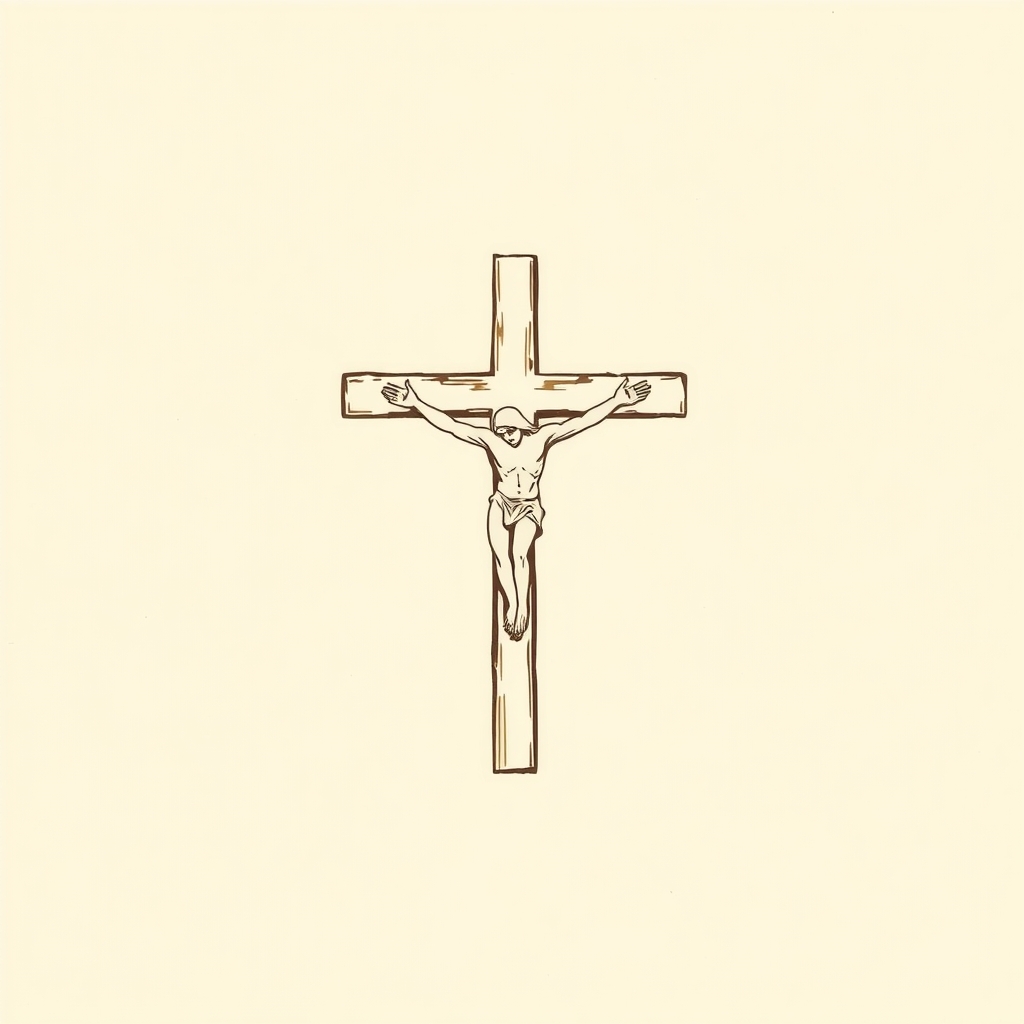
Signs and attributes
Frequently asked questions about Tomasa Ortiz Real
Who was Tomasa Ortiz Real?
Tomasa Ortiz Real (1842-1916), in religion Mother Piedad de la Cruz, was a Spanish religious sister and foundress of the Congregation of the Salesian Sisters of the Sacred Heart of Jesus.
How is Tomasa Ortiz Real depicted in Christian art?
In iconography, Tomasa Ortiz Real is recognizable by: Crucifix.
Which saints were contemporaries of Tomasa Ortiz Real?
Contemporaries include: Pauline of the Agonizing Heart of Jesus, Felipe de Jesús Munárriz and 50 companions, Mariano de Jesús Euse Hoyos and Teresa of Jesus of the Andes.
When did Tomasa Ortiz Real die?
Tomasa Ortiz Real died around 1916.
What are the other names of Tomasa Ortiz Real?
Other forms of the name: Mère Piedad de la Cruz and Piedad de la Cruz.
Who are the relatives of Tomasa Ortiz Real?
Relatives of Tomasa Ortiz Real: José Ortiz Belda (father), Tomasa Real López (mother), Antonia (sister) and Mariana (sister).
Annexes & related entities
Structured data for exploration: events, miracles, quotes, places, attributes, patronages, and important entities cited in the text.
Key Events
- Era / death: 1916
- Beatification in 2004 by John Paul II
Quotes
-
He died on the cross, and I must not die in a bed, but on the ground
https://vertexaisearch.cloud.google.com/grounding-api-redirect/AUZIYQE67sJzdVjDrseUKbupUgpmykwPTno96tHi3u0uPDTRPK0ZKOPx6mSP6EK6vuhGDLA7EsgkiIHdyEOIZrM50UlqtKFSgmfmrQiDAaBC1FyJcLhZiPF2tjr4z86WWHxl5wQfl9IVZmvYsZavloWpKn7kMYc9rGHeQc_HejE9KcgRo7B5N0VgBDKVZw== -
The alms of love are worth more than those of money
https://vertexaisearch.cloud.google.com/grounding-api-redirect/AUZIYQGBuS_monuFCfBKtQq8g7quiUz7liguEOqJrG4Cq8FjiziZw2wDtZzPsO6fKrMLiQgJfb8exOpLJmlAlxUr5kvt6IjIHI4Psp4Ebk1UnKP1WJen1d539AXjIIdZQftnRjfzXZxZP1AqEFbS4hO4kk4kYit8fBE=