
Narcisa de Jesús
An Ecuadorian lay mystic, Narcisa de Jesús (1832-1869) led a life of intense prayer, penance, and charity toward the poor, first in Guayaquil and later in Lima.
Contemporaries

Figures and markers around the normalized period for this entry.
Guided reading
5 reading sections
Biography
Childhood and youth of Narcisa de Jesús Martillo Morán in Ecuador, marked by her early piety and confirmation.
Saint Narcisa de Jesús Martillo Morán (Narcisa de Jesús) was born on October 29, 1832, at the San José de Nobol hacienda, located in the Daule canton (Guayas province, Ecuador). She was the sixth of nine children born to Pedro Martillo and Josefa Morán, deeply devout landowners. Her mother passed away in 1838 when Narcisa was only six years old. With the help of an itinerant teacher and her older sister, she learned to read, write, sew, cook, sing, and play the guitar. She showed a great spiritual sensitivity and a gift for music from a very early age, often transforming her prayers into songs.
On September 16, 1839, at the age of seven, she received the sacrament of confirmation from the hands of Bishop Francisco Xavier de Garaycoa, the first bishop of Guayaquil. It was at this moment that she felt an intense inner call to holiness. She made it a habit to retreat into a small woods near her home, by a guava tree (guayabo), to contemplate divine realities. She also set up an oratory in her home and chose Saint Mariana de Jesús (the "Lily of Quito") as her model, deciding to offer herself as a victim soul for the salvation of the world.
Life and Work
Narcisa's active and contemplative life in Guayaquil and later in Lima, divided between her work as a seamstress, charity, and extreme penances.
After the death of her father in January 1852, Narcisa, then 19 years old, moved to Guayaquil to provide for her younger siblings. There, she worked as a seamstress, a trade she mastered perfectly. In this large city, she led a double life: on one hand, she worked actively to support her family and devoted herself to the service of the poor, the sick, and abandoned children; on the other hand, she dedicated herself to a life of prayer and extremely rigorous penance. She joined the Association of the Daughters of Mary and became spiritually associated with the Dominicans by becoming a member of the Third Order of Saint Dominic.
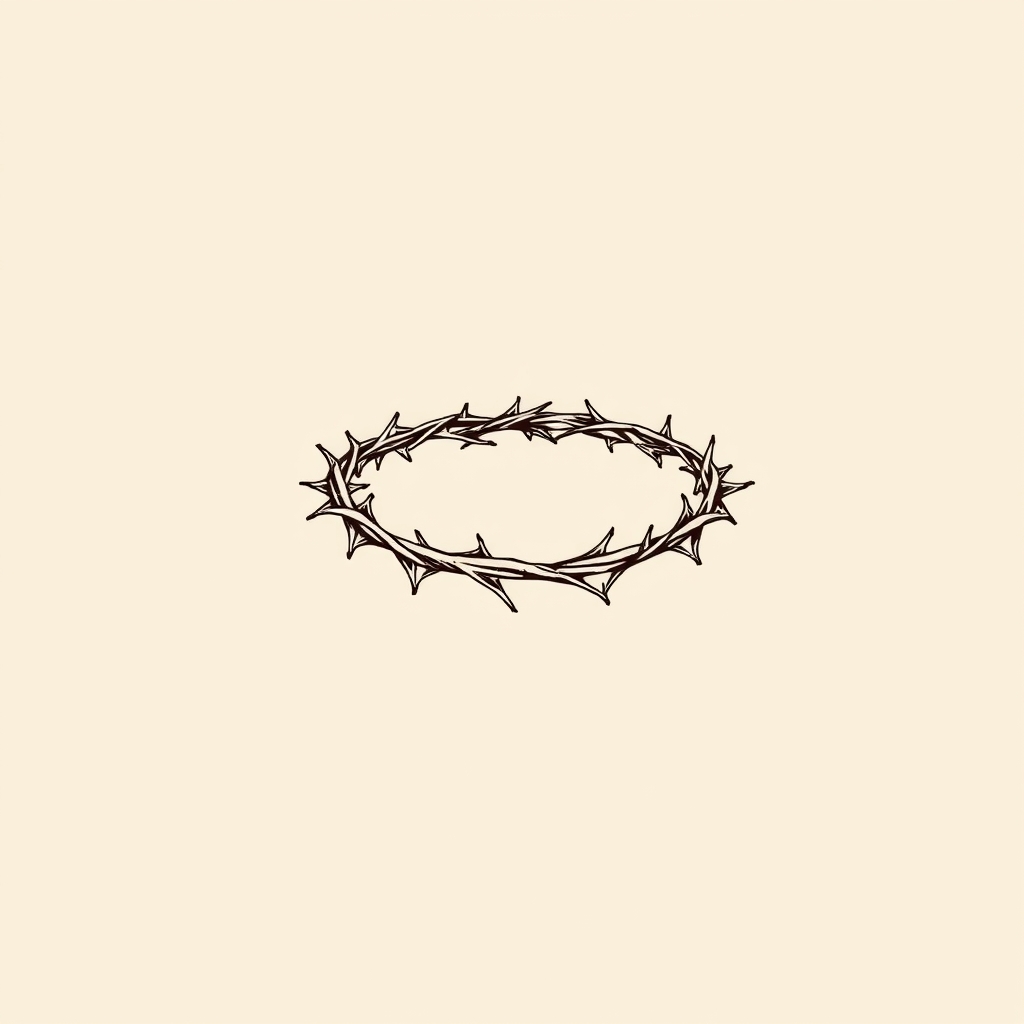
In order to live her union with Christ more deeply, she made several private vows: perpetual virginity, poverty, obedience to her spiritual director, enclosure, eremitism, fasting on bread and water, and daily communion. After a brief stay in Cuenca to seek more solitude, she left in June 1868 for Lima, Peru, on the advice of her Franciscan spiritual director. She was welcomed there as a lay boarder at the Dominican convent of the Patrocinio. Without taking public religious vows, she followed a schedule of impressive austerity: eight hours of daily silent prayer, four hours of nocturnal mortification (including flagellation and wearing a crown of thorns), and an almost absolute fast where the Eucharist constituted her main nourishment. She experienced frequent mystical ecstasies there.
Path to Holiness
The death of Narcisa in 1869, the discovery of her incorrupt body in 1955, and the opening of her cause for canonization.
Narcisa de Jesús died on December 8, 1869, at the Convent of El Patrocinio in Lima, at the age of 37, the very day Pope Pius IX opened the First Vatican Council in Rome. Immediately after her death, the nuns of the convent observed a resplendent light and a sweet, persistent fragrance emanating from her cell. Her reputation for holiness, already well-established during her lifetime, spread immediately among the people. In 1955, nearly a century after her death, her body was exhumed to be transferred from Lima to Guayaquil. Witnesses then discovered with astonishment that her remains were perfectly preserved and incorrupt: her flesh had remained supple and elastic, and she appeared to be merely sleeping. Her body now rests in the sanctuary dedicated to her in Nobol, her native village. The diocesan informative process for her canonization officially opened in Guayaquil on September 26, 1961, and closed on July 10, 1962. The decree on her writings was published on July 8, 1965. On October 23, 1987, Pope John Paul II promulgated the decree recognizing the heroic nature of her virtues, thereby granting her the title of Venerable.
Beatification and canonization
The recognized miracles that led to the beatification of Narcisa in 1992 and her canonization in 2008.
The beatification of Narcisa de Jesús was made possible by the recognition of a first miracle that occurred in 1967. It involved the scientifically inexplicable healing of Juan Pesántez Peñaranda, a young man suffering from cancerous tumors following a frontal collision with a banana tree trunk. After praying to "Narcisita" in a dream, his tumors disappeared completely. The decree on the miracle was promulgated on March 7, 1992, and Pope John Paul II solemnly beatified her on October 25, 1992, in Saint Peter's Square at the Vatican. The path to canonization opened thanks to a second miracle that occurred in 1992. Edelmira Victoria Arellano Plúas, a child born with a severe congenital anatomical malformation (absence of external genitalia), was healed in an instantaneous, complete, and lasting manner after her mother entrusted her to the intercession of Blessed Narcisa. The Vatican medical commission unanimously approved this miracle on January 18, 2006. Pope Benedict XVI proceeded with her solemn canonization on October 12, 2008, in Saint Peter's Square. She is the second saint in the history of Ecuador.
Spirituality and Legacy
The spirituality of offering of Narcisa de Jesús and her legacy as a model of lay holiness.
The spirituality of Saint Narcisa de Jesús is based on a deep identification with the suffering Christ through contemplative prayer and self-offering. Although she remained a layperson her entire life, she lived the demands of the consecrated life with the rigor of a hermit in the heart of the world. Her love for the Eucharist and her filial devotion to the Virgin Mary guided each of her actions. She was able to combine an extraordinary mystical life (marked by ecstasies and, according to some testimonies, by the stigmata) with humble, daily service to the most destitute.
Her legacy remains alive in Ecuador, particularly in Nobol, where her national sanctuary attracts thousands of pilgrims each year who come to venerate her incorrupt body. She is presented by the Church as a model of lay holiness, of a catechist, and of a worker, particularly for women forced to leave the countryside to seek work in the city.
Iconography
Signs and attributes
The supernatural in their life
The miracles of Narcisa de Jesús
Frequently asked questions about Narcisa de Jesús
Who was Narcisa de Jesús?
An Ecuadorian lay mystic, Narcisa de Jesús (1832-1869) led a life of intense prayer, penance, and charity toward the poor, first in Guayaquil and later in Lima.
What is Narcisa de Jesús the patron saint of?
Patronage of Narcisa de Jesús: laïcs, laity, catéchistes, catechists, travailleurs, workers, jeunes femmes quittant la campagne pour la ville and young women moving from the countryside to the city.
What is Narcisa de Jesús invoked for?
Narcisa de Jesús is invoked for: guérison de tumeurs, healing of tumors, malformations congénitales and congenital malformations.
How is Narcisa de Jesús depicted in Christian art?
In iconography, Narcisa de Jesús is recognizable by: guitar and crown of thorns.
What miracles are attributed to Narcisa de Jesús?
2 miracles are attributed to this saint, notably: Healing.
Which saints were contemporaries of Narcisa de Jesús?
Contemporaries include: Jesús María Echavarría Aguirre, Pauline of the Agonizing Heart of Jesus, Juan de Jesús López y González and Mercedes de Jesús Molina.
When did Narcisa de Jesús die?
Narcisa de Jesús died around 1869.
What are the other names of Narcisa de Jesús?
Other forms of the name: Narcisse de Jésus Martillo Morán and Narcisita.
Who are the relatives of Narcisa de Jesús?
Relatives of Narcisa de Jesús: Pedro Martillo (father) and Josefa Morán (mother).
Annexes & related entities
Structured data for exploration: events, miracles, quotes, places, attributes, patronages, and important entities cited in the text.
Key Events
- Era / death: 1869
- Canonized in 2008 by Benedict XVI