
Eugene de Mazenod
A Provençal aristocrat who became a priest and then Bishop of Marseille, Eugene de Mazenod founded the Missionaries of Provence in 1816, which would become the Missionary Oblates of Mary Immaculate, a congregation dedicated to the evangelization of the poor and foreign missions.
Contemporaries

Figures and markers around the normalized period for this entry.
Guided reading
5 reading sections
Biography
Born in Aix-en-Provence in 1782 into a family of the noblesse de robe, Eugène de Mazenod experienced the exile of the Revolution before returning to France and being ordained a priest in 1811.
Charles-Joseph-Eugène de Mazenod was born on August 1, 1782, in Aix-en-Provence, the son of Charles-Antoine de Mazenod, president of the Court of Accounts of Aix, and Marie-Rose Joannis. The French Revolution forced the family into exile starting in 1791: the child grew up in Italy, passing through Turin, Venice, Naples, and Palermo, and did not receive a consistent Christian education there. Upon returning to Provence around the age of twenty, the young aristocrat went through a period of worldliness, then an interior conversion, which, according to Oblate tradition, took place on a Good Friday before the Cross, oriented him toward the priesthood. He entered the Saint-Sulpice seminary in Paris in 1808 and was ordained a priest on December 21, 1811, in Amiens. Sensitive to the spiritual misery of a society emerging from the revolutionary turmoil, he dedicated his ministry to the poorest, the youth, and the prisoners of Aix, willingly preaching in Provençal to be understood by the people. Appointed Bishop of Marseille in 1837, he exercised an intense pastoral charge there until his death on May 21, 1861.
Life and Work
In 1816, Eugène de Mazenod founded the Missionaries of Provence in Aix, which would become the Oblates of Mary Immaculate, a missionary congregation approved by Rome in 1826.
The major work of Eugène de Mazenod is the foundation, on January 25, 1816, in Aix-en-Provence, of a society of missionary priests initially called the Missionaries of Provence. Their goal was to re-evangelize the countryside and the working-class environments neglected after the Revolution, always prioritizing the most abandoned. The congregation received pontifical approval on February 17, 1826, from Pope Leo XII and took the name Congregation of the Missionary Oblates of Mary Immaculate. From 1841, during the founder's lifetime, the Oblates spread outside of France and became a great missionary congregation, notably reaching Canada—where they contributed to the establishment of the Church in the Far North—the United States, Ceylon, Southern Africa, Ireland, and England. Having become Bishop of Marseille in 1837, Mazenod reorganized his diocese, multiplied parishes and works, oversaw the construction of the Major Cathedral and the sanctuary of Notre-Dame de la Garde, all while continuing to govern his congregation. His episcopal and missionary motto, taken from the Gospel, remains: 'to evangelize the poor'.
Journey toward holiness
The spirituality of Eugène de Mazenod unites a passionate love for Christ the Savior, a Marian devotion, and a zeal for the salvation of the poorest.
The holiness of Eugène de Mazenod is rooted in an interior experience of received mercy: the contemplation of the crucified Christ, who saved him, becomes the driving force of his entire apostolate. From this proceeds the principle he transmits to his Oblates: to love those whom Christ loved first, that is to say, the poor and sinners. His devotion to the Virgin Mary, whom he chose as the patroness of his congregation under the title of the Immaculate, structured his spiritual life long before the definition of the dogma of 1854. An indefatigable pastor, he was distinguished by his sense of the Church, his obedience to the Apostolic See, and a missionary zeal that drove him to send his sons to 'the most difficult missions.' Recognized during his lifetime for his charity toward the people of Marseille—he personally visited working-class neighborhoods, notably during cholera epidemics—he bequeathed to his disciples the exhortation to practice 'charity among yourselves, charity, charity, and outside, zeal for the salvation of souls.' The reputation for holiness that surrounded him after his death would support the opening of his cause.
Beatification and canonization
Declared venerable in 1970, Eugène de Mazenod was beatified by Paul VI in 1975 and then canonized by John Paul II on December 3, 1995.
The cause for the beatification of Eugène de Mazenod first led to the recognition of his heroic virtues by a decree of the Congregation for the Causes of Saints on May 26, 1970, which conferred upon him the title of venerable. After the approval of the required miracles on December 4, 1974, Pope Paul VI beatified him in Rome on October 19, 1975. A new miracle attributed to his intercession was recognized by the Congregation on December 15, 1994, opening the way to canonization. Pope John Paul II proclaimed him a saint on December 3, 1995, the first Sunday of Advent, at Saint Peter's in Rome; in his homily and during the meeting with pilgrims the following day, he invited the Oblates to remain faithful to their motto, "evangelize the poor," and highlighted "an immense love for the poor" as the central trait of the founder's life. The liturgical feast of Saint Eugène de Mazenod is set for May 21, the anniversary of his death.
Spirituality and Heritage
Saint Eugène de Mazenod is honored as the founder of a great international missionary family and as a builder of the Church in Marseille and Canada.
The most visible legacy of Eugène de Mazenod is the Congregation of the Missionary Oblates of Mary Immaculate, present today on every continent and counting among the principal missionary institutes of the Catholic Church. Many of his sons spread missionary work in the Canadian Far North, in Southern Africa, in Asia, and in Oceania, and his charism of evangelizing the poorest continues to inspire the Mazenodian family, which also includes women's congregations and associated laity. In Marseille, his episcopate remains linked to the construction of the Major Cathedral and the sanctuary of Notre-Dame de la Garde, which has become an emblem of the city. His remains are venerated in the Marseille Cathedral. Honored as the patron of the Archdiocese of Marseille and the tutelary figure of the Oblates, he is regularly presented as a model of apostolic zeal and preferential love for the poor. His memory is celebrated each May 21 in the Church and particularly within the Oblate family.
Iconography
Signs and attributes
Frequently asked questions about Eugene de Mazenod
Who was Eugene de Mazenod?
A Provençal aristocrat who became a priest and then Bishop of Marseille, Eugene de Mazenod founded the Missionaries of Provence in 1816, which would become the Missionary Oblates of Mary Immaculate, a congregation dedicated to the evangelization of the poor and foreign missions.
What is Eugene de Mazenod the patron saint of?
Patronage of Eugene de Mazenod: Famille missionnaire des Oblats de Marie Immaculée, Missionary Oblates of Mary Immaculate, Archidiocèse de Marseille and Archdiocese of Marseille.
How is Eugene de Mazenod depicted in Christian art?
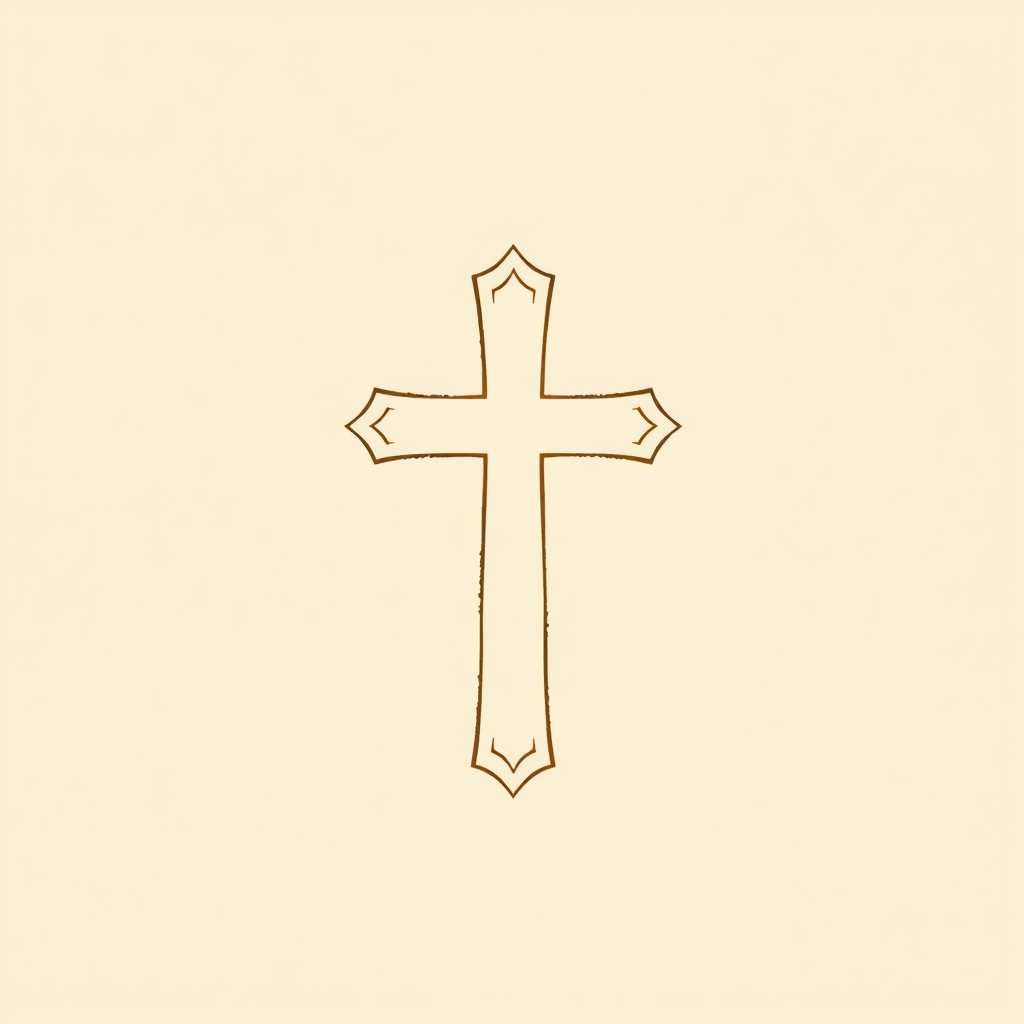
In iconography, Eugene de Mazenod is recognizable by: Oblate cross and Episcopal crosier and mitre.
Which saints were contemporaries of Eugene de Mazenod?
Contemporaries include: Jesús María Echavarría Aguirre, Pauline of the Agonizing Heart of Jesus, Narcisa de Jesús and Juan de Jesús López y González.
When did Eugene de Mazenod die?
Eugene de Mazenod died around 1861.
What are the other names of Eugene de Mazenod?
Other forms of the name: Charles-Joseph-Eugène de Mazenod and Eugenio de Mazenod.
Who are the relatives of Eugene de Mazenod?
Relatives of Eugene de Mazenod: Charles-Antoine de Mazenod (father) and Marie-Rose Joannis (mother).
Annexes & related entities
Structured data for exploration: events, miracles, quotes, places, attributes, patronages, and important entities cited in the text.
Key Events
- Era / death: 1861
- Canonized in 1995 by John Paul II
Quotes
-
evangelize the poor
https://www.vatican.va/content/john-paul-ii/en/speeches/1995/december/documents/hf_jp-ii_spe_19951204_pellegrini-beatificaz.html -
Practice charity well among yourselves, charity, charity, and outside, zeal for the salvation of souls.
https://www.omiworld.org/our-charism/founder/biography/