
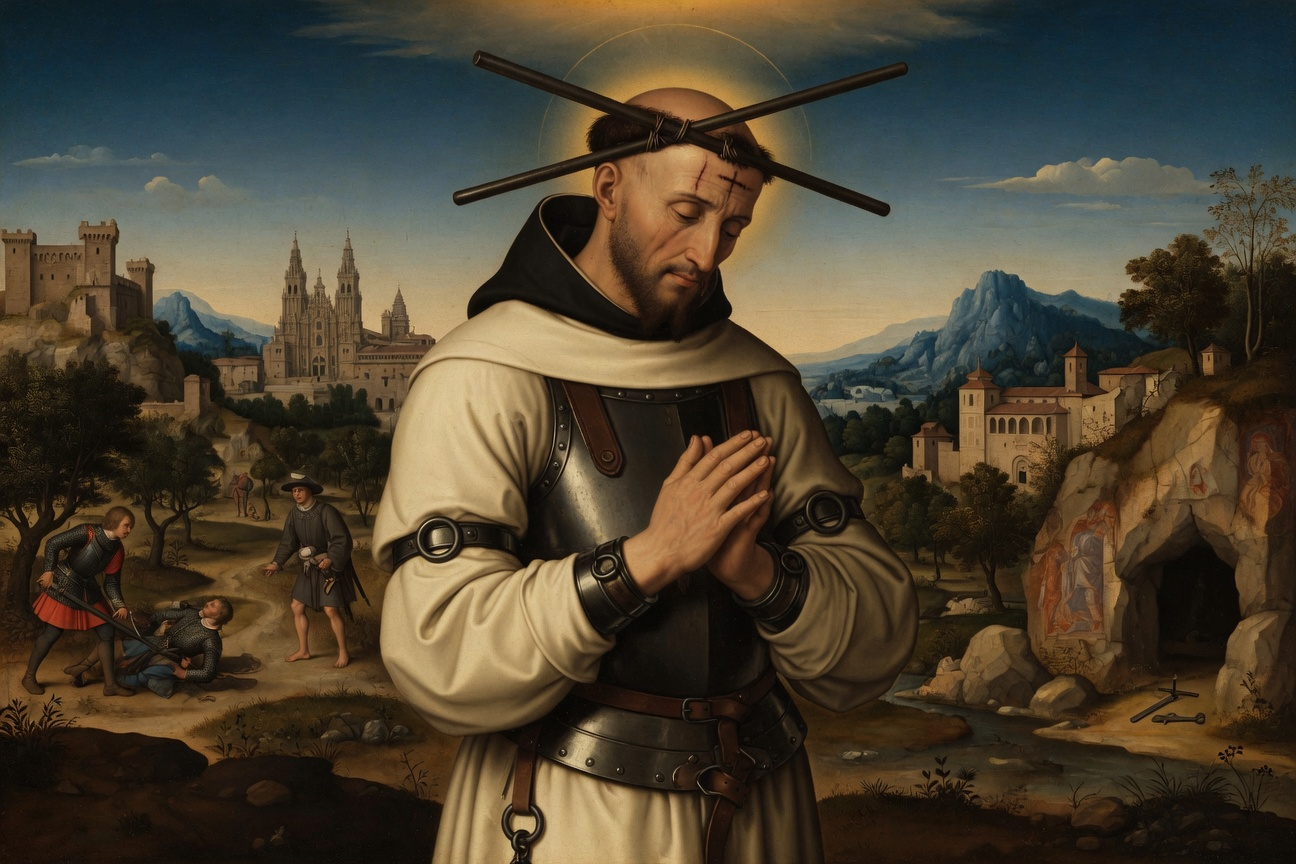
Blessed Lawrence
A former soldier converted after an accidental homicide, Laurent became a hermit and then a Benedictine monk near Subiaco in the 13th century. He distinguished himself through extreme austerities, wearing iron instruments and practicing rigorous silence. His cult was officially recognized by Pope Pius VI.
Contemporaries

Figures and markers around the normalized period for this entry.
Guided reading
5 reading sections
THE B. LAURENT, OF THE ORDER OF SAINT BENEDICT (1243).
Origins and conversion
A native of Apulia and a former soldier, Laurent left the military after accidentally killing a man and undertook a pilgrimage to Compostela.
Apulia, a province of the Kingdom of Naples, was the homeland of the Blessed Laurent, who came into the world in the 13th century. He first embraced the military state; but having had the misfortune of killing a man by accident, he felt such sorrow that he left the career of arms and undertook a pilgrimage to Santiago de Compostela.
Eremitic Life at Subiaco
Upon returning to Italy, he settled near Subiaco to lead a hermit's life before training disciples according to the Rule of Saint Benedict.
Upon returning to Italy after this long journey, Lawrence withdrew to a place near the monastery of Su biaco and practiced the eremitic life there. The desire for greater perfection led him to request permission from the religious of the abbey of Subiaco to settle on a mountain quite close to their house and not far from the cave where the great Saint Benedic t once lived . Having obtained it, he chose a place there to dwell, and there he lived very holily for many years. Having received several disciples, he trained them in the practice of the Rule of Saint Benedict.
Asceticism and mortifications
Lawrence practiced extreme asceticism, wearing iron armor and imposing upon himself dietary deprivations and rigorous silence.
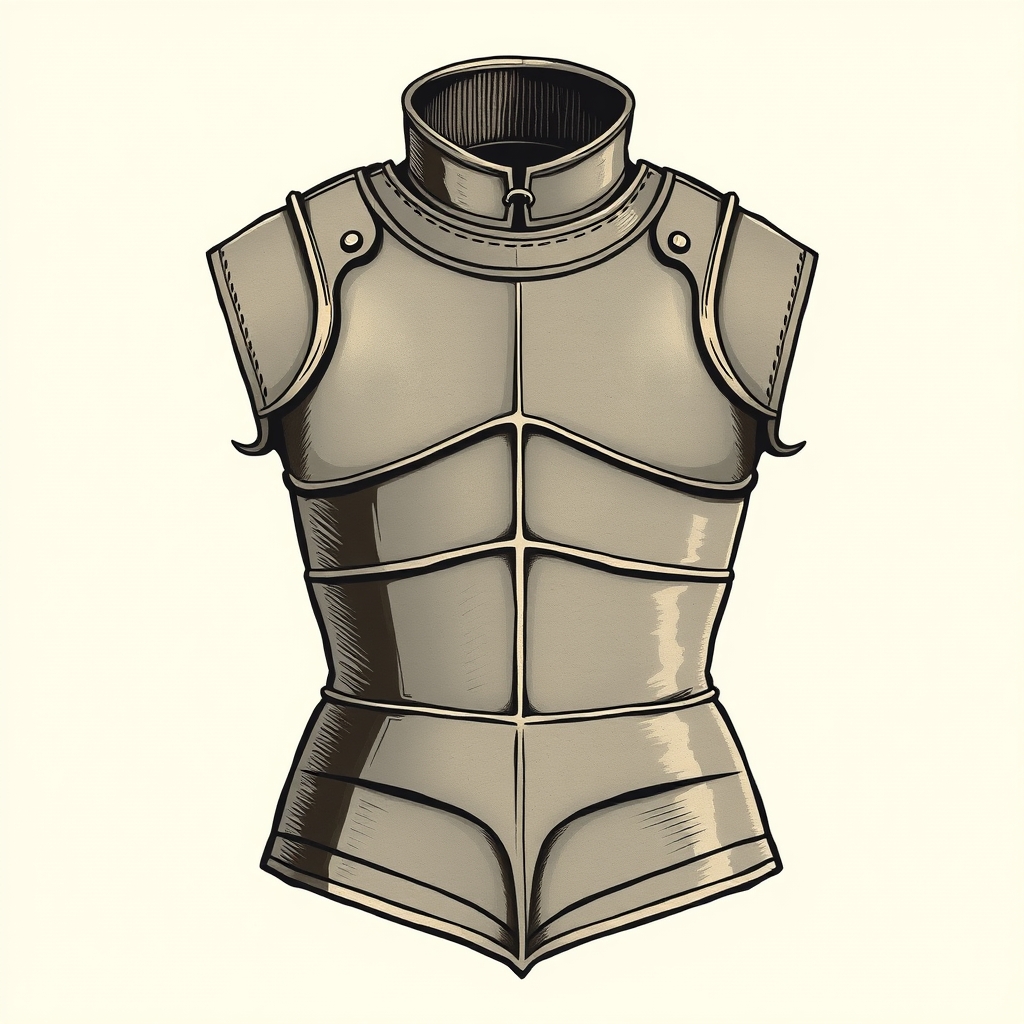
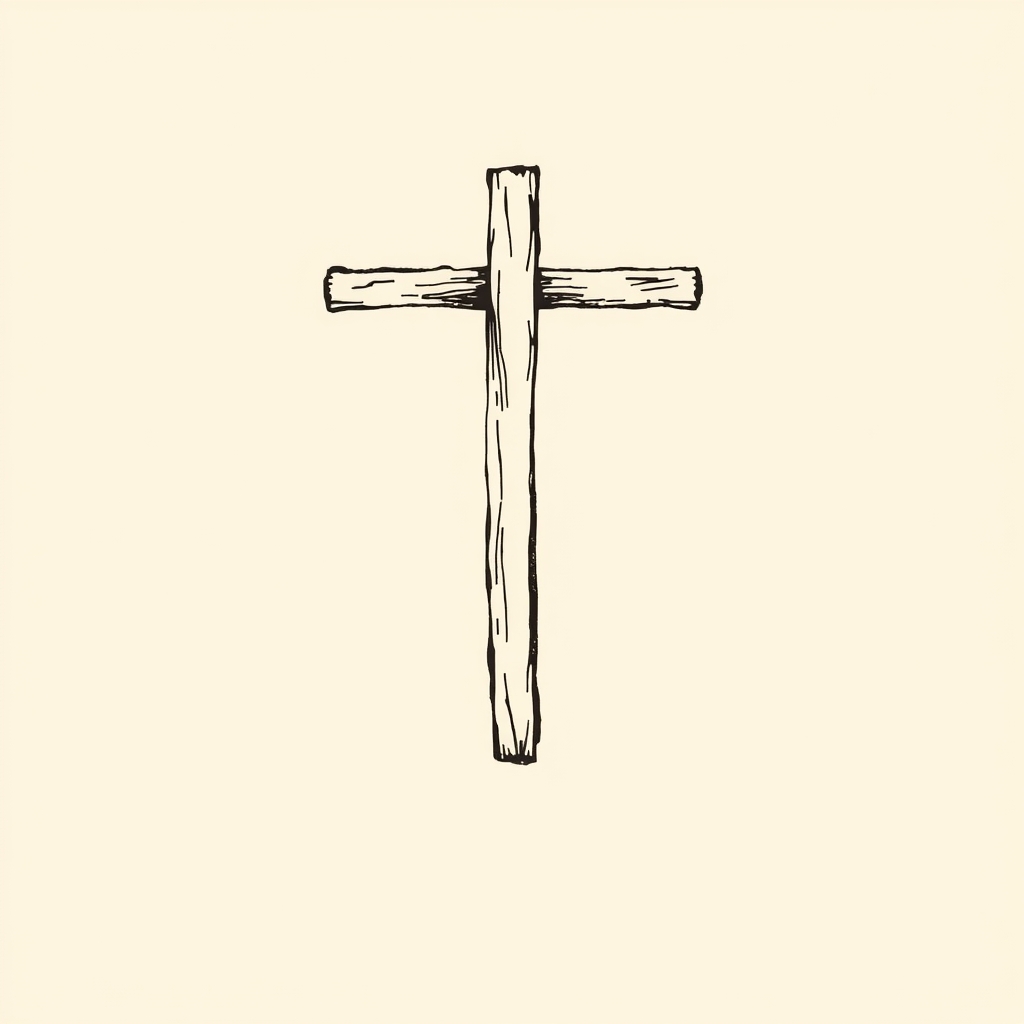
Among the virtues that shone in this servant of God, his abstinence was especially noted. It was so rigorous that he ate only once a day, and his only food was bread, water, and a few herbs. His mortification seems almost incredible, so much effort did he put into afflicting his body and reducing it to servitude. He wore an iron cuirass against his bare skin; he had circles of the same metal on his arms, thighs, and legs. Furthermore, he wore on his head two iron rods placed in the shape of a cross. Animated by the desire to imprint within himself the image of the suffering Jesus, he was in the habit of burning his forehead each year on Good Friday.
Cardinal Ugolino, who later attained the papacy under the name Gregory IX, having come to visit the blessed Lawrence, u rged him to moderate the rigor of his penance. Docile to the voice of a superior and a child of obedience, the servant of God relaxed his austerities a little; but his ardor for mortification led him to find other ways to practice it. He applied himself with extreme care to preserving chastity. His silence was almost perpetual; three days each week, and during the whole of Lent, he did not allow himself to say a single word.
Marian devotion and miracles
He manifested great charity and devotion to the Virgin, erecting a church near miraculous fountains.
His charity for his neighbor was very vivid, and the poor inspired in him a tender affection. The Blessed Virgin had in Laurent the most devoted son, and he gave her a manifest proof of this devotion by building in her honor a church between two fountains that can still be seen and which are said to have sprung from the earth in a miraculous manner.
Death and recognition of the cult
Died in 1243, his remains were transferred to the cave of Saint Benedict in 1734; his cult was officially recognized by Pius VI.
After having led the most edifying life for a long time, the servant of God went to receive from the Lord the crown of justice on August 16, 1243. His body, buried in the place where he had lived, remained there for several centuries. In 1734, it was transferred to the cave of Saint Benedict and exposed for public veneration. Under the pontificate of Innocen t IV, inqui ries had been undertaken regarding the holiness of the venerable Lawrence; they made it known that he had performed several miracles during his life. After his deat h, Piu s VI, desiring to increase his cult, permitted the celebration of the Mass and the Office in his honor.
See the lessons in the Monastic Breviary, printed in R ome in 18 31 (Godescard).
Iconography
Signs and attributes


Entities
Narrative network
The names, places, and concepts most present in the entry, weighted by centrality in the text.
The supernatural in their life
The miracles of Blessed Lawrence
Frequently asked questions about Blessed Lawrence
Who was Blessed Lawrence?
A former soldier converted after an accidental homicide, Laurent became a hermit and then a Benedictine monk near Subiaco in the 13th century. He distinguished himself through extreme austerities, wearing iron instruments and practicing rigorous silence. His cult was officially recognized by Pope Pius VI.
How is Blessed Lawrence depicted in Christian art?
In iconography, Blessed Lawrence is recognizable by: iron cuirass worn against the skin, iron circles on his limbs, two iron rods in the form of a cross on the head and burned forehead.
What miracles are attributed to Blessed Lawrence?
2 miracles are attributed to this saint, notably: Sign / wonder.
Which saints were contemporaries of Blessed Lawrence?
Contemporaries include: Saint Anthony of Padua (Ferdinand), Saint Arthaud of Belley, Saint Thomas Aquinas and Saint Bernard of Clairvaux.
When did Blessed Lawrence die?
Blessed Lawrence died around 1243.
Annexes & related entities
Structured data for exploration: events, miracles, quotes, places, attributes, patronages, and important entities cited in the text.
Key Events
- Initial military career
- Accidental homicide leading to his conversion
- Pilgrimage to Santiago de Compostela
- Eremitic retreat near Subiaco
- Settlement on a mountain near the cave of Saint Benedict
- Visit of Cardinal Ugolino (future Gregory IX)
- Translation of relics in 1734
- Authorization of cult by Pius VI