
A 13th-century Polish Dominican friar, Hyacinth was one of the first disciples of Saint Dominic. Known as the Apostle of the North, he traveled thousands of miles to evangelize Poland, Russia, and as far as the borders of Asia. Famous for his many miracles, notably his walking on the waters of the Vistula and the Dnieper, he died in Krakow in 1257.
Contemporaries

Figures and markers around the normalized period for this entry.
Guided reading
9 reading sections
SAINT HYACINTH OF POLAND,
RELIGIOUS OF THE ORDER OF SAINT DOMINIC
Origins and intellectual formation
Hyacinth, from the noble Polish family of Odrowatz, received an elite education in Krakow, Prague, and Bologna, where he became a doctor of law and theology.
O most beautiful flower of the Order of Preach ers, Hyacinth, we sing of your merits; let us be perfumed by the fragrance of your virtues. Dominican Liturgy. Hyacinth was Polish, of the ancient house of the Counts of Odrowatz, which gave many great dignitaries to this kingdom; he was born at the castle of Saxe, in the diocese of Breslau. His ancestor was Saul of Odrowatz, who often cut the Tartars to pieces and compelled them to leave Poland in peace. His grandfather had the same name, and he distinguished himself no less by his courage and his great military exploits against other enemies of the State. The county of Konski having fallen to him, he was thereafter called Saul of Konski. Of two children that God gave him, Eustace and Yves of Konski, the younger was Bishop of Krakow, and the elder was the father of our Saint, who became the glory of his family, and raised it higher by his holiness and his miracles than his ancestors and several palatines and army generals, who have come from it since him, could ennoble it by all their fine actions. He spent his youth in great innocence: as he was of a very good nature, and grace anticipated him in all his actions, he practiced virtue from his earliest years. He also had great vivacity of mind: this is why he learned the human sciences in a short time, first under the guidance of private tutors, then at the colleges of Krakow in Poland, Prague in Bohemia, and Bologna in Italy; he took, at the university of the latter city, the degree of doctor of law and theology. Upon his return to Poland, he attached himself to Vincent, Bishop of Krakow, who gave him a prebend in his cathedral and associated him with the government of his diocese. Hyacinth gave in these employments marks of an uncommon piety; and, as he loved the poor, visited the hospitals, consumed his income in alms, attended the divine offices with an angelic modesty, and joined, to these practices of charity and religion, a very great severity toward himself, he made himself admired and cherished by everyone.
Meeting with Saint Dominic and Vocation
During a trip to Rome with his uncle, Bishop Iwo, Hyacinth meets Saint Dominic and joins the Order of Preachers at the convent of Santa Sabina.
Iwo of Konski, uncle of our Saint and chancellor of Poland, having succeeded Vincent to the episcopal see of Krakow, needed to make a journey to Rome in 1218. He took his two nephews, Hyacinth and Ceslas, with him. Saint Domini c was then in t his capital of the Christian world. Our travelers were witnesses to his preaching and his miracles. The Bishop of Krakow asked him for missionaries from his new Order for Poland. Dominic replied that he regretted being unable to satisfy this request: he had sent such a great number of his disciples on mission that he had almost none left. Strongly pressed by the entreaties of Iwo, who promised to be the protector and father of the Friars Preachers in the diocese of Krakow, the holy founder, by divine inspiration, found an expedient. He asked the bishop for three or four of the people who were with him: he said that he would clothe them in the habit of his Order, that he would form them in a short time in all the exercises of religious life and apostolic functions, and that he would then return them to him to go and begin in Poland what his other children were doing with such success in France, Italy, and Spain. Iwo accepted this proposal and communicated it to the people in his retinue, several of whom, touched by divine grace, embraced the new Institute. Of this number were Hyacinth and Ceslas, and two German gentlemen, Hermann the Teuton and Henry the Moravian. They all received the habit from the hands of Saint Dominic, in the convent of Santa Sabina, in the month of March of the same year, 1218. They became perfect imitators of their holy patriarch and, by dispensation, made their vows after a six-month novitiate. Hyacinth was then thirty-three years old. No one took on the spirit of the Institute better than he. Saint Dominic imprinted primarily in his soul an extreme horror of himself and a pitiless rigor against his own body; a generous contempt for all earthly things, and even for his health and his life; an ardent love for Jesus Christ; an insatiable desire to please Him and to make Him known, honored, and served by everyone; a great devotion and loving confidence toward the Blessed Virgin; an inflamed zeal for the salvation of souls; a resolution to spare nothing to procure it; a constant and inviolable fidelity in the observance of regular discipline, without ever claiming that apostolic labors should exempt him from it; finally, a perfect disinterestedness and a sovereign purity of heart in all his employments and in all his actions. He also trained him in the exercise of preaching, not according to the rules of profane eloquence, but according to the spirit of the Gospel, whose simplicity is stronger than all the subtlety of philosophers and all the skill of orators.
As soon as Saint Dominic had received the vows of Hyacinth, he established him as superior of the mission he was sending to Poland. These holy missionaries did not accompany the Bishop of Krakow, who was leaving Rome at the same time as them. They took another route, in order to conform to their rule which ordered them to go on foot and without provisions.
Return to Poland and first foundations
Upon returning to Krakow, he founded the convent of the Holy Trinity and initiated a spiritual renewal marked by miracles and rigorous piety.
Having passed through the lands of the lordship of Venice, they entered Upper Carinthia, where they remained for six months in Friesach. Hyacinth gave the habit to several people there and founded a convent, of which he made Hermann the superior. The Archbishop of Salzburg, who had witnessed the eminent virtues of Saint Dominic in Rome, received his children with great marks of veneration and helped them with all his power. Passing through Styria, Austria, Moravia, and Silesia, Hyacinth left on all sides
marks of his piety and fervor. When he arrived in Krakow, he was receive d by the clergy, the nobility, and all the people with universal applause. The bishop, his uncle, helped him to found a convent of his Order in the city, under the invocation of the Holy Trinity. Hyacinth gave the habit of Saint Dominic to a great number of notable people whom the Spirit of God touched powerfully and who became worthy laborers of the Gospel. Among this number was Doctor James, whom Cardinal Crescentius had brought from Rome with him to be his advisor and secretary in the great affairs he had to conduct in Poland. The preaching of our Saint brought about very great conversions among the nobles and the people: luxury, debauchery, and unchastity were banished; restitutions and reconciliations were made on all sides. Devotion to the Blessed Sacrament and to the Blessed Virgin, which had grown extremely cold, took on new vigor: one even saw the austerities of the first centuries of the Church reappear in Krakow, the use of the hair shirt, fasting on bread and water, vigils in the churches, and other similar mortifications. The miracles of our Saint contributed much to such a prodigious change. He restored life to a young nobleman who had drowned the day before while trying to cross the Vistula: this prodigy was witnessed by a large number of ecclesiastics, gentlemen, and common people, as is recounted in the Bull of his canonization. He restored the use of speech to a lady who had not spoken for six weeks due to paralysis of the tongue. He restored to health another lady who was in agony and from whom only death was expected. He cast out demons from the bodies of the possessed several times and performed a host of other wonders. The more God exalted his merit, the more severe he was with himself, and he increased his penances. In imitation of his father Saint Dominic, he had no other room than the church, nor any other bed than the ground he trod upon. He tore his shoulders every night with knotted ropes or iron chains; he fasted every Friday and on the vigils of Our Lady and the Apostles on bread and water; he was continually occupied, either in prayer, or preaching, or hearing confessions, or visiting the sick, or rendering some other assistance to his neighbor. In short, his life was a perpetual exercise of charity toward the miserable, or of holy cruelty against himself. Moreover, he was consoled by frequent visits from heaven, and the Blessed Virgin, whose Rosary he published and recited with marvelous fervor, often appeared to him to encourage him in his labors and to show him how satisfied she was with his zeal and the eagerness with which he strove to always procure new servants for her.
Missionary expansion towards the North
Hyacinth extends the influence of his order in Bohemia, Prussia, and Pomerania, performing the famous miracle of crossing the Vistula on dry land.
When the convent of Krakow was well established, which was done in a very short time, Saint Hyacinth, animated by the spirit of his father, Saint Dominic, conceived the design of the conquest of the great kingdoms of the North for Jesus Christ. Feeling strong enough to be able to do without the two holy auxiliaries that Providence had given him, in the persons of Ceslas and Henry the Moravian, he sent them to the kingdom of Bohemia: they preached with marvelous force in Prague, the capital of this kingdom, and brought about great changes in morals. King Premislas founded for them, under the name of Saint Clement, martyr, a magnificent convent which was the head of all the other convents in Bohemia. Hyacinth then set out himself, with some of his new workers, to travel through all the provinces of the North, whose inhabitants were either idolaters, or heretics, or schismatics, or without religion. The first theaters of his labors were the surroundings of Krakow, the Duchy of Moravia, Royal Prussia, and Pomerania. The two convents of Sandomir, on the Vistula, in Lesser Pol and, an d that of Ploko, in Moravia, which was eagerly given to him, are testimonies to the great success of his preachings. In this country, he walked for the first time on the waters on dry land, so as not to deprive the inhabitants of Wisgrade of the doctrine of salvation that he was to announce to them. Here is how Pope Clement VIII speaks of it in the Bull of his canonization: "While Hyacinth was going here and there to preach the truths of the Gospel, he arrived at the banks of the Vistula, which washes the walls of Wisgrade. This river preventing him from passing, he looked on all sides to see if he might see a boatman to transport him to the other shore with his companions; but, having seen none, he implored the help of heaven, and, having armed himself with the sign of the cross, he courageously exhorted his companions to continue their journey through the midst of the waves: — Courage, my beloved children, he said to them, follow me in the name of Jesus Christ. — In saying this, he began to walk on the waves as on dry land; but seeing that his companions did not have the boldness to do the same, he returned to them, and, having spread his cloak on the water, he said to them: — Fear nothing, my dear children, this cloak, in the name of Jesus Christ, will serve us as a bridge. — Thus, they all crossed this river, which is so deep and so rapid, without being wetted or receiving any other inconvenience." This prodigy took place in the sight of a numerous crowd, who were waiting for Hyacinth on the shore, on the side of the city. One can easily imagine how much weight it gave to the word of our admirable preacher, and how much it served to lead the inhabitants of this city to a perfect conversion. In Royal Prussia, he won a thousand pagans to the faith. To strengthen these good beginnings, he asked the Duke of Pomerania for the small island of Gedanum, in the Baltic Sea, to build a monastery there. It was represented to him that this place being deserted and not very accessible to the inhabitants of the surroundings, his religious would not be able to be very useful there; he replied that, in a few years, there would be one of the greatest cities of the country in this place; indeed, some time later, the sea having retreated by itself, it came to this island and formed a very convenient port there, a nd sinc e then the city of Dantzig has been built there, so famous for its maritime commerce. We do not speak of the convent of Calm, which our Saint also accepted in Prussia; but we must not omit those of Cammin, of Premislau or Ferzemysla, of the island of Rugen, of Elbing, and of Montreal, in Pomerania, striking proofs of the great fruits that the word of life which he preached bore in this duchy.
Missions in Russia and the Orient
He traveled through Scandinavia, Russia, and reached Constantinople, founding a convent in Kiev and converting pagan and schismatic populations.
From Prussia and Pomerania, Saint Hyacinth, continuing his long journeys, traveled through Denmark, Sweden, Gothia, Norway, Scotland, and Livonia. Then he descended into Little Russia or Red Russia, where he reunited with the Roman Church Prince Daniel, who followed the errors and schism of the Greeks. From Russia, he entered the borders of the Black Sea, and came from there to Constantinople and the island of Chios, announcing everywhere the truths of the Gospel. Having gone back up towards the North, he entered Black Russia or Great Russia, which is the Grand Duchy of Muscovy, to work to bring Duke Vlodimir or Vladimir and his entire country back into the bosom of the Church. He found there a profane mixture of Gentiles and Greek Christians, of whom the former, by their stupidity, and the latter, by their pride and obstinacy, were little disposed to receive the lights of the faith. As for Catholics, he found very few, and even their bishop, created by the Pope, had no church there, neither cathedral nor parish. These difficulties did not stop his zeal, which was crowned with full success; many infidels recognized the truth of Christianity, and many schismatics embraced the belief of the Roman Church, and there were even some who left their Greek usage to conform to the customs and habits of the Latins. Hyacinth built a magnificent convent of Preaching Friars in the city of Kiow, which was then the capital of the entire duchy. The religious he assembled there served him to make new journeys throughout the country. One day, being on the bank of the Borysthenes, which we also call the Dnieper, he perceiv ed on an island in this river a group of people who were on their knees, bareheaded, before an oak tree; he immediately understood that they were idolaters, and resolved to convert them; but finding no boat, he crossed this arm of the river on dry land. This miracle deeply impressed the pagans: they received him as an extraordinary man, as an envoy from heaven; they listened to him with attention, let themselves be penetrated and persuaded by his own reasons, and, renouncing their superstitious worship, they embraced the Catholic faith. The demon, to prevent this good success, appeared visibly in the form of a black man, who complained of the harm that Hyacinth was doing to him by banishing him from his domain and taking away his worshippers; but the Saint drove him away with blows of his staff, and this monster fleeing by the river, he pursued him by the same path, walking there again on dry land and as if on solid ground.
The Siege of Kiev and the Miracle of the Statue
During the Tartar invasion of Kiev, he saves the Blessed Sacrament and a heavy statue of the Virgin by miraculously crossing the Dnieper.
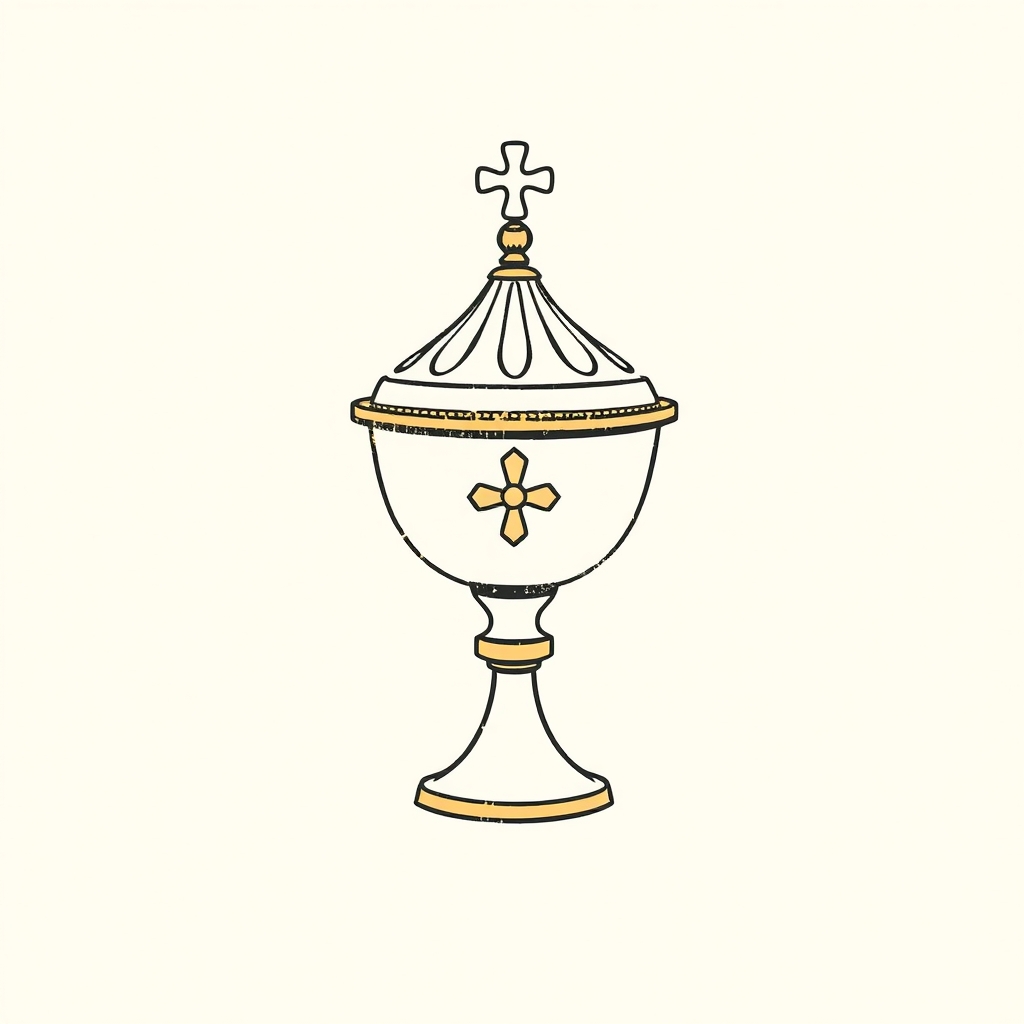
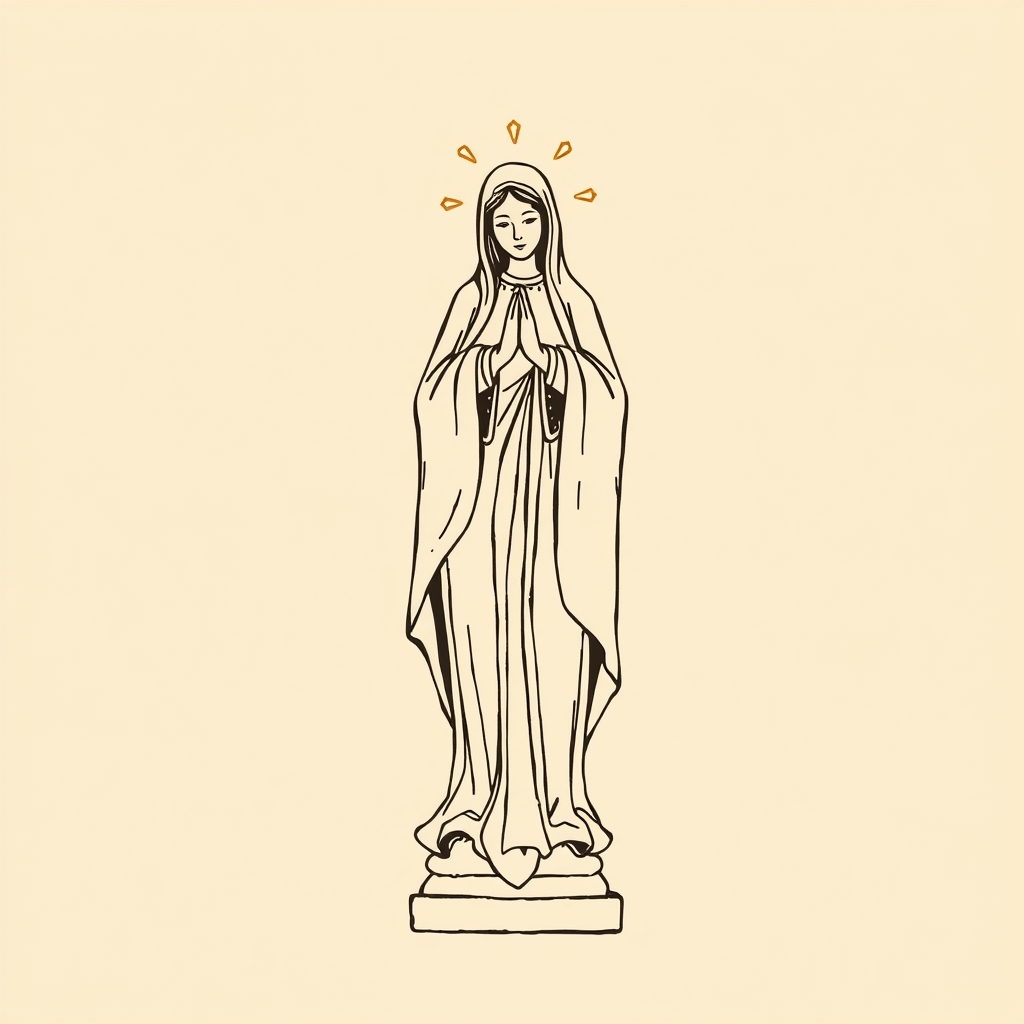
The inflexible hardness of most of the inhabitants of Kiev brought upon them a terrible punishment of divine justice. The Tartars came to besiege this city with a formidable army, and, after much resistance, they finally took it by storm, sacked it, filled it with blood and carnage, and having set it on fire, they made of it nothing but a heap of ashes, which no longer deserved the name of a city. When they entered, Saint Hyacinth was at the altar saying Mass. His religious brothers warned him that there was not a moment to lose, and that, if he wished to save himself with his entire community, it was necessary to leave immediately so as not to fall into the hands of this nation, which was an enemy of Christianity. He submitted to this advice; but not wishing to leave the Blessed Sacrament exposed to the insults of the barbarians, he opened the tabernacle, took the holy ciborium, and with this pledge of paradise and this great God of hosts, he left the choir accompanied by all his brothers. As he passed before an image of Our Lady, which was in the church, this alabaster statue miraculously opened its mouth and begged him to take it away as well. He replied that he would take it with him very willingly, but that it was so heavy that he would not have enough strength to support it. Indeed, it is said that it weighed eight or nine hundred pounds. But the image replied that he should fear nothing, and that the Savior he held in his hands would make it so light that he would have no trouble carrying it. The Saint did not hesitate any longer; he approached the image with a faith as miraculous as the voice that had come from that inanimate mouth, and taking it with one hand, he found it as light as a reed. Thus, having in his right hand the holy ciborium filled with consecrated hosts, and in his left the statue of the Blessed Virgin, he reached the city gate and the road to Poland. Arriving at the bank of the Borysthenes, he found no boat to cross it. His faith served as his boat and boatman; he did not stop any more than if he had always had a path of solid ground before him; he placed his feet upon the waters, and the waters did not yield. As for his religious brothers, he gave them his cope to serve as their boat or bridge; thus they all crossed this great river on dry land, and found themselves out of danger of being pursued by the Tartars. As an eternal mark of such an astonishing miracle, God imprinted upon the waves the traces of the Saint's feet from one bank to the other; and, in the passage of time, these traces could not be erased, neither by the flow of the waters, nor by the passage of boats, nor by the storms and tempests that have occurred there; this was examined so rigorously by the Holy See, in order to proceed with the canonization of this great preacher of the Gospel, that four hundred and eight witnesses were confronted for this purpose, all of whom testified under oath, before the apostolic commissioners, to having seen these traces with their own eyes, and to having learned from those of the country that they are and are commonly called the Path of Saint Hyacinth. This divine man made the entire journey in this state from Kiev to Krakow, which is several hundred leagues. It is not said how he lived with his children during such a long journey; but the Chronicles of the Order of Saint Dominic assure that he carried the image during the entire journey, and that he finally deposited it in his convent in Krakow, where, no longer needing to be carried, it immediately resumed its natural weight.
Evangelization of the frontiers and rural miracles
His travels led him as far as Tartary and the borders of China, while in Poland he multiplied agrarian miracles and healings.
Hardly had our great Thaumaturge arrived when a lady, named Clemence, sent to beg him to come to her village on the day of Saint Margaret, to give her and all her vassals the consolation of hearing one of his exhortations. He went there the day before, but he found a general desolation; a storm mixed with wind and hail had so shredded all the wheat that not a single whole ear remained. The tears of this lady and all the inhabitants, who saw themselves unable to sow their lands and feed their families throughout the course of the year, touched his heart deeply: he told them to have recourse to God, by confessing and spending the night in prayer, and that he, for his part, would not fail to implore His infinite mercy, in order to obtain a salutary remedy against this evil. Indeed, he groaned and wept all night, and his tears were so effective that the next day, at the first rays of the sun, the flattened ears rose up and were found as beautiful and as full of grain as if the storm and hail had never touched them. This is how the bull of his canonization speaks of it. This miracle was followed by several others: Felice of Grus Zousca had not been able to have children in the twenty years she had been married; the Saint obtained one for her from heaven, and assured her that he would be brilliant in the world, and that he would have an illustrious posterity that would give Poland lords and prelates of great merit: which has happened since as he had predicted. He also gave sight to two children of a lady named Vitoslauska, who had been born blind.
His return to Krakow was not the end of his evangelical labors; he remained there at most for only two years, that is to say from 1241 until the year 1243. At that time, he went to visit the main provinces of Prussia, where he had already spread the light of his preaching. From there, he passed into Cumania, a province for which Saint Dominic had had a particular attraction and affection, which all his brothers had inherited. He already found there religious of his Order, whom the General Chapter had sent there, and he had the consolation of working, in concert with them, for the evangelization of this infidel nation. His zeal for the salvation of souls carried him even further. The Tartars had driven him out of Kiev and all of Great Russia: he went to seek them out even in their own country, in order to enlighten them with the torch of the faith, and God gave him so many graces in this mission that he won several thousand of these barbarians to Jesus Christ. The historians of France bear witness to this truth when they say that, Saint Louis having arrived on the island of Cyprus in the year 1247, several Tartars came to greet him on b ehalf of a king of their country, who, having been converted three years earlier with many of his vassals, offered him powerful aid in his enterprise against the Saracens. Great Tartary was not even the end of his journeys: he reached as far as the kingdom of Tibet, which touches that of Tangut and the East Indies, and as far as Cathay, which is the northern part of China. Those who have traveled through these countries in modern missions have still found there remains and vestiges of the Christian religion that he had planted there. We would never finish if we wanted to follow this Apostle in all his other travels: for it is asserted that he also traveled through Little Russia, where he so strongly inflamed Prince Caloman and Princess Salome, his wife, with the love of God that they renounced the schism into which ignorance had led them, to place themselves in the union of the Church, and both made a vow of chastity; he also evangelized Volhynia, Podolia, and Lithuania, where he founded several famous convents, especially that of Wilna, in Lithuania, which is the head of a large province whose religious work continually, with indefatigable zeal, to maintain the faith throughout the country.
Furthermore, we must not close this chapter on the missions of Saint Hyacinth without making an important reflection: naturally speaking, it was impossible for him to travel through these regions which are almost always covered in ice and where the cold is unbearable, without being provided with good furs against the rigor of the seasons; without being accompanied by learned interpreters and faithful guides to explain the languages to him and show him the paths; without being well provided with money to buy the necessities of life; without being advantageously mounted to make long daily journeys, in order to always reach some shelter, and above all without being well armed to defend himself against bandits, nomadic tribes, and ferocious beasts; and yet this heavenly man had none of these aids. He was without arms, without a mount, without money, without interpreters, without furs, and often even without a guide, abandoning himself to divine Providence for everything he needed on such difficult routes. How did he not get lost a hundred times in the woods or in the snow? How was he not a hundred times frozen with cold, or devoured by beasts, or massacred by the Barbarians? How did hunger, thirst, weariness, rains, winds, storms, broken roads full of precipices, not reduce him a hundred times to the last extremity? What was he doing in the midst of these unknown nations, without knowing their languages and without having anything striking or magnificent that could impress them? God helped him in all his encounters; He protected him on the roads, He made him understood by the most barbarian peoples, and finally granted him the grace, after such glorious and useful journeys for his neighbor, to return in health to Krakow, aged more than seventy-two years, to end his life there.
Last days and glorious death
Warned by a vision of the Virgin, Hyacinth dies in Krakow in 1257 after exhorting his brothers to poverty and charity.
A year before his death, the Blessed Virgin appeared to him; she had formerly assured him that he would obtain everything he asked for through her intercession: he asked insistently to be delivered from his mortal body to enter into the possession of his sovereign good. Mary declared to him that this would happen soon; that, moreover, he must still embellish and perfect his crown, and that she would take care to have him warned when the hour of his departure was near. One cannot conceive of the consolation that this visit gave to our Saint, because of the happy assurance of the approach of his happiness, and because the Queen of angels showed herself to him in a grace and beauty capable of ravishing all hearts. She was in the state that Saint John described in his Apocalypse: she had the moon under her feet, the splendor of the sun served as her royal mantle, and she wore a crown of twelve stars on her head. If this divine man had always taken care to prepare himself for death, he then renewed all his dispositions, and, as a stone goes faster when it is close to its center, so he redoubled his fervor and devoted himself more than ever to the exercises of mortification, retreat, and union with his God.
In the year 1257, on the eve of the Assumption, he had a revelation that, the very next day, he would go to celebrate in heaven the feast of this glorious Virgin, whom he had so perfectly loved on earth. Indeed, a continuous fever, which had been consuming him for some days, increased noticeably and made his life despaired of. He called his children to him and gave them an exhortation full of strength and unction, which the authors of his life have reported in these terms: "The time has finally come," he told them, "my dear children, to leave you and to go to God. It is He who calls me and who takes me away from you. What I leave you by testament are the same things that our blessed Father left us. Love one another, live in rigorous poverty, carefully preserve your purity, be jealous of your observances, persuade yourselves that everything in them is great, work tirelessly for the salvation of souls and for the expansion of our Order for the glory of God. Do not grieve at my death. Jesus Christ being my life, I gain infinitely by dying, and you will receive no damage from it; for, if I have assisted you on earth, I will assist you, God helping, much more effectively in heaven." He then wished to attend Matins in the choir; afterwards, he had Mass said, and received Communion there as Viaticum, with transports of love that cannot be described. When he had finished his thanksgiving, he had Extreme Unction given to him on the steps of the altar, and he would have remained there until death, if the religious had not forced him to let himself be led into a poor cell, which his great age and weakness had forced him to accept: it was there that, while pronouncing these words of Psalm XXX: "Into your hands, O Lord, I commend my spirit," he rendered his blessed soul, to enter into the enjoyment of eternal glory.
Pandrotta, Bishop of Krakow, who had succeeded Yves de Konski, performed the ceremony of his funeral himself. When he had finished it, having entered the cathedral, he began to pray to console himself, with God, for the death of such a holy man, who, moreover, was his intimate friend. During his prayer, having fallen into an ecstatic sleep, he saw two old men all radiant with glory: one was dressed in pontifical vestments; the other as a Dominican religious, and had on his head two crowns of inestimable price. They were also preceded by a procession of angels dressed in white, who had lighted torches in their hands. In the astonishment that this spectacle caused him, he addressed the one who appeared to be a bishop, and asked him who they were; he replied that, for his part, he was Stanislaus, one of his predecessors, who had received the crown of martyrdom; but that the one who accompanied him was Hyacinth, whose bo dy he had just buried, who was enjoying the crowns of the doctorate and virginity. A Premonstratensian nun had at the same time a very similar vision, except that Saint Hyacinth was not led by Saint Stanislaus, but by the Blessed Virgin, who was holding him by the hand. The bishop and the nun received a wonderful consolation from these apparitions; they shared them with the Dominican religious; and, as the rumor spread in the city, they wiped away a little the tears of the people, who could not regret enough the loss they had suffered. The next day, a young nobleman, named Zegotta, fell so hard from his horse that he broke his neck and shattered all his limbs. His dead and broken body was carried to the sepulcher of the Saint; an hour later, he rose full of life, without any mark of his wounds, and declared that it was Hyacinth, already glorious in heaven, who had resurrected him.
Canonization and posterity
Canonized in 1594, he is honored as a great wonderworker whose relics are venerated in Krakow and were partially transferred to Paris.
Subsequently, a multitude of other most considerable miracles occurred through his intercession; not only at his tomb and in Poland, but also in France, Italy, Spain, Hungary, on the island of Chios, in the East and West Indies, and everywhere else. Thus, one sees chapels dedicated in his honor on all sides, bearing numerous ex-votos in testimony to the miraculous assistance received through his means. It is therefore unnecessary to say that, when the question of his canonization arose, evidence was provided for the miracles performed in Krakow alone, of fifty dead resurrected, seventy-two dying restored to health, and an infinity of other sick people of all kinds delivered from their ailments and pains. He has earned the name of Wonderworker everywhere; he is one of the saints who is invoked universally and with great success.
He was canonized by Clement VIII in 1594. Urban VIII, by a decr ee of Februa ry 1, 1625, declared his feast a double office and moved it to August 16. His relics are kept in Krakow, in a magnificent chapel that bears his name. Anne of Austria, mother of Louis XIV, obtained a portion of them from Ladislas, King of Poland, and presented them to the Dominicans of the Rue Saint-Honoré in Paris. These relics are lost today, and the house that possessed them is entirely destroyed. The church of this convent was, at the beginning of the Revolution, transformed into a club hall under the name of the Jacobins, and housed the most fanatical of the revolutionaries.
It was very reasonable that these great honors should be rendered to one who had fled them with such care throughout the course of his life: in this regard, we must note that, with the exception of the three years he spent in Krakow founding his first monastery, he always defended himself against any superiority. Bishoprics were often offered to him, and he himself, having worked for the conversion of all the provinces of the North, had the blessed Father Gerard given as bishop to the Russians; the blessed Father Maynard to the Livonians; the blessed Father Vital to the Lithuanians; and the blessed Father Henry to the Prussians; but he never wished to be raised to this dignity. It is not even read that he was provincial of Poland; but his only desire was to be free, in order to be able to carry the light of the faith and devotion to the Blessed Virgin into an infinity of countries without hindrance. The places he traveled cover fully four thousand leagues, counting from Scotland to Cathay, and from Finland, which approaches the Arctic Pole, to the islands of the Archipelago.
He is represented: 1st, kneeling before a statue of the Blessed Virgin; a banner descends upon him where these words are read: Rejoice, Hyacinth, my son, your prayers are pleasing to my Son; and all that you ask of him in my name, he will grant you; 2nd, carrying a ciborium and a statue of the Blessed Virgin; 3rd, crossing the Dnieper and the Vistula on dry land;
4th, holding a lily in his hand, to recall that he preserved his virginity until death; 5th, restoring life to a drowned person who has just been laid at his feet and whom he takes by the hand. A Polish lady had sent her son to ask the Saint to come and preach on her lands; on the return, the messenger drowned and the mother had the corpse brought to the Saint, who brought him back to life. Consequently, he has been invoked against the danger of perishing in water and he is sometimes seen in his images pulling a drowned person from the water.
His life was written in particular by Leander Albert (it is reported in Surius), by Thomas Brevius, a famous continuator of Baronius, and by Severin of Krakow, who also provided the journal of his canonization. The bull was published by Fontanini in 1729. All the Annals of his Order mention him, especially Malvanda, who diligently examined his chronology.
Iconography
Signs and attributes


Entities
Narrative network
The names, places, and concepts most present in the entry, weighted by centrality in the text.
The supernatural in their life
The miracles of Saint Hyacinth of Poland
Frequently asked questions about Saint Hyacinth of Poland
Who was Saint Hyacinth of Poland?
A 13th-century Polish Dominican friar, Hyacinth was one of the first disciples of Saint Dominic. Known as the Apostle of the North, he traveled thousands of miles to evangelize Poland, Russia, and as far as the borders of Asia. Famous for his many miracles, notably his walking on the waters of the Vistula and the Dnieper, he died in Krakow in 1257.
What is Saint Hyacinth of Poland the patron saint of?
Patronage of Saint Hyacinth of Poland: Poland and Order of Preachers.
What is Saint Hyacinth of Poland invoked for?
Saint Hyacinth of Poland is invoked for: danger of drowning, resurrection of the drowned and infertility.
How is Saint Hyacinth of Poland depicted in Christian art?
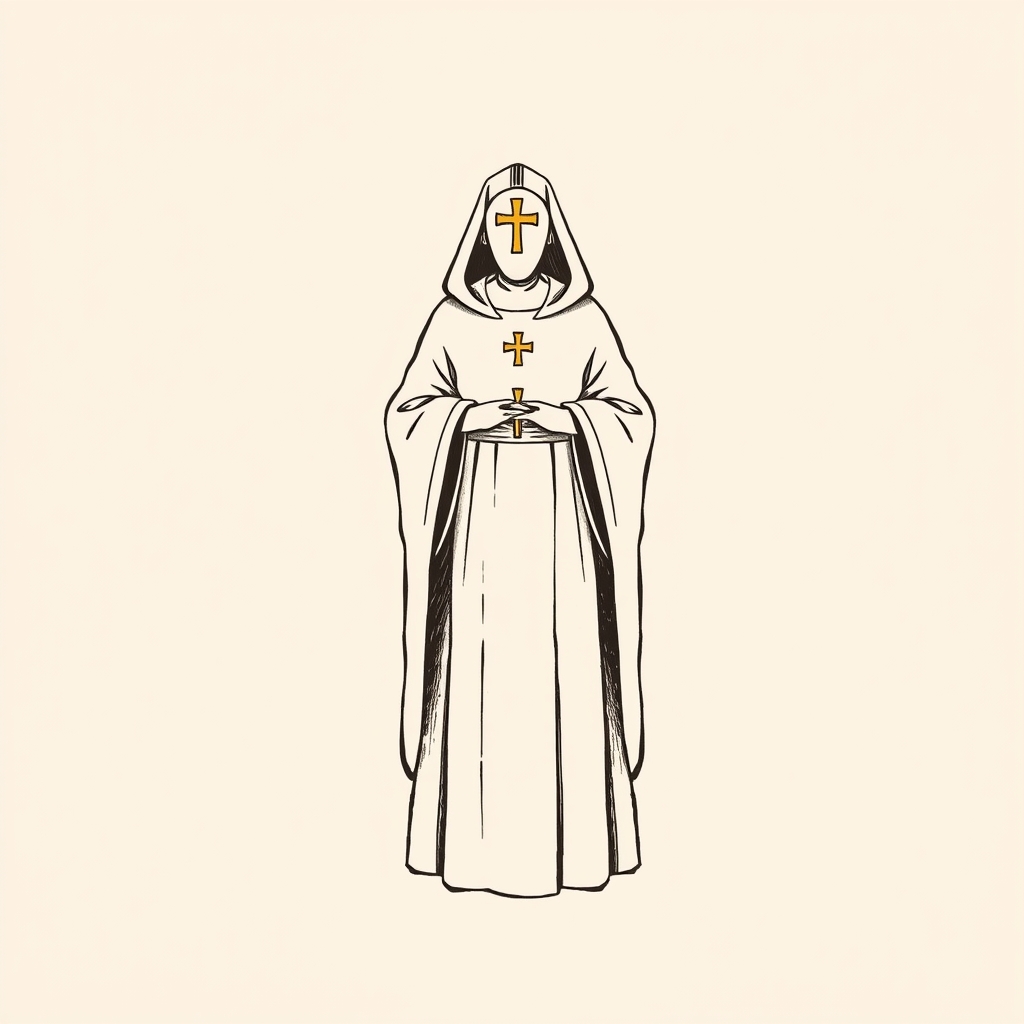
In iconography, Saint Hyacinth of Poland is recognizable by: Ciborium, Statue of the Blessed Virgin, Lily, Walking on water and Dominican habit.
What miracles are attributed to Saint Hyacinth of Poland?
5 miracles are attributed to this saint, notably: Mastery of the elements, Sign / wonder, Resurrection and Healing.
Which saints were contemporaries of Saint Hyacinth of Poland?
Contemporaries include: Saint Anthony of Padua (Ferdinand), Saint Arthaud of Belley, Saint Thomas Aquinas and Saint Bernard of Clairvaux.
When did Saint Hyacinth of Poland die?
Saint Hyacinth of Poland died around 1257.
What are the other names of Saint Hyacinth of Poland?
Other forms of the name: Hyacinthe d'Odrowatz and Jacek.
Who are the relatives of Saint Hyacinth of Poland?
Relatives of Saint Hyacinth of Poland: Eustache d'Odrowatz (father), Yves de Konski (uncle), Céslas (brother or cousin (nephew of Yves)) and Saul d'Odrowatz (grandfather).
Annexes & related entities
Structured data for exploration: events, miracles, quotes, places, attributes, patronages, and important entities cited in the text.
Key Events
- Studies in Krakow, Prague, and Bologna
- Meeting with Saint Dominic in Rome in 1218
- Reception of the habit at the convent of Santa Sabina
- Foundation of the Holy Trinity convent in Krakow
- Evangelization missions in Prussia, Russia, Scandinavia, and Asia
- Rescue of the Blessed Sacrament and the statue of the Virgin during the sack of Kiev by the Tatars
- Canonization by Clement VIII in 1594
Quotes
-
Into your hands, O Lord, I commend my spirit
Psalm 30 (last words) -
Rejoice, Hyacinth, my son, your prayers are pleasing to my Son
Apparition of the Virgin Mary