
A 5th-century Egyptian abbot, Saint Poemen lived a life of rigorous austerity between the deserts of Scetis and Terenuthis. Renowned for his profound humility and wisdom, he fled the distractions of the world and taught the mastery of passions through silence and obedience. He died in 451 after guiding many religious through his spiritual counsel.
Contemporaries

Figures and markers around the normalized period for this entry.
Guided reading
5 reading sections
SAINT POEMEN OR PASTOR,
Introduction and ascetic life
Presentation of Saint Poemen and his brothers, followed by a description of his rigorous ascetic practices and his monastic schedule.
451. — Pope: Saint Leo I, the Great. — Emperors of the East: Pulcheria and Marcian.
Restraint, discretion, self-vigilance, these are the three guides that the soul must faithfully follow. Spirit of Saint Poemen.
Perhaps the least known of the illustrious Saints of his time, Saint Poemen or Pastor was nevertheless very famous in antiquity. There is no name more surrounded with glory in the history of the Fathers of the Desert, say Baronius and Tillemont, than that of Saint Poemen or Pastor. The Greeks gave him great praise in their Menaion, and he appears to have justified their praise. They called him fellow citizen of the angels, leader of the solitaries and prince of the desert. They compare him to a sun shining by his wonders over all the earth, and as the mirror of the Divinity, through the holiness of his life.
He was Egyptian by origin, and could scarcely have reached the age of fifteen when he abandoned the world around 385; but he already had such a marvelous talent for inspiring the love of virtue that his brothers, touched by his pious invitations, followed him in his resolution and became solitaries with him. They were six in number, one of whom, older than him, was named Anub, and another, Paesius or Paese; the others, Simon, Alonius, Nesteros and Sarmatas the Younger. We shall not enter into the details of his virtues, his austerities and his miracles, which raised his reputation far above anything we could say about them.
Humility was, so to speak, his favorite virtue, after which charity, gentleness and patience were the most constant objects of his application. To give all these virtues a sure safeguard, and especially to purity, he devoted himself to the harshest austerities of the monastic life. He sometimes spent two entire days without taking any food, and as he grew in age, he extended this rigorous fasting to four and five days. He had forbidden himself the use of wine and meat, and if at times he deviated from this rule, it was only out of charity and while watering with his tears the food he agreed to take. However, he was as indulgent towards others as he was severe with himself; his maxim was that one must not kill the body, but kill the passions. No less assiduous in vigils, prayer and manual labor than in other austerities, he divided the twelve hours of the night into three different periods, four hours working, four hours praying, and four hours taking a little rest. By day he worked until Sext, read until Nones, and then gathered herbs to feed himself.
Detachment from the world
An illustration of Poemen's radicalism, as he refuses to see his own mother in order to prioritize their eternal reunion in heaven.
His profound wisdom and high holiness were evident both in his counsel and in the guidance of religious. No one was more devoted than he to the practices of the interior life, and more careful to distance himself from everything that could give rise to distractions and the memory of a world he had abandoned, and for which he had only contempt. His mother herself, having come to visit him, received this reply: "Which do you prefer, to see me for a moment now, or to be eternally with me in the world to come? You will enjoy the happiness of heaven if you resist your desire now." The mother, hearing this speech from her son through the door, which he had not even opened for her, withdrew, saying: "I renounce the pleasure of seeing you on earth to ensure the happiness of enjoying your company in heaven."
Wisdom and Teachings
A series of parables and advice on the hardening of the heart, humility, obedience, and the practice of silence.
A person from Syria, drawn by the reputation of his merit, having come to consult him regarding the hardening of the heart, Saint Poemen replied: "Water is soft and stone is hard. Yet water, falling from a vessel drop by drop upon the stone, pierces it little by little. It is the same with the word of God. Although it is in some way soft by its sweetness, and our heart is hard by its insensitivity, if one takes care to listen often to this divine word, it finally opens the heart, despite its hardness, to let the salutary fear of God enter therein."
He regarded humility, as did all the other Saints, as the foundation and proof of all virtues. "It is," he said, "as necessary to the soul as breathing is necessary to the body. Men carry their wickedness behind them," he also said. Finally, he asserted that this virtue was the source of the peace of the soul. One day a brother said to him: "How is it, my Father, that I can avoid speaking of my neighbor?" And he answered him: "It is if you are humble enough to reproach yourself for your faults. Imagine for this that you and your neighbor are like two paintings. If, in considering the one that represents yourself, you find only faults, you will undoubtedly find that that of your neighbor is respectable and admirable in comparison to your own. If, on the contrary, yours seems good to you, you will find that of your neighbor ugly. Thus, you will take great care not to detract from anyone, if you think rather of correcting yourself."
He regarded obedience and the renunciation of one's own will as the most effective instrument for the soul to arrive at perfection, and he said: "One advances in virtue according to how one distrusts oneself, how one resorts to God in trouble with deep humility, and how one casts one's own will behind oneself; for," he added, "our own will is like a wall of brass that we place between God and us, or like a stone that pushes us away from Him. Let us abandon our own will, and we shall be able to say with the Prophet: The wall will not stop me; I will leap over it to go to God."
Here are the rules he gave for silence. He was asked if it was better to speak than to be silent. "He who speaks for the love of God does well," he replied, "and he who is silent for the love of God does well also." — "If you put a bridle on your tongue," he said to another, "you will be at rest everywhere." — "Whatever trouble may befall you, if you know how to be silent, you have conquered it." A brother said to him: "When I see something, should I report it first?" He answered him: "You know what the Scripture says: He who answers before he has listened is a fool and makes himself despised. Thus, when you are questioned, answer, by all means; otherwise keep silence."
Barbarian incursions and end of life
Account of Poemen's forced displacements in the face of the Mazices invasions and his peaceful death at Scetis in 451.
Poemen was several times obliged to change deserts because of the frequent incursions of the Barbarians. Thus, in 395, after terrible ravages committed at Scetis by the Mazices, he had to withdraw with his brothers to Terenuthis, near an ancient temple of idols, and remain there for several years. But the danger that still existed in remaining there, because of the incessant attacks to which they were subjected, led him, very much against his will, to reach the desert near the city of Diolcos, which was populated by solitaries and where there were several monasteries. Finally, as soon as calm was restored, he returned to Scetis, where he gave himself up more than ever to the delights of contemplation. As his end approached, his ardent love for God increased, the treasure of his merits was filled; his body, exhausted by vigils and prayers, detached itself; his soul, entirely seraphic, rose in continual ecstasies, until, ripe for heaven, he launched himself radiant into the bosom of his God, in the year 451, around his eightieth year.
Source
Identification of the source work written by Abbé Grimes.
Excerpt from The Spirit of the Saints, by Abbé Grimes.
Additional passages recovered from the sources
These passages from Les Petits Bollandistes supplement the entry. The references identify their context in the original volume.
Read the supplementary notes and passages (1)
Source and restoration of the beginning of the entry
The beginning of this entry had been omitted during extraction. The retrieved page is reattached to the existing body, preserving the phrasing and chronology of the historical source.
Paul Guérin, Les Petits Bollandistes, volume 10, p. 238, 239. Bibliothèque nationale de France: https://gallica.bnf.fr/ark:/12148/bpt6k30740r
Iconography
Signs and attributes


Entities
Narrative network
The names, places, and concepts most present in the entry, weighted by centrality in the text.
The supernatural in their life
The miracles of Saint Pimen (the Shepherd)
Frequently asked questions about Saint Pimen (the Shepherd)
Who was Saint Pimen (the Shepherd)?
A 5th-century Egyptian abbot, Saint Poemen lived a life of rigorous austerity between the deserts of Scetis and Terenuthis. Renowned for his profound humility and wisdom, he fled the distractions of the world and taught the mastery of passions through silence and obedience. He died in 451 after guiding many religious through his spiritual counsel.
What is Saint Pimen (the Shepherd) invoked for?
Saint Pimen (the Shepherd) is invoked for: humility, patience and victory over passions.
How is Saint Pimen (the Shepherd) depicted in Christian art?
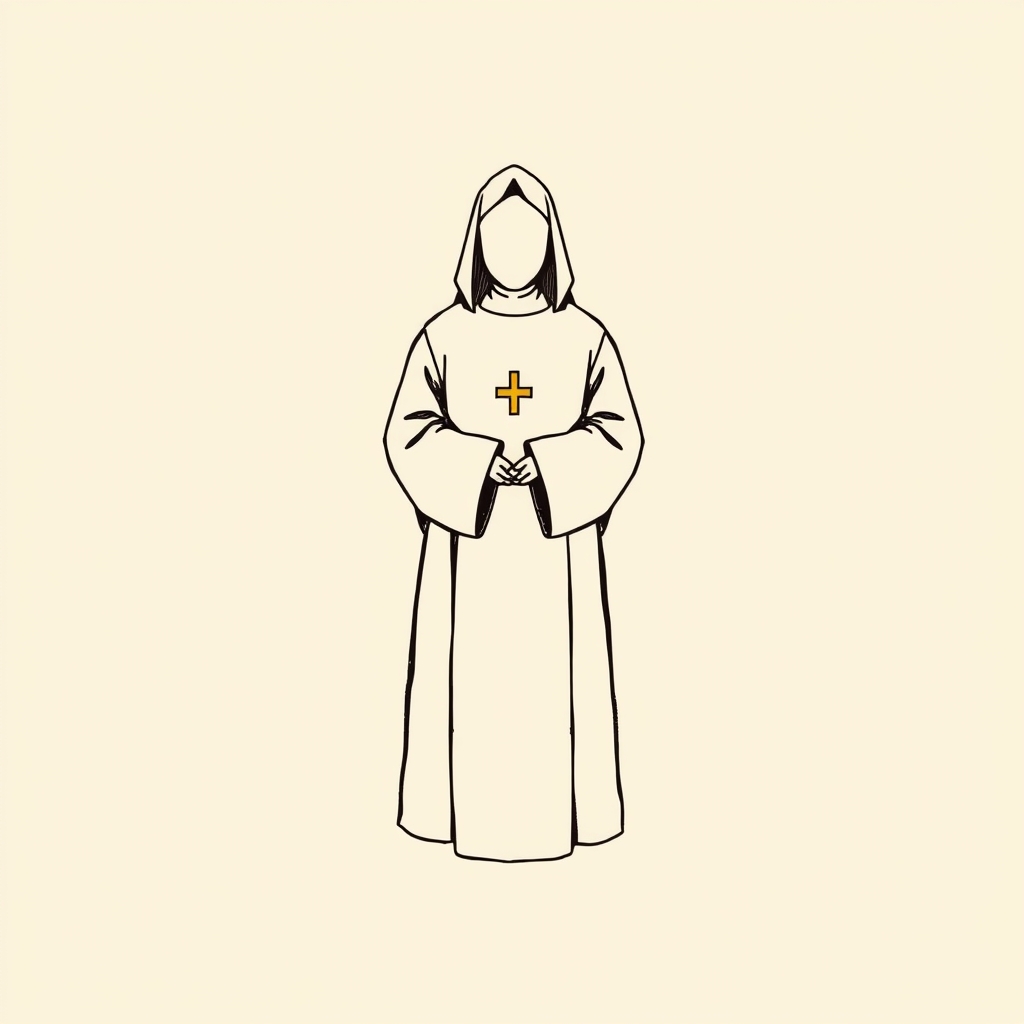
In iconography, Saint Pimen (the Shepherd) is recognizable by: monastic habit, herbs (food) and tears.
What miracles are attributed to Saint Pimen (the Shepherd)?
1 miracle are attributed to this saint, notably: Vision / apparition.
Which saints were contemporaries of Saint Pimen (the Shepherd)?
Contemporaries include: Saint Augustine of Hippo, Saint Honoratus of Arles, Saint James of Tarentaise and Saint Jerome of Stridon.
When did Saint Pimen (the Shepherd) die?
Saint Pimen (the Shepherd) died around 500.
What are the other names of Saint Pimen (the Shepherd)?
Other forms of the name: Pasteur and Poemen.
Who are the relatives of Saint Pimen (the Shepherd)?
Relatives of Saint Pimen (the Shepherd): Anub (brother), Payse (ou Paëse) (brother), Simon (brother), Alone (brother), Nesteros (brother), Sarmace le Jeune (brother) and Inconnue (mother).
Annexes & related entities
Structured data for exploration: events, miracles, quotes, places, attributes, patronages, and important entities cited in the text.
Key Events
- Monastic retreat in Scetis
- Fled to Terenuthis in 395 following the ravages of the Mazices
- Stayed near an ancient idol temple
- Retreat in the desert of Diolcos
- Return to Scetis after the restoration of calm
Quotes
Water is soft and stone is hard. Yet water, falling from a vessel drop by drop upon the stone, pierces it little by little. It is the same with the word of God.
Saint PoemenOur own will is like a wall of brass that we place between God and ourselves.
Saint Poemen