
Blessed Carloman
MONK OF MONTE CASSINO, IN ITALY (756).
The eldest son of Charles Martel, Carloman renounced his vast domains in 747 to embrace the monastic life. After a stay at Mount Soracte, he became a monk at Monte Cassino, distinguishing himself by his humility. He died in Vienne in the Dauphiné after a final diplomatic mission for peace in Italy.
Contemporaries

Figures and markers around the normalized period for this entry.
Guided reading
5 reading sections
BLESSED CARLOMAN, PRINCE OF FRANCE,
MONK OF MONTE CASSINO, IN ITALY (756).
Origins and political legacy
Son of Charles Martel, Carloman inherited the government of Austrasia, Swabia, and Thuringia in 741.
Carloman was the eldest son o f Charles Mart el and his wife Chrotrude or Rotrude, and brother of the powe rful Pepin, King of the Franks. His father, who died in 741, bequeathed to him by testament the government o f the pro vinces of Austrasia, Swabia, and Thuringia.
Abdication and pilgrimage
In 747, Carloman relinquished his titles in favor of his brother Pepin and set out on a pilgrimage to Rome to meet Pope Zachary.
Having reached the pinnacle of glory and suddenly disgusted with the world, Carloman handed over the government of his states to his brother Pepin in 747, entrusted him with the education of his eldest son Drogon, and set out on a pilgrimage t o Rome, where Pope Zachary received him with the greatest distinction.
Retreat to Monte Cassino
After a stay at Mount Soracte, he sought solitude at the Abbey of Monte Cassino under the direction of Abbot Petronax.
After having satisfied his devotion in the capital of Christendom, he went to Mount Soracte, located a few miles from Rome. There he had a convent built in honor of Saint Sylvester where he remained hidden for some time. But when the place of his stay became better known, all the Franks of distinction who went on pilgrimage to Rome came to see him, and often disturbed him in his contemplation and his intimate communion with God. This determined him to leave this place, and he went with only one of his companions to the Benedictine Abbey of Monte Cassino, governe d at that t ime by Petronax.
Soon it was k nown thr oughout almost all of Europe that Carloman had embraced the monastic life at Monte Cassino, and that he was a model of the most sublime Christian virtues. All good people praised God and admired the power of His grace, which operates such astonishing transformations in the hearts of men, causing them to descend voluntarily from the height of honors to the humblest condition.
Final mission and passing
Sent on a diplomatic mission to Pepin to address the Lombard threat, he died in Vienne in Dauphiné on his return journey.
After having, for several years, edified the entire community, he was obliged, by an order of his abbot, to make a journey to his brother Pepin, t o con sult with him on the means to put an end to the ravages that the Lombards were beginning to inflict in Italy. We have no certain information on the success of this mission. It is only known that after having fulfilled it, he set out to return, and that he died in a convent in Vienne, in Dauphiné, rich in merit an d similar, by his v oluntary humility, to his Redeemer. The day of his death cannot be specified, but it occurred in the month of August or December. Pepin sent his mortal remains in a golden reliquary to Monte Cassino, where they were buried with honor under the high altar. The name of Carloman is found in the Benedictine martyrology.
Sources
References to the works of Baillet and the continuators of Godescard.
Baillet and the continuators of Godescard.
Iconography
Signs and attributes

Entities
Narrative network
The names, places, and concepts most present in the entry, weighted by centrality in the text.
Frequently asked questions about Blessed Carloman
Who was Blessed Carloman?
The eldest son of Charles Martel, Carloman renounced his vast domains in 747 to embrace the monastic life. After a stay at Mount Soracte, he became a monk at Monte Cassino, distinguishing himself by his humility. He died in Vienne in the Dauphiné after a final diplomatic mission for peace in Italy.
How is Blessed Carloman depicted in Christian art?
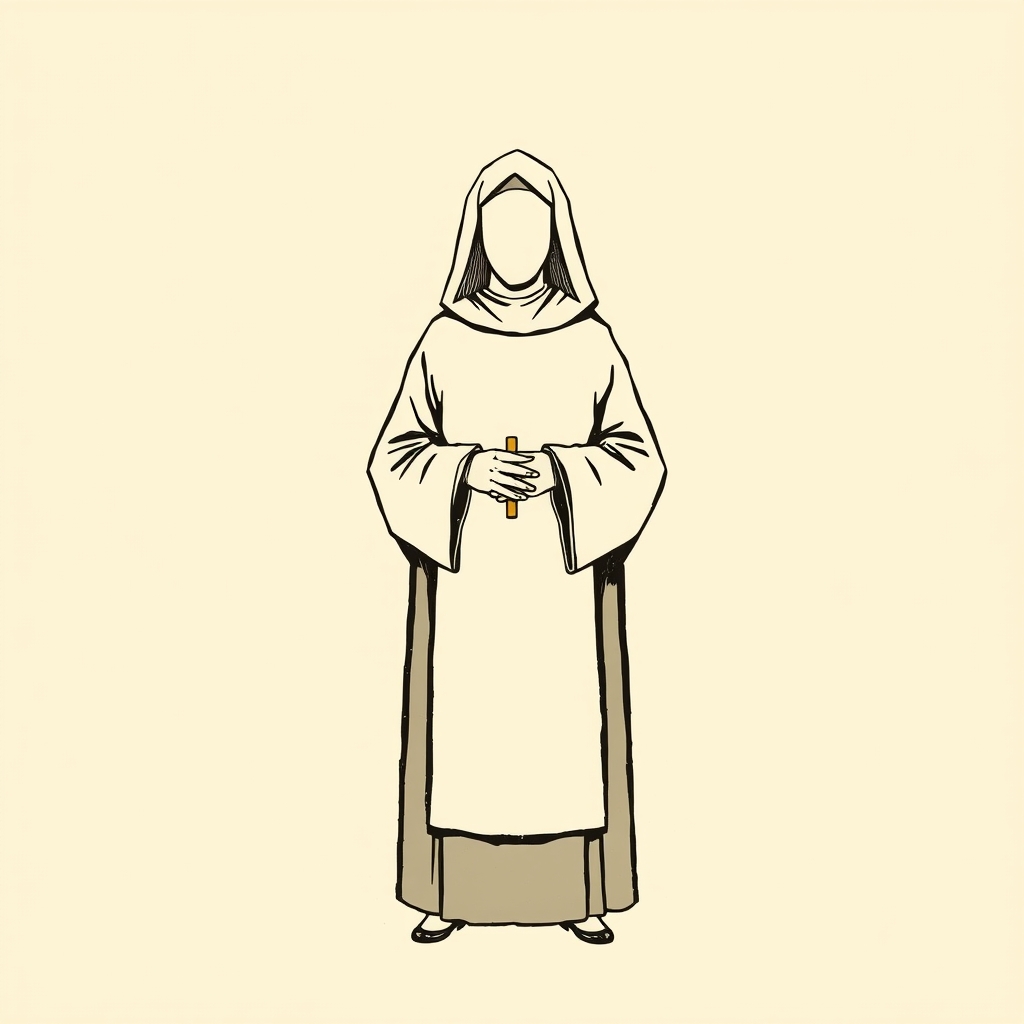
In iconography, Blessed Carloman is recognizable by: Benedictine monk habit and laid-aside crown.
Which saints were contemporaries of Blessed Carloman?
Contemporaries include: Saint Hidulph of Trier, Saint Ghislain (Guillain), Saint Lambert (Landebert) and Saint Amand of Maastricht.
When did Blessed Carloman die?
Blessed Carloman died around 756.
Who are the relatives of Blessed Carloman?
Relatives of Blessed Carloman: Charles Martel (father), Chrotrude (ou Rotrude) (mother), Pépin (brother) and Drogon (son).
Annexes & related entities
Structured data for exploration: events, miracles, quotes, places, attributes, patronages, and important entities cited in the text.
Key Events
- Inheritance of the government of Austrasia, Swabia, and Thuringia in 741
- Renunciation of power in 747 in favor of his brother Pepin
- Pilgrimage to Rome and reception by Pope Zachary
- Foundation of a convent on Mount Soracte
- Entered the Abbey of Monte Cassino under Abbot Petromax
- Diplomatic mission to Pepin regarding the Lombards
- Died in Vienne, Dauphiné