
A former king of Cambria in the 6th century, Gunthiern renounced his crown to live as a solitary on the island of Groix and then in Quimperlé. He is famous for having saved the Vannes region from an invasion of destructive worms thanks to holy water. His cult has remained very active in Brittany, notably at the Sainte-Croix Abbey in Quimperlé.
Contemporaries

Figures and markers around the normalized period for this entry.
Guided reading
6 reading sections
SAINT GUNTHIERN OR GONTHIERN,
KING OF CAMBRIA AND LATER A SOLITARY
Renunciation and retreat
Gunthiern, a Breton king of Cambria, abandons his crown and riches to withdraw into the solitude of the island of Groix.
6th century.
Salitudinem veluti matrem orationis et munditiae semper amplectatur.
Cling to solitude: it is like the mother of prayer and purity.
Saint Bonaventure.
Gunthiern, one of the Breton kings of Cambria (Wales), left the crown, through a movement of piety, and, generously trampling the grandeurs of the earth underfoot, he gave everything he possessed to buy the precious pearl of the Gospel, and withdrew to the island of Groix or Groais, located one league from the mouth of the Blavet river.
Meeting with Count Grallon
After years of solitude, Gunthiern is discovered and invited by Count Grallon, who offers him land at Anaurot, the future site of Quimperlé.
It was in this dreadful solitude that Gunthiern came to hide his rank and his virtues, after having slipped away from his courtiers and servants. He remained there for several years, known only to the fishermen of that coast. But at last, heaven manifested him through so many wonders that the two lords who owned the place, named Chemen and Heboen, paid him every kind of respect and made him known to Count Grallon, upon whom the island depended. The latter sent to ask Saint Gunthiern to come and see him. The Saint obeyed, and Grallon remained so edified by his conversation and his humility that he wished to remove him from his rock, and gave him a portion of land in a place named Anaurot, situated at the confluence of the two rivers Isol and Ellé, at the eastern extremity of the land of his dominion, which is the very place where the town of Kimperlé or Quimperlé was built.
The miracle of the harvest
At the request of Count Guérech I of Vannes, Gunthiern uses holy water to eradicate an invasion of worms ravaging the crops.
The Count of the land of Vannes, Guérech I, seeing his vassals threatened with famine because the worms, which were eating the wheat in the blade, were entirely ruining the hope of the harvest, judged that there was no better way to stop this calamity than to have recourse to the prayers of Gunthiern. Persuaded of their efficacy, he sent to him three of the principal inhabitants of Vannes, Guedgual, Catuoth, and Cadur, to beseech him to have pity on the whole country. The Saint, sensitive to the miseries of the people, sent holy water and ordered that a few drops be sprinkled over the countryside; which had no sooner been done than all the worms that were ravaging it died, as if this water had become a poison to them. The Count, in gratitude, gave to Saint Gunthiern a land situated on the Blavet river, named Vegnac, and since Kervegnac or Chervegnac, which subsequently passed into secular hands.
Death and translations
The saint died at the beginning of the 6th century at Chervegnac; his remains were later sheltered from the Normans on the island of Groix.
Saint Gunthiern died at the beginning of the 6th century, and was buried at Chervegnac, where he had retired. During the incursions of the Normans, his body was transported and hidden on the island of Groix; it was discovered there in the 12th century.
Cult and Heritage
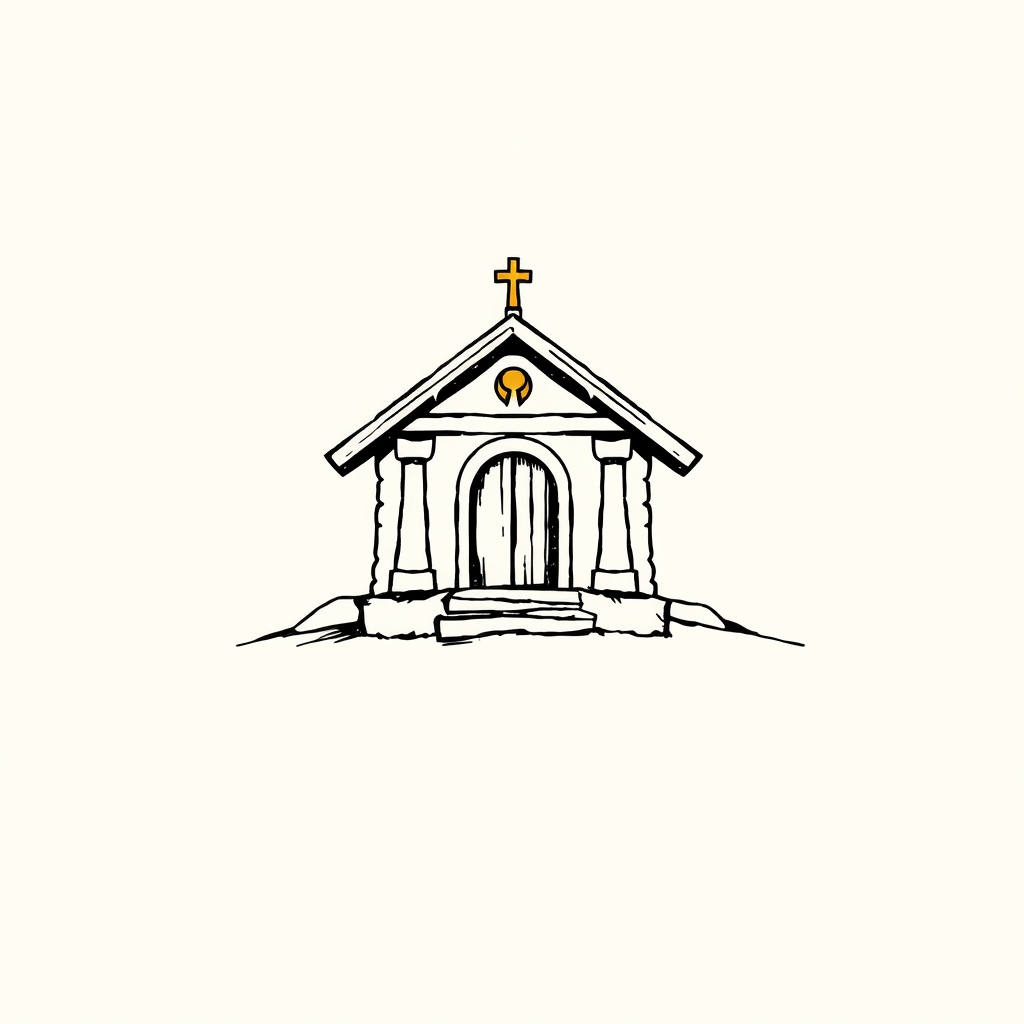
The saint's memory is honored in Quimperlé and on the island of Groix, with several chapels and priories dedicated to his name throughout the centuries.
## CULT AND RELICS. His memory has always been preserved in the Abbey of Sainte-Croix de Quimperlé (Sancta Crux Trecorensis, of the Order of Saint Augustine, in the former diocese of Tréguier, current diocese of Saint-Brieuc, Côtes-du-Nord), of which he was believed to be the founder, on the island of Groix, and in other places. In 1080, a chapel in honor of Saint Gunthiern was built within the monastery enclosure of Quimperlé, which was blessed in 1099 and rebuilt on its ruins in 1407 by F. Pierre de Kaer, chamberlain. Only marbles remained of it in 1678, and it was completely destroyed to lay out the plan for the abbatial palace. The head of the Saint was carried to the underground chapel of Saint-Gurinès and placed on the epistle side. The church of the priory of Doüelan, located on an inlet two leagues from Quimperlé, was dedicated to Saint Gunthiern. There was also a chapel under the same name at one of the points of the island of Groix, where the oratory of Saint Gunthiern once stood, and this place still bears the name of Loc-Guthiern. An assembly was held there every year on the day of the Saint's feast, which was of double solemnity, and which, falling on June 29, the day consecrated to the memory of the apostles Saint Peter and Saint Paul, was transferred to July 3. A 14th-century act from the Abbey of Quimperlé mentions the cemetery of Saint-Guthiern, and another act from the year 1253 speaks of the port of Saint-Guthiern.
Hagiographic sources
The biography is based on the work of Dom Lubineau concerning the saints of Brittany.
To complete this biography, we have made use of the Lives of the Saints of Brittany, by Dom Lubineau.
Additional passages recovered from the sources
These passages from Les Petits Bollandistes supplement the entry. The references identify their context in the original volume.
Read the supplementary notes and passages (3)
Note on the Blavet River
Historical supplement to the Petits Bollandistes, transcribed from the image of the 19th-century edition. The traditions, assessments and expressions describing a "current" situation are those of the source in its time; they do not constitute a contemporary verification.
This river rises in the department of Côtes-du-Nord, passes through Hennebon and becomes navigable there. It empties into the roadstead of Lorient.
Paul Guérin, Les Petits Bollandistes, volume 8, p. 5. Bibliothèque nationale de France: https://gallica.bnf.fr/ark:/12148/bpt6k307386
Note on the etymology and location of Quimperlé
Historical supplement to the Petits Bollandistes, transcribed from the image of the 19th-century edition. Traditions, assessments and expressions describing a "current" situation are those of the source in its era; they do not constitute contemporary verification.
Kemperellé, in Breton, means confluence of the Ellé. This town is three leagues from Port-Louis, and eight from Quimper.
Paul Guérin, Les Petits Bollandistes, volume 8, p. 5. Bibliothèque nationale de France: https://gallica.bnf.fr/ark:/12148/bpt6k307386
Note on the title of abbot attributed to Saint Gunthiern
Historical complement from Les Petits Bollandistes, transcribed from the image of the 19th-century edition. Traditions, assessments, and expressions describing a "current" situation are those of the source in its time; they do not constitute a contemporary verification.
Some calendars of the province give the saint the title of abbot; this is an error. There was no abbey in the place where he lived before the 10th century, a time when Alain Cagnart, Count of Cornouaille, founded that of Quimperlé.
Paul Guérin, Les Petits Bollandistes, volume 8, p. 5. Bibliothèque nationale de France: https://gallica.bnf.fr/ark:/12148/bpt6k307386
Iconography
Signs and attributes

Entities
Narrative network
The names, places, and concepts most present in the entry, weighted by centrality in the text.
The supernatural in their life
The miracles of Saint Gunthiern (Gonthiern)
Frequently asked questions about Saint Gunthiern (Gonthiern)
Who was Saint Gunthiern (Gonthiern)?
A former king of Cambria in the 6th century, Gunthiern renounced his crown to live as a solitary on the island of Groix and then in Quimperlé. He is famous for having saved the Vannes region from an invasion of destructive worms thanks to holy water. His cult has remained very active in Brittany, notably at the Sainte-Croix Abbey in Quimperlé.
What is Saint Gunthiern (Gonthiern) the patron saint of?
Patronage of Saint Gunthiern (Gonthiern): Quimperlé, Groix Island and Kervignac.
What is Saint Gunthiern (Gonthiern) invoked for?
Saint Gunthiern (Gonthiern) is invoked for: protection of crops against insects and famine.
How is Saint Gunthiern (Gonthiern) depicted in Christian art?
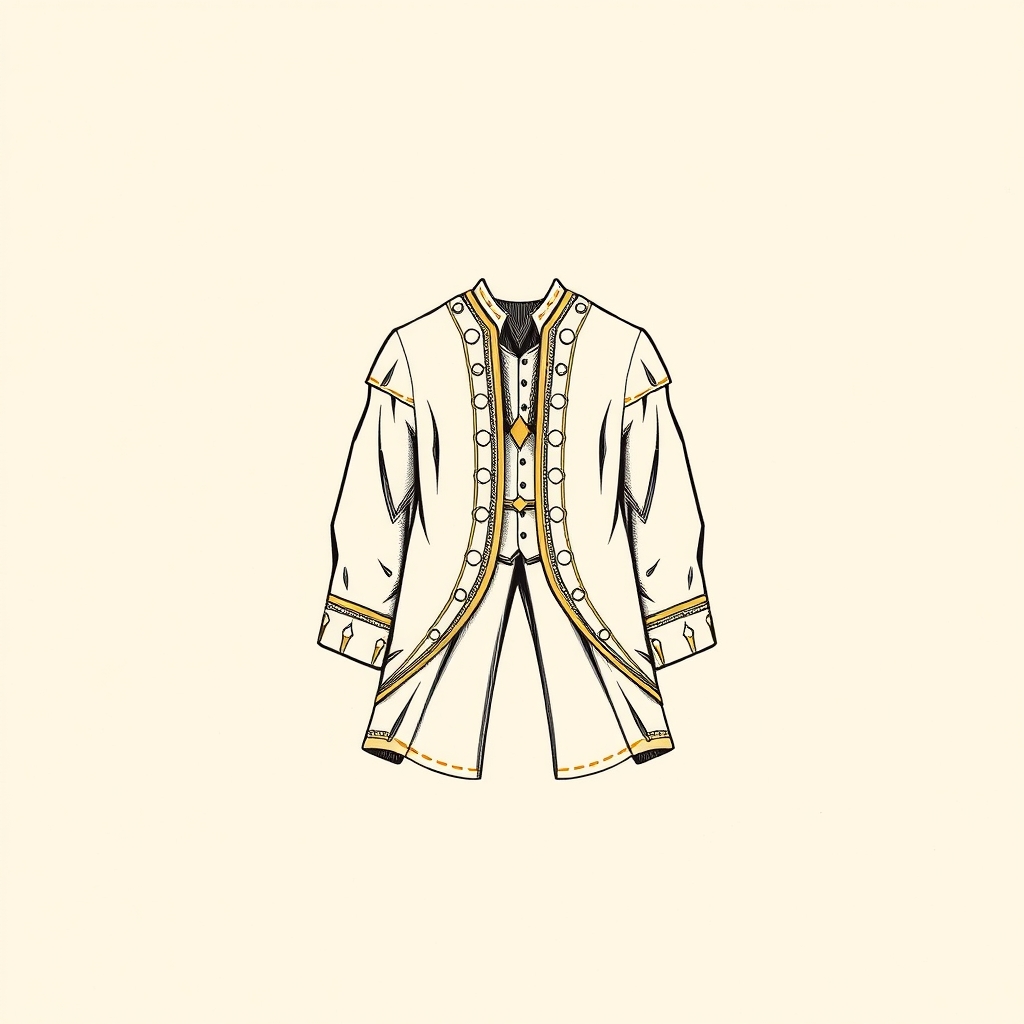
In iconography, Saint Gunthiern (Gonthiern) is recognizable by: royal garments abandoned, holy water and hermitage.
What miracles are attributed to Saint Gunthiern (Gonthiern)?
2 miracles are attributed to this saint, notably: Mastery of the elements and Sign / wonder.
Which saints were contemporaries of Saint Gunthiern (Gonthiern)?
Contemporaries include: Saint Remigius (Apostle of the Franks), Saint Antide of Besançon, Saint Eugene of Carthage and Saint Nicaise of Reims.
When did Saint Gunthiern (Gonthiern) die?
Saint Gunthiern (Gonthiern) died around 600.
What are the other names of Saint Gunthiern (Gonthiern)?
Other forms of the name: Gonthiern, Guthiern and Gunthiernus.
Annexes & related entities
Structured data for exploration: events, miracles, quotes, places, attributes, patronages, and important entities cited in the text.
Key Events
- Abdication from the throne of Cambria
- Solitary retreat on the island of Groix
- Meeting with Count Grallon
- Establishment at Anaurot (Quimperlé)
- Miracle of holy water against destructive worms in Vannes
- Translation of the relics to Groix during the Norman incursions
- Rediscovery of the body in the 12th century
Quotes
Cling to solitude: it is like the mother of prayer and purity.
Saint Bonaventure (as an epigraph)