
Venerated at the church of Saint-Étienne-des-Grès in Paris, this Black Madonna became the center of an illustrious confraternity in the 16th century. She is famous for having delivered Saint Francis de Sales from a terrible temptation and for having been saved from revolutionary destruction by the Countess of Carignan. Since 1806, she has been honored by the Sisters of Saint Thomas of Villanova.
Contemporaries

Figures and markers around the normalized period for this entry.
Guided reading
7 reading sections
NOTRE-DAME DE BONNE-DÉLIVRANCE, IN PARIS
Origins and influence of the confraternity
The church of Saint-Étienne-des-Grès in Paris became famous thanks to its statue of the Black Virgin and an illustrious confraternity founded in the 16th century to assist the afflicted.
The church of Saint-Étienne-des-Grès has, from time immemorial, drawn all its fame from a Black Virgin, kn own as Notre-Dame de Bonne-Dél ivrance, placed in one of its chapels; and in the 16th century, a confraternity was formed there in her honor which became illustrious, under the title of the Confraternity of Notre-Dame de Bonne-Délivrance. In fact, people flocked from all parts to this confraternity, and soon more than twelve thousand members had themselves registered under the banner of Notre-Dame de Bonne-Délivrance. This title alone spoke to every heart: for who does not need to be delivered from some mental distress, some anguish of heart, some bodily infirmity, some passion that tyrannizes within, or some contradiction that comes from without? But this title touched above all prisoners for debt, women approaching their term, and the sick in danger of death. It touched the students of the colleges themselves; and these young people, faithful to the pious traditions of the domestic hearth, came in crowds to enlist in the service of the Queen of Virgins to place under her protection the honor of their early years. They rose before daybreak to recite the Office of Our Lady, and gathered together around the venerated statue to say the rosary.
The deliverance of Saint Francis de Sales
In 1578, the young Francis de Sales was healed of a profound spiritual and physical crisis after invoking the Virgin and making a vow of chastity.
Among this number was, in 1 578, Francis de S ales, then seventeen years old. His most delightful moments were those he spent at the feet of the miraculous image of Mary, telling her everything that was happening in his innocent soul, nourishing himself on the memory of her benefits and the gratitude they gave birth to in his heart. It was there that, in the holy ardor of his piety, he took the firm resolution to consecrate himself forever to God and to Mary and to keep perpetual chastity; it was there above all that he obtained deliverance from a terrible temptation that nearly led him to the grave. This holy young man had been seized by the thought that perhaps he would not be saved, that perhaps he would go to hell and be deprived for all eternity of the happiness of seeing God and loving Him, of seeing and loving Mary, his tender mother; and this thought had so overwhelmed him that he could neither eat, nor drink, nor sleep; he was withering away before one's eyes, and jaundice, invading his whole body, caused him acute pain. Finally, one day, returning from college, he entered the church of Saint-Étienne-des-Grès, went to prostrate himself before Our Lady of Good Deliverance, and said to her with many tears, more from the heart than from the lips: "Remember, O Virgin Mary, my tender mother, that never was it known that anyone who fled to your protection and implored your assistance was left forsaken. Inspired by this confidence, O Virgin, mother of virgins, I run to you, I throw myself at your feet, groaning under the weight of my sins. O Mother of the Word, do not despise my prayers, but graciously hear and answer me." Then, addressing God, he asked Him, through the intercession of Mary, that his mind and body be restored to their original state, made a vow of perpetual chastity, and promised to recite each day, in memory of this vow, a rosary of six decades. Scarcely had he said these words when full health was restored to him, and his soul, reassured, returned, after six weeks of unheard-of suffering, to a profound peace.
The intercession for Father Bernard
Father Bernard, a figure of Parisian charity, obtains the protection of the Virgin in the face of a perilous situation in his home.
Full of the same confidence in Our Lady of Good Deliverance, F ather Bernard, nicknamed the poor priest, whose beatification the clergy of France has several times requested, obtained before the same statue a grace no less remarkable. Having returned from a life of waywardness to a Christian conduct, he found himself exposed to imminent peril by the arrival in the house where he lived of a very dangerous person who wanted to take up residence there. In this crisis, he ran to throw himself at the feet of Our Lady of Good Deliverance, prayed to her with all his soul, returned to his dwelling, and the person had already left, never to return.
Royal Devotion and Social Works
The kings of France, from Louis XIII to Louis XIV, supported the confraternity, which used donations to pay off the debts of Parisian prisoners.
These facts and several others increased the devotion of the faithful to this religious sanctuary. The Sovereign Pontiffs enriched it with the most precious indulgences; the most illustrious personages, kings and queens, princes and lords, men-at-arms and women of the world, had themselves inscribed in the register of the confraternity, and their names appear there alongside the most common names. One sees there Louis XIII a nd Anne of Aus tria, Louis XIV , still a child, and, following his example, all the children of France, inscribed from their birth, the Duke of Orléans, brother of Louis XIII, and the Duke of Anjou, brother of Louis XIV, the Great Condé and the princess of that name, the Prince and Princess of Conti, Maria Theresa of Austria, wife of Louis XIV, and Louis, the Dauphin. We would never finish if we wished to name all the celebrities who came to mingle with the common people under the banner of Mary; and their piety proved as generous as their veneration for Our Lady of Good Deliverance. Louis XIII gave a truly royal gift of silverware for the decoration of her chapel, Anne of Austria gave silver candlesticks adorned with fleurs-de-lis, a magnificent lamp and a holy water stoup, both of silver, and finally a complete set of red velvet vestments. Excited by the example of the court, some gave rich garments and precious robes to cover the holy image on great solemnities; others poured abundant alms into the treasury of the confraternity, which were consecrated to the deliverance of prisoners for debt. Furthermore, a collection took place at every service for this noble work; and each year the governors of the confraternity would spread out into the various prisons of Paris, provided with the gifts made to Our Lady of Good Deliverance, would have the doors opened for the unfortunate debtors, and would return them to their moved and grateful families.
An intense liturgical life
Detailed description of daily and weekly offices, including masses for the deceased and solemn processions.
However, the fervor of these faithful servants of Mary is even better revealed by the religious offices celebrated by the confraternity, the multiplicity and duration of which would so greatly frighten the lukewarmness of our century today.
Every Sunday, after the chapter mass, a solemn mass was celebrated in honor of the Blessed Virgin with deacon and subdeacon, chapels and organs, and the celebrant recited a De profundis after the offertory, and another after the mass, for the deceased confreres. Likewise, in the afternoon, the chapter Vespers were followed by a sung office with nine psalms and nine lessons.
Every first Sunday of each month, there were, in the evening, the Vespers of the Blessed Virgin, a procession around the church, where the litanies, the Salve Regina or another hymn, depending on the season, the Domine, non secundum, the Exaudiat with the prayer for the king, the Languentibus and the De profundis were sung; then a solemn benediction.
Every Monday, Lauds and a solemn Requiem mass were sung for the deceased confreres. Every Tuesday, a solemn mass of Saint Roch, with a commemoration of Saint Sebastian, followed by a low mass of Our Lady of Pity. Every Wednesday, a solemn mass of the Holy Spirit. Every Thursday, a solemn mass of the Blessed Sacrament, followed by a low mass of Saint Stephen. In the evening, solemn benediction, and, every first Thursday of the month, a procession of the Blessed Sacrament. Every Friday, a solemn mass of the Holy Cross, followed by the reading of the Passion. Finally, every Saturday, a solemn mass of the Blessed Virgin, followed by the Stabat Mater. These rules were only deviated from on feast days when the rubric opposed them; and at the end of each mass, the De profundis was said for the deceased confreres.
Besides this, a mass was said every day for the benefactors of the confraternity. On all feasts of the Blessed Virgin, the entire office of the breviary was sung, starting with the first Vespers; there were also two high masses; then, evening and morning, exposition of the Blessed Sacrament with preaching. On the feasts of Saint Peter and Saint John the Baptist, of Saint Stephen and Saint Denis, of Saint Roch and Saint Sebastian, of Saint Genevieve and Saint Barbara, who were the patrons of the confraternity, the entire office was also sung. Finally, upon the death of each confrere, Vespers of the Dead, Matins with nine psalms and nine lessons, Lauds and commendations, three high masses, and the absolution were sung.
But what was most remarkable was the general procession that took place every year, on May 1st and August 24th, from the church of Saint-Étienne to another parish chosen each year. They departed at eight o'clock in the morning, and all the brothers and sisters attended with a numerous clergy.
Conflict with the Parliament of Paris
In 1737, the Parliament of Paris suppressed the annual procession, a decision attributed to the influence of Jansenism.
This procession had two centuries of existence and glory when, on February 6, 1737, the Parli ament of Paris, posse ssed by the mania of interfering in spiritual matters, deemed it appropriate to suppress this solemnity, which gladdened all Christian hearts and only offended the gaze of Jansenism, t hen in gre at vogue, or of the impiety then nascent within the homeland. But if human power could suppress an external ceremony, it could diminish nothing of the trust and love of the children of Mary for their mother. Thus, the sanctuary of Our Lady of Good Deliverance continued to be the object of the devotion of the faithful and the destination of their pious pilgrimages.
Survival during the Revolution
During the Reign of Terror, the Countess of Carignan saved the statue from revolutionary auctions before entrusting it to the nuns of Saint-Thomas de Villeneuve.
Finally arrived the evil days of the revolution and the supreme triumph of impiety. Priests were driven out, churches were pillaged, and in this sacrilegious devastation, Saint-Étienne des Grès was not forgotten. This church offered too seductive a bait to greed to escape the fury of the devastators. It was therefore stripped of all the riches that the faith of princes and the faithful had amassed there over several centuries: gold, silver, iron, grilles, marbles, woodwork, and all the works of art that decorated the walls were removed, and finally the statue itself, to sell everything at auction. A pious lady, the Countess of Carignan Saint-Mauric e, informed of the fact, immediately ran to the municipality of Paris, managed to buy the holy statue, had it transported to her mansion, and there dedicated a small oratory to it where a hidden priest celebrated the holy mysteries every day. The pious countess enjoyed her treasure in secret, when, according to the customs of the time, she was incarcerated as a suspect.
LIVES OF THE SAINTS. — VOLUME VII. 38 in the house on Rue de Sèvres called *les Oiseaux*, which had been transformed into an additional prison; but the holy statue, having escaped the gaze of the evildoers, always remained in its small oratory; and on October 4, 1794, the pious countess, set free by a protection of Our Lady of Good Deliverance whom she had invoked every day during her captivity, resumed her prayers before the holy image. Four months later, learning that the hospital sisters of Saint-Thomas de Villeneuve, whom s he was particularly fond of, were about to be dri ven from their community by the government, she vowed to give her cherished statue to these ladies if the government, renouncing its hostile designs, ceased to disturb them. For their part, the nuns made a novena to Our Lady of Good Deliverance; so many prayers were answered, and the nuns remained undisturbed in their community. The Countess of Carignan then offered to fulfill her vow: the ladies of Saint-Thomas accepted it with happiness, hastened to build a chapel to receive the statue; and, on July 1, 1806, the miraculous image was transported to Saint-Thomas de Villeneuve, where it also became the object of fervent worship and the destination of numerous pilgrimages. Thus was replaced the famous chapel of Our Lady of the Grès, which fell, as did the church, under the hammer of the demolishers.
Excerpt from *Notre-Dame de France*, by the parish priest of Saint-Sulpice.
Iconography
Signs and attributes
Entities
Narrative network
The names, places, and concepts most present in the entry, weighted by centrality in the text.
The supernatural in their life
The miracles of Our Lady of Good Deliverance (Black Madonna of Paris)
Frequently asked questions about Our Lady of Good Deliverance (Black Madonna of Paris)
Who was Our Lady of Good Deliverance (Black Madonna of Paris)?
Venerated at the church of Saint-Étienne-des-Grès in Paris, this Black Madonna became the center of an illustrious confraternity in the 16th century. She is famous for having delivered Saint Francis de Sales from a terrible temptation and for having been saved from revolutionary destruction by the Countess of Carignan. Since 1806, she has been honored by the Sisters of Saint Thomas of Villanova.
What is Our Lady of Good Deliverance (Black Madonna of Paris) the patron saint of?
Patronage of Our Lady of Good Deliverance (Black Madonna of Paris): Confraternity of Our Lady of Good Deliverance.
What is Our Lady of Good Deliverance (Black Madonna of Paris) invoked for?
Our Lady of Good Deliverance (Black Madonna of Paris) is invoked for: deliverance from mental anguish, heart anguish, bodily infirmities, debtors, women approaching their due date, the terminally ill and students.
How is Our Lady of Good Deliverance (Black Madonna of Paris) depicted in Christian art?
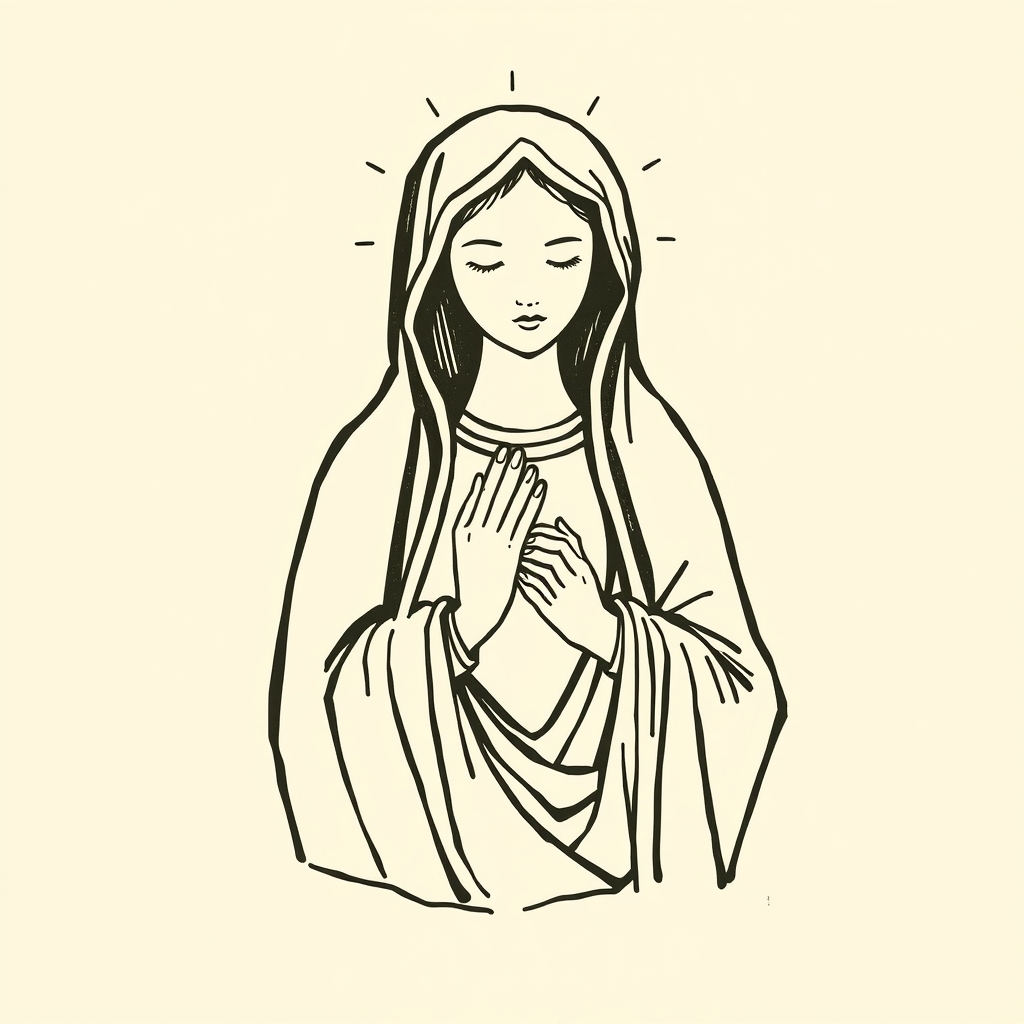
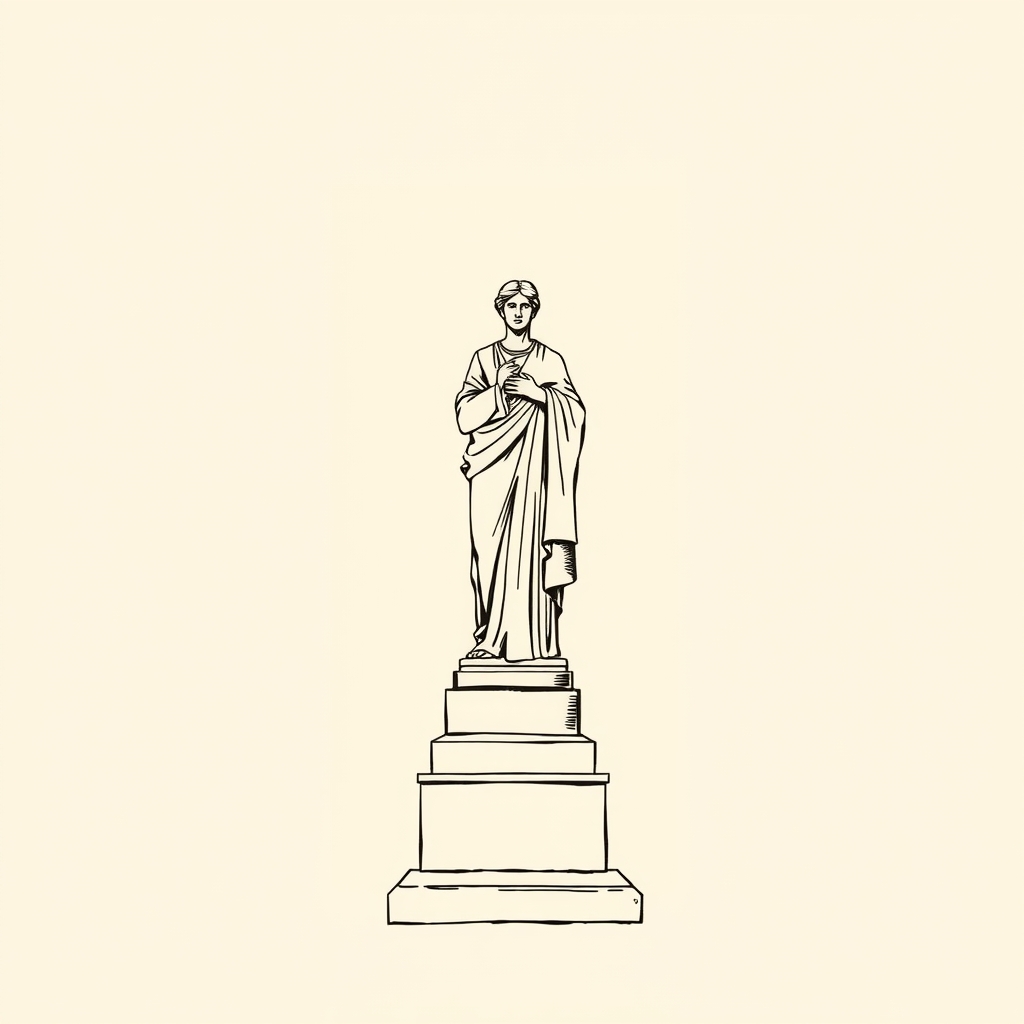
In iconography, Our Lady of Good Deliverance (Black Madonna of Paris) is recognizable by: Black Madonna and Statue.
What miracles are attributed to Our Lady of Good Deliverance (Black Madonna of Paris)?
3 miracles are attributed to this saint, notably: Healing and Protection / deliverance.
Which saints were contemporaries of Our Lady of Good Deliverance (Black Madonna of Paris)?
Contemporaries include: Blessed John of Jesus-Mary, Ana de Jesús, Venerable Anne of Jesus and Saint Francis de Sales (Bishop and Prince of Geneva).
When did Our Lady of Good Deliverance (Black Madonna of Paris) die?
Our Lady of Good Deliverance (Black Madonna of Paris) died around 1600.
What are the other names of Our Lady of Good Deliverance (Black Madonna of Paris)?
Other forms of the name: Vierge noire and Notre-Dame des Grès.
Annexes & related entities
Structured data for exploration: events, miracles, quotes, places, attributes, patronages, and important entities cited in the text.
Key Events
- Establishment of an illustrious confraternity in the 16th century
- Vow of chastity of Francis de Sales before the statue in 1578
- Suppression of the annual procession by the Parliament of Paris on February 6, 1737
- Pillage of the Saint-Étienne-des-Grès church during the Revolution
- Purchase of the statue by the Countess of Carignan Saint-Maurice to save it from auction
- Transfer of the statue to the Sisters of Saint Thomas of Villanova on July 1, 1806
Quotes
-
Remember, O most gracious Virgin Mary, my tender mother, that never was it known that anyone who fled to your protection and implored your assistance was left forsaken.
Prayer of Francis de Sales (Memorare)