
Saint Chlodulf
Chloud
Son of Saint Arnulf and Saint Doda, Chlodulf was a high dignitary of the palace of Austrasia before becoming Bishop of Metz in 656. He governed his diocese with great charity for forty years and died at the age of 91. His relics are today preserved in Lay, near Nancy.
Contemporaries

Figures and markers around the normalized period for this entry.
Guided reading
5 reading sections
SAINT CHLODULF OR CHLOUD, BISHOP OF METZ (696).
SAINT EUSTADIOLA,
Origins and formation
Son of Saint Arnulf and Dode, Chlodulf received a careful education in letters and sciences within a pious family.
Chlodu lf (Chloudulfus, Floudulphus), who should not be confused with Saint Cloud (Clodouls), grandson of Saint Clotilde, was the son of the blessed A rnulf, Bishop of Metz, and of D ode. Formed in holiness from his childhood by the examples he had before his eyes in his father's house, he was instructed in letters and sciences by the best masters, and made rapid progress. He long held the highest offices in the palace of the kings of Austrasia, and acquired such a reputation for probity and virtue that, after the death of Godon, the second succe ssor of Saint Arnulf, he was, despite his resistance, placed in his position by the clergy and the people.
Political career and episcopal election
After a brilliant career at the court of Austrasia, he was elected Bishop of Metz by the clergy and the people to succeed Godon.
Invested with the episcopal character, he who had lived until then in the world, promptly reached the summit of perfection.
Ministry and pastoral solicitude
A devoted bishop, he traveled throughout his diocese, distinguished himself by his charity toward the poor, and commissioned the writing of his father's life.
His pastoral solicitude was extreme. He often visited his entire vast diocese. His faith was admirable, his doctrine remarkable, his charity ardent; he had the heart of a father for the poor.
He had the life of his father, Saint Arnulf, written, in order to often reflect upon the actions of the one whose see he occupied.
An exemplary act of humility
Chlodulfe demands that his initial refusal to help his father financially be mentioned in his father's biography, in order to bear witness to his humility.
Here is a trait that shows what his humility was:
Saint Arnulf having given to the poor not only all that remained of his goods, but also all the revenues of the Church, they were found to come to his aid as well as to the poor. The youngest, Ansegisel, who wa s the st em of the second dynasty of the kings of France, replied: "I will willingly strip myself of everything to follow the example that my father gives me." On the contrary, Chlodulfe refused and provided his father with only very minimal help. The author of the life of Saint Arnulf wanted to omit this fact; but Chlodulfe demanded that it be reported.
Death and fate of the relics
He died in 696 after forty years of episcopate. His relics, transferred to Lay in 959, were preserved from revolutionary desecrations.
He governed the church of M etz for forty years, and died at the age of ninety-one, in the year 696. His body was placed in the paternal tomb; but, on December 11, 959, it was transferred to the Ben edictine monastery of Lay, in the territory of Nancy, where it remained until the suppression of the monastic Orders by th e National Conventio n. Piously saved from desecration, it is today preserved in the parish church of the same place, where it is the object of a very particular veneration.
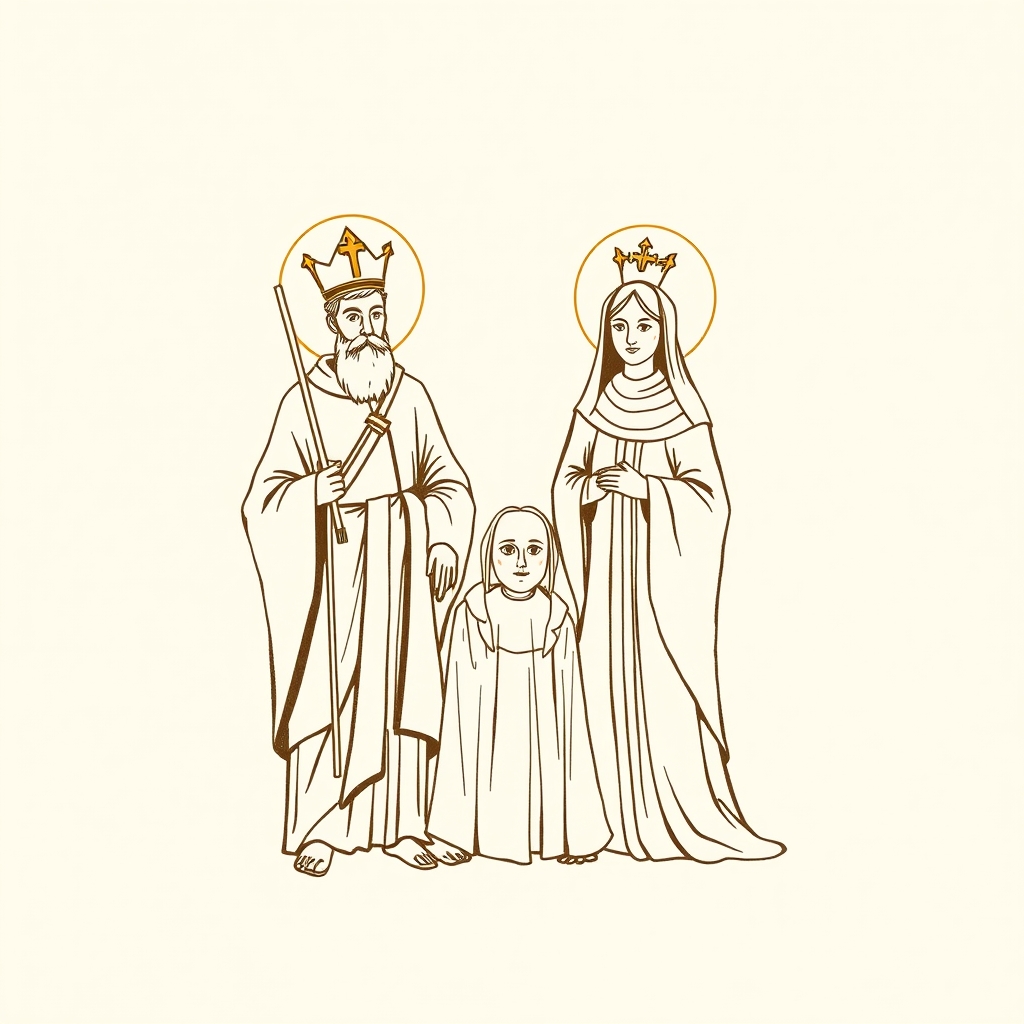
He is sometimes seen depicted in a group, in the company of his father Saint Arnulf and his mother, Saint Doda.
Proper of Metz.
Iconography
Signs and attributes
Entities
Narrative network
The names, places, and concepts most present in the entry, weighted by centrality in the text.
Frequently asked questions about Saint Chlodulf (Chloud)
Who was Saint Chlodulf (Chloud)?
Son of Saint Arnulf and Saint Doda, Chlodulf was a high dignitary of the palace of Austrasia before becoming Bishop of Metz in 656. He governed his diocese with great charity for forty years and died at the age of 91. His relics are today preserved in Lay, near Nancy.
What is Saint Chlodulf (Chloud) the patron saint of?
Patronage of Saint Chlodulf (Chloud): Metz and Lay.
How is Saint Chlodulf (Chloud) depicted in Christian art?
In iconography, Saint Chlodulf (Chloud) is recognizable by: family group with Saint Arnulf and Saint Doda.
Which saints were contemporaries of Saint Chlodulf (Chloud)?
Contemporaries include: Saint Priest (Prix), Saint Gregory the Great (Pope and Doctor of the Church), Saint Die (Didier, Deodat) and Saint Augustine of Canterbury.
When did Saint Chlodulf (Chloud) die?
Saint Chlodulf (Chloud) died around 700.
What are the other names of Saint Chlodulf (Chloud)?
Other forms of the name: Chloud, Chlodulfus and Floudulphus.
Who are the relatives of Saint Chlodulf (Chloud)?
Relatives of Saint Chlodulf (Chloud): Arnoult (father), Dode (mother) and Ansegise (brother).
Annexes & related entities
Structured data for exploration: events, miracles, quotes, places, attributes, patronages, and important entities cited in the text.
Key Events
- Education in letters and sciences
- Held high-ranking positions in the palace of the kings of Austrasia
- Election to the episcopal see of Metz after Godon
- Governance of the Church of Metz for forty years
- Transfer of relics to the monastery of Lay in 959