
Blessed Adalberon II
Son of the Duke of Lower Lorraine and nephew of Hugh Capet, Adalberon II became Bishop of Metz in 984. Renowned for his immense charity, he personally cared for the victims of ergotism and reformed numerous monasteries. He died in 1005 after a life dedicated to the poor and ecclesiastical discipline.
Contemporaries

Figures and markers around the normalized period for this entry.
Guided reading
6 reading sections
BLESSED ADALBERON II, BISHOP OF METZ
Origins and accession to the episcopate
Son of the Duke of Lower Lorraine and nephew of Hugh Capet, Adalberon was educated at the Abbey of Gorze before being appointed Bishop of Metz in 984 under the influence of his family and Saint Adelaide.
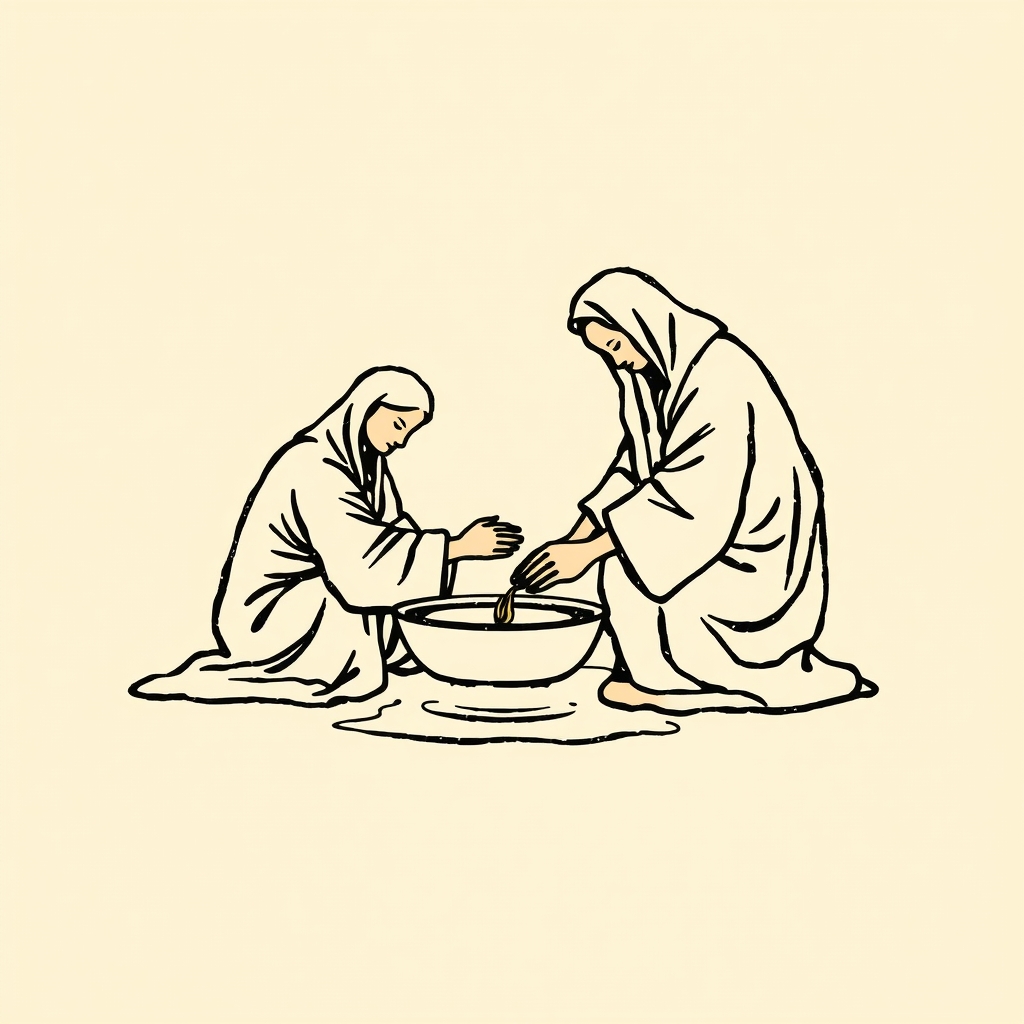
Adalberon was the son of Frederick, Duke of Lower Lorraine, and Beatrice, sister of Hugh Capet. Raised in the Abbey of Gorze (Moselle), where he made great progress in the sciences and in piety, he destined himself for the ecclesiastical state. The Duchess Beatrice, his mother, and the Empress Saint Adelaide, his grandmother, widow of Otto the Great, seconded by the choice of the clergy and the people, had him appointed to the bishopric of Metz in 984. Adalberon made his entry into this city amidst the acclamations of the people. The gentleness and affable manners of the new prelate soon won him the affection of his flock. The author of his li fe, Constantine, Abbot of Saint-Symphorien, represents him as a bishop worthy of the finest centuries of the Church. He was of such great amenity that he was accustomed to say that he could not conceive how men could become angry. He received into his palace all the poor and pilgrims who presented themselves, washed their feet, and served them at table himself.
Monastic restoration and reforms
Following the example of his uncle Adalberon I, he restored several abbeys, including Saint-Symphorien and Saint-Pierre, and founded a community in Épinal.
A faithful imitator of the virtues of the venerable Adalberon I, his uncle, whose affection for religious and zeal for the restoration of regular observance had earned him the nickname Father of the Monks, he applied himself above all to making religious discipline flourish again in his vast diocese. One of the first cares of the holy bishop was to restore the abbey of the Holy Innocents, known since as Saint -Symphorien, whi ch had suffered greatly from the recent wars. He repaired its buildings, had its property restored to it, gave it new property, and placed as abbot the blessed Fingenius, of Scottish origin, who had succeeded Saint Cadroël in the government of the abbey of Saint-Clément, and was at the same time abbot of Saint-Vannes, in Verdun. At the same time, Adalberon rebuilt the abbey of Saint-Pierre. He also founded, in the vicinity of Saint-Pierre, another abbey for nuns which took the name of the august Mother of God. He established a community of nuns in Épinal (Vosges) in the place where the blessed Theodoric I, his predecessor, had deposited the relics of Saint Goëric .
Heroic Charity and Interior Life
The bishop distinguished himself by his devotion to the victims of the 'mal des ardents' (St. Anthony's fire) in Épinal and by an austere piety marked by the use of a hair shirt and fasting.
Around the same time, the terrible disease known as the sacred fire and the mal des ardents prevailed, especially in th e region of Bur gundy. The unfortunate people who were afflicted by it, having heard of the healings that were taking place in Épinal through the intercession of Saint Goëric, flocked there in crowds. Adalbéron, who often resided in the castle located above the monastery, took the tenderest care of them. Not content with providing them with the necessities of life and consoling them with his words, he himself dressed their ulcers, and often he performed this humble service for eighty or even a hundred people in a single day, considering himself happy to see his house thus turned into a hospital. The author of his life claims to have assisted him for seven consecutive days in this heroic exercise of charity. This action could not fail to be accompanied by all the Christian virtues. Indeed, Adalbéron, who loved and cared so tenderly for the suffering members of Jesus Christ in the person of the poor, was imbued with the deepest respect and the most affectionate piety for our holy mysteries. He never offered the august sacrifice of the Mass without first having donned a hair shirt, and he could not hold the sacred body and precious blood of the divine victim in his hands without watering them with his tears. He spent the eve of the principal feasts without taking any food; and to better sanctify the Lenten fast through prayer and recollection, he spent it entirely in a holy retreat.
Political Wisdom and Defense of the People
In an empire in conflict, he protected his subjects from excessive military burdens and did not hesitate to oppose pillaging lords by force to defend the poor.
All the provinces of the empire were then as if being pillaged; the lords, in order to meet the costs of the contributions they owed to the army that the emperor maintained almost continuously in Italy, were pillaging, and were forced to ruin their lands and oppress their subjects. Adalbéron knew through his wisdom how to avoid these extremes, and to satisfy his duties toward his sovereign without failing in what he owed to the people entrusted to him. To reduce the expense as much as lay within his power, he did not conduct campaigns, and took from his own revenues the greater part of the subsidies that his flock was to provide. Although the holy prelate was naturally inclined toward gentleness, he knew when circumstances required it to use severity. He was seen waging war against the lords who vexed his people, ruining their castles and their fortresses. He only came to these extremes after having employed the ways of gentleness. As for the goods of which he had made himself master, he never appropriated them for himself, but distributed them to the poor, or employed them for the repair of churches.
Pilgrimages to Rome and ecclesiastical discipline
He made two journeys to Rome, collaborated with Emperor Otto III, and called upon Saint William of Dijon to reform the abbeys of his diocese.
Adalberon went to Rome twice to satisfy his devotion to the holy Apostles. During a first journey he made in 994, he was very well received by Pope John XVI, who pres ented him with some precious relics. On the second journey, he accompanied Emperor Otto III, whom he p ersuaded to bestow great benefits upon his church. Always occupied with the reform of the monasteries of his diocese, he brought in Saint William, abbot of Saint-Bénigne of Dijon, and charged him with restoring regular discipline in the famous abbeys of Gorze and Saint-Arnould. He regularly performed ordinations there twice a year, at Christmas and at Easter, and they were so numerous for the time that more than a thousand priests and other ministers are counted upon whom he had laid his hands.
End of life and legacy
Afflicted with paralysis, he died in 1005 after distributing his goods. He was buried at Saint-Symphorien where his remains were honored until the Revolution.
In 1005, the holy bishop was struck by paralysis. When he saw that his end was approaching, he distributed all his wealth to the poor and to the churches. He sent gifts as far as Saint-Martin of Tours, to Saint-Denis, to Saint-Remi of Reims, to Notre-Dame of Verdun, to Saint-Pierre of Cologne, and to several other famous places of devotion. He died on December 15, deeply mourned by all his people, even by the Jews who shed tears for him. Duke Thierry, his brother, and Bertaut, bishop of Toul, his pupil, attended his funeral amidst an immense gathering of the populations. The holy prelate was buried in the abbey of Saint-Symphorien, where he had chosen his burial place. His precious remains were kept there until the Revolution, along with the h air sh irt he used in the fervor of his penance.
We owe this biography to Father Noël, of the diocese of Metz. — Cf. Saint Symphorica and his cult, by Father Binet.
Iconography
Signs and attributes

Entities
Narrative network
The names, places, and concepts most present in the entry, weighted by centrality in the text.
The supernatural in their life
The miracles of Blessed Adalberon II
Frequently asked questions about Blessed Adalberon II
Who was Blessed Adalberon II?
Son of the Duke of Lower Lorraine and nephew of Hugh Capet, Adalberon II became Bishop of Metz in 984. Renowned for his immense charity, he personally cared for the victims of ergotism and reformed numerous monasteries. He died in 1005 after a life dedicated to the poor and ecclesiastical discipline.
What is Blessed Adalberon II the patron saint of?
Patronage of Blessed Adalberon II: Metz.
What is Blessed Adalberon II invoked for?
Blessed Adalberon II is invoked for: ergotism and sacred fire.
How is Blessed Adalberon II depicted in Christian art?
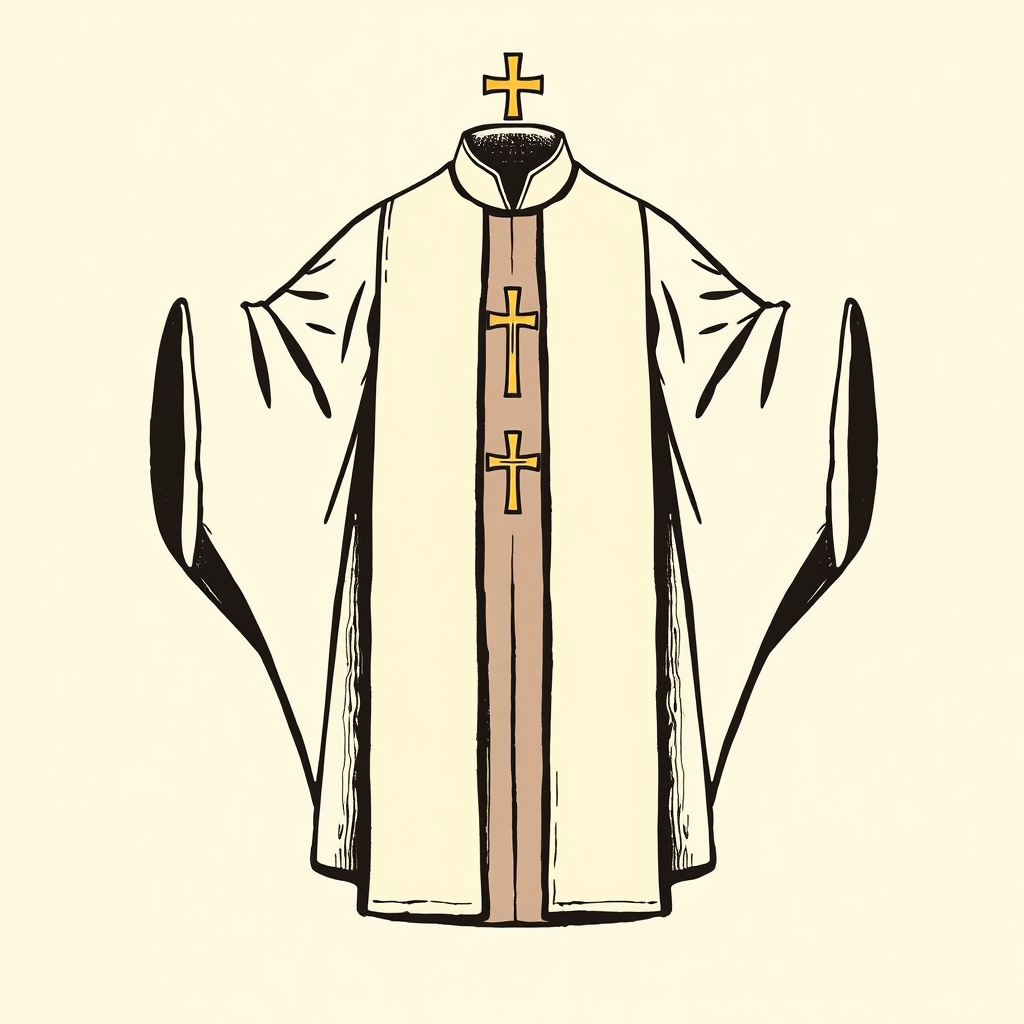
In iconography, Blessed Adalberon II is recognizable by: hairshirt, episcopal vestments and washing the feet of the poor.
What miracles are attributed to Blessed Adalberon II?
1 miracle are attributed to this saint, notably: Healing.
Which saints were contemporaries of Blessed Adalberon II?
Contemporaries include: Saint Bernard of Menthon (Apostle of the Alps), Saint Stephen of Hungary, Saint Norbert of Magdeburg and Saint Anselm of Canterbury.
When did Blessed Adalberon II die?
Blessed Adalberon II died around 1005.
Who are the relatives of Blessed Adalberon II?
Relatives of Blessed Adalberon II: Frédéric (father), Béatrix (mother), Hugues-Capet (maternal uncle), Sainte Adélaïde (grandmother), Adalbéron Ier (uncle) and Thierry (brother).
Annexes & related entities
Structured data for exploration: events, miracles, quotes, places, attributes, patronages, and important entities cited in the text.
Key Events
- Education at Gorze Abbey
- Appointed Bishop of Metz in 984
- Restoration of the Abbey of Saint-Symphorien
- Care for those suffering from ergotism in Épinal
- Travels to Rome in 994 and with Emperor Otto III
- Reform of monasteries with Saint William of Dijon
Quotes
-
Mortgrio majus quam est charitas praecim. (Charity towards one's neighbor is something greater than martyrdom.)
Saint John Chrysostom (as an epigraph)