
Saint Desiderius of Vienne
Bishop of Vienne in the 6th century, Didier was a learned and zealous prelate, esteemed by Saint Gregory the Great. His opposition to the scandalous conduct of Queen Brunhilda led to his exile and subsequent martyrdom. He was stoned to death in 608 at Prissignac, a place that became the town of Saint-Didier-sur-Chalaronne.
Contemporaries

Figures and markers around the normalized period for this entry.
Guided reading
8 reading sections
SAINT DIDIER, BISHOP OF VIENNE IN DAUPHINÉ
Youth and formation in Autun
Didier was born in Autun in the 6th century and received his education at the Abbey of Saint-Symphorien under the direction of Saint Germain.
The persecutions did not say to him: Die in sacrifice to the Idols; but: Die or consent to our sins and keep silent the truth. Adon, de transl. S. Desiderii.
In the first half of the 6th century, during the reign of Childebert I, a child of blessing named Didier was born in Autun, who would one day illustrate one of the greatest episcopal sees of the Merovingian empire by his life and his death. He spent his adolescence in his native city, and likely received the first lessons of science and virtue in the illustrious Abbey of Saint-Symphorien, then governed by Saint Germain.
Ascension to Vienne and ties with Rome
Noticed by several successive bishops, Didier became archdeacon and then bishop of Vienne in 596, earning the esteem of Pope Gregory the Great.
Saint Numace, bishop of Vienne, having made the acquaintance of Didier, discovered in him the seeds of eminent qualities and wished to cultivate them himself. He therefore took him into his company and loved him as a son (558). Saint Philippe, his successor, could not fail to take the same interest in a young man who showed such great promise, and admitted him among the clergy of his church. Didier soon distinguished himself among all by his piety and his progress in ecclesiastical sciences. Dear to Saint Evance as well as to Saint Numace and Saint Philippe, appreciated by Saint Verus as much as by the three preceding bishops, he was raised by him to the office of archdeacon and distinguished himself so much in this important ministry that after the death of this holy prelate (596), the clergy and the faithful of Vienne called him with a unanimous voice to fill the vacant seat. The choice could not have been better. Didier shone in the Church of the Gauls for his knowledge and for all the episcopal virtues. His reputation soon extended even to Rome; and Saint Gregory, an eminent judge of true merit, gave him in the letters he wrote to him the most honorable testimonies of esteem and confidence. This great Pope recommended to the holy bishop of Vienne, as to Saint Virgile of Arles and Saint Syagre of Autun, the missionaries he was sending to England, made use of his zeal, as firm as it was enlightened, to combat simony, and entrusted to him the important task of keeping the ecclesiastical discipline intact in his province. However, Didier, who had received a brilliant education, believed he could continue to cultivate or to give as a relaxation to his mind the study of human letters. Assuredly nothing was more legitimate: indeed, he only used the advantages he derived from this study to better present religious truths. But some weak, narrow, or envious minds accused him before the Pope of substituting pagan fables for Scripture and of profaning with the praises of Jupiter a mouth destined to sing the praises of Jesus Christ. The illustrious head of the Church wrote to the holy bishop about it. The latter had no difficulty in having his apology accepted by a Pontiff who was himself so enlightened. Saint Gregory confounded the accusers of Didier by publicly rendering him justice.
Defense of Classical Culture
Accused of mixing pagan fables and Scripture, Didier justifies his use of human letters to the Pope, who publicly rehabilitates him.
Soon after, the great Pope died, and a more terrible hatred was unleashed against our Saint. Brunhilda, who no longer had the word and authority of Gregory as counsel and restraint, abandoned herself from then on to the passion of vengeance. She did not forgive Didier for having raised his voice, with the generous and holy freedom of a bishop, against the disorders fomented by the ambition of a scandalous court. For her vengeance to be fully satisfied, she needed two things: to discredit the bishop who had condemned her, in order to strip his reproaches of all value; then to banish him, in order to rid herself of his presence, which was for her an accusation and a remorse. She therefore convened a conventicle at Chalon-sur-Saône and produced false witnesses who charged Didier with crimes. The new Chrysostom was deposed and relegated to a distant and wild island on the coasts of Scotland. But God took it upon Himself both to justify the slandered innocence of His servant and to proportion glory to humiliations, by honoring him with the gift of miracles. The fame of these wonders made a great noise, and Brunhilda trembled: she was undoubtedly afraid of divine vengeance. Perhaps she also feared public opinion, which reproached her for persecuting a Saint. Be that as it may, she allowed Didier to see his desolate diocese again after four years of exile. But the governor of Vienne did not leave him in peace there for long and seemed to make it his task to molest him in every circumstance. One day, among others, he had twelve servants of the Church thrown into prison. The Pontiff, filled with sorrow, shed tears before God: his prayer was not finished when Saint Severus appeared to the prisoners and delivered them. It is thus that heaven, by this miracle and by others still, continued to show that the cause of our Saint was its own. The young King Theuderic II was struck by this: he wanted to see the man of God and asked him for advice. Didier, whom persecutions had not taught to hold the truth captive, boldly dictated his duty to him: "Drive away," he told him, "these wretched women whose presence defiles the court and take a legitimate wife, a princess worthy of you, worthy of Burgundy." The prince, docile to this advice, as generous on the part of the bishop as it was salutary and glorious for him, asked for the daughter of Witteric, King of the Visigoths. But Brunhilda, fearing to lose her authority as queen mother through this marriage, succeeded in preventing it and prepared a new vengeance against Didier.
Conflict with Brunhilda and exile
Opposing the disorders of the court, Didier became the victim of a plot by Queen Brunhilda, who had him exiled to Scotland for four years.
This new Herodias had three assassins posted, Beffan, Galifred, and Betton, whom she ordered to follow him when he returned from Chalon to Vienne. Accompanied by a troop of scoundrels, they caught up with him in the Dombes region, at the village of Cormoranche, where they treated him inhumanely; continuing his journey in the midst of his executioners, this holy bishop succumbed, overwhelmed by a hail of stones, in the place of Prissignac.
Remonstrances to King Theuderic II
Upon returning from exile, the bishop exhorted King Theuderic II to dismiss his concubines and marry a legitimate princess, provoking the fury of Brunhild.
(*Prisciniacum*), near the Chalaronne river. Thus died our holy bishop, on May 23, 608; thus, having suffered for justice what the martyrs endured for the truth, he shared in their glory, as a true imitator of Saint John the Baptist and the prophet Elijah, in the conduct they had maintained toward Herodias and Jezebel.
The martyrdom in the Dombes
On the orders of Brunhilda, Desiderius was intercepted by three assassins and stoned to death near the Chalaronne river in 608.
His body was buried in the village of Prissignac, where it pleased God to reveal, through the miracles performed at his tomb, the holiness of his servant and the felicity with which he had been rewarded. The blind recovered their sight there; the lame and the infirm, afflicted with various diseases, were healed there; but it was above all to be delivered from fever that the crowd, at all times of the year, from all parts of the Dombes and the Lyonnais, came on pilgrimage to the church of Prissignac. A considerable town formed there which took the name of Saint-Didier-sur-Chalaronne; it is today a very large parish in the canton of Thoissey. The growth of this town must therefore be attributed to this Saint.
Cult and miracles at Prissignac
His tomb became a famous place of pilgrimage for the healing of fevers, giving rise to the village of Saint-Didier-sur-Chalaronne.
Five years later, in 613, Clotaire II having united the entire French monarchy under his rule, put Brunhilda to death and exterminated her entire lineage by massacring the children of King Theuderic, the grandson of that princess.
Translation of the relics
In 620, his remains were transferred to Vienne by Saint Etherius; later, Ado of Vienne sent a portion to the Abbey of Saint Gall.
The Bishop of Vienne, Domnolus, who had been substituted for the Saint, having died around the year 620, his successor, Saint Etherius, transferred the body of Saint Desiderius to Vienne, into the church of Saint Peter and Saint Paul, outside the walls, on the 11th day of February, around the year 620. Numerous miracles occurred during this translation: those that continued to take place near his relics made his cult famous for a long time throughout the Dauphiné. Ado, Bishop of Vienne, the author of the Martyrology, who also wrote the history of the martyrdom and this translation of our Saint, detached some relics from it, around the year 870, to send them to the Abbey of Saint Gall, in Switzerland.
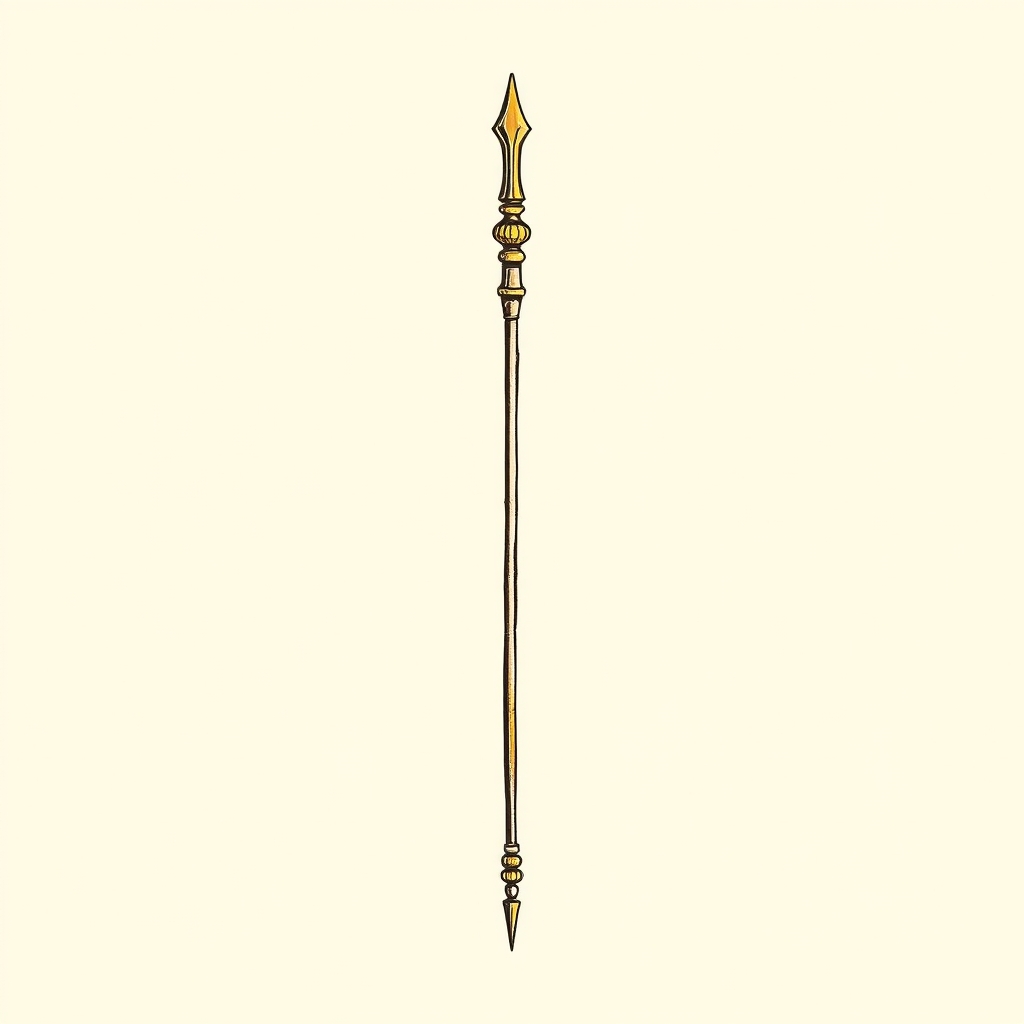
The attributes of Saint Desiderius of Vienne in the arts are the *staff* with which he was scourged, the rope that was used to lead him like a criminal and perhaps to strangle him. He is also represented speaking with authority to Brunhilda.
We have supplemented Father Giry, in this place, with the *Histoire hagiologique du diocèse de Belley*, by Mgr Depéry; this prelate, of learned and pious memory, having deigned, only a few days before his death, to send us his works with a letter, one of the best encouragements we have received. We also made use of *Saint Symphorien et son culte*, by M. Dinot; the *Légendaire d'Autun*, etc.
Additional passages recovered from the sources
These passages from Les Petits Bollandistes supplement the entry. The references identify their context in the original volume.
Read the supplementary notes and passages (5)
Etymology and Spread of the Name Didier
Historical supplement to the Petits Bollandistes, transcribed from the image of the 19th-century edition. Traditions, assessments and expressions describing a "current" situation are those of the source in its time; they do not constitute a contemporary verification.
Didier (Desideratus, Desiderius). This name, Latinised from that of the Apostle, the first bishop of Lyons (Ποθεινός, Pothinus), became very common in Gaul and spread there with the cult of this illustrious disciple of Saint Polycarp, this companion of our apostles Saint Benignus and Saint Andochius.
Paul Guérin, Les Petits Bollandistes, volume 6, p. 113. Bibliothèque nationale de France: https://gallica.bnf.fr/ark:/12148/bpt6k30736h
Note on the church and patronage of Cormoranche
Historical supplement to the Petits Bollandistes, transcribed from the image of the 19th-century edition. The traditions, assessments and expressions describing a "current" situation are those of the source in its era; they do not constitute a contemporary verification.
As soon as Didier was declared a Saint, the church of Cormoranche took him as patron, and the staff that his assassins had snatched from him to strike him with was preserved there.
Paul Guérin, Les Petits Bollandistes, volume 6, p. 116. Bibliothèque nationale de France: https://gallica.bnf.fr/ark:/12148/bpt6k30736h
Note on the Place of the Martyrdom of Saint Didier
Historical supplement to Les Petits Bollandistes, transcribed from the image of the 19th-century edition. Traditions, assessments and expressions describing a "current" situation are those of the source in its own era; they do not constitute contemporary verification.
Father de Colonia, Histoire littéraire de la ville de Lyon, vol. 1st, p. 16 and 43, believes that the true ancient name is Pistriniacum, which came from the mills built in large quantities on the Chalaronne river; Paradin and de Rubuys were mistaken in saying that Saint Didier was massacred at Caluire. Caluire is a village one league from Lyon, in which no trace of a stream is to be seen. Those who make him die at Brignais, another market town near Lyon, committed no lesser error; tradition and history leave no doubt as to the true place of the martyrdom of Saint Didier.
Paul Guérin, Les Petits Bollandistes, volume 6, p. 116. Bibliothèque nationale de France: https://gallica.bnf.fr/ark:/12148/bpt6k30736h
Note on the Chalaronne River
Historical complement to the Petits Bollandistes, transcribed from the image of the 19th-century edition. Traditions, assessments and expressions describing a "current" situation are those of the source in its era; they do not constitute contemporary verification.
The Chalaronne is a small river that takes its source near Marlieux in Dombes, and empties into the Saône not far from Thoissey, after a course of twenty-six kilometers.
Paul Guérin, Les Petits Bollandistes, volume 6, p. 117. Bibliothèque nationale de France: https://gallica.bnf.fr/ark:/12148/bpt6k30736h
SAINT DIDIER, BISHOP OF VIENNE (608).
Historical complement from Les Petits Bollandistes, transcribed from images of the XIXth-century edition. The traditions, assessments, and expressions describing a "current" situation are those of the source in its era; they do not constitute contemporary verification.
He was born in Autun to a noble family; he lived in Vienne under four bishops, and there received the order of the diaconate. The last of these bishops, Saint Vire, having died, Didier was elected in his place in 596. He was deposed by the Synod of Châlon-sur-Saône, at the instigation of Aridius, Bishop of Lyon, and Queen Brunehaut, whom he had rebuked for her misconduct. Domnolus was substituted for him in the sacerdotal dignity. Didier was exiled to Île Barbe. In the year 608, Theuderic, yielding to the advice of Aridius and his grandmother, had Didier stoned to death, who had returned from exile. Bede places him on May 23, the day of his martyrdom. Today is the anniversary of the translation of his venerable relics to Vienne. Adam and Sigebert speak of Saint Didier in their chronicles. Sigebert sees, in the destruction of Theuderic's kingdom, the punishment for the crime committed by this prince against Saint Didier. This holy bishop was a contemporary of Saint Gregory the Great, who addressed several letters to him; in the second, he recommends to him religious and priests whom he was sending to Saint Augustine in England. These letters are found in regist. lib. V, epist. 54; lib. VII, epist. 116; lib. IX, epist. 48, et lib. XII, epist. 5. Mention is also made of him in the Acts of Saint Columban, abbot. It is believed that the holy bishop of Vienne was assassinated in a place in the principality of Dombes, which came to be called Saint-Didier de Chalaronne, in memory of this tragic event. Painting gives, as attributes to Saint Didier, the rope with which he was half strangled on the way to execution, the staff with which blows were not spared him, the woman whose conduct he rebuked 1. 1. See, for more details, in volume VI, page 115.
Paul Guérin, Les Petits Bollandistes, volume 2, p. 467. Bibliothèque nationale de France: https://gallica.bnf.fr/ark:/12148/bpt6k307324
Iconography
Signs and attributes


Entities
Narrative network
The names, places, and concepts most present in the entry, weighted by centrality in the text.
The supernatural in their life
The miracles of Saint Desiderius of Vienne
Frequently asked questions about Saint Desiderius of Vienne
Who was Saint Desiderius of Vienne?
Bishop of Vienne in the 6th century, Didier was a learned and zealous prelate, esteemed by Saint Gregory the Great. His opposition to the scandalous conduct of Queen Brunhilda led to his exile and subsequent martyrdom. He was stoned to death in 608 at Prissignac, a place that became the town of Saint-Didier-sur-Chalaronne.
What is Saint Desiderius of Vienne the patron saint of?
Patronage of Saint Desiderius of Vienne: Saint-Didier-sur-Chalaronne.
What is Saint Desiderius of Vienne invoked for?
Saint Desiderius of Vienne is invoked for: healing of fever, the blind and the lame and the infirm.
How is Saint Desiderius of Vienne depicted in Christian art?
In iconography, Saint Desiderius of Vienne is recognizable by: staff, rope and stones (stoning).
How did Saint Desiderius of Vienne die?
Saint Desiderius of Vienne suffered martyrdom for the Christian faith (7th century).
What miracles are attributed to Saint Desiderius of Vienne?
3 miracles are attributed to this saint, notably: Sign / wonder, Vision / apparition, Protection / deliverance and Healing.
Which saints were contemporaries of Saint Desiderius of Vienne?
Contemporaries include: Saint Augustine of Canterbury, Saint Gregory the Great (Pope and Doctor of the Church), Saint Remigius (Apostle of the Franks) and Saint Priest (Prix).
What are the other names of Saint Desiderius of Vienne?
Other forms of the name: Desiderius.
Annexes & related entities
Structured data for exploration: events, miracles, quotes, places, attributes, patronages, and important entities cited in the text.
Key Events
- Born in Autun in the 6th century
- Education at the Abbey of Saint-Symphorien
- Elevation to the rank of Archdeacon of Vienne
- Unanimous election to the episcopal see of Vienne in 596
- Correspondence with Pope Saint Gregory the Great
- Slanderous accusations regarding the study of secular literature
- Four-year exile in Scotland following the conciliabulum of Chalon
- Conflict with Queen Brunhilda and King Theuderic II
- Martyred by stoning at Prissignac in 608
Quotes
Drive away these wretched women whose presence defiles the court and take a legitimate wife
Words addressed to King Theuderic II