
Born in Rieti in 1477, Colomba dedicated herself to God at an early age under the influence of Saint Catherine of Siena. After fleeing a forced marriage and miraculously leaving her hometown, she settled in Perugia where she founded a Dominican monastery. A mystic famous for her ecstasies and prolonged fasts, she died in 1501 after serving as a spiritual and political advisor.
Contemporaries

Figures and markers around the normalized period for this entry.
Guided reading
8 reading sections
BLESSED COLOMBA OF RIETI,
NUN OF THE THIRD ORDER OF SAINT DOMINIC
Origins and childhood in Rieti
Birth of Colombe in 1477 in Rieti into a pious family, marked by miraculous signs from her baptism.
In the land of the Sabines, at the foot of the Apennines, on the southern side, one finds a charming valley that is like the heart of all Italy. There rises the city of Rieti, in the middle of a fertile countryside, dotted with rich hills and watered by very beautiful streams. It is in this city, where the body of Saint Barbara is religiously preserved, and where Saint Dominic was canonized by Pope Gregory IX, that the Blessed Colombe was born to an honest f amily and very Christia n parents. She came into the world in 1477, on the very day of the Purification of the most holy Virgin, a little before sunrise. Her father was named Ange Antonio, and her mother is known only by her baptismal name, which was Jeanne. Married very early, Jeanne was only fifteen years old when she received this precious gift from heaven for herself and her husband. Moreover, they both deserved to have such a daughter; for they seemed to live only to do good. Their charity was so ardent that, after exhausting their own resources, they would go begging to provide for the needs of the unfortunate.
The child received the name Angelella, little angel, at baptism, because angels, holding a golden circle surmounted by seven luminous torches, had appeared at her birth; but as a dove had rested on her head during the sacred ceremony, she was more familiarly called Colombe. The father and mother tried in vain to oppose it: the people, witness to this prodigy, kept this name for her, which reminded them of the memory of it.
From her earliest childhood, she led a mortified life, sleeping on the hard ground, making herself little hairshirts from pieces of horsehair she found, and frequenting the churches, where she recited the Ave Maria with a piety so tender, so extraordinary for that age, that she drew tears from those who witnessed it. She learned to read with the Dominican nuns of the city, and having procured the little office of the most holy Virgin, she recited it every day. She made a discipline for herself out of a rosary with large beads that her confessor had given her.
The Blessed Colombe was already observing the fasts of the Church very exactly, even though she was hardly more than eight to ten years old. She fasted during Advent, Lent, the Ember Days, and on the vigils of feasts. She constantly wore a wool shirt with a rope belt scattered with large knots. Where had she taken this early love of austerities? In the life of Sai nt Catherine of Siena, whi ch she read at the Dominican convent, and which was her delight. She loved this great saint, whose memory was not more than a century old; she wanted to imitate her, and as no obstacle came to oppose these inspirations of grace, she managed to retrace in herself some of her virtues.
Vocation and refusal of marriage
At twelve years old, Colomba vows her virginity to God and refuses an advantageous marriage by cutting her hair, following the example of Saint Catherine of Siena.
The Blessed one was barely twelve years old, and already she burned with the desire to consecrate her virginity to God. One night, as she was praying at the foot of a small altar raised in her room, Our Lord appeared to her, seated on a magnificent throne; he had at his sides the apostles Saint Peter and Saint Paul, Saint Jerome, holding a book in his hand, and Saint Dominic. At this sight, the Blessed one, transported with joy and admiration, cried out: "Give me, Lord, your blessing." And after the Lord had blessed her, she begged him to accept the vow she was making in his hands to keep perpetual virginity.
Our Lord accepted the offering of his servant with the kindness of a father; he handed her the book that Saint Jerome was holding, which she kept all night; upon leaving her, he left her room perfumed with a scent from heaven.
The Blessed one had a young brother whom she loved particularly and who, when very small, said of her and himself: "Colomba will be a religious and I will be a religious." He was indeed received, at the age of ten, among the Dominicans. Shortly after, the Blessed one obtained the favor of being able to pronounce at the foot of the altars, at the good nuns of Saint Dominic, the vow to enter religious life. A few days later, she had a vision: she was led in spirit into the church of Saint Scholastica, where two angels handed her, to her brother and to her, before the altar of the most holy Virgin, a belt of dazzling whiteness that each of them held in their hand. It was a mark of the purity they had promised to keep and a help against the assaults of the demon. Two months later, the brother of the Blessed one died, going to receive in heaven the crown he had so promptly acquired.
However, the beauty of the Blessed one had caused her to be asked in marriage by a very rich young man from Rieti: her parents, dazzled by the greatness of this alliance, consented to it easily and tried to win their daughter over to it. They spoke to her of the necessity of settling down in the world, without, however, speaking openly to her of the engagement they had made. They set a day with the young man for the presentation of the engagement gifts, and fixed it for the next day. During the night, two religious of the Order of Saint Dominic appeared to the Blessed one and said to her: "As soon as it is day, hasten to go to the mountain of Saint Maron, you will find there a nun who will warn you of a danger that threatens you." In the morning, the Blessed one asked her mother to accompany her to the church of Saint Maron on the mountain. As she was preceding her by a few steps, she caught sight of a nun who said to her: "Your parents have promised you in marriage, and your betrothal is to take place today. If you wish to be faithful to the eternal Spouse, arm yourself with courage and cut your hair." After these words, the nun disappeared.
The Blessed one entered the church, and, having confessed there, she asked her director for advice regarding the warning that had been given to her. This man of God, who knew her vocation, approved the means that had been suggested to her. "Saint Catherine of Siena," he told her, "cut her hair on a similar occasion; do the same and have recourse to prayer."
In the evening, the young man presented himself, bringing a rich belt for his fiancée, according to the custom of the country. The Blessed one asked for a few moments to reflect on the alliance that was proposed to her: she went up to the terrace of the house, where she cut her hair, which she then handed to her family, saying that she did not wish to have any other spouse than Jesus Christ. One can well imagine the confusion of the young man and the anger of her parents. They overwhelmed the Blessed one with reproaches and insults, but during the night Our Lord appeared to her and consoled her. He was accompanied by Saint Catherine of Siena, who supported the tired head of the young girl on her arm. "Fear nothing," she said to her, "you will be a religious of my Order, just as you desire."
That very night, the young man who was seeking her had a vision. He saw her enter his room, magnificently adorned and crowned, as one is on the day of one's wedding; but at the moment she approached, her crown fell and he saw her faint so that she seemed dead to him. He went in the morning to consult a famous theologian. "This young girl is promised to Jesus Christ," the theologian replied, "and Our Lord does not approve that you should be his rival. He wished to warn you by this vision that if Colomba failed in her promise, she would soon die." The young man therefore went to withdraw the word he had given to the parents of the Blessed one. Shortly after, he himself died upon returning from a trip he had made to Rome.
Mystical Life and Asceticism
Columba led a life of extreme austerities, nourishing herself almost exclusively on the Eucharist and experiencing frequent ecstasies of the Passion.
However, the Blessed one's parents came to their senses and were ashamed to dispute their daughter with Our Lord; her father even gave her a small room where she could devote herself in peace to her religious exercises. She therefore began to lead a more secluded life, even more austere than she had done until then. She ate little more than fruit and a little bread, and eventually she abstained from that entirely. The holy Eucharist was almost her only food; but this divine Bread sustained her strength and her courage.
Every night she scourged herself three times with a discipline made of five small iron chains; the first time for the expiation of her sins, the second for the conversion of sinners, and the third for the poor souls in purgatory. She spent almost all her nights in prayer. The angels then came to visit her and conversed with her. God favored her at this time with several ecstasies, the memory of which has been preserved for us by Father Sebastian of Perugia, her confessor.
"One day, while she was in pra yer, Our Lord showed her all the sufferings He had endured in His passion. She saw Him in the Garden of Olives, at the house of Annas and Caiaphas, then at the tribunal of Pilate; but when the executioners delivered Him to the scourging, and she heard the blows of the whip and saw that adorable blood flowing, her pain became so sharp that she began to scourge herself cruelly to take part in the torment of the divine Spouse. Her mother, who was sleeping in an adjoining room, awakened by the sound of the blows she was giving herself, got up weeping, and, running to the door of her room, cried out to her: 'My daughter, what are you doing? Why do you wish to destroy yourself?' But the Blessed one, rapt in ecstasy, could not hear her voice.
"Another time, while she was assisting at the holy sacrifice, having glimpsed above the chalice her Jesus attached to the cross, pale and disfigured, His side opened and His head crowned with thorns, the compassion she felt for Him made her fall to the ground and reduced her to a kind of agony. As this fainting spell continued, her confessor was notified, and he came to her side. Then the Blessed one said to him: 'Pray for me, my father, so that I may no longer see this heart-rending spectacle; for I am persuaded that if I see it again, I shall die of sorrow.'"
This holy girl also had frequent ecstasies during which her body, deprived of the action of her soul, remained as if in a state of death. This had been happening for a long time without her mother's knowledge, when one day the latter, having entered her room, found her in this supernatural state which was entirely unknown to her. Columba was lying on her altar like a sleeping person. Her mother, having lifted her up to wake her, she rolled onto the floor and remained lying there without giving any sign of life. Her mother, believing her dead, let out heart-rending cries that brought the neighbors running. These women, persuaded in their turn that she had ceased to live, cried for vengeance against her confessor, whom they accused of having killed her through excessive abstinence and austerities. The irritation became so intense that they spoke of going to do him harm, when Columba very fortunately returned to herself.
From that day on, her ecstasies were no longer secret, and the parents and neighbors were not long in noticing that the confessor had nothing to do with these extraordinary states, which could only come from a supernatural principle. The assiduous work to which this holy girl devoted herself did not put any obstacle in the way of her habitual contemplation. Often, while weaving her cloth, her hands would fall onto the loom, and she would remain motionless for several hours in an ecstatic state. The women of the neighborhood, alerted by her mother, would run to this spectacle and could not recover from their astonishment at seeing her as devoid of movement as if she had been turned to stone. The same thing would happen to her when, occupied with sewing or spinning, someone would come to speak or make her speak of the things of God.
A woman who had commissioned Columba to make a piece of cloth for her came wickedly to complain to her mother about the slowness with which she was working, and made a great noise on purpose to attract reproaches to this holy girl. The mother, who did not perceive the evil design of this woman, pressured poor Columba, demanded impossible work from her, and, dissatisfied with not obtaining it, overwhelmed her with reproaches, saying: "I offered you a husband, and you despised him. I charge you to procure some profit for the house, and you prefer to remain doing nothing. I tell you, my daughter, that you must work. See to it that you obey me."
These reproaches were as unjust as could be; for she was continually in action, as much as God left her the power to be. However, she did not say a single word in her defense. God, content with her patience, wished to reward her for it. One day, when she had just been scolded in this way by her mother, Jesus appeared to her at the window of her room that looked out onto the street and said to her: "Columba, follow me." Transported with joy and understanding perfectly what her Beloved wanted of her, Columba said to her mother with as much sweetness as humility:
"My good mother, it is indubitable that Jesus Christ has the right to be obeyed in preference to my parents. I shall therefore follow Him every time He calls me, without worrying about the work you have charged me to do. I conjure you, my mother, to take with patience these apparent resistances to your will, and not to be hostile to this all-lovable God. What is the use of so much solicitude for the things of life? Is it not better to work for heaven?" Moreover, it was very rare that this holy girl permitted herself to give advice to her mother. But, on the other hand, she often did so to the neighbors who were drawn to her by the charm of her pious conversations and perhaps even more by that of her good examples.
Here now is another wonder that God performed in her favor. After having long desired to contemplate the Holy Places and having implored the Lord to grant her this grace, she had a rapture that lasted five days, during which she was led to Jerusalem and the rest of Palestine, where Our Lord showed her all the places consecrated by His life and by His death. She also saw on the days of their feasts the mysteries whose memory the Church celebrated; thus on Christmas night, Our Lord appeared to her lying in His manger between the donkey and the ox, while the most holy Virgin and Saint Joseph knelt before Him, and the angels sang the Gloria in excelsis. At the Epiphany, she saw the star that guided the Magi; her astonished confessor perceived a globe of fire above her house and asked her the cause of it: "This morning," she said, "I prayed to my sweet Master to let me see the star that led the Magi from their country to Bethlehem; immediately it appeared to me, spreading an extraordinary splendor in my room; and upon disappearing, it left it perfumed with the most delicious scent."
Entry into the Third Order and miracles
She donned the habit of the Dominican Third Order in 1486 and began to perform numerous public miracles in Rieti and the surrounding area.
On Passion Sunday in the year 1486, the Blessed finally obtained permission from her parents to enter the Third Ord er of Saint Dominic. An uncle, who, because of his wealth, had great authority over her family, had tried again that day to persuade her to remain in the world; but, overcome by her arguments and her prayers, he offered to pay for her taking of the habit himself. The following Sunday, which was Palm Sunday, she therefore took this holy habit of penance, with a joy entirely celestial to belong henceforth entirely to her Spouse.
God began at this time to glorify her through several miracles. One day, she met a poor woman in the streets of Rieti who was weeping because she had been unable to find bread to feed the vine-dressers working in her vineyard; no one had been willing to lend her any. "Take heart," the Blessed one said to her, "return home and God will help you." This woman, indeed, found upon returning home, on the table, twelve large and beautiful loaves that God had sent her through the intercession of the Blessed.
One evening while she was at prayer, she saw in spirit a troop of Guelphs setting fire to a gate in the lower town; she immediately ran into the street, crying out that the enemies were burning the Arcis gate. The inhabitants would not believe her; but the flames that soon rose from the suburb made them regret having despised her warnings.
During a pilgrimage she made to the famous sanctuary of Our Lady of the Oak, *della Quercia*, near Viterbo, she delivered a woman who was possessed by the devil. The magistrates of the city, who had already heard of her holiness, having learned of this miracle, resolved to keep such a rare treasure for themselves; they therefore gave the order to place guards everywhere to prevent her from leaving their territory; but the Blessed, warned by an inspiration from heaven, said to her companions: "Let us withdraw very quickly, there is no time to lose." They were indeed able to escape before the magistrates' order had been executed.
On the return journey, the Blessed embarked on Lake Piediluco; as they were in the middle of the crossing, the devil tried to cause her to perish by stirring up a storm. She warned her companions: "We are threatened by a great danger," she told them; "but fear nothing, God is with us." However, the waves were breaking against the boat with fury, and the passengers were already trembling for their lives, when the Blessed, rising, with a look restored tranquility to the lake.
An inhabitant of Rieti had had a rich merchant murdered by two peasants in his employ; he was condemned to death. His wife and mother came in tears to beg the Blessed to obtain his pardon through her prayers. Touched by pity, she went to see this man and urged him to reconcile himself with God. When he had confessed, she said to him: "Take heart, you will not die this time." However, the execution order arrived that very evening and the judge decided that it would take place the next day. The distraught family returned to beg the Blessed. "Be at peace," she replied to them, "I told you he would not die." A few hours later, a new courier brought the pardon.
She received Holy Communion several times from the hand of Our Lord and his angels. One day when her confessor was saying Mass in a church other than the one where she was waiting for him, she prayed to the most holy Virgin to satisfy the ardent desire she felt to be united with her divine Son. After a few moments, a priest came to her holding between his fingers the sacred body of Jesus Christ, and gave it to her. "During that time, her confessor, who was celebrating the holy mysteries, felt a very sharp pain at not finding in the chalice, at the moment of communion, the fragment of the host that he had placed there. Colomba returned to that church while he was finishing Mass, and the Father, after having removed his priestly vestments, shared his sorrow with her. "Do not be afflicted, my Father," she replied, "this fragment of the holy host was brought to me in the cathedral by an angel, and it rests at this moment in my heart." "In that case," the confessor replied, "I rejoice in the loss that caused me so much anxiety, and thank God for having made you a participant in my communion."
Departure for Perugia and foundation
Obeying a vision of Saint Dominic, she leaves Rieti for Perugia where she founds a monastery in 1493.
One day while she was in prayer, Saint Dominic and Saint Catherine of Siena appeared to her. They spoke to her first of the happiness of heaven, then they showed her a wide and straight road, which led to a beautiful church of Saint Dominic. — Leave Rieti, they said to her, and come to this church, where you will find everything necessary for your perfection. The Blessed one, troubled by this order to leave her homeland to go to a distant land, did not dare to answer. — Have no fear, my daughter, resumed Saint Dominic, it is in the name of Jesus, your beloved Spouse, that I give you this order. He awaits you himself in the church that you see; do not delay in going there. Moreover, we will both be with you to assist you in all your dangers. She therefore warned her parents and friends of this upcoming journey, the goal of which she did not know. A great sadness took hold of her family and spread through the city of Rieti. Everyone spoke to her about it while weeping; but she replied: — It must be so. One day, a sparkling comet was seen above her house heading towards Perugia, and it was regarded as an omen of the loss with which Rieti was threatened.
The day before her departure, which was a Thursday in the month of September, she gathered twelve of her companions to eat with her a lamb that she had prepared for them. After supper, she wanted to wash their feet while meditating on the words of the divine Master after the Last Supper; then she bade them farewell, commending herself to their prayers. The next day, Friday, her mother, not seeing her appear, had the door of her room broken down, where she found nothing but her clothes lying on the ground in the shape of a cross. Her cries of pain soon brought the dire news to all the inhabitants of Rieti. The house was filled in a moment with people who wept with her parents over the mysterious departure of the Blessed one. No one knew where she had gone. They had run to the gates and had ensured that none had been opened during the night.
At this moment, a stranger, who appeared to be a beggar, approached the poor mother: — Woman, he said to her, your heart is prey to a very deep affliction. — How do you know, she replied? — I know; but believe me, what has happened was done by God. Know that your daughter, leaning as she is on this staff, cannot fall. If you wish to lean on it following her example, your faith will cease to waver, as it has done until now, and you will see the hand of God in all these extraordinary events.
After these words, adds the confessor of the Blessed one, this man disappeared, and I suspect that he was none other than the Lord Jesus, who, in his compassion, had wanted to strengthen and console this poor mother. This conversation indeed softened her sorrow and communicated to her a strength she did not have before. Thus she never forgot what this good Master had deigned to say to her.
What, however, had become of the Blessed one? Let us listen to her tell her confessor the details of this mysterious event herself. "That evening," she told him, "I had set myself to prayer as was my custom, when I felt myself stripped of my usual clothes, which were immediately replaced by others; but by whom this double operation was performed, is what I am entirely ignorant of. I was then pulled out of my room, out of the house and out of the city, but by whom and in what manner, is what I cannot say further, for I saw no one, and no memory remains to me of what happened during this abduction. I only remember that finding myself suddenly in sight of a city (it was Spoleto), a man came to me and invited me to follow him into a house where his wife and daughters would gladly give me hospitality."
"Not knowing in what country I was, I accepted his offer with gratitude. Having then followed him, he led me into a house far from the road where I found myself alone with him. A little uneasy about this isolation, I asked him where his wife and daughters were? Wait a little, he said to me, they will not be long in returning. My anxiety increased, but what to do? This man did not lose sight of me, and it was impossible for me to escape him. Moreover, I still hoped a little to see his wife and daughters appear. It was at least for me the object of a very keen desire, but which, alas! was not to be satisfied. There were neither women nor daughters in this sad house; it was a den of monsters more formidable than thieves and assassins. What were they doing there, is what it is appropriate to inform you. At that time, an only daughter of a Neapolitan lord, who held an office in the province, had let herself be abducted by a seducer: her father had all the magistrates of the surrounding cities notified, sending them her description, and promising a large reward to those who would arrest her. This news having come to the knowledge of some young men, they resolved to search for this fugitive, with the intention of earning the money promised by her father; and it was with this design that they had come to occupy this solitary house. Judge, my Father, of my sad situation in the hands of such scoundrels. They were then beating the countryside; but the wretch who had abused my trust went in search of them, after having taken the precaution of locking me up."
If the counsels of God have something that astonishes, it is especially when one sees Him expose to such perils angelic virgins, objects of all His complacencies. The situation of Colomba, in this circumstance, recalls the similar trials to which a Saint Lucy, a Saint Agnes and so many others were exposed, whom God engaged in these sad combats only to make His power shine forth, and to render them, by their glorious victory, more virgin than they were before. Let the reader be without fear for the innocence of our Colomba. It is not she who threw herself into danger; it is God himself who placed her there. He will know well how to defend her and preserve her innocence.
However, the foolish young men arrived, and upon seeing her, they persuaded themselves that she was this young person who was being sought on all sides. She effectively had this elegance, this air of nobility that the description had attributed to the fugitive, and appeared to be of the indicated age. After greeting her, with all the refinements of politeness, they sat down beside her, and inquired honestly about her name, her homeland, and the place where she was going. Colomba, seeing well the danger she was running, prayed to God in her heart, and kept silent. Then began the most criminal propositions which were rejected with holy indignation. Promises of rich gifts came next and were despised. It was then that, subjected to the same trials as the Lucys, the Agneses and the Margarets, like the first she became so heavy, that they tried in vain to make her change place, while she astonished them by the strength of her discourses on death, the judgments of God and hell. Seized with terror at this spectacle, her persecutors took flight.
From there she came to Foligno, a city not far from Spoleto, where she received hospitality from the nuns of Saint Clare. As the whole country was in an uproar regarding the abducted young Neapolitan, there too she was exposed to new trials; the magistrates interrogated her, and when they knew she was from Rieti, they wrote to that city to inquire about her past life. It was thus that her parents learned the place of her retreat. Her father came to see her with a religious of Saint Dominic; they tried to bring her back to Rieti, but the orders that the Blessed one had received from heaven did not allow her to yield to their desires.
However, her holiness had moved the city of Foligno; the inhabitants ran to see her, and the magistrates were already taking measures to keep her by force in their midst, when she left Foligno one morning, accompanied by her father and this Dominican, who was the prior of the convent of Rieti. They headed towards Perugia, and stopped for a moment at the church of Our Lady of the Angels or the Portiuncula. The next day they entered the walls of Perugia, where Our Lord had fixed the dwelling of his servant. When it was known that she was arriving, the whole population came to meet her. One could hear shouting in the streets: "Here is the Saint who is coming, let us go to meet her."
She was led first to a house where some sisters of the Third Order lived, then, the inhabitants resolved to build h er a convent, o f which she laid the first stone on February 22 of the year 1493. During the ceremony, she fell into ecstasy and appeared to converse with Saint Catherine of Siena and Saint Jerome, to whom she urgently recommended the city of Perugia. While waiting for the convent to be completed, a very famous jurisconsult and his wife, whom her great qualities made worthy of him, received her into their house, where they treated her less as a stranger than as a tenderly loved daughter.
"At that time," says the confessor of the Blessed one, "it pleased the Lord to illustrate his servant with new miracles. Cesare Borgia, later Duke of Valentinois, was then, while still a child, doing his studies at the college of Perugia. One day when he had come to recreate with us, in the garden of the convent, he followed us after the recreation into our church, where we found, at the foot of the altar of Saint Catherine of Siena, a large group of people of both sexes, by whom the pious Colomba was surroun ded. A noble citizen, having caught sight of the prince, said to him in a loud voice: — Lord, come see a child that Sister Colomba has just resurrected by her prayers. The prince, at these words, turning towards me, said to me: — Well! Father Sebastian, we are going to ring the bells, so that everyone comes to see this evident miracle. — Let us be very careful not to, Lord, I replied; for that could bring us some confusion. — How? he resumed. — This sister, I added, is still only a novice, and it has been so little time since she has lived in this city, that we cannot know her sufficiently. When we have tested her for at least ten years, we will know if she is a woman of true virtue and solid holiness, and then we will be able to believe in the wonders that she will perform and proclaim them with assurance."
These miracles of the Blessed one engaged several people of the city to join her in the convent that had just been completed. Colomba gave them a Rule similar to that which Saint Catherine of Siena observed, under whose patronage she placed this house. She recommended to her daughters never to suffer that they be condemned to an exact enclosure, which the Rule of the Third Order did not prescribe and which Saint Catherine had never observed. Colomba, who was at that time twenty-three years old, did not reserve for herself any authority, wanting to obey like the others to the superior. She chose for a cell a poor room under the roof, and whose cracked walls let through the smoke from the kitchen, which was nearby; this room had no window and resembled more a tomb than a place of habitation.
Public role and protection of the city
She protected Perugia from the plague and invasions, and became a trusted advisor to Pope Alexander VI and the powerful figures of her time.
Perugia, which had welcomed the Blessed one with such joy and which generously provided for all the needs of her convent, did not take long to feel the effects of her presence. In the year 1494, the plague ravaged the entire region: by the counsel of the Blessed one, great processions were held which halted its ravages; all the villages that invoked her were preserved from it. She healed the sub-prior of the Dominicans, who had been stricken by it. She urgently asked God to take her as a victim and to spare her people. Our Lord accepted her prayer; He allowed the demons to strike her, and they did so with a rage that showed their hatred for her. However, after seven days of cruel suffering, Saint Dominic and Saint Catherine of Siena appeared to her and healed her completely.
She once warned the magistrates of a great danger that threatened the city: "I have seen," she had them told by her confessor, "a king of admirable beauty and incomparable majesty. He was seated on a radiant throne, surrounded by a brilliant court. His appearance was imposing and severe; he held in his left hand three sharp swords, and his gestures announced that he was going to use them to immolate the inhabitants of Perugia, whose sins solicited his vengeance. I was all trembling and desolate, when I saw the queen appear, dazzling with beauty and adorned in garments woven of gold. She prostrated herself three times with her face to the ground as she approached the throne. Having reached the foot of the steps, she fell to her knees, imploring the clemency of the king, who at first resisted in the interest of his justice; but the queen insisting, he allowed himself to be swayed and handed her two swords out of the three he held in his hand. The queen then withdrew, without making any request for the third."
It was soon known what this third sword was with which Perugia was threatened. Its enemies entered it one night by treachery, and without the courage that the Blessed one inspired in the inhabitants, without the protection of Saint Catherine of Siena who assisted them in the combat, the city would have been sacked.
Pope Alexander VI, during a trip h e made to Perugia , and his cardinals showed her a keen interest. The secretary of His Holiness and that of the King of France also came to consult her, in the oratory of her convent, on affairs of State.
The apostolic treasurer was charged with consulting her on a plan of Pope Alexander VI, who felt inwardly pressed to abdicate the sovereign Pontificate. She had a terrible vision regarding this, which terrified the treasurer, but could not overcome the Pope's irresolutions; thus, one saw the misfortunes she had announced to him come to pass. First, his States were invaded by the Venetians, who, for several years, waged a disastrous war against him. Then his life was exposed to the most imminent danger. On the day of the feast of Saint Peter in the year 1500, a violent tempest, stirred up by an extraordinary storm, having overturned the chimney of the room where this Pontiff was, the roof was caved in; the floor collapsed on his head, and without a beam that fell in such a way as to protect him, he would have been infallibly crushed under the debris. He got off with a slight wound and extreme fright, because the time of mercy was not yet exhausted.
The Archbishop of Cartagena asked her for two white scapulars for King Ferdinand and Queen Isabella. One could not enumerate the religious and secular persons who sought the favor of speaking to her during the period in question; but this holy girl was so humble that she did not want to receive any visit outside the presence of her confessor, always fearing to let some indiscreet word escape. Far from that, everything was admirable and truly divine in her conversations. With the most qualified persons, her language was plain and without any affectation. With those who exercised her patience, it never happened that she let any vivacity or any annoyance appear. Her sweetness did not falter with those who came to set traps for her. Thus all withdrew content with her, enchanted by her simplicity, her humility, her modesty, and greatly edified by her devotion. All the words that came out of her mouth had something angelic, and breathed the sweet perfume of peace and charity. Should one be astonished after that at the authority she exercised over all those who had the happiness of knowing her? The opinion of her holiness was universal. Thus, one attached the greatest value to possessing something that had belonged to her, even if it were only a thread from her spindle. When she had nothing left to give, small pieces of her clothing were cut, without her resisting any more than a sheep that lets itself be shorn. Her most ordinary small gifts were rosary beads that she always gave in a mysterious number. Sometimes she gave three in honor of the Holy Trinity, sometimes five in honor of the five wounds of Jesus Christ, sometimes seven in memory of the sorrows of the divine Mary, sometimes nine in memory of the nine choirs of angels; always adding a pious explanation of the mystery represented by her small offering. Many people begged her to touch the pious objects they had purchased, and the amiable virgin, while blushing, did not know how to refuse such acts of kindness. Finally, without ever departing from the rules of prudence, she lent herself to all desires with the most touching simplicity.
If she loved to give, she also received without difficulty the alms that were made to her, not for herself, but for her community. It even happened sometimes that she asked certain persons, whose pious generosity she knew, for altar decorations, priestly ornaments, and sacred vessels for the monastery chapel. She was quite frequently given robes, veils, and cloaks. She used them for a few days, to please the persons who made her these kinds of alms; then she passed them on to her sisters. She refused nothing, not even the delicacies that were brought to her in abundance; but then, instead of eating them, she distributed them to the priests who rendered service to the community, to the infirm nuns, and to the young girls who were brought to her, carrying them herself to the mouths of the latter with an amiable familiarity. "I decided one day," reports her confessor, "to urge her to refuse these kinds of delicacies, for fear that she might be suspected of being sensual; but she replied to me respectfully: I cannot refuse these small gifts, without saddening those who offer them to me. Leave them that satisfaction and me that of contenting them. I do not believe that the glory of Jesus Christ is foreign to this small commerce of charity. Oh! may this divine Savior be praised in these trifles as in all the rest."
Trials, Slanders, and Deposition
Despite her holiness, she endured slanders, attempts at forced reform of her rule, and a temporary deposition from her office as prioress.
Appointed prioress, it was noticed that she did not possess everything necessary to perfectly fulfill the obligations attached to this office. She knew marvelously well how to excite others to good through her exhortations, to warn them with gentleness, to encourage them by her examples, and to support them with her prayers: but she was incapable of reprimanding with rigor or correcting with authority. She felt this so well that she entrusted the confessor with this latter ministry. He was simple enough to accept this unpleasant mission; but it was not long before he recognized that such a role could not be reconciled with the employment with which heaven had charged him. Women, especially when they are still young, do not willingly receive reproaches and corrections, from wherever they may come. However, this severity displeases them less when coming from their mother than from the confessor. He can be sure that such a commission will only serve to tighten their hearts and singularly diminish their confidence. We do not mean, however, that he should approve of their errors, excuse their faults of mind, and remain silent about the sins of which they are guilty. God wants him to correct them, but in the holy tribunal and not externally. Furthermore, he must do so with care and measure: otherwise, they become annoyed without daring to admit it to him, and their troubled conscience no longer opens up, or at least only opens in a very imperfect manner. It may even happen that this lack of openness compromises the validity of their confessions. It is true that one can remedy this inconvenience by giving the nuns several habitual confessors; but this multiplication itself is not without inconvenience in monasteries.
The confessor understood all this, albeit a little late, and hastened to return this commission of scolding and punishing to the mother prioress, telling her that she would have grace for this as for her other duties. This good mother therefore took it upon herself to try to be severe when necessary, in order to do in this, as in everything else, the holy will of God. Now, as this good Master usually delights in testing his saints, it happened that the first use she wished to make of this just severity earned her an extraordinary affliction. Having believed it her duty one day to reprimand a young, presumptuous, and stubborn nun in public, the latter took the correction very badly and replied: "When one is in a sad mood, one easily finds fault with the conduct of others." She then went to complain to the confessor, to whom she recounted the matter in a way that put her mother in the wrong. The father, deceived by this false report, believed that the correction had not been sufficiently discreet. He consequently went to find the servant of God, gave her a long instruction on fraternal charity, in which it slipped out that a superior, in reprimanding her daughters, could exceed the measure to the point of becoming guilty of mortal sin.
At this frightening name of mortal sin, the Blessed one began to weep so bitterly that the confessor felt pity for her. He felt the need to reassure her regarding the sentence he had just pronounced and which had so greatly frightened her. But he had all the trouble in the world to dry the source of her tears. The sorrow of this holy girl, who had only done her duty in the circumstance, and without going beyond the bounds of discretion, provides us at least with a beautiful example of the horror we should have for everything that can gravely offend the divine Majesty.
The rest of the life of the Blessed one was not exempt from painful trials; she was slandered by her envious peers, suspected by her superiors, and subjected to tribulations that hardly ended until her death. The confessor of this holy girl was not spared in their accusations. He was, it was said, in collusion with her to deceive the public, and served her marvelously with his physical knowledge. These slanders found credence, to the point that this religious believed he had to undertake their common justification.
At this same time, some of the protectors of the convent afflicted the servant of God in a much more sensitive manner. Accustomed to judging things according to human sense, the regime of the house seemed to them very defective; and, in their misguided zeal, they believed themselves called to remedy the alleged abuses through a salutary reform. After having conferred at length among themselves, they shared their ideas with the Blessed one, but without being able to make her appreciate them. However, they went ahead and undertook, against her will, to overturn her Rule. The clothing of the nuns seemed to them too simple, their poverty too rigorous, the ceremonial of their professions too little solemn: they wanted the younger ones to learn to sing and to be instructed in letters. They also intended to introduce some dangerous innovations into the custom book; and their foolish presumption called all this a salutary reform. Colombe, deeply afflicted by an enterprise whose unfortunate results she foresaw, opposed it with all her strength.
But Colombe did not find in all her daughters the docility she had the right to expect, and which should have been the reward of her government, so gentle and maternal. Some sided with the imprudent reformers and pushed ingratitude to the point of complaining to the superiors about such a holy and good mother. Unfortunately, their complaints were heard and produced the most unfortunate results. On the day of the feast of Saint Vincent, upon returning from church, Colombe found in the monastery a religious sent by the superior to give victory to her enemies. She received, in fact, from this religious a letter which signified her deposition and forbade her from having any further contact with the brothers of the Order, with the exception of one who was designated to her, and whom she had to accept as her confessor. The Blessed one, provided with this letter, went to the church, all trembling, and had her spiritual father read it. While he was reading it aloud, the holy girl, having heard this penal clause: under pain of deprivation of graces, said while groaning: "Alas! To deprive me of grace! What will become of me, in this state of abandonment?" and thereupon she began to melt into tears.
Such is human weakness that the greatest souls sometimes allow themselves to be troubled by grave adversities and cannot defend themselves from a certain feeling of sadness. Now, one cannot deny that, speaking naturally, Colombe found herself then in a sad position, condemned by her superiors without having been able to defend herself, deposed from her office without having deserved it, and forced to receive a confessor she did not know, in place of the one who had her confidence. Was she less to be pitied in this state than a child deprived of its mother, a sheep without a shepherd, a poor impotent old man from whom one takes his last support? The day before this desolation, she had had a kind of premonition of it, for these words of the dying Jesus occupied her in a most extraordinary way: "My God, my God, why have you abandoned me?" Divine Providence is accustomed to warning those it wishes to test, so that they may prepare themselves to carry the crosses it destines for them in a holy manner.
A letter that the servant of God received then from Rieti taught her things that added much to her affliction. She had in this city an old friend named Cecilia, to whom she had given, before her departure, several objects that she kept as precious relics. Among these objects was an image of the divine Mary upon which this pious woman frequently cast her gaze. Having one day noticed that this image was shedding tears, she believed that this wonder was an evident sign of some calamity that threatened Colombe and perhaps also the city of Rieti. The prognosis, according to what we have just said, was only too true, as far as the Blessed one was concerned. As for the city, it did not take long to obtain its fulfillment. To return to Cecilia, she was terrified by this miracle, and, in her trouble, she brought the image and everything that had belonged to the servant of God to the monastery of Saint Dominic. However, a grave sedition having broken out in the city, this pious woman went to tell the magistrates about the wonder we have just spoken of, and advised them to ask for the advice of the Blessed one regarding what was happening. Never was advice perhaps more poorly addressed than that. These were no longer those former magistrates who, witnesses to the virtues of Colombe, listened to her like an Angel from heaven. These, already little inclined to believe by nature, were furthermore imbued with all the slanders that were being published against this holy girl. Thus, they mocked the vision, the advice of Cecilia, the revelations, and the miracles of the servant of God, treating all this as mummery, hollow dreams, superstitions, and extravagances. Now, this is what Cecilia recounted naively in her letter to the servant of God.
This state of affairs lasted several years. In the end, her former confessor managed to have her freedom of action restored to her.
Death and glorification
Columba died on May 20, 1501, at the age of 33; her cult is officially recognized by Popes Pius V and Urban VIII.
When the day approached on which God had resolved to reward His servant for all the labors she had endured for Him, He permitted Saint Dominic to announce this good news to her. The holy Patriarch therefore appeared to her with a joyful air and said these consoling words: "Rejoice, my daughter, for the time approaches when you will be called to celebrate your nuptials with your beloved Spouse."
On the day of the Epiphany, she had an ecstasy during which she was thought to be dead; upon regaining her senses, she said: "Lord, since it pleases Your Majesty to defer my departure until the Ascension, may Your holy will be done."
She was, however, preparing to leave this world; she bade farewell to her dear sisters, begging them to forgive her for the bad examples she had given them. She also gathered the principal citizens of Perugia to speak to them one last time of the joys of the kingdom of heaven, where she hoped to see them again. During Lent, she redoubled her austerities, offering herself as a holocaust for this city of Perugia, which she loved so much and which was then threatened by great misfortunes. She was heard once crying out at the foot of the altar of Saint Catherine of Siena: "O my good Master, O my Lord Jesus Christ, hear the prayers that we address to You for Your people of Perugia, have mercy on us, have mercy on us. Be propitious to us, O Jesus! If You need a victim, I offer myself to Your justice, but for mercy's sake, spare the poor sinners."
On the night of Holy Saturday to Easter Sunday, she had such a considerable vomiting of blood that one could not understand how there could be so much in a body so thin and so exhausted. Fever then took her with violent headaches, from which she suffered for thirty-three days. She had no other relief than the sight of her crucifix, which she kissed lovingly while saying to it: "O my Jesus! O my sweet Master! O my saving refuge! O my beloved Spouse!"
She had several more visions that consoled her in her sufferings. Our Lord appeared to her in the midst of His angels and said to her: "Prepare yourself, O my Columba, for I want you to come soon to dwell with me." Saint Catherine of Siena, surrounded by a brilliant cortege of virgins, and Saint Peter of Verona, with a glorious escort of martyrs, also brought her sweet words of peace and happiness.
On the vigil of the Ascension, at the end of Vespers, Father Sebastian gave her Extreme Unction and recited the prayers for the commendation of the soul, amidst the tears and sobs of the sisters and other persons who were present. The Passion of Our Lord was then read to her. The demons tried to launch a final assault upon her, but she defeated them by showing them the crucifix and repeating incessantly: *I believe in God!* The Passion of our Savior was read to her a second and a third time. Shortly after, she cried out, her eyes fixed on heaven: "O Queen of Angels, most sweet Mother of God, O my Father Saint Dominic, O my Mother Saint Catherine; I commend my soul to you; I commend to you all Christians, the holy Church of God, my Order, my sisters, the friends and benefactors of this monastery."
"Towards the middle of the night," says Father Sebastian, "while the confessor and the nuns were praying for her, the Spouse came. Columba, at His sight, cried out, beside herself: 'O my Spouse, O my Spouse, be welcome! Yes, the time has come; receive... your humble servant.' While saying *receive*, her blessed soul flew away and followed Jesus Christ into the heavens, leaving her body with eyes open and face rosy. She had lived thirty-three years, three months, and eighteen days. It was the 20th of May of the year 1501 that heaven snatched this angel from the earth."
Blessed Osanna of Mantua saw her, at the break of dawn, approach her, her head adorned with two resplendent crowns; she greeted her with an angelic air full of kindness; then she said to her: "Prepare yourself, my dearest sister, and be ready. You will not be long in following me, and will come to receive the immortal crown that Jesus Christ, our most faithful Spouse, has prepared for you."
There was at that time, in Ferrara, another nun of Saint Dominic, who was Blessed Lucy of Narni. The Duke of Ferrara, having come to hear Mass in her monastery on that same day of the Ascension, wished to see her after the office. Finding her more joyful than usual, he desired to know whence this great joy came to her: "Know, Prince," replied Blessed Lucy, "that our illustrious sister Columba has ascended to heaven this very day with Jesus Christ." The Duke immediately sent a courier to Perugia and obtained proof that the Blessed had indeed died on the day of the Ascension.
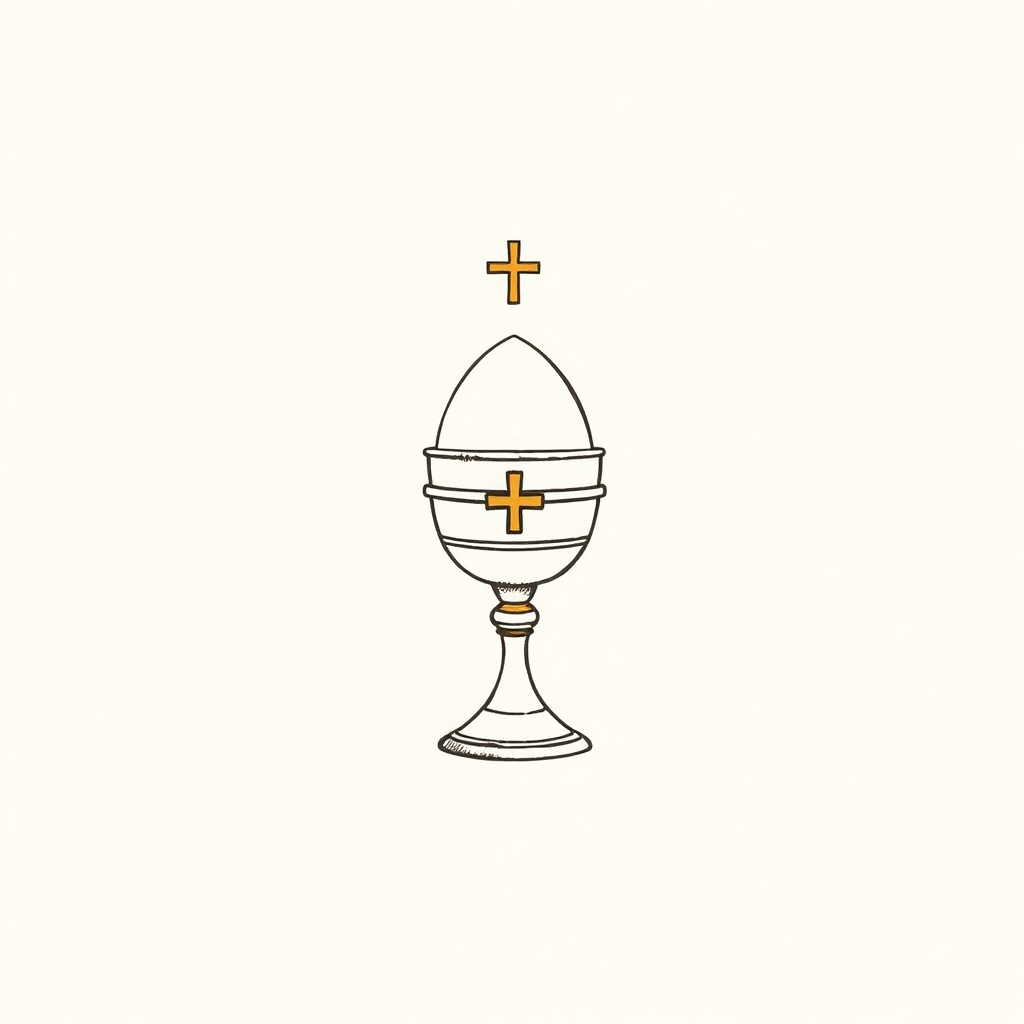
The angels who appeared at her birth, the dove that rested on her head at the moment of her baptism, Our Lord who showed Himself to her as He was after His flagellation, the star that shone above her on several occasions, and notably on the day of the Epiphany, such are the facts that serve to characterize Saint Columba in the arts; one has been able to read them in the life of the Saint. One also places near her a ciborium or a host, because holy communion often took the place of all food for the saint. She is invoked against witchcraft; she is particularly helpful in temptations.
The cult of Blessed Columba of Rieti, approved first in 1571 by Saint Pius V, was approved again in 1627 by Urban VIII.
Cf. *Life of Blessed Columba of Rieti*, by Father Sebastian of Perugia, her confessor, a work translated from the *Acts of the Saints* by the Abbé P., former Vicar Ge neral of Év reux. Clermont, 1845.
Iconography
Signs and attributes




Entities
Narrative network
The names, places, and concepts most present in the entry, weighted by centrality in the text.
The supernatural in their life
The miracles of Blessed Columba of Rieti
Frequently asked questions about Blessed Columba of Rieti
Who was Blessed Columba of Rieti?
Born in Rieti in 1477, Colomba dedicated herself to God at an early age under the influence of Saint Catherine of Siena. After fleeing a forced marriage and miraculously leaving her hometown, she settled in Perugia where she founded a Dominican monastery. A mystic famous for her ecstasies and prolonged fasts, she died in 1501 after serving as a spiritual and political advisor.
What is Blessed Columba of Rieti the patron saint of?
Patronage of Blessed Columba of Rieti: Perugia and Rieti.
What is Blessed Columba of Rieti invoked for?
Blessed Columba of Rieti is invoked for: against witchcraft and temptations.
How is Blessed Columba of Rieti depicted in Christian art?
In iconography, Blessed Columba of Rieti is recognizable by: dove on her head, ciborium or host, star or globe of fire, lily and cross.
What miracles are attributed to Blessed Columba of Rieti?
5 miracles are attributed to this saint, notably: Vision / apparition, Sign / wonder, Multiplication / provision and Resurrection.
Which saints were contemporaries of Blessed Columba of Rieti?
Contemporaries include: Blessed John of Jesus-Mary, Ana de Jesús, Venerable Anne of Jesus and Saint Francis de Sales (Bishop and Prince of Geneva).
When did Blessed Columba of Rieti die?
Blessed Columba of Rieti died around 1501.
What are the other names of Blessed Columba of Rieti?
Other forms of the name: Angelella and Colomba da Rieti.
Who are the relatives of Blessed Columba of Rieti?
Relatives of Blessed Columba of Rieti: Ange Antonio (father), Jeanne (mother) and Inconnu (brother (Dominican)).
Annexes & related entities
Structured data for exploration: events, miracles, quotes, places, attributes, patronages, and important entities cited in the text.
Key Events
- Born in Rieti in 1477
- Vow of virginity at the age of 12
- Entered the Third Order of Saint Dominic in 1486
- Mysterious departure from Rieti to Perugia
- Foundation of a convent in Perugia in 1493
- Intercession during the plague of 1494
- Died on Ascension Day 1501
Quotes
-
To leave prayer for one's neighbor is to leave Jesus Christ for Jesus Christ.
Maxim of Saint Philip Neri (as an epigraph) -
O my Spouse, O my Spouse, be welcome! Yes, the time has come; receive... your humble servant.
Last words reported by Father Sébastien