
Saint Felix of Cantalice
A 16th-century Capuchin religious, Felix of Cantalice spent forty years in Rome as a questing friar. Known for his simplicity and his perpetual 'Deo gratias', he was a close friend of Saint Philip Neri and distinguished himself by his charity toward the sick and the poor. His life was marked by a profound mystical union, illustrated by a vision in which the Virgin Mary entrusted the Child Jesus to him.
Contemporaries

Figures and markers around the normalized period for this entry.
Guided reading
7 reading sections
SAINT FELIX OF CANTALICE, CAPUCHIN
Origins and youth in Cantalice
Felix was born in 1513 into a family of pious laborers and manifested from childhood a marked inclination for prayer and meditation.
This good religi ous was bo rn in Can talice, at the foot of the Apennine mountains, on the borders of Umbria or the Duchy of Spoleto, in the year of grace 1513. His parents were poor and laborers by profession, but they possessed great piety; and, as the father was named Saint and the mother Santa, they did not belie the excellence of their names by their lives and actions. Saint gave a beautiful testimony of this when, seeing a daughter of his eldest son expiring, he said to her with tears, but with a prophetic spirit: "Go in peace, my little Saint, with the blessing of God and mine, I will follow you closely: next Saturday I hope to see you." What he had predicted actually happened, even though, when he uttered these words, he was in perfect health.
Felix was the third of four children born of their marriage. Raised very carefully in this domestic school, he made such great progress in virtue from the start that he was already considered a Saint. When the children saw him approaching, they would say to one another out of respect: "Here is Felix, here is the Saint." As soon as he was able to render some service to the family, his father employed him to tend the livestock in the countryside; and there, while his companions slept at night, or took some amusement during the day, he would withdraw secretly, and throwing himself on his knees at the foot of an oak tree, before a cross that was carved there, he would say his prayers and meditate on the sorrows of Our Lord in His Passion; besides this, he recited, as often as he could, the Pater and the Ave Maria.
Vocation and entry into the Capuchins
After working as a shepherd and plowman, Felix survives a plowing accident miraculously, which leads him to enter the Capuchin Order.
At the age of twelve, he hired himself out as a shepherd to a lord named Marc Tulle Pichi or Picarelli. He then added to his ordinary devotions the Holy Communion and more frequent attendance at the holy sacrifice of the Mass. To hear it, he sometimes abandoned his flocks to Providence, which sent a mysterious guardian: many people have claimed to have seen this unknown and extraordinary shepherd. When Felix was older and stronger to take care of them, he was assigned by his master to the plow and other tasks of rustic life: he gave proof of his virtue everywhere. He was extremely sober, very exact in observing the fasts commanded by the Church; and although he worked all day, nevertheless, on those days, he ate only once towards evening. He was the declared enemy of lying, murmuring, and bad speech, and, to better avoid them, he spoke little. He was always humble, patient, and so full of sweetness that when someone offended him, he did not avenge himself otherwise than by saying to him: "Go, may you become a Saint!" He enjoyed hearing the lives of the holy anchorites of Egypt read aloud. As he was listening attentively one day to the life of these anchorites, he conceived such a great desire to imitate them that he was already proposing to become a hermit; but, reflecting within himself and considering the perils of the solitary life, he resolved instead to take the habit of the Friars Minor with the Capuchin reform; when one of his cousins tried to dissuade him because of the r igor of their life, which is so austere, he said to him in two words: "That he wanted to be a religious in earnest, or not get involved at all." God strengthened him in this resolution by a rather strange accident.
As he was a very good plowman, he was one day given the commission to tame and train two young bulls to the yoke. Scarcely were they yoked when the lord Tulle, his master, appeared unexpectedly, dressed in black, and these animals were terrified; furious, they began to run impetuously. As Felix tried to stop them, they threw him to the ground; they trampled him underfoot and passed the plow over his body; he should have died a thousand times from this accident; nevertheless, by a singular providence of God, he received no harm, although all his clothes were in pieces. The servant and the master recognized the finger of the Most High, who does not like one to delay the execution of promises made to Him; Felix therefore had no trouble obtaining his leave to devote himself to the service of a greater Master, in the Capuchin Order: he came to find the guardian of the convent of Civita-Ducale, not far from Cantalice, to ask him for the habit of his Order. In vain did this Father explain to him how hard and painful the life of a Capuchin is; he only inflamed Felix's desires. He then led him into the church, and, showing him our Lord all bloody and livid on a cross, he said: "Behold, young man, what Jesus Christ suffered for us." At this sight, and at the pathetic tone of the religious, Felix felt his heart moved and shed abundant tears. These pious sentiments seemed to the Father guardian a new mark of vocation: he therefore sent the young postulant, with a letter of recommendation, to Rome, to the Provincial. He was then nearly thirty years old; he was made to do his novitiate at the convent of Ascoli. From the first day, he appeared there completely imbued with the spirit of his Orde r. Oft en he would throw himself at the feet of the novice master, begging him to double his mortifications and to treat him with more rigor than the others, who were, to hear him tell it, more docile than he and more inclined to virtue.
Forty years of begging in Rome
Sent to Rome, he exercised the office of beggar for forty years, distinguishing himself by his charity towards the sick and his constant gentleness.
He took his vows in 1545. Four years later, his superiors sent him to Rom e; t here he exercised the office of beggar for forty years, in the most edifying manner. During his rounds, he would say from time to time to his companion: "Come my brother, the rosary in hand, eyes on the ground and spirit in heaven." He observed a very rigorous silence, for he spoke almost not at all; and, when he did, it was always with great simplicity and extreme gentleness. And what is admirable, although in his youth he had been raised in the rusticity of country folk, he nevertheless had very polished manners, which made him as loved as his holiness made him admired. His gait and his demeanor alone were enough to inspire piety. As his office prevented him from visiting the sick during the day, he did not fail, at night, to see them one after the other, and to relieve them in every way possible. He was not content with those in the convent: he sought them out throughout the city of Rome, as much as obedience and his duties allowed him, and those he visited most willingly were the most needy and those whose illnesses might cause the most repulsion. He spent Sundays and feast days visiting public hospitals to serve the poor there. His charity extended to all the afflicted, to whom he distributed not only consolations, but relief. When he noticed some bashful poor, he would immediately assist them; he begged for their needs with more affection than if they had been his own: it is thus that he saved several people from dishonor and despair.
He was so zealous for the glory of God that he would impart fraternal correction indiscriminately to the great and the small; and when he encountered some young debauchee in the street, he would stop him short to give him a salutary remonstrance. Two gentlemen had drawn their swords to settle their quarrel: they were in the heat of the duel: Brother Felix arrived very opportunely, and, from as far as he saw them, he shouted to them with all his might: *Deo gratias, my brothers; Deo gratias; say both of you: Deo gratias!* They were hardly in a state to listen to anyone then; however, the word of Felix had such force over them that they stopped short, and both said: *Deo gratias!* Afterwards, they took as arbiter of their dispute the holy brother, who reconciled them and made them excellent friends. He had no less wisdom than zeal in the corrections he made.
One day, when he was at the home of a city judge named Bernardino Biscia, a young calf was brought to this judge with a letter full of compliments to recommend a lawsuit to him. He read it, and, during this time, the animal let out some bellows. The blessed Felix took advantage of this to say to him: "Lord B ernardino, do yo u understand the language of this animal well? He begs you to grant the case to those who send him to you; but, take care to do nothing against your conscience, for fear that on the day of judgment these gifts may be to your confusion." He had a retort so prompt and so adroit that he turned everything to the glory of God and the edification of his neighbor. Having once promised some small crosses to Princess Colonna, it happened by chance that he was obliged to distribute them to other people. The princess complained about it, and said to him pleasantly: "That is fine, my brother, to promise and not to keep." — "But how many things," Brother Felix replied to her, "do we promise to God, that we do not keep for Him?"
Friendship with Philip Neri and virtues
He formed a deep friendship with Saint Philip Neri and practiced rigorous asceticism, marked by extreme obedience and poverty.
He formed a close friendship with Sai nt Philip Neri, who wa s then in Rome; and, whenever they met, they greeted each other with affection, but in a very novel way: for they wished upon one another the tortures of the lash, the wheel, the rack, and all sorts of other torments for Jesus Christ, and often they both remained for a long time without speaking, as if seized and entirely transported with joy.
What shall we say after this of the other virtues of our blessed one? He had such esteem for obedience that he remained with joy all his life in the most humiliating office. The Cardinal of Santa Severina, protector of the Order, having asked him in his old age if he would not like to be relieved of his begging, he replied with humility: "My Lord, a good soldier must die with his sword in his hand, and a donkey under his burden."
He made the extreme poverty of this holy Order even more rigorous. He never wore a tunic in winter or summer, but only a poor habit, extremely short and narrow and covered with patches. He avoided seeing his relatives, as a thing unworthy of a good religious, and one day when he approached Cantalice, he did not enter; but as he was obliged to lodge outside, at the home of one of his cousins, seeing that she was preparing a straw mattress and a blanket for him, he went off to spend the night under a tree. He could not suffer anything that was against modesty; not only did he have a horror of loose talk, but he could not even listen to that which was suspicious.
As for his abstinences and bodily mortifications, it seems that he undertook to renew all the austerities of the ancient Fathers of the Thebaid. He observed exactly all the Lents of the Order and fasted on bread and water for all the time that had been sanctified by the fast of his holy patriarch. He had such hatred for himself that he could not treat himself badly enough to his own liking. He slept on boards which he covered with an old mat and had only a log of wood, or at most a bundle of vine branches, for a pillow. He usually slept only two hours, and three when he was unwell. He spent the rest of the night in prayer, during which he took the discipline three times, and often as many times during the day. He wore, besides this, a hair shirt under his habit, particularly when he visited the seven churches of Rome.
He was subject, at the end of his life, to an irritation of the bowels which caused him extreme pain; but he suffered it so willingly that he called them favors from heaven and roses of paradise; and, when they were most acute, he charmed them with some spiritual canticle that delighted even those who saw him suffer. These holy transports of joy, in the midst of the most excruciating pains, sufficiently show the excellence of his patience. He was always so far removed from any kind of vanity and self-complacency that he believed himself unworthy to converse with the other brothers: that is why, when he was with them, he spoke little or not at all. He never allowed laypeople to kiss his hands (as is the custom in Italy to do out of respect for ecclesiastics and religious), unless he was caught by surprise. And when he foresaw that this might happen, he would have this honor rendered to his companion. He had much veneration for priests, and never spoke to them except with very great respect. He always did his best to appear only as a very simple man, in order to better hide the particular graces he received from God. He only used sandals in his extreme old age, and when asked why he went barefoot: "Because," he said, "I walk more at my ease." He could not suffer anything to be said in his praise, and when it was done, he immediately took flight.
Devotions and mystical experiences
Deeply devoted to the Virgin and the Eucharist, he benefited from mystical visions, including that of the Child Jesus placed in his arms.
He had a singular devotion to the most holy Virgin; he fasted on bread and water on all the eves of her feasts, along with the entire Lent that Saint Francis observed in her honor, from the Octave of the apostles Saint Peter and Saint Paul until her Assumption. He recited his rosary every Saturday, and the chaplet every day, but with such tenderness that he was often obliged to interrupt it due to the excess of sweetness he felt in his soul. He had so much love and respect for the name of Jesus that he uttered it in every place and on every occasion. When he met children, he would call out to them: "Say: Jesus, my children; say all of you: Jesus!" At other times, he would have them say: Deo gratias! Thus, the little children, who knew his devotion, did not wait for him to command them; but as soon as they saw him from afar, they would cry out: Deo gratias, Brother Felix; Deo gratias! And he, enraptured and weeping with joy, would answer them as loudly as he could: Deo gratias, my children; God bless you, Deo gratias! When he served Mass, he could hardly make the responses because of the tears he shed in abundance, and the sweetness that flooded his heart. His devotion was also very sensitive toward the passion of Our Lord; and when he heard it being read, especially during Holy Week, he would weep so bitterly that he watered the floor with his tears. His continuous meditations acquired for him a habitual and so intimate union with God that he was always in contemplation and so far removed from himself that he often did not recognize those with whom he was conversing, although his office as a questor obliged him to deal with all sorts of people. It is reported that a religious, asking him one day how, amidst the embarrassment of the world and an infinity of such different objects, he could always keep himself in the presence of God, he replied: "All the creatures of the earth are capable of raising us to God if we know how to look at them with a straight eye!".
He slept only about two hours; then he would go to the Church and remain there in prayer until Prime; then he would serve the first Mass, at which he usually received communion every day. For feasts and Sundays, he would hear several, in addition to the one he served. Finally, in the evening, upon returning from his quest, he never failed to enter the church, where, after a profound reverence, he would kiss the ground before the most holy Sacrament.
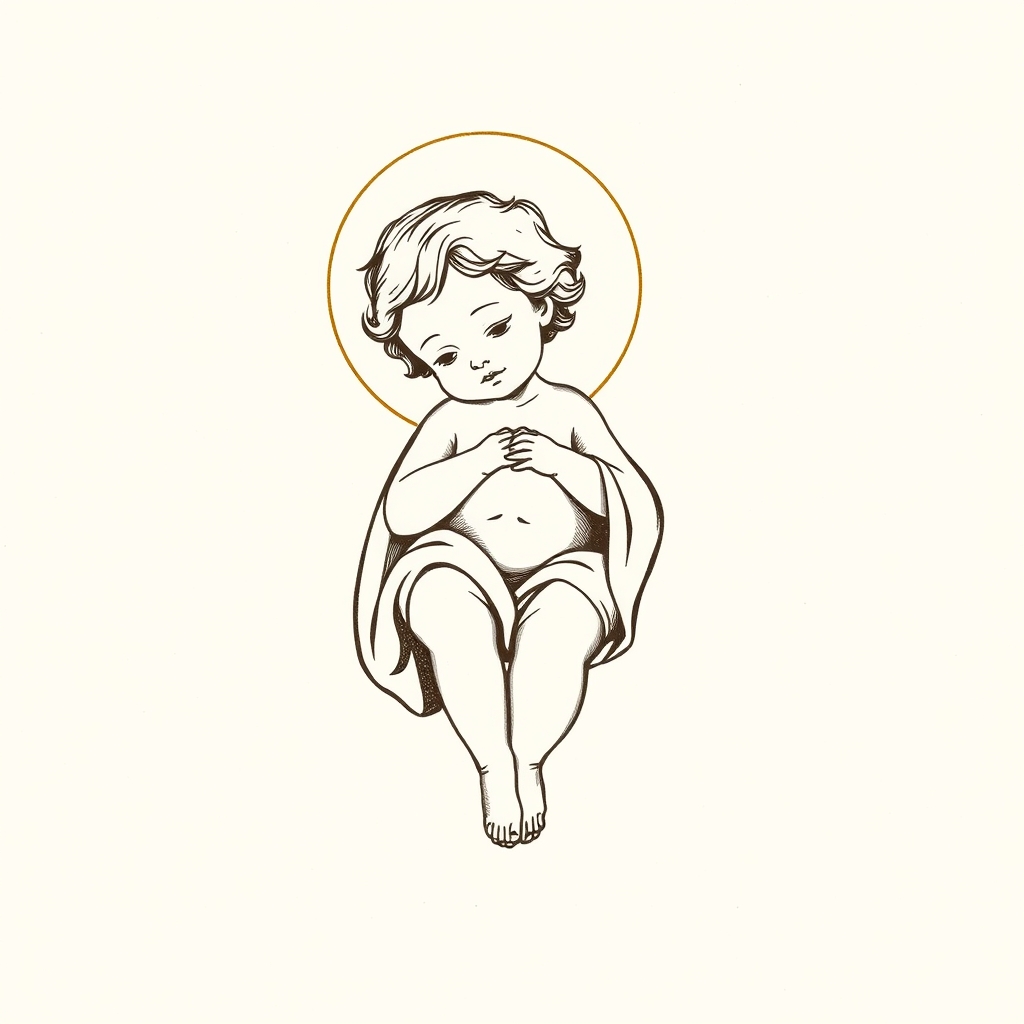
It was during these visits to Our Lord in the Eucharist that a religious priest, secretly spying on what he was doing, perceived him standing in the middle of the church, arms open and as if in ecstasy, crying out and saying with great sighs: "Lord, I commend this poor people to You; I commend our benefactors to You. Mercy, great God, show them mercy!" After having made this prayer for a quarter of an hour, he stopped short, and remained for two or three hours with his arms extended in the form of a cross and motionless, as if he had been dead. Another time, he had such a violent transport of love for his Savior that, running to the high altar, he prayed and conjured the Blessed Virgin to give him her little Jesus during that time; indeed, this good Mother appeared to him, and, to satisfy him, she placed her dear Son into his hands.
Death and miracles
He died in 1587 after a vision of the Virgin; his body and his tomb became the site of miraculous phenomena.
All these graces and great favors from heaven, which could not be hidden, made him so highly regarded in Rome that, even during his lifetime, everyone looked upon him as a Saint. Being seventy-two years old, God made it known to him, by revelation, that he would soon die. Indeed, some time later, he fell dangerously ill. During his illness, he would often slip away from the infirmarian to go to the church, even though he was so weak that one was obliged to carry him back, fainted and half-dead, to his cell. It was a cross for him to be lying on a mattress that had been given to him against his will, and he believed that this was not dying poorly enough, nor as a religious of Saint Francis ought to die. When he had received the last Sacraments, the Blessed Virgin appeared to him followed by a beautiful troop of angels, to strengthen him in this final passage.
He was so enraptured with joy that he cried out with all his might: Oh! oh! oh! and then remained for nearly seven or eight minutes with his arms extended and raised toward heaven. The enemy of all good sought to tempt him with despair and infidelity; but the man of God stopped him short, saying to him: "That it was his Savior who was to judge him, and that he could not distrust His mercy; that, moreover, he believed everything that the holy Catholic Church believes and teaches." Finally, he peacefully rendered his soul to his Creator, in the praises of His holy name and those of His holy Mother, finishing them in this world on May 18, to go and continue them for all eternity in heaven.
His holiness appeared, after his death, through four very remarkable things: 1st, by the change in his body, which, from brown as it was, became as tender and as white as that of a child; 2nd, by the famous translation that was made of it from the common cemetery of the religious, where he had been buried, into a tomb in the church, supported by marble pillars that he himself had requested from the lord Alessandro Poggi, assuring him that they would be used for him; 3rd, by a liquid that distills continuously from his coffin, and which is often the instrument of many wonders; 4th, finally, by a miraculous virtue that God has communicated to the oil of the lamp that burns day and night before his sepulcher.
Cult and representations
Beatified and then canonized in the 17th and 18th centuries, he is traditionally represented with his beggar's satchel and the inscription 'Deo gratias'.
Saint Felix was beatified by Urban VIII in 1625; canonized by Cl ement XI i n 1712; but the Bull of his canonization was not published until 1724, by B enedict XII I. His body is in the Capuchin church in Rome. There is a plenary indulgence for those who, having fulfilled the ordinary conditions, visit a church of his Order on the day of his feast.
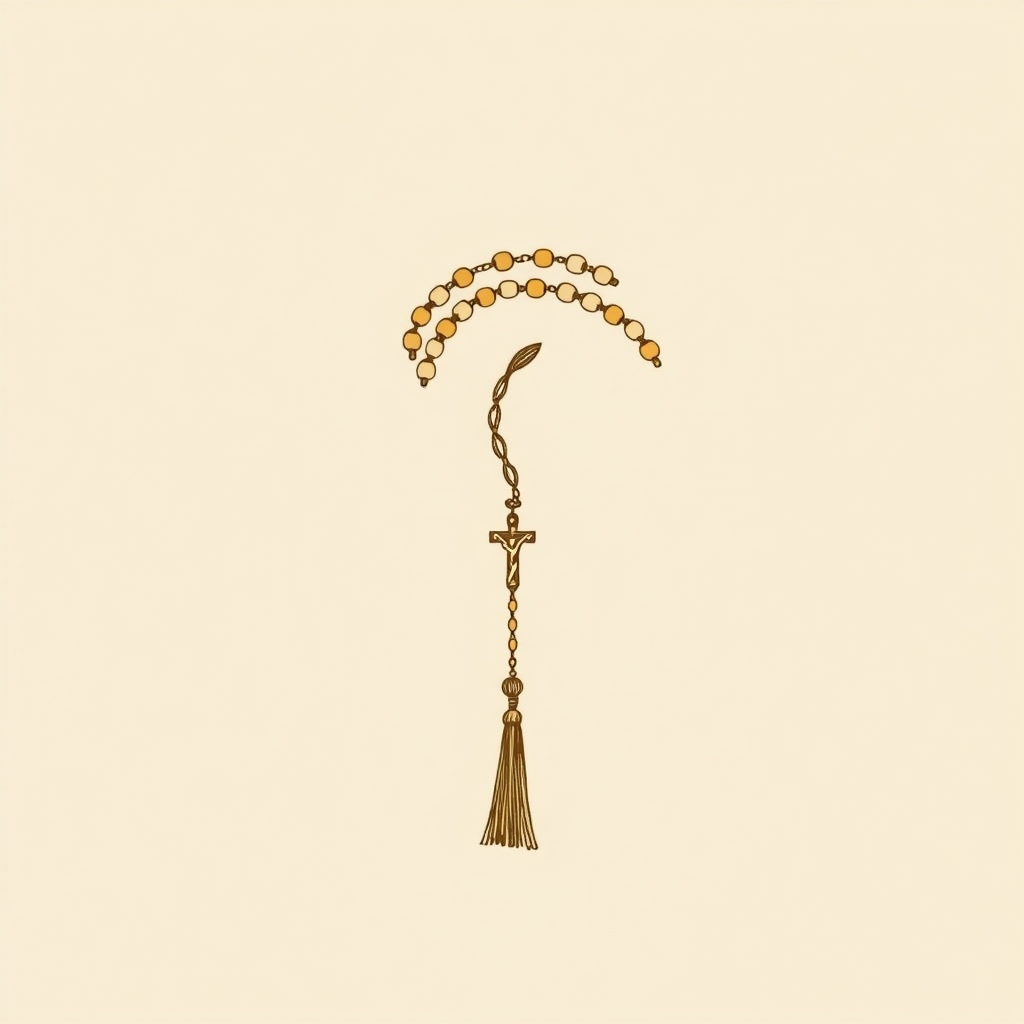
Saint Felix of Cantalice is represented with a satchel, a barrel or a demijohn on his shoulder; a basket or bag on his arm. Sometimes he is accompanied by a donkey that helped him in his rounds as a beggar. On his empty or full satchel, the words Deo gratias are traced, which he pronounced with the same piety, whether he was well received or whether he suffered refusals. He is also sometimes painted meeting Saint Philip Neri in the street, and giving him a drink from his gourd or wicker-covered bottle. It is known that the Saint willingly recited his rosary while walking the streets of Rome; this is why a large rosary often hangs from his right hand, which he counts devoutly. The Boll andists prov ide his authentic portrait in their appendix for the month of May.
See the Bollandists, May, vol. IV and vol. VII of the new ed., p. 793.
Iconography
Signs and attributes





Entities
Narrative network
The names, places, and concepts most present in the entry, weighted by centrality in the text.
The supernatural in their life
The miracles of Saint Felix of Cantalice
Frequently asked questions about Saint Felix of Cantalice
Who was Saint Felix of Cantalice?
A 16th-century Capuchin religious, Felix of Cantalice spent forty years in Rome as a questing friar. Known for his simplicity and his perpetual 'Deo gratias', he was a close friend of Saint Philip Neri and distinguished himself by his charity toward the sick and the poor. His life was marked by a profound mystical union, illustrated by a vision in which the Virgin Mary entrusted the Child Jesus to him.
What is Saint Felix of Cantalice the patron saint of?
Patronage of Saint Felix of Cantalice: Order of Friars Minor Capuchin and Alms collectors.
What is Saint Felix of Cantalice invoked for?
Saint Felix of Cantalice is invoked for: the sick and the shamefaced poor.
How is Saint Felix of Cantalice depicted in Christian art?
In iconography, Saint Felix of Cantalice is recognizable by: alms bag, barrel or demijohn, basket or shopping bag, donkey, inscription 'Deo gratias' and large rosary.
What miracles are attributed to Saint Felix of Cantalice?
4 miracles are attributed to this saint, notably: Protection / deliverance, Vision / apparition and Sign / wonder.
Which saints were contemporaries of Saint Felix of Cantalice?
Contemporaries include: Blessed John of Jesus-Mary, Ana de Jesús, Venerable Anne of Jesus and Saint Francis de Sales (Bishop and Prince of Geneva).
When did Saint Felix of Cantalice die?
Saint Felix of Cantalice died around 1600.
What are the other names of Saint Felix of Cantalice?
Other forms of the name: Félix and Frère Félix.
Who are the relatives of Saint Felix of Cantalice?
Relatives of Saint Felix of Cantalice: Saint (father) and Sainte (mother).
Annexes & related entities
Structured data for exploration: events, miracles, quotes, places, attributes, patronages, and important entities cited in the text.
Key Events
- Born in Cantalice in 1513
- Worked as a shepherd then a plowman for Marc Tulle Pichi
- Miraculous accident with bulls and a plow
- Entered the Capuchin novitiate in Ascoli around 1543
- Profession of vows in 1545
- Sent to Rome in 1549 for the office of questor
- Forty years of begging in the streets of Rome
- Beatification by Urban VIII in 1625
- Canonization by Clement XI in 1712
Quotes
-
Deo gratias, my brothers; Deo gratias; say both of you: Deo gratias!
Words addressed to two duelists -
A good soldier must die with his sword in his hand, and a donkey under its load.
Reply to the Cardinal of Santa Severina -
All the creatures of the earth are capable of raising us to God if we know how to look at them with a right eye!
Response to a religious on the presence of God