
Hedwig Borzecka
The Venerable Hedwig Borzecka (1863-1906) was a Polish religious sister who co-founded, with her mother Blessed Celine Borzecka, the Congregation of the Sisters of the Resurrection in Rome.
Contemporaries

Figures and markers around the normalized period for this entry.
Guided reading
5 reading sections
Biography
Born in 1863 in the Russian Empire, Hedwig Borzecka grew up in a fervent Polish family before moving to Rome with her mother, where she discerned her religious vocation.
Jadwiga (Hedwig) Borzęcka was born on February 1, 1863, in Obrębszczyzna, near Grodno (today in Belarus), into a deeply patriotic and Catholic Polish noble family [1.1.4]. From her early childhood, she was marked by the political trials of her homeland under Russian rule, even being briefly imprisoned with her mother, Céline Chludzińska Borzęcka, for supporting the January insurgents. After the paralysis and death of her father, Józef Borzęcki, in 1874, Hedwig and her mother moved to Rome in October 1875. It was in the Eternal City that she met Father Pierre Semenenko, co-founder of the Congregation of the Resurrection, who became her spiritual director and prepared her for her first communion in 1876. Under his guidance, Hedwig matured her desire to dedicate herself entirely to God. On March 25, 1881, at the end of a spiritual retreat, she pronounced her "Fiat" and decided to join her mother in founding a new female religious community. She died suddenly on September 27, 1906, in Kęty, Poland, at the age of 43.
Life and Work
Hedwig Borzecka co-founded with her mother the Congregation of the Sisters of the Resurrection, a pioneering work dedicated to the education of young girls and the spiritual renewal of society.
On January 6, 1891, Hedwig Borzecka and her mother, Céline, pronounced their perpetual vows in Rome before Cardinal-Vicar Lucido Maria Parocchi, thus formalizing the foundation of the Congregation of the Sisters of the Resurrection of Our Lord Jesus Christ. This event marked a historical first in the Catholic Church, as a religious community was founded jointly by a mother and her daughter. Hedwig invested herself fully in the development of the institute, directing a girls' school in Rome and taking charge of the formation of novices. Endowed with a great sense of organization and deep solicitude, she assumed responsibility for the Roman community when her mother left to found new houses in Poland, notably in Kęty in 1891. In 1905, after the official approval of the congregation's constitutions by the Holy See, Hedwig was appointed Assistant General and First Councilor of the order, consolidating the expansion of the work which would soon extend to the United States.
Path to Holiness
Recognized for her heroic obedience, her fervor in prayer, and her humility, Hedwig Borzecka lived a life of total self-denial in the service of her community.
Throughout her religious life, Hedwig Borzecka distinguished herself by an absolute fidelity to her vocation and a profound humility. She agreed to constantly efface herself behind her mother, acting as her most solid support and her "Cyrenian" in moments of doubt and trial, notably after the sudden death of their spiritual mentor, Father Pierre Semenenko, in 1886. Her spiritual life was deeply rooted in the Paschal mystery, uniting her physical and moral sufferings to the Passion of Christ to participate in his glory. The testimonies of her contemporaries describe a religious woman of exceptional integrity of character, animated by an ardent love for the Eucharist and an indefatigable zeal for the salvation of souls. Her reputation for holiness, already solid during her lifetime due to her charity and spiritual wisdom, spread rapidly after her premature death, prompting her sisters and the faithful to seek her intercession.
Beatification and canonization
Introduced in the mid-20th century, the cause for the beatification of Hedwig Borzecka reached a major milestone in 1982 with the recognition of her heroic virtues by John Paul II.
The cause for the beatification of Hedwig Borzecka was officially opened in the Archdiocese of Krakow on April 10, 1964. After a meticulous examination of her writings and testimonies regarding her life, the file was transmitted to Rome to the Congregation for the Causes of Saints on June 27, 1969. The process progressed successfully and, on December 17, 1982, Pope John Paul II promulgated the decree recognizing the heroic nature of her virtues, thereby conferring upon her the title of Venerable. Her mother, Celine Borzecka, was beatified on October 27, 2007, by Pope Benedict XVI. For the Venerable Hedwig to be proclaimed Blessed in turn, the official recognition of a miracle attributed to her intercession by the Holy See remains necessary. Her liturgical feast is celebrated on September 26, particularly within her congregation and in the city of Kęty.
Spirituality and Heritage
The legacy of Hedwig Borzecka endures through the educational and spiritual mission of the Sisters of the Resurrection, present today in several countries.
The spirituality of Hedwig Borzecka is based on the motto of her congregation: "Through the Cross and Death to the Resurrection and Glory." This Paschal ideal invites a continuous inner transformation, inspired by the evangelical Beatitudes, to bear witness to Christian hope in society. Today, the Sisters of the Resurrection continue the educational and charitable work initiated by Hedwig and her mother, working in schools, orphanages, and care centers in Poland, Italy, the United Kingdom, Canada, the United States, and Belarus. The relics of Hedwig Borzecka rest alongside those of her mother in a common sarcophagus within the parish church of Saints Margaret and Catherine in Kęty, Poland. This place remains an important center of pilgrimage and prayer for the faithful who ask for graces through her intercession, perpetuating the memory of this devoted co-founder.
Iconography
Signs and attributes
Frequently asked questions about Hedwig Borzecka
Who was Hedwig Borzecka?
The Venerable Hedwig Borzecka (1863-1906) was a Polish religious sister who co-founded, with her mother Blessed Celine Borzecka, the Congregation of the Sisters of the Resurrection in Rome.
What is Hedwig Borzecka the patron saint of?
Patronage of Hedwig Borzecka: Sœurs de la Résurrection and Sisters of the Resurrection.
How is Hedwig Borzecka depicted in Christian art?
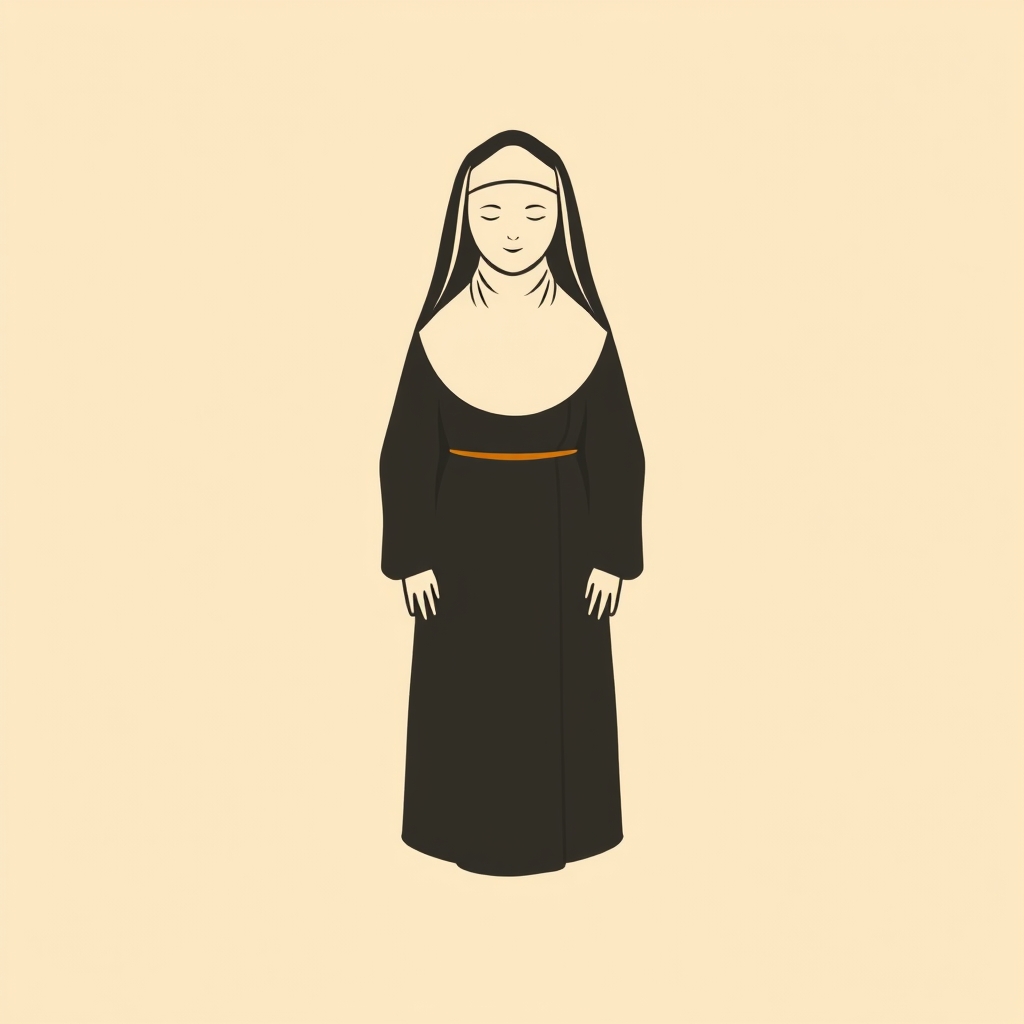
In iconography, Hedwig Borzecka is recognizable by: Religious habit.
Which saints were contemporaries of Hedwig Borzecka?
Contemporaries include: Pauline of the Agonizing Heart of Jesus, Felipe de Jesús Munárriz and 50 companions, Mariano de Jesús Euse Hoyos and Teresa of Jesus of the Andes.
When did Hedwig Borzecka die?
Hedwig Borzecka died around 1906.
What are the other names of Hedwig Borzecka?
Other forms of the name: Jadwiga Borzęcka and Hedwige Borzęcka.
Who are the relatives of Hedwig Borzecka?
Relatives of Hedwig Borzecka: Céline Chludzińska Borzęcka (mother) and Józef Borzęcki (father).
Annexes & related entities
Structured data for exploration: events, miracles, quotes, places, attributes, patronages, and important entities cited in the text.
Key Events
- Era / death: 1863-1907
- Decree of venerability by John Paul II