
Oscar Gattiani
Oscar Gattiani, in religion Father Guglielmo of Badi (1914-1999), was an Italian Capuchin priest known for his radical poverty, life of prayer, and heroic charity.
Contemporaries

Figures and markers around the normalized period for this entry.
Guided reading
5 reading sections
Biography
Birth of Oscar Gattiani in 1914 in Badi, his entry into the Capuchins under the name of Brother Guglielmo, and his priestly ordination in 1938.
Oscar Luciano Gattiani was born on November 11, 1914, in Badi, a hamlet in the municipality of Castel di Casio, in the province of Bologna, Italy. He was the second of four children of Dionisio Gattiani and Maria Puzzarini. During his childhood, he helped his parents in their small family grocery and bakery. Very pious, he assiduously attended the parish church of Saint Prosper, where he was baptized on November 15, 1914. His parish priest, Father Pio Mazzetti, quickly discerned his religious vocation and guided him toward the Order of Friars Minor Capuchin. On November 9, 1924, at the age of ten, Oscar entered the Capuchin seraphic seminary in Faenza. He continued his secondary studies in Imola starting in September 1925. On November 15, 1929, he began his novitiate at the convent of Cesena, where he received the Franciscan habit and the religious name of Brother Guglielmo (William). He pronounced his temporary vows on November 17, 1930, followed by his perpetual vows in 1935. After completing his studies in philosophy and theology in Bologna, he was ordained a priest on May 22, 1938.
Life and Work
Teaching, service to the wounded during the war, novice master in Cesena, life as a hermit in Lagrimone, and a pilgrimage to the Holy Land before his return to Faenza.
After his ordination, Father Guglielmo was sent by his superiors as a teacher in the Capuchin seminaries of Faenza, Lugo, and Ravenna. During the Second World War, he resided in Cesena, where he taught young friars in high school while tirelessly dedicating himself to helping the wounded, the sick, and those displaced by the bombings. In 1946, he was appointed novice master at the Cesena friary, a duty he would fulfill with great faithfulness for nearly nineteen years, until 1964. During this period, he strove to transmit to future Capuchins a love for radical poverty and evangelical simplicity according to the spirit of Saint Francis of Assisi. He was also the confessor for the Capuchin Poor Clare monastery in Cesena, as well as for many priests and laypeople. Desiring to live an even more radical poverty, he was encouraged in this path by Saint Pio of Pietrelcina (Padre Pio), whom he met several times in San Giovanni Rotondo. In 1969, his superiors authorized him to settle in Lagrimone (province of Parma), where the Capuchin Poor Clares of Ferrara had just founded a new monastery. He served there as chaplain and obtained permission to live in complete destitution, lodging in a simple wooden hut located in the community's garden. It was there that he conceived, with the help of Father Natale Montalti, the project of the "Casa del Padre" (House of the Father) and a secular fraternity dedicated to universal love. In 1976, he temporarily retired to a hermitage in Querceto (diocese of Parma). In April 1980, he undertook a six-month pilgrimage to the Holy Land. He led a life of solitude and penance in the Judean desert and stayed with Father Giuseppe Dossetti's community in Jericho. Although he wished to remain there, obedience called him back to Italy in October 1980. His superiors then assigned him to the Sanctuary of the Most Holy Crucifix (Santissimo Crocifisso) in Faenza. He spent the last nineteen years of his life there, dedicating himself day and night to welcoming the faithful, spiritual direction, confessions, and prolonged Eucharistic adoration.
Path to holiness
Reputation for holiness during his lifetime, nicknamed the "Padre Pio of Romagna," and his peaceful death in 1999 followed by the transfer of his remains to Cesena.
Father Guglielmo Gattiani enjoyed an immense reputation for holiness during his lifetime. Sometimes nicknamed the "Padre Pio of Romagna," he was sought out by thousands of the faithful for his spiritual counsel, his prayers, and his compassion toward the afflicted. It is reported that Padre Pio himself, upon receiving pilgrims from Romagna, would tell them: "Why do you come to me? You have Father Guglielmo, go to him." Afflicted by serious heart problems at the end of his life, he passed away peacefully at dawn on December 15, 1999, in Faenza. His funeral attracted a considerable crowd. Initially buried in Faenza, his body was solemnly transferred on December 15, 2013, to the portico of the Capuchin church in Cesena, in order to respond to popular devotion.
Beatification and canonization
Opening of his cause for beatification in 2006, closure of the diocesan inquiry in 2011, and declaration of the heroic nature of his virtues by Pope Francis in 2024.
The cause for the beatification and canonization of Father Guglielmo Gattiani was officially opened at the diocesan level on November 4, 2006, in Cesena. The diocesan inquiry into his life, virtues, and reputation for holiness was solemnly closed on December 10, 2011. After the examination of the Positio by the Congress of Theologians and subsequently by the Ordinary Session of Cardinals and Bishops, Pope Francis authorized, on May 23, 2024, the promulgation of the decree recognizing the heroic nature of his virtues. From that moment, Father Guglielmo Gattiani was officially declared Venerable by the Catholic Church.
Spirituality and legacy
Spirituality centered on absolute poverty, contemplation, Eucharistic adoration, and devotion to the Virgin Mary and Saint Joseph.
The spirituality of the Venerable Guglielmo Gattiani is deeply rooted in evangelical radicalism and the Franciscan charism of absolute poverty. His spiritual motto, taken from Saint Francis, was "My God and my All" (Mio Dio e mio tutto). For him, poverty was not an end in itself, but the necessary gateway to unite intimately with God and to make oneself totally available to the love of neighbor. His life of prayer was highly contemplative, marked by long hours of nocturnal adoration before the Blessed Sacrament. He also nurtured a deep devotion to the Virgin Mary and Saint Joseph, to whom he dedicated several apologetic and hagiographic writings. His legacy remains alive through the spiritual fraternity he inspired and the memory of his heroic charity toward the sick and the sinners he confessed tirelessly.
Iconography
Signs and attributes
Frequently asked questions about Oscar Gattiani
Who was Oscar Gattiani?
Oscar Gattiani, in religion Father Guglielmo of Badi (1914-1999), was an Italian Capuchin priest known for his radical poverty, life of prayer, and heroic charity.
How is Oscar Gattiani depicted in Christian art?
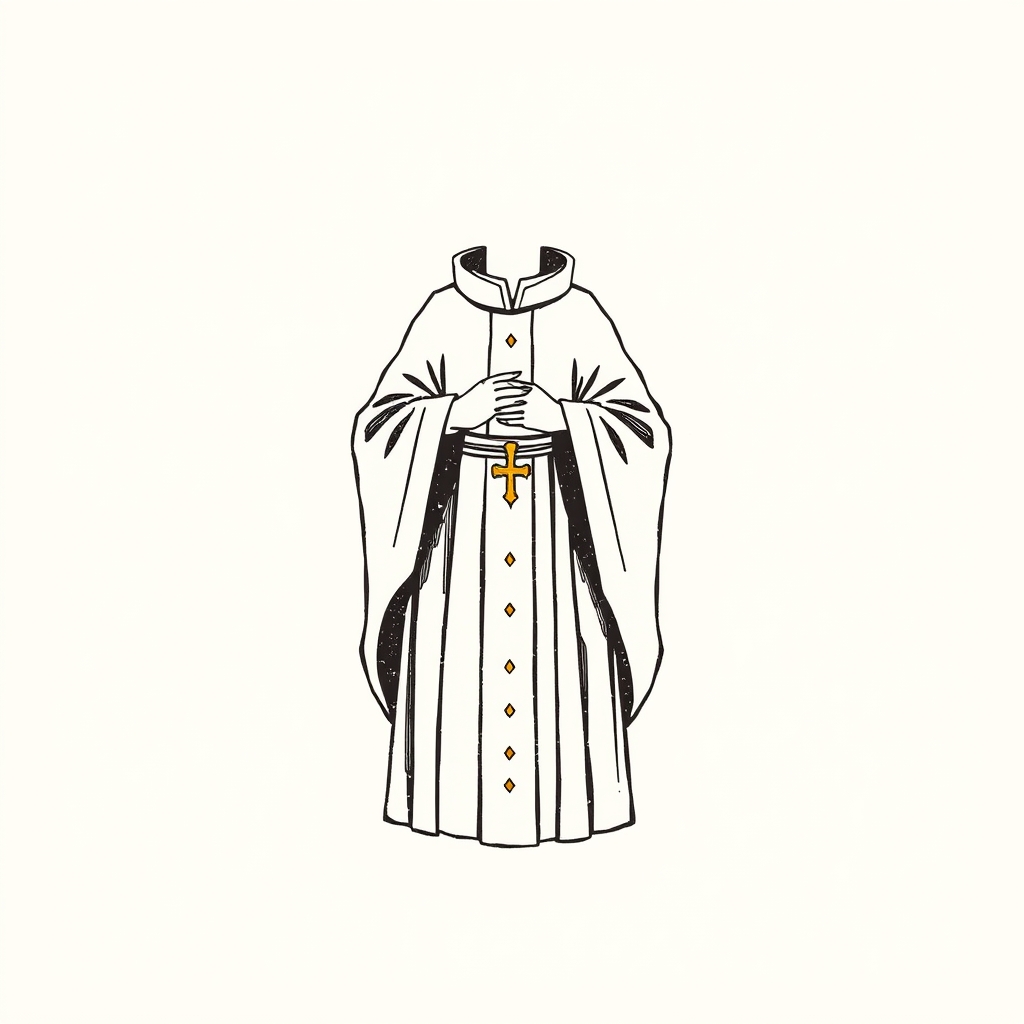
In iconography, Oscar Gattiani is recognizable by: Franciscan habit.
Which saints were contemporaries of Oscar Gattiani?
Contemporaries include: Pauline of the Agonizing Heart of Jesus, Felipe de Jesús Munárriz and 50 companions, Mariano de Jesús Euse Hoyos and Teresa of Jesus of the Andes.
When did Oscar Gattiani die?
Oscar Gattiani died around 1914.
What are the other names of Oscar Gattiani?
Other forms of the name: Guglielmo de Badi, Guglielmo Gattiani and Guillaume de Badi.
Who are the relatives of Oscar Gattiani?
Relatives of Oscar Gattiani: Dionisio Gattiani (father) and Maria Puzzarini (mother).
Annexes & related entities
Structured data for exploration: events, miracles, quotes, places, attributes, patronages, and important entities cited in the text.
Key Events
- Era / death: 1914-1999
- Decree of venerability by Francis
Quotes
-
Why do you come to me? You have Father Guglielmo, go to him.
https://vertexaisearch.cloud.google.com/grounding-api-redirect/AUZIYQGHw-8Hc_VPlScvAusYeNBQxdRZcFqDoh-Nraif9FBTc-cvrrowL0cV56Csy5m_VMsfdwOZ52QEHvFVcY0kzpttejWZbDLuMy9uT0EvGLwysI2Bj8XfPfS9901NwiB-GJQ=