
Marie de La Ferre
The Venerable Marie de La Ferre (1589-1652) was a French religious sister, co-founder of the Religious Hospitallers of Saint Joseph with Jérôme Le Royer de La Dauversière.
Contemporaries

Figures and markers around the normalized period for this entry.
Guided reading
5 reading sections
Biography
Born around 1589 in Roiffé, Marie de La Ferre grew up in a context of religious tensions before dedicating herself entirely to God and dying in the service of the sick in Moulins in 1652.
Marie de La Ferre was born around 1589 in Roiffé, on the borders of Poitou and Touraine, into a noble family [1.1.3]. Having lost her mother at the age of eleven, she had to face the attempts of her Calvinist stepmother to convert her to Protestantism. Taken in by her maternal aunt at the Château du Grand Ruigné, near La Flèche, she initially led a worldly life before experiencing a profound spiritual conversion on July 22, 1607, during Mass. From then on, she renounced riches and dedicated herself to the service of the poor and her parish. After discerning her vocation and overcoming several illnesses that prevented her from entering traditional religious orders, she settled in La Flèche in 1636 to care for the sick. She died on July 28, 1652, in Moulins, a victim of an epidemic contracted while caring for the poor after a severe flood of the Allier river.
Life and Work
Co-founder of the Religious Hospitallers of Saint Joseph, Marie de La Ferre structured a community dedicated to the care of the sick and the most destitute.
The major work of Marie de La Ferre began in 1636 in La Flèche, when she joined forces with Jérôme Le Royer de La Dauversière to found the congregation of the Hospital Sisters of Saint Joseph. On May 18, 1636, accompanied by her friend Anne Foureau, she joined three servants already active at the Hôtel-Dieu of La Flèche to care for the sick in a spirit of poverty and devotion. Officially recognized in 1643 by the Bishop of Angers, Claude de Rueil, the community elected Marie de La Ferre as its first superior. Under her leadership, the institute developed rapidly and spread to other cities, notably in Moulins in 1651, where she established a new community. Her actions laid the foundations for a hospital congregation that would later extend to New France (Canada), actively participating in the founding of Montreal and its Hôtel-Dieu under the impetus of Jeanne Mance.
Journey toward holiness
Animated by a Eucharistic faith and deep charity, Marie de La Ferre lived a life of humility and total abandonment to Divine Providence.
The spiritual journey of Marie de La Ferre is marked by a constant search for the divine will and an unconditional love for the most destitute. Nicknamed the "holy young lady" by the inhabitants of La Flèche, she distinguished herself by her humility, her spirit of poverty, and her Marian and Eucharistic devotion, inherited from her mother. Her spirituality rested on an absolute trust in Providence, which she strove to transmit to her hospital sisters. She conceived the service of the sick not as a simple material task, but as an intimate encounter with the suffering Christ. Her reputation for holiness, firmly established during her lifetime by her heroic dedication during epidemics, was confirmed after her death by the fervor of the faithful and the sisters who continue to be inspired by her virtues and her example of perfect charity.
Beatification and canonization
Recognized as venerable by Pope Benedict XVI in 2009, Marie de La Ferre is liturgically commemorated on July 28, the day of her birth into Heaven.
The process for the beatification of Marie de La Ferre was conducted to examine the heroic nature of her virtues. On April 3, 2009, Pope Benedict XVI authorized the promulgation of the decree recognizing her heroic virtues, thus conferring upon her the title of venerable, two years after her co-founder Jérôme Le Royer de La Dauversière. As no miracle has yet been officially validated by the Holy See for her beatification, her cause remains actively supported by her congregation and the associated dioceses. Her liturgical feast is celebrated on July 28, the anniversary of her death in 1652.
Spirituality and heritage
The legacy of Marie de La Ferre endures through the Religious Hospitallers of Saint Joseph and the healthcare institutions founded under her patronage in France and Canada.
The spiritual legacy of Marie de La Ferre remains alive through the Religious Hospitallers of Saint Joseph (RHSJ), who continue their mission of compassion for the sick and the elderly in France, Canada, and several countries in the Americas. In La Flèche, the historic house preserves the memory of the founders, and a residential care facility for dependent elderly people (EHPAD) proudly bears her name. Her spiritual influence also marked the history of Canada, where the first sisters of her community arrived in 1659 to care for the settlers of Ville-Marie (Montreal). In September 2025, an icon of the venerable was solemnly blessed and installed in the chapel of the diocesan house of Le Mans, testifying to the ongoing devotion she receives in her region of origin.
Iconography
Signs and attributes
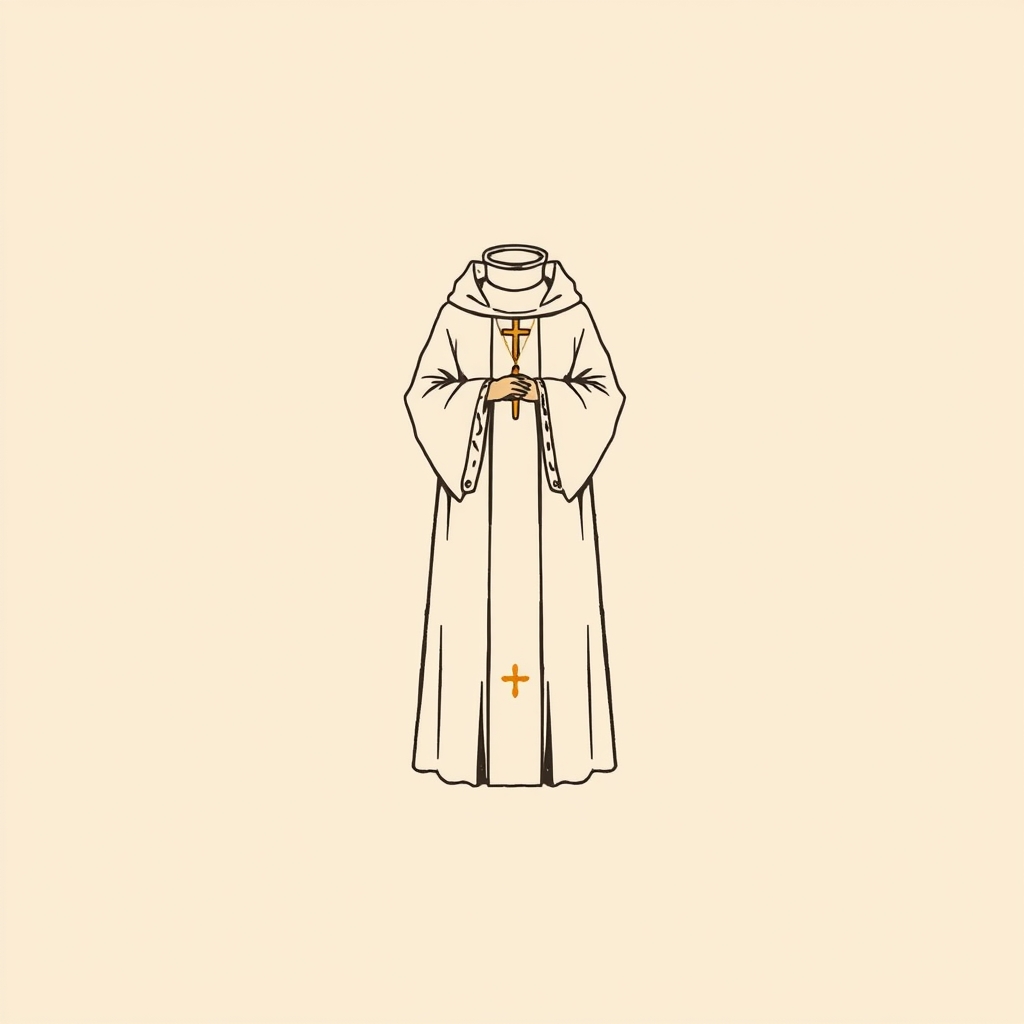
Frequently asked questions about Marie de La Ferre
Who was Marie de La Ferre?
The Venerable Marie de La Ferre (1589-1652) was a French religious sister, co-founder of the Religious Hospitallers of Saint Joseph with Jérôme Le Royer de La Dauversière.
What is Marie de La Ferre the patron saint of?
Patronage of Marie de La Ferre: Religieuses Hospitalières de Saint-Joseph and Religious Hospitallers of Saint Joseph.
What is Marie de La Ferre invoked for?
Marie de La Ferre is invoked for: Soin des malades, Care of the sick, Secours des pauvres and Relief of the poor.
How is Marie de La Ferre depicted in Christian art?
In iconography, Marie de La Ferre is recognizable by: Religious habit.
Which saints were contemporaries of Marie de La Ferre?
Contemporaries include: María de Jesús López Rivas, Mariana de Jesús de Paredes, Blessed Mariana de Jesús (de Paredes y Flores) and Saint Francis de Sales (Bishop and Prince of Geneva).
When did Marie de La Ferre die?
Marie de La Ferre died around 1652.
Who are the relatives of Marie de La Ferre?
Relatives of Marie de La Ferre: Madame de Goubitz (aunt).
Annexes & related entities
Structured data for exploration: events, miracles, quotes, places, attributes, patronages, and important entities cited in the text.
Key Events
- Era / death: 1590-1652
- Decree of venerability by Benedict XVI