
Pierina Morosini
Young Italian worker and Catholic Action militant, who died a martyr for purity at the age of 26.
Contemporaries

Figures and markers around the normalized period for this entry.
Guided reading
5 reading sections
Biography
Birth and childhood of Pierina Morosini in Fiobbio di Albino within a large and pious family.
Pierina Eugenia Morosini was born on January 7, 1931, at the "Stalle" farm in Fiobbio, a hamlet of the municipality of Albino, in the province of Bergamo (Lombardy, Italy). She was the eldest of nine children born to Rocco Morosini and Sara Noris, a family of poor but deeply pious farmers. She was baptized the very next day, on January 8, 1931, in the parish church of Fiobbio. From her childhood, Pierina manifested a living faith and a great Marian devotion. On January 10, 1937, at the age of six, she received the sacrament of confirmation from the hands of the Bishop of Bergamo, Msgr. Adriano Bernareggi, in the church of Albino. In May 1938, she made her first communion in the church of Fiobbio. As the eldest of a large sibling group, she actively helped her mother with household chores and the upbringing of her brothers and sisters. After her primary studies, she took cutting and sewing courses to become a seamstress.
Life and work
Her work at the spinning mill, her private vows, and her active commitment within Catholic Action.
The financial situation of the Morosini family worsened when her father, Rocco, became an invalid. To provide for her family, Pierina had to renounce her dreams of continuing her studies to become a teacher, as well as her religious and missionary vocation. On March 18, 1946, at the age of 15, she was hired as a textile worker at the Cotonificio Honegger in Albino, a major local spinning mill. Her salary then became the family's main financial resource. Unable to enter a convent, Pierina decided to live her consecration in the heart of the world. In 1947, she took private vows of chastity, poverty, and obedience, and wrote a small daily rule of life that she strove to follow scrupulously. She found her "monastery" in her own home, her "school" at the factory, and her "mission" in her parish. She became actively involved in the Women's Youth of Catholic Action (Azione Cattolica) starting in 1942, becoming responsible for the formation of the youngest girls ("piccolissime" and "beniamine"). She was also a member of the Third Order of St. Francis, the Children of Mary, and became a promoter (zelatrice) of missionary works and the diocesan seminary of Bergamo. Her daily life was marked by rigorous spiritual discipline: she rose every morning at 4 a.m. to pray and attend daily Mass in order to receive communion before starting her work at the factory. On the path leading from her house to the spinning mill, which she traveled on foot, she faithfully recited the rosary.
Path to Holiness
Her significant pilgrimage to Rome, her fatal assault by Giuliano Schena, and the opening of her cause.
On April 27, 1947, Pierina undertook the only major journey of her life by traveling to Rome to attend the beatification of Maria Goretti. This pilgrimage left a deep mark on her; the young martyr of the Pontine Marshes became her absolute model of purity. She wrote in her private diary of her desire to imitate her faithfulness even unto sacrifice. Ten years later, on April 4, 1957, while returning from her work at the factory along an isolated path on the slopes of Mount Misma, Pierina was approached by a twenty-year-old man, Giuliano Schena, a local unemployed man. The latter, driven by a malicious bet from his companions, attempted to make aggressive advances toward her. Pierina firmly rejected his solicitations and tried to bring him to his senses. Faced with her heroic resistance, the attacker grabbed her and threw her to the ground. As she tried to defend herself, the man seized a stone and struck her violently on the head, leaving her unconscious in the woods. Worried by her delay, her loved ones set out to search for her. It was her brother who found her dying on the path, still holding her rosary in her hand. Transported urgently to the hospital in Bergamo, she died there two days later, on April 6, 1957, without having regained consciousness, after having forgiven her executioner. The cause for beatification was officially opened in the Diocese of Bergamo with the granting of the nihil obstat from the Congregation for the Causes of Saints on November 17, 1979. The diocesan inquiry took place from 1980 to 1983. On April 10, 1983, her remains were exhumed from the Fiobbio cemetery to be transferred to the parish church.
Beatification and canonization
The recognition of her martyrdom and her beatification by Pope John Paul II in 1987.
Pope John Paul II officially recognized her martyrdom in defensum castitatis (in defense of chastity). On October 4, 1987, during the celebration of the Synod of Bishops on the vocation and mission of the laity, the Sovereign Pontiff proclaimed Pierina Morosini blessed during a solemn mass in St. Peter's Basilica in Rome. Her mother, Sara Noris, as well as her brothers and sisters, attended this historic celebration.
Spirituality and legacy
The holiness of everyday life, her spiritual legacy, and the veneration of her relics in Fiobbio.
The spirituality of Pierina Morosini is based on what is described as the "holiness of everyday life" (santità feriale). She demonstrated that it is possible to reach the heights of the Christian life through factory work, family service, and parish involvement, without isolating oneself from the world. Her life was centered on the Eucharist, which she considered her daily strength. She left this profound reflection on her vocation: "Virginity is a profound silence of all things of the earth." Today, her mortal remains rest in a bronze urn under the high altar of the parish church of Sant'Antonio di Padova in Fiobbio. A museum adjacent to the church preserves her personal belongings and traces her life. In 2012, on the occasion of the 25th anniversary of her beatification, a new bell was dedicated to her in the bell tower of Fiobbio, adorned with her effigy alongside that of Saint Maria Goretti.
Iconography
Signs and attributes
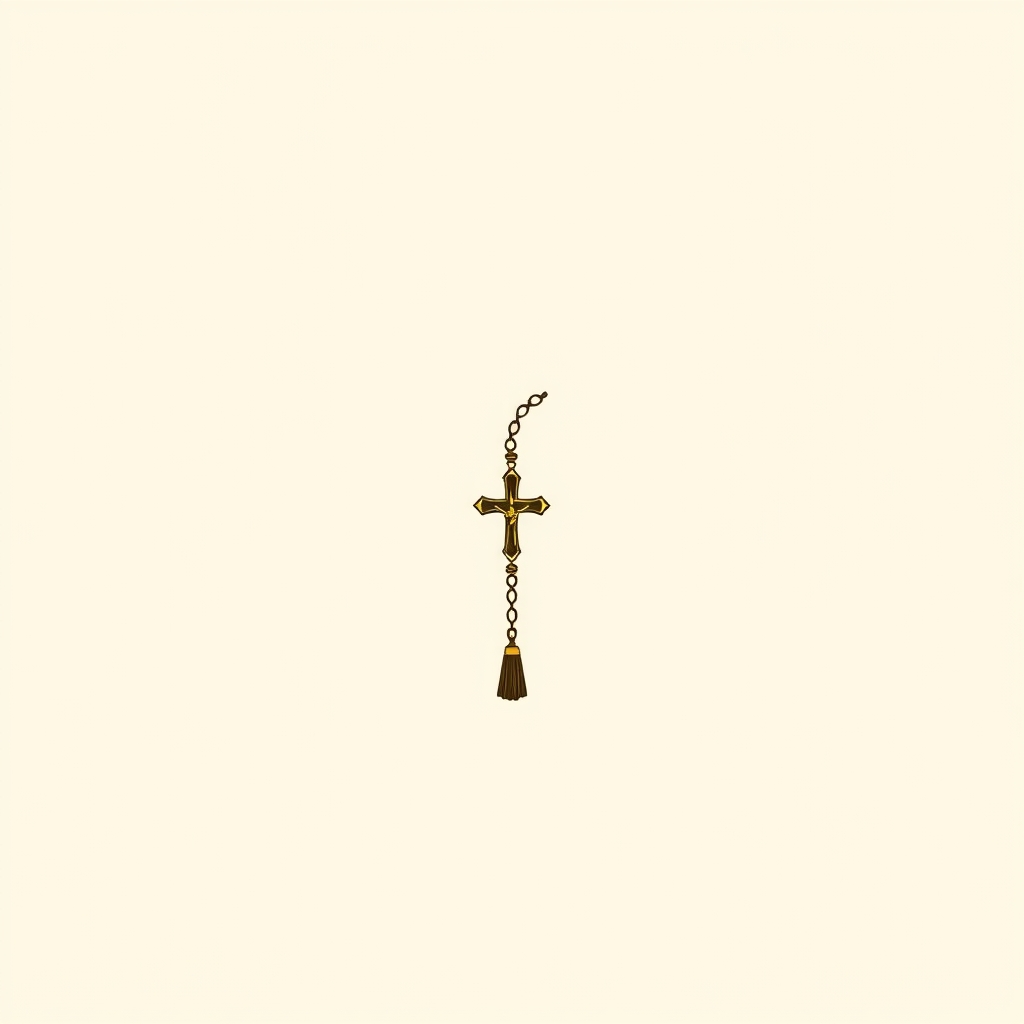
Frequently asked questions about Pierina Morosini
Who was Pierina Morosini?
Young Italian worker and Catholic Action militant, who died a martyr for purity at the age of 26.
How is Pierina Morosini depicted in Christian art?
In iconography, Pierina Morosini is recognizable by: Rosary.
How did Pierina Morosini die?
Pierina Morosini suffered martyrdom for the Christian faith (20th century).
Which saints were contemporaries of Pierina Morosini?
Contemporaries include: Pauline of the Agonizing Heart of Jesus, Felipe de Jesús Munárriz and 50 companions, Mariano de Jesús Euse Hoyos and Teresa of Jesus of the Andes.
What are the other names of Pierina Morosini?
Other forms of the name: Pierina Eugenia Morosini.
Who are the relatives of Pierina Morosini?
Relatives of Pierina Morosini: Rocco Morosini (father) and Sara Noris (mother).
Annexes & related entities
Structured data for exploration: events, miracles, quotes, places, attributes, patronages, and important entities cited in the text.
Key Events
- Era / death: 1957
- Beatification in 1987 by John Paul II
Quotes
-
Virginity is a profound silence of all the things of the earth
https://vertexaisearch.cloud.google.com/grounding-api-redirect/AUZIYQHKowBjqJ7eMbxxkSzTQvdyBIwQMd4NXjth6zbTZVgQwFj64kGgh0CZDlbq5C1_szTj0K0yQwgVopHi8emi0x5_EE4ucjfF5gDMw5mV6OXnXTss6HAChtp3EiVdSiNLBO5Z