
Bartolo Longo
A former satanic priest who converted, Bartolo Longo (1841-1926) became the apostle of the Rosary, founding the Shrine of Pompeii and numerous charitable works.
Contemporaries

Figures and markers around the normalized period for this entry.
Guided reading
5 reading sections
Biography
The youth of Bartolo Longo, his studies in Naples, his drift into Satanism, and his radical conversion thanks to his loved ones and Father Radente.
Bartolo Longo was born on February 10, 1841, in Latiano into a wealthy Catholic family. After the death of his mother in 1851, he drifted away from the faith. During his law studies in Naples starting in 1863, influenced by the anticlerical climate, he became involved in occultism and became a priest of a satanic cult. This period severely altered his mental and physical health. Thanks to the intervention of his friend Vincenzo Pepe and the Dominican priest Alberto Radente, he renounced spiritualism and went to confession on June 23, 1865, marking his radical conversion.
Life and Work
Bartolo Longo's commitment in Pompeii, the propagation of the Rosary, the construction of the shrine, and the creation of major charitable works.
After his conversion, Bartolo Longo engaged in charitable works and joined the Third Order of Saint Dominic in 1871 under the name Brother Rosario. In 1872, he went to Pompeii to manage the lands of Countess Marianna Farnararo De Fusco. Touched by the local misery, he received the inspiration to propagate the Rosary to save himself. He had an old painting of Our Lady of the Rosary restored in 1875 and launched the construction of a shrine, consecrated in 1891. He married the countess in 1885 on the advice of Pope Leo XIII, living with her in perfect conjugal chastity. Together, they founded a city of charity including orphanages for children of prisoners, hospices, schools, and modern infrastructure, before bequeathing everything to the Holy See in 1906.
Journey toward holiness
The psychological trials and financial slanders overcome by Bartolo Longo with humility and perseverance.
The life of Bartolo Longo remains marked by interior struggles, anxiety crises, and psychological fragilities inherited from his occult past, making him a model for people suffering from mental disorders. Around 1900, he faced false accusations of embezzlement. He accepted this trial with obedience, handing over his works to Pope Pius X in 1906 before being completely cleared. He spent his final years in poverty and prayer, honored by Pope Pius XI in 1925, and passed away on October 5, 1926.
Beatification and canonization
The process of recognizing the holiness of Bartolo Longo, from his beatification in 1980 to his solemn canonization in 2025.
Declared venerable by Paul VI in 1975, Bartolo Longo was beatified on October 26, 1980, by Pope John Paul II, who described him as the "Apostle of the Rosary." His canonization was approved by Pope Francis on February 24, 2025. Following the latter's passing, Pope Leo XIV confirmed the date during the consistory of June 13, 2025. Bartolo Longo was solemnly canonized by Pope Leo XIV on October 19, 2025, in Saint Peter's Square in Rome during the Jubilee.
Spirituality and legacy
Bartolo Longo's Marian devotion, his famous spiritual writings, and the lasting impact of his work in Pompeii.
The spirituality of Bartolo Longo is centered on the Rosary, which he conceived as a "chain of love" connecting earth to heaven. In 1883, he composed the famous Supplication to Our Lady of the Rosary of Pompeii, recited worldwide every May 8th and on the first Sunday of October. He also wrote the 54-day Novena and the devotion of the Fifteen Saturdays. Today, the shrine of Pompeii is a major place of pilgrimage, and his charitable foundations continue to support orphans and the children of prisoners.
Iconography
Signs and attributes
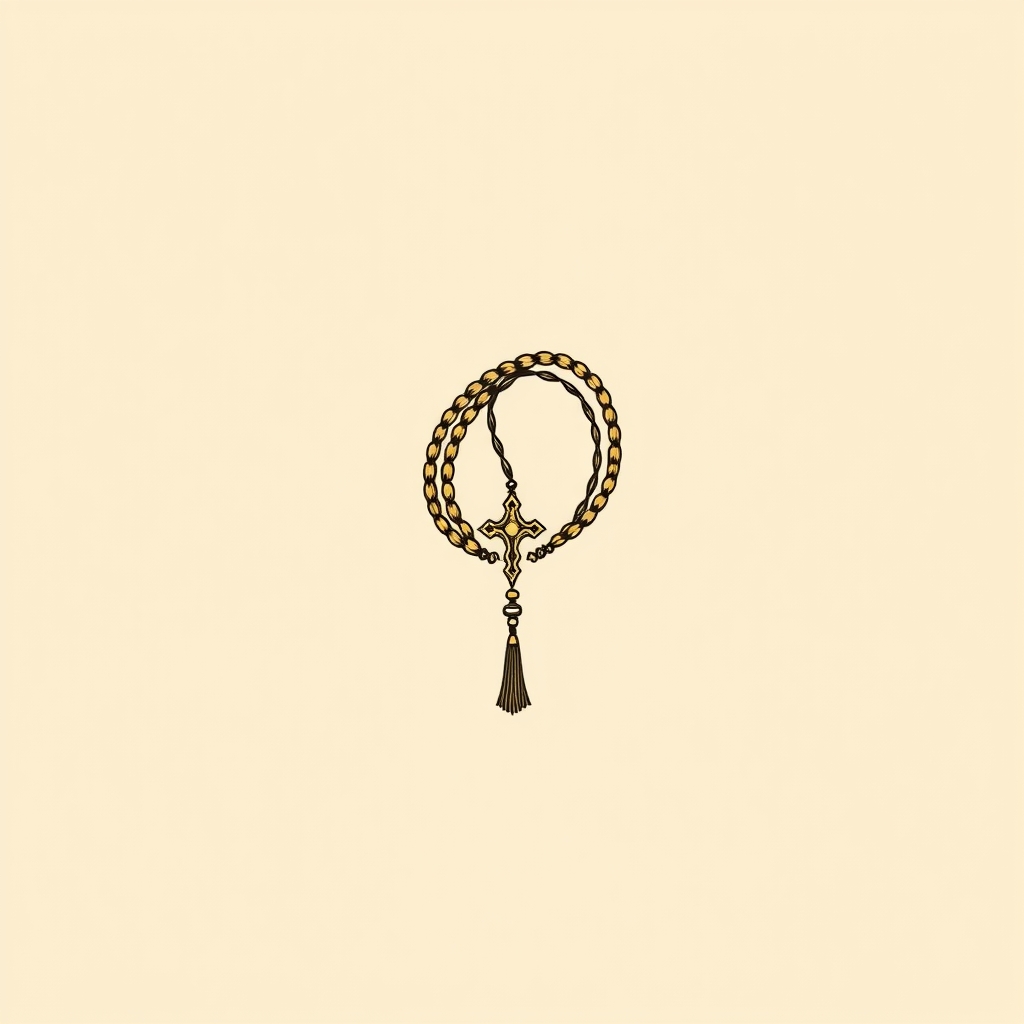
The supernatural in their life
The miracles of Bartolo Longo
Frequently asked questions about Bartolo Longo
Who was Bartolo Longo?
A former satanic priest who converted, Bartolo Longo (1841-1926) became the apostle of the Rosary, founding the Shrine of Pompeii and numerous charitable works.
What is Bartolo Longo the patron saint of?
Patronage of Bartolo Longo: Personnes souffrant de troubles mentaux, People suffering from mental disorders, Enfants de prisonniers, Children of prisoners, Orphelins and Orphans.
What is Bartolo Longo invoked for?
Bartolo Longo is invoked for: Guérison des troubles mentaux, Healing of mental disorders, Délivrance de l'occultisme, Deliverance from occultism, Persévérance dans les épreuves and Perseverance in trials.
How is Bartolo Longo depicted in Christian art?
In iconography, Bartolo Longo is recognizable by: Rosary and Painting of Our Lady of the Rosary of Pompeii.
What miracles are attributed to Bartolo Longo?
1 miracle are attributed to this saint, notably: Healing.
Which saints were contemporaries of Bartolo Longo?
Contemporaries include: Pauline of the Agonizing Heart of Jesus, Felipe de Jesús Munárriz and 50 companions, Mariano de Jesús Euse Hoyos and Teresa of Jesus of the Andes.
When did Bartolo Longo die?
Bartolo Longo died around 1926.
What are the other names of Bartolo Longo?
Other forms of the name: Frère Rosario and Barthélemy Longo.
Who are the relatives of Bartolo Longo?
Relatives of Bartolo Longo: Bartolomeo Longo (father), Antonina Luparella (mother) and Marianna Farnararo De Fusco (wife).
Annexes & related entities
Structured data for exploration: events, miracles, quotes, places, attributes, patronages, and important entities cited in the text.
Key Events
- Era / death: 1926
- Canonization in 2025 by Leo XIV
Quotes
-
If you seek salvation, propagate the Rosary. This is Mary's promise. Whoever propagates the Rosary will be saved!
https://vertexaisearch.cloud.google.com/grounding-api-redirect/AUZIYQFlSpURu_zHZsuTqZDySlWDnXZAu8qEUmG86ZeUuC-ShPeP_7y0oYZU-hjxUukOelJqFmPpHg3hK4UKPc67U1BjDOyBXGCivH2GnLRUZ6XGwVJ98A-roVpzwbAk4GRiv6PD -
My only desire is to see Mary, who saved me and will save me from the clutches of Satan.
https://vertexaisearch.cloud.google.com/grounding-api-redirect/AUZIYQEnjpyXvOmBpxL82ehZN-TqLw6K7jgr04b3iSZCaD0_djigXYlQNhFw36aDmbbyXdYMb00kKu94J6xcgG-kYVmuZuKLqs0DG0TrjbrPpSk5Ix7PVEgLan6WBhZCYMM28tXGVUbwLczXkBxnlckL22y-WkFT0RQiMmGMDT7Fgz2s6pPBivTGWcuQjC_q1fXU_FVPpZrR7jeYX9TGG4xkTHzHuD9rpw==