
Dulce Lopes Pontes
Saint Dulce Lopes Pontes (1914-1992), nicknamed the Good Angel of Bahia, was a Brazilian religious sister famous for her monumental work with the poor and the sick in Salvador.
Contemporaries

Figures and markers around the normalized period for this entry.
Guided reading
5 reading sections
Biography
The youth of Maria Rita de Souza Brito Lopes Pontes in Salvador, her early vocation for the poor, and her entry into the Congregation of the Missionary Sisters of the Immaculate Conception.
Maria Rita de Souza Brito Lopes Pontes was born on May 26, 1914, in Salvador (Bahia), Brazil. She was the second of five children of Augusto Lopes Pontes, a dental surgeon, and Dulce Maria de Souza Brito Lopes Pontes. Orphaned of her mother at the age of six (in 1921), she was raised by her aunts. From the age of thirteen, after visiting the most destitute neighborhoods of her city with one of her aunts, she felt a deep compassion for the poor. She then began to welcome children, adults, and the elderly in distress into the basement of the family home, providing them with care, food, and clothing that she collected from her relatives and neighbors. Alongside her studies at the normal school of Salvador to become a teacher, she joined the Franciscan Third Order. Once she obtained her diploma on February 8, 1933, she chose to dedicate her life to God and entered the novitiate of the Congregation of the Missionary Sisters of the Immaculate Conception of the Mother of God, in São Cristóvão, in the state of Sergipe. On August 15, 1934, she took her religious vows and took the name Sister Dulce (Irmã Dulce), in honor of her late mother.
Life and Work
Sister Dulce's commitment to the working class and the founding of the Obras Sociais Irmã Dulce (OSID), including the creation of the Saint Anthony Hospital.
The work of Saint Dulce Lopes Pontes is inseparable from the founding and development of the Obras Sociais Irmã Dulce (OSID) (Sister Dulce Social Works), a major charitable institution in Brazil. From the beginning of her ministry, Sister Dulce committed herself to the working class and the most destitute of Salvador. In 1935, she founded the 'Saint Francis Workers' Union' (União Operária São Francisco), the first Christian workers' movement in Bahia. In 1937, she created the 'Workers' Circle of Bahia' (Círculo Operário da Bahia). Concerned with the education of workers' children, she inaugurated the 'Saint Anthony College' (Colégio Santo Antônio) in the Massaranduba district in 1939. That same year, she began taking in the sick and homeless in abandoned buildings in the city, notably in an unsanitary area called the 'Rat Island' (Ilha dos Ratos). Expelled several times by municipal authorities, she tirelessly sought a stable place for shelter. In 1949, with the authorization of her superior, she improvised the installation of seventy sick people in the henhouse attached to her congregation's convent. This bold and humble gesture marked the birth of the 'Saint Anthony Hospital' (Hospital Santo Antônio), which would become a vast medical, social, and educational complex. In order to structure and perpetuate her multiple initiatives, Sister Dulce officially founded the Obras Sociais Irmã Dulce (OSID) on May 26, 1959. In 1960, she inaugurated the 'Sister Dulce Social Hospice' (Albergue Santo Antônio), endowed with an official status reaffirming its exclusively Christian and humanitarian character. Today, the OSID manages one of the largest entirely free public health networks in Brazil, performing millions of examinations, hospitalizations, and medical consultations each year, while maintaining educational and social assistance programs for the most vulnerable.
Path to Holiness
Sister Dulce's dedication despite her fragile health, her meetings with John Paul II and Teresa of Calcutta, her nomination for the Nobel Peace Prize, and her death in 1992.
Despite extremely fragile health—suffering for the last thirty years of her life from severe respiratory insufficiency that reduced her lung capacity to only 30%—Sister Dulce deployed prodigious energy in the service of the poor. Her work drew the admiration of great contemporary figures of the Church. In July 1979, she met Saint Teresa of Calcutta during her visit to Salvador. On July 7, 1980, she met Pope Saint John Paul II for the first time during his apostolic journey to Brazil; the Sovereign Pontiff warmly encouraged her to continue her work. In 1988, Brazilian President José Sarney officially nominated her for the Nobel Peace Prize. In October 1991, while she had been hospitalized for sixteen months due to the worsening of her pulmonary problems, John Paul II personally visited her bedside at the Convent of Saint Anthony to give her his blessing. Sister Dulce passed away peacefully on March 13, 1992, in Salvador, at the age of 77. Her body was interred at the Basilica of Our Lady of the Immaculate Conception of the Beach, then transferred in 2010 to the chapel of the Convent of the Immaculate Conception of the Mother of God. During this exhumation, her body was discovered to be naturally incorrupt.
Beatification and canonization
The canonization process of Sister Dulce, marked by the recognition of two healing miracles and her proclamation as a saint by Pope Francis in 2019.
The beatification process for Sister Dulce officially opened in January 2000. On April 3, 2009, Pope Benedict XVI recognized the heroic nature of her virtues and declared her venerable. The beatification: The first miracle accepted for her beatification concerns the healing of Cláudia Cristiane Santos Araújo, which occurred on January 11 and 12, 2001, in Itabaiana, in the state of Sergipe. After giving birth to her second child, Cláudia suffered from a massive and uncontrollable postpartum hemorrhage. Despite three successive surgical interventions, the doctors declared themselves powerless. A priest friend of the family, Father José Almi de Menezes, then invited Cláudia to pray for the intercession of Sister Dulce and gave her a relic of the nun. The hemorrhage ceased suddenly and inexplicably. This miracle was officially recognized by Benedict XVI on December 10, 2010. Sister Dulce was beatified on May 22, 2011, in Salvador de Bahia by Cardinal Geraldo Majella Agnelo, the Pope's special envoy. The canonization: The second miracle, necessary for her canonization, concerns the healing of José Maurício Bragança Moreira, a musician and maestro (conductor) from Salvador. Suffering from total blindness in his right eye due to terminal glaucoma for fourteen years, he suffered from extremely painful conjunctivitis on December 10, 2014. By placing an image of Blessed Dulce on his eyes and imploring her help, he fell asleep. The next morning, his vision was completely and instantly restored. After validation by the medical and theological commission, Pope Francis signed the decree of canonization on May 13, 2019 (published on May 14). Sister Dulce Lopes Pontes was solemnly canonized by Pope Francis on October 13, 2019, in Saint Peter's Square at the Vatican, under the title of "Saint Dulce of the Poor" (Santa Dulce dos Pobres).
Spirituality and legacy
The Franciscan spirituality of Sister Dulce, nicknamed the Good Angel of Bahia, and her lasting legacy through the OSID and the concept of Dulcism.
Saint Dulce Lopes Pontes embodied a deeply Franciscan spirituality, characterized by active, joyful, and boundless charity. Nicknamed the "Good Angel of Bahia" (Anjo bom da Bahia) or the "Mother of the Poor," she saw the face of the suffering Christ in every destitute or sick person she encountered. Her charity, entirely maternal and tender, drew its strength from a life of intense prayer and absolute trust in Divine Providence. Her legacy remains alive through the OSID, which continues to care for and educate millions of Brazilians free of charge. Furthermore, her example gave rise to the concept of "Dulcism" (Dulcismo), which designates this way of acting guided by empathy, unconditional love for one's neighbor, and selfless service to the least among us.
Iconography
Signs and attributes
The supernatural in their life
The miracles of Dulce Lopes Pontes
Frequently asked questions about Dulce Lopes Pontes
Who was Dulce Lopes Pontes?
Saint Dulce Lopes Pontes (1914-1992), nicknamed the Good Angel of Bahia, was a Brazilian religious sister famous for her monumental work with the poor and the sick in Salvador.
What is Dulce Lopes Pontes the patron saint of?
Patronage of Dulce Lopes Pontes: Les pauvres, The poor, Les malades, The sick, Les ouvriers and Workers.
What is Dulce Lopes Pontes invoked for?
Dulce Lopes Pontes is invoked for: Guérison des hémorragies, Healing of hemorrhages, Guérison de la cécité et des maladies oculaires, Healing of blindness and eye diseases, Soutien aux pauvres et aux malades and Support for the poor and the sick.
How is Dulce Lopes Pontes depicted in Christian art?
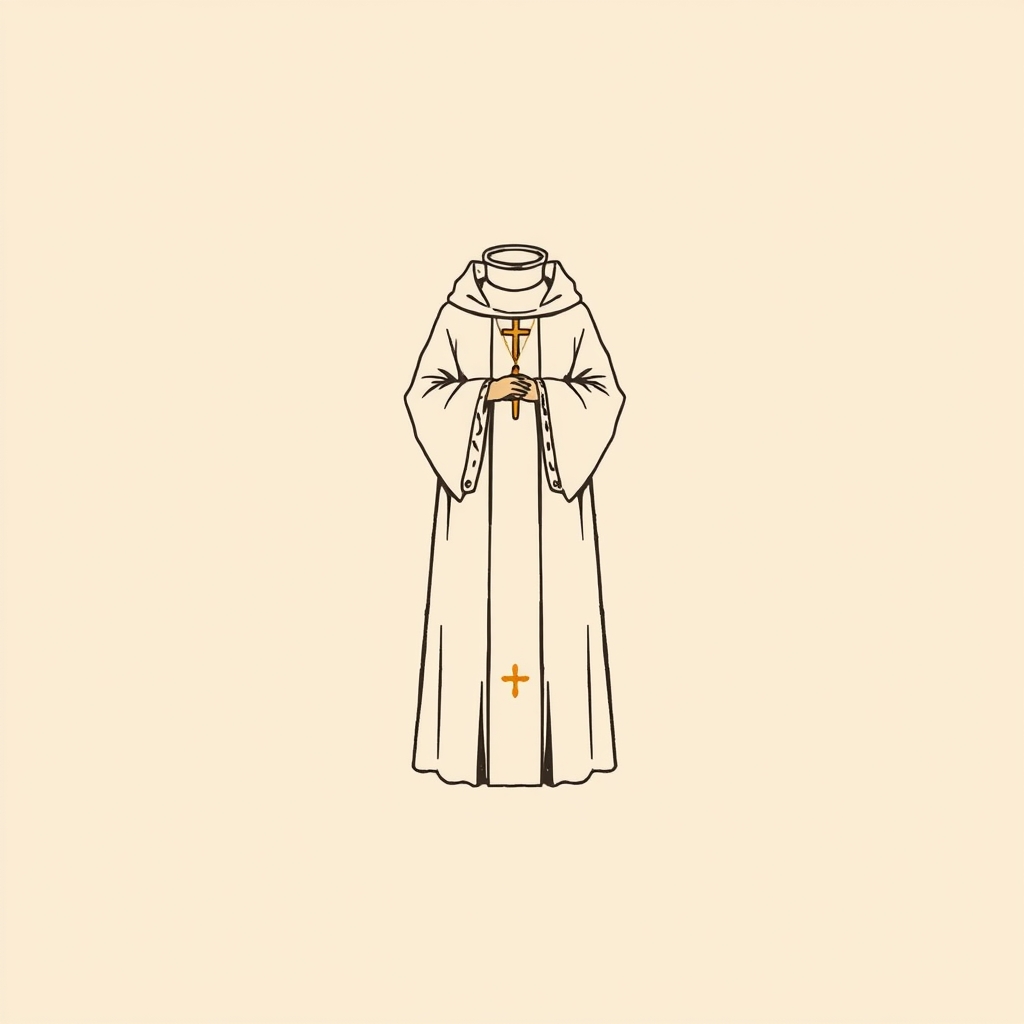
In iconography, Dulce Lopes Pontes is recognizable by: Religious habit, Relic and Image of Blessed Dulce.
What miracles are attributed to Dulce Lopes Pontes?
2 miracles are attributed to this saint, notably: Healing.
Which saints were contemporaries of Dulce Lopes Pontes?
Contemporaries include: Pauline of the Agonizing Heart of Jesus, Felipe de Jesús Munárriz and 50 companions, Mariano de Jesús Euse Hoyos and Teresa of Jesus of the Andes.
When did Dulce Lopes Pontes die?
Dulce Lopes Pontes died around 1992.
What are the other names of Dulce Lopes Pontes?
Other forms of the name: Maria Rita de Souza Brito Lopes Pontes, Sœur Dulce, Irmã Dulce, Sainte Dulce des Pauvres, Santa Dulce dos Pobres, Ange bon de Bahia and Anjo bom da Bahia.
Who are the relatives of Dulce Lopes Pontes?
Relatives of Dulce Lopes Pontes: Augusto Lopes Pontes (father) and Dulce Maria de Souza Brito Lopes Pontes (mother).
Annexes & related entities
Structured data for exploration: events, miracles, quotes, places, attributes, patronages, and important entities cited in the text.
Key Events
- Era / death: 1992
- Canonized in 2019 by Francis
Quotes
-
Saint Dulce of the Poor
https://vertexaisearch.cloud.google.com/grounding-api-redirect/AUZIYQFXIRewsc0YfCZ2msXwjy_jaeO_u0Fmqzijb8suRhYVxqwAWjqOU9uKIoFWx49JdZMcHjTRKMoavps6lEBRRRV-IGPB-PZvBYxMw5pS2nk1khRs3zGtNMwfLoZPtywuVFI=