
Peter the Venerable
Abbot of Cluny in the 12th century, Peter the Venerable was a major theologian and diplomat of his time. A friend of Saint Bernard and a mediator between kings and popes, he is famous for his wisdom, his reform of the Cluniac order, and the first translation of the Quran.
Contemporaries

Figures and markers around the normalized period for this entry.
Guided reading
6 reading sections
THE BLESSED PIERRE MAURICE DE MONTBOISSIER,
Origins and formation
Peter Maurice of Montboissier was born in Auvergne and was raised at the abbey of Sauxillanges under the guidance of Saint Hugh.
Peter Maurice of Montboissier, surnamed the Venerable, belonged to the region of Auve rgne, which had already seen the birth of Saint Odilo and Duke William, foun der of the abbe y of Cluny. Raised at Sauxillanges (an abbey, daughter of that of Cluny), under the c are of Saint Hugh, who loved him tenderly, he proved himself the worthy disciple of such a great master.
Spiritual Portrait and Election
Recognized for his learning and piety, he became Abbot of Cluny in 1122 at the age of thirty, embodying the monastic ideal.
From his youth, he was called "the doctor and master of the elders," and later, "the support of the monastic Order." A theologian, poet, orator, and a skillful and formidable controversialist, he joined to vast knowledge in all divine and human sciences the purity of a spotless life, a profound humility, and an unction and tenderness of heart without equal; he was to the Order of Cluny what Saint Bernard was to the Order of Cîteaux. His stature was elegant, his face handsome, his manners grave; his voice, most harmonious, delighted those who heard him. He was elected Abbot of Cluny in 1 122, at the a ge of thirty.
Diplomatic and Ecclesial Role
A major figure of the 12th century, he advised popes and kings, participated in councils, and reconciled Abelard with the Church.
His name, having become so famous, is constantly intertwined with the great names and great events of the 12th century, and it can be said that he holds one of the most eminent places among the most eminent figures of his era, which produced so many. He was one of the most illustrious defenders of the Church; it was he who ca used Abe lard to retract and led him to embrace the Institute of Cluny. It was also he who extirpated the schism of Pontius, and who established a learned, regular, and complete reform in several monasteries of his Order. Confidant and advisor to popes and kings, consulted by the most learned doctors, intimate friend of Saint Bernard, called upon and admired at the Council of Pisa and the Second Lateran Council, he was the peacemaker of the Pisans and the Lucchese, the mediator between the King of France Louis the Younger and A madeus of Savoy, between the Sovereign Pontiff Eugene III and the King of Spain; finally, the ornament of the religious state and of the Church; and when this great man had thus accomplished the highest missions commanded by the good of the Church and the State, he would come humbly to hide, to recollect himself, and to rest in the modest cell of the religious, and to apply himself with ardor to study and to monastic virtues.
Literary Heritage
A prolific author, he left behind letters, sermons, and theological treatises renowned for their style and clarity.
We have from him several works, which are: six books of very precious Letters, four dogmatic Sermons, Hymns, and some small Treatises. However, we have lost three books of his immortal Controversy. Only the general table of contents contained in the first four books has been recovered; it is a bibliographic curiosity to consult. His letters are imbued with freshness and purity of style, finesse, gentleness, and sentiment. In general, they are beautiful and written with clarity, ease, and elegance; delicate sentiments abound throughout.
Defense of the faith and passing
He distinguished himself by the translation of the Quran and his struggle against heresies before passing away in 1157 after thirty-five years of abbacy.
Peter the Venerable fought against the doctrines of the Mahometans, and was the first to have the Qura n translated. It was a marvel for the time. He also wrote agai nst Peter of Bruys, from whom the Petrobrusians took their name. But his final moments were arriving, and his glorious career was reaching its end; his death had long been known by the holiness of his life; it occurred in 1157, in the sixty-fifth year of his age; he had governed for thirty-five years the abbey he loved. Unanimous regrets shed light on this immense loss. One could not yet believe to be deprived of him while seeing him dead, so much pure beauty and serenity had his face retained! It is impossible to say with what respect his relics and his memory have been surrounded!
Cult and posterity
Although not officially canonized, he is honored with the title of saint in public memory and monuments.
Although Peter the Venerable was not canonized, several public monuments give him the title of Saint.
Excerpt from the Spirit of the Saints, by Abbé Grimes.
Iconography
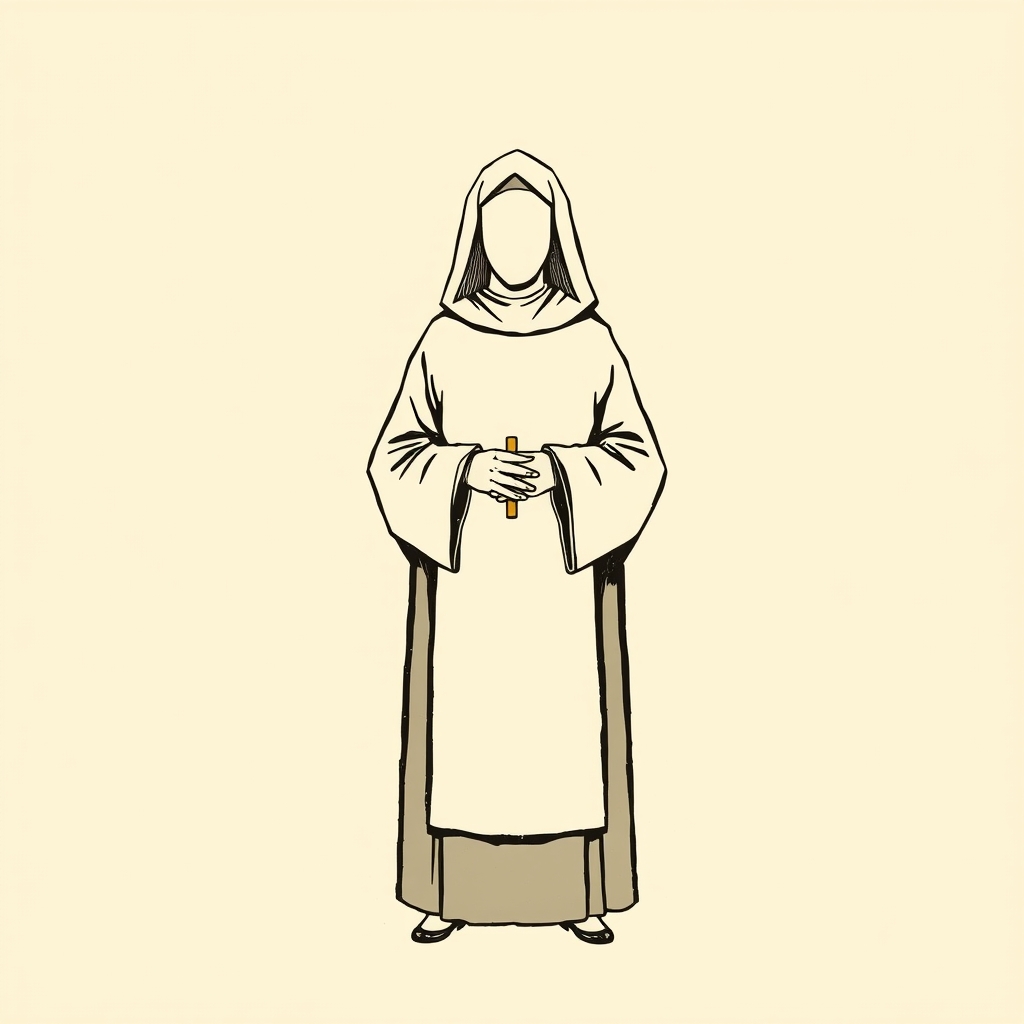
Signs and attributes


Entities
Narrative network
The names, places, and concepts most present in the entry, weighted by centrality in the text.
Frequently asked questions about Peter the Venerable
Who was Peter the Venerable?
Abbot of Cluny in the 12th century, Peter the Venerable was a major theologian and diplomat of his time. A friend of Saint Bernard and a mediator between kings and popes, he is famous for his wisdom, his reform of the Cluniac order, and the first translation of the Quran.
What is Peter the Venerable the patron saint of?
Patronage of Peter the Venerable: Cluniac Order.
How is Peter the Venerable depicted in Christian art?
In iconography, Peter the Venerable is recognizable by: Benedictine monk habit, abbot's crosier and books.
Which saints were contemporaries of Peter the Venerable?
Contemporaries include: Saint Norbert of Magdeburg, Saint Stephen of Hungary, Saint Bernard of Clairvaux and Saint Arthaud of Belley.
When did Peter the Venerable die?
Peter the Venerable died around 1157.
What are the other names of Peter the Venerable?
Other forms of the name: Pierre le Vénérable and Petrus Venerabilis.
Annexes & related entities
Structured data for exploration: events, miracles, quotes, places, attributes, patronages, and important entities cited in the text.
Key Events
- Education at the Abbey of Sousclange
- Elected Abbot of Cluny in 1122 at the age of 30
- Participation in the Council of Pisa and the Second Council of the Lateran
- Diplomatic mediation between kings and popes
- Translation of the Quran
- Abelard's retraction
- Struggle against Peter of Bruys
Quotes
-
the doctor and master of the elders
Youth nickname cited in the text -
the support of the monastic Order
Title cited in the text