
Of humble origins in Auvergne, Valery became a monk at Luxeuil under Saint Columbanus before founding the abbey of Leuconaüs in Picardy. Renowned for his gentleness and numerous miracles, notably the resurrection of a hanged man and the destruction of pagan idols, he evangelized the English Channel coast. His relics, long venerated at Saint-Valery-sur-Somme, were largely destroyed during the French Revolution.
Contemporaries

Figures and markers around the normalized period for this entry.
Guided reading
8 reading sections
SAINT VALERY
MONK OF LUXEUIL AND FIRST ABBOT OF LEUCONAUS
Youth and Education
Born in Auvergne to a modest family, Valery taught himself to read and write while tending flocks, before turning toward the religious life.
Omnia possum in eo qui me confortat. With the grace of God and an energetic will, one can do all things. To the Philippians, iv, 13. Saint Valery was born in Auvergne, of a poor and obscure family. The precise place of his origin is unknown; but it is known that he spent his youth tending flocks. He had a great desire to be educated, and the means were lacking to him. One day, while guarding his father's sheep, he heard tell of some schools in the neighborhood, where the children of noble families were raised in study; he sighed from that moment for the happiness of participating in the same benefit. He went to beg one of these masters of youth to be willing to trace for him the shapes of the letters, and to teach him to know them: to which the latter willingly lent himself. Valery, returned to the guarding of his flock, went over in his memory what had just been taught to him, and, unknown to his parents, developed these first notions with such assiduity that he succeeded in a short time in knowing how to read and write. The first use he made of this knowledge was to transcribe the Psalter, which he learned entirely by heart. He began from then on to frequent the church more assiduously, to follow the chants of the choir; little by little, the grace of God acting, he felt his soul inflamed with heavenly things. It was, without doubt, in some monastery church that he thus went; one may presume that the aspect of edifying religious awakened in him this taste for recollection and solitude, which dominated him all his life.
Entry into religious life and time in Auxerre
Despite his father's opposition, he entered the monastery of Autun and then joined Bishop Aunacharius in Auxerre to deepen his ascetic life.
An uncle of his, traveling one day to the monastery of Autun, was accompanied by Valery. He spent some time there; his desire to enter religious life became so intense that it was no longer possible to persuade him to leave. His father came in vain to beg him to return home: Valery replied that he would never see his father's house again. The abbot and all the monks joined their entreaties to those of the father: they could not overcome his resolution. Neither gentleness, nor severity, nor the rigorous fasts imposed upon him, nor even the threat of corporal punishment, could make him yield: he remembered, says the historian, these words of Jesus Christ: "He who loves father or mother more than me is not worthy of me." In the end, the abbot, recognizing that such a firm vocation could only come from heaven, said to his brothers: "Let us not reject the gift of God." In all appearance, the father himself yielded to these evident signs of the divine will and consented to part with his son: for, a few days later, he was present at the monastery when the abbot of Autun, giving the clerical tonsure to Valery, irrevocably committed him to the service of the Lord.
The young novice made rapid progress in virtue, to the point of soon becoming the model for his brothers. One could not tire of admiring his patience, his love of mortification, his prudence, his gentleness, his angelic piety. He was always found ready for works of charity; thus, he was universally loved. Moreover, interior grace seemed to be reflected in him outwardly, and to spread over his features a certain loveliness that charmed all who looked upon him. A maturity beyond his years was added to these high virtues: it became visible that God destined him for some great design. Soon, indeed, Valery, initiated so early into the secrets of piety, felt the need to act and to pour out the fire that consumed him. He was, moreover, too close to his parents: like the illustrious solitaries of that era, he felt that detachment cannot be perfect as long as one lives in the midst of one's homeland.
He therefore left for Auxerre. Fame had taught him that Bishop Aunacharius had established, under the invocation of Saint Germanus, a monastery in the suburb of that city, that he lived there himself and gave the example of all virtues. Valery went there and was welcomed with kindness by the prelate. In this new retreat, freer and more detached from all earthly ties, he gave himself with new ardor to the exercises of penance, to vigils, to fasts, and to prayer: so that he seemed less to lead the life of a man than that of an angel.
His reputation soon spread far and wide. A lord named Bobon, as rich as he was illustrious, heard of our young religious and wanted to see him. Scarcely had he approached Valery than he felt won over by the sweetness of his speech and the good odor of his virtues. The instructions of the young monk penetrated so deeply into the soul of the lord that the latter felt compelled to renounce the world to give himself entirely to God. He did not even return home, stripped himself entirely of his fortune, and embraced evangelical poverty.
The influence of Saint Columbanus
Attracted by the fame of Saint Columbanus, Valery joined Luxeuil in 594, where he distinguished himself by his humility and his first miracles in the garden.
The celebrity that attaches today to scholars was then reserved for the saints. A personage illustrious for his virtues became like a focal point toward which all eyes were turned. Saint Columba nus was one of those men whom heaven gives as a spectacle to the earth. His preaching in the Gauls, his great virtues, the miracles he performed, the number of his disciples, and the regularity that reigned among them: everything was apt to excite the desire to see him, to hear him, to serve God under his orders. Valery hoped above all to find in him new lights or more powerful examples; he resolved to leave for Luxeuil. Bobon wished to follow him. Their expectation was not deceived: Columbanus was the man they were seeking. The spectacle of the communities he directed edified them to the highest degree. They saw a society of men foreign to the world, dead to the life of the senses, having nothing of their own, united by the closest charity, and succeeding one another perpetually to sing the praises of God. Valery and Bobon, at the height of their wishes, asked for and obtained a place in this brilliant community. This was around the year 594. According to the rule of Saint Co lumbanus , working the land was part of the occupation of the religious; the novices, in particular, had to tend the garden. Valery was assigned to this task, intended above all to inspire the virtue of humility; but, as nothing is small for a servant of God, he knew how to elevate this office by the spirit of piety with which he animated it; and God himself was pleased to manifest by a prodigy how much this spirit was pleasing to Him. That year, a quantity of insects were devouring the herbs and fruits; now, it happened that the portion of the garden cultivated by the humble monk was entirely spared by the plague. Saint Columbanus was surprised to see freshness and greenery everywhere, the vegetables healthy and intact, and he attributed it to the humility and obedience of his fervent disciple. The latter, on the contrary, attributed everything to the merit of his brothers; for, what he feared most after sin was praise. Although he had only been a novice for a short time, Columbanus admitted him among the professed, judging that there was no reason to subject to longer trials one whom heaven itself thus honored with its favors. One day the holy Abbot, explaining to his monks the subject of the reading, suddenly felt as if a heavenly odor filled the room. He asked which religious had just entered; and, as they answered him that it was Valery, seized with a pious transport, he exclaimed: 'O my beloved, it is you who are the true lord and abbot of this monastery.'
Defense of the Abbey and Mission in Neustria
After the exile of Columbanus, he helped Saint Eustace protect Luxeuil before departing to evangelize Neustria with the support of King Clotaire.
It would be difficult to specify the time that Valery spent under the direction of Saint Columbanus: one may, however, presume that it was about fifteen or sixteen years (594-610). He was still at Luxeuil when King Theuderic compelled the holy Abbot to leave his monastery. Witnessing the desolation that the departure of the illustrious founder caused his children, he felt his heart torn as he addressed a final farewell to his venerated master. There is no doubt that he would have willingly accompanied the glorious exile; but the orders of Theuderic were formal: only the Irish and the Bretons could follow Columbanus. However, a religious named Waldolenus had asked for permission to go far away to preach the Gospel. Such was the zeal that consumed the monks in their solitude at that time: the monasteries were little more than fertile hives, where evangelical workers were formed. Columbanus having consented to this request, Waldolenus solicited the favor of taking Valery, to whom a deep affection united him. Columbanus, who also loved this faithful disciple, replied to Waldolenus: "The goal you propose is good; but know that the companion you ask for is a great servant of God. Take care, therefore, not to cause him the slightest pain, for fear of exposing yourself to regrets." For reasons that we do not know, the departure of the two missionaries did not take place then; and the monastery gained a useful help in the difficult circumstances in which it found itself.
Indeed, scarcely had Columbanus departed when the abbey became, so to speak, the prey of its enemies. By the orders, or at least with the consent of Theuderic, seculars invaded its possessions, and even its buildings, where shepherds had not feared to establish their residence. Saint Eustace, elected abbot, strove to repel these unjust aggressions and was powerfully seconded by Valery. A portion of the religious wanted to resort to violent means: Eustace and Valery opposed it. The latter, returning one day from an excursion to the desert, where he liked to withdraw, following the example of Saint Columbanus, found the holy place itself occupied by strangers. Seized with a holy transport of zeal, he implored the help of God and succeeded in putting an end to the scandal. His gentleness and persuasive eloquence, as well as that of Eustace, gradually decided the usurpers to withdraw, and the monastery recovered its possessions and its tranquility. Only one of the monks, carried away by a false zeal, wanted to employ violence, despite the prohibition of Eustace; having had some brothers follow him, he engaged in a combat where he received a wound of which he kept the trace all his life, as a sign of his disobedience.
It seems that the departure of Saint Columbanus should have determined Waldolenus and Valery to execute their project. However, if one is to believe one author, Eustace would have delayed it further by entrusting Valery with the government of the abbey during the journey he made to Bobbio to attempt to bring back Saint Columbanus.
But once peace was re-established in the monastery, the two Saints resolved to give free rein to their apostolic zeal. They preached in different provinces for about two years, working numerous conversions everywhere. Arriving in Neustria, they asked King Clotaire for permission to settle in his states. This prince, who loved and favored Luxeuil, welcomed them with benevolence and permitted them to establish themselves wherever they wished. They headed toward Amiens.
As they arrived at Gamaches (Walimago), a lord called Sigobard was holding, according to the custom of the time, assizes where he judged the people of his domains. He had just condemned a man to death, and the sentence was already being executed. Seeing from afar the patient suspended from the gallows, Valery felt his bowels moved; he ran with all his strength toward the place of execution, but he arrived too late: the condemned man had just expired. The executioners themselves forbade the Saint to approach and touch the corpse; he, without listening to them, cut the rope, received the dead man in his arms, and laid him on the ground; then, lying on him face to face, he prayed with fervor and shed abundant tears. The Lord granted the wish of such ardent charity: to the great astonishment of all those who were there, life returned to the limbs of the executed man, and soon he rose full of strength and health. The miracle was evident: Valery begged Sigobard to set free the one he had just restored to life. But the cruel lord refused and ordered that the criminal be hanged again. Then Valery cried out: "You have already executed your sentence, and if this man still lives, it is by a miracle of divine mercy. You will not tear him from me, or you will make me die with him. If you disdain to lend an ear to a humble servant of Christ, remember that the God creator does not despise those who invoke him; he will grant our request because we fight for his laws." Sigobard allowed himself to be swayed by these prayers and granted grace to the culprit, who lived for many long years afterward. Until recent times, a chapel was shown in Amiens on the very spot where, according to tradition, this miracle had taken place.
Foundation of Leuconaüs
On the advice of Bishop Berchond, he founded the monastery of Leuconaüs (Saint-Valery-sur-Somme) around 613, which quickly became a major spiritual center.
A pious lady, named Bertille, offered an asylum to the two Saints.
She soon recognized in Valery a man favored by heaven. From then on, she regarded him only with a sort of veneration. One day, she begged him as a favor to allow her to bury him, should he die before her. Confused and astonished that he should be judged worthy of the slightest honor, the Saint evaded the request by replying: "It is for God to act in this: may He do according to His good pleasure!" He considered himself below all creatures.
However, the two Solitaries were looking for the corner of land where they could settle, to devote themselves to contemplation. The Bishop of Amiens, Berchond, was accustomed to retiring to a deserted place to escape the noise of the world: this place, with rich and fertile soil, surrounded by forests, bathed on one side by the sea and on the other by the Somme, and crowned at the back by st eep rocks , was called Leuconaüs (Leuconay). He advised Valery to go and settle there; Valery yielded to the bishop's advice. Finding his God again in solitude, he devoted himself with even greater ardor to prayer, fasting, and all the exercises of penance. His only ambition was to escape all eyes, to lose himself in God. But already the fame of his holiness had spread far and wide; the miracle he had performed before so many witnesses had revealed in him what he would have so much desired to hide. Soon a crowd of disciples came to place themselves under his direction. The desert of Leuconaüs suddenly changed its appearance: where deep solitude had recently reigned, known only to a holy bishop, numerous cells and a temple rose; where the howls of wild beasts had alone found an echo, the praises of the Lord resounded day and night. Such was the beginning of the abbey of Leuconaüs or Saint-Valery, so famous in the Church. Founded around 613, that is to say three years after the expulsion of Saint Columbanus, it was established under the rule of this great servant of God.
Valery could not refuse to receive the faithful who came to gather around him; but, foreseeing the distractions that the care of a community would inevitably cause him, he thought of creating for himself a new retreat, a solitude in the midst of solitude. He therefore built himself a separate cell, where he remained isolated, while his monks lived in common. He was nonetheless the guide and, as it were, the soul of his monastery. King Clotaire, whose benevolence had followed our Saints, learned with joy the news of this foundation, and took it upon himself to provide for the sustenance of the monks by sending them provisions.
Miracles and the struggle against paganism
Valery performs numerous healings, including that of Blitmond, and destroys pagan idols, notably a sacred oak at Ouste-Marais.
Having thus found the object of his desires, Valery applied himself with particular care to his own perfection. He could finally surrender himself without obstacle to that sublime taste for contemplation, with which he was enamored. But the more he strove to hide himself from men, the more God delighted in making his holiness shine forth. He was favored with the gift of miracles; and, whatever care he took to contain, in a way, the virtue that worked within him, he could not prevent it from coming to light. From this came a celebrity, burdensome to his humility, but from which it was no longer given to him to escape.
An inhabita nt of th e banks of the Oise, named Blitmond, was afflicted with such a great weakness of limbs that he could not stand. He came to find Valery, upon hearing of his holiness, and commended himself to his prayers. Touched by his sad state, the pious solitary began to pray, then laid his hands upon him, lifting his eyes to heaven. He then touched the diseased limbs, and wherever his hand passed, the sharpest pains were felt. But at the same time, life was reborn there with strength; soon Blitmond was restored to perfect health. The numerous witnesses of this miracle loudly gave thanks to God, and Blitmond himself did not believe he could better show his gratitude than by joining the ranks of the Saint's disciples. He settled at Leuconaüs, where Valery took particular care of him, and profited so well from the lessons and examples of his master that he deserved to succeed him in the direction of the monastery. The Church honors him as a saint.
Valery delivered a great number of those possessed by the demon. For this sort of healing, he had, according to the counsel of the divine Master, recourse to fasting and prayer; thus he was the terror of the impure spirits, who cried out in his presence: "This man torments us: Valery is our enemy." He was also honored with the gift of prophecy. More than once, he publicly reprimanded faults that had been committed in secret; the result was that, to avoid this humiliation, his religious hastened to confess to him what they had most hidden, convinced that nothing escaped the divinely enlightened eye of their master. It is thus also that on a day of Saint Martin he reproved two brothers for having drunk before Mass; and, another time, another man who had committed the same fault before attending the Sunday sacrifice, for in the first centuries of the Church one had to hear Mass fasting. The guilty ones threw themselves at his knees, asked for pardon, and promised to correct themselves. A pious lady having sent him provisions by her son, the latter succumbed to a temptation of gluttony, and hid a part of what he was carrying, to take it back on his return. The Saint said to him: "We give thanks to God for the goods he sends us by your hands. As for you, my son, take care not to eat the bread and drink from the flask that you hid while coming; for a serpent is hidden in this vessel, and this bread is poisoned." The child, terrified, returned to the place where his provisions were buried, and recognized the truth of what the servant of God had told him. He returned trembling to throw himself at his feet, and to ask his pardon for his fault.
If an ardent faith was necessary in our Saint to perform these wonders, it was no less so in those who were the objects of them. One day, a man, afflicted in the eye with a very dangerous pustule, came to find Valery. The latter contented himself with making the sign of the cross over him, and ordered him to return to his work. The sick man hesitated to obey, no doubt unable to persuade himself that a miraculous healing could be done at so little cost. Valery, seeing him waver, said to him: "You doubt! Well! Return home and refuse all remedies, even that which your wife will present to you. Otherwise, you will be healed of this infirmity, but you will bear the mark of it all your life." What was predicted happened. This man of wavering faith received from the hand of his wife the potion she presented to him, and applied other remedies as well, in the hope of healing his ailment. He did indeed escape death; but he remained blind in one eye all his life. "One would never finish," adds the historian, "if one wanted to recount how many sick people he healed by making the sign of the cross over them, or by rubbing them with his saliva."
The taste for solitude did not extinguish in Valery his apostolic zeal. Idolatry still reigned in some regions along the Ocean. The Saint saw with extreme pain entire populations given over to gross errors; he applied himself to delivering them from them. Halfway between the monastery and the city of Eu, at Ouste-Marais, a dependency of Meneslies (canton of Ault), not far from the Bresle, there was, near this river, an enormous oak, upon which a crowd of pagan images had been traced, which had become an object of worship for the surrounding peoples. Passing one day by there, Valery felt himself inflamed with a holy zeal, and ordered a young monk who was accompanying him to overturn this tree. The disciple, who was every day a witness to the wonders performed by his master, did not hesitate for a single instant: he touched the tree with his finger, and immediately it fell with a crash, as if it had been struck by lightning. This event threw the pagans who were present into stupor; but soon they passed from surprise to fury, and rushed, armed with axes and sticks, upon the Saint, in whom they prepared to avenge the outrage done to their divinities. Valery, without being moved, said: "If it is the will of God that I die, nothing will be able to resist them." But suddenly an invisible force held back the arms of these furious men, terror seized them, and the Saint was saved. Taking advantage then of the circumstance, he spoke to them with force of their blindness, and exhorted them to leave their idols for the true God. His word penetrated these blind hearts; all were converted, and later, on these very sites, that is to say at Ponts, which touches Oust-Marais, a basilica was raised, under the invocation of Saint Valery, above the fountain where tradition holds that the Saint had washed himself. Many miracles were performed there subsequently.
A young child, named Ursin, a close relative of Mauronte, one of the first dignitaries of the palace, had a wound on his thigh that put his life in danger. The father of this child had little faith in divine virtue; but his relatives brought him to the abbot of Leuconaüs, who delivered him immediately from his infirmity. Another lord also presented his son to him, tormented by a frightful ailment and resistant to all remedies, begging him, if he did not wish to heal him, to at least have the kindness to bury him. The Saint replied: "He who drew Lazarus from the tomb after he had been dead for four days, can certainly restore health to this child." Immediately he touched him, and the dying boy regained life and strength, and asked to eat. Audebert, that was his name, lived long after, and served God faithfully.
Valery, from the bosom of his solitude, thus spread afar the good odor of Jesus Christ. A zealous apostle, he went by turns to the different points of the region, evangelizing the poor, thundering against vices, sowing good doctrine everywhere: he usually had himself followed by one or several disciples, whom he thus exercised in the ministry of the word. It was the type of apostolate most used then, and the best adapted to the needs of society. It was necessary, to convert the coarse populations, given over to the most stupid errors, to have striking spectacles; and what is more striking than these austere monks, buried in solitude, living only on wild herbs, praying day and night, and only leaving their retreats to announce the oracles of heaven? Through their coarse instincts, the barbarians of this era felt that a superhuman power was acting in these extraordinary men. Let us add that almost always the missionaries were favored with the gift of miracles; so that those who had resisted the action of the word bowed before the force of the wonder. Let us admit, however, that there were still hardened ones, as Valery experienced in a circumstance that his biographer recounts in these terms:
"He was returning one day from Caldis to the monastery, in the company of some of his disciples. The rigor of the cold forced him to ask for asylum from a priest who lodged on the road. By chance, the judge of the place was there; but, instead of welcoming with the proper regard the holy missionary who was asking them for hospitality, these unworthy characters let themselves go to dishonest remarks and obscene jokes. Valery made wise remonstrances to them on the impropriety of this proceeding, and reminded them of the severe account that we must render one day for every idle word, and all the more so for every licentious discourse. This warning did not touch these libertines, who only gave freer rein to the malice of their hearts. Then the Saint cried out: "I was asking you for a shelter for a moment against the rigors of the cold; but your frightful discourses force me to do without this relief." And he left, shaking the dust from his feet. Immediately the divine Justice took care to avenge the injury done to its servant. Of these two wretches, one, the priest, lost his sight, and the other was afflicted with a horrible disease. They recognized the hand that was striking them, and begged the Saint to retrace his steps and to return to warm himself; but he would not. The priest remained blind all his life, and the judge perished miserably from the shameful ailment that had reached him."
Spiritual Portrait and Passing
Characterized by great gentleness and extreme austerity, he died on April 1, 619, after designating his burial place at Cap Hornu.
The Saints owed the empire they enjoyed over nature only to their eminent virtues. Now, from this point of view, Valery can be cited as an accomplished model. All Christian virtues met in his beautiful soul. His chastity was so perfect that no impure thought ever stained it. Every time he began to pray, or attended the choir, or even preached to his disciples, abundant tears flooded his cheeks, so tender was his devotion! Often, he spent the entire night in prayer; often, too, he would withdraw into the depths of the woods or into the hollow of rocks, or lock himself in his cell to attend to the contemplation of holy things, and hide from the eyes of men the holy ecstasies with which heaven honored him. His mortification was extraordinary: he had only a wicker hurdle for a bed, and for clothing only a coarse tunic topped with a hood; he forbade himself the use of linen. He took food only once a week, on Sunday. He used neither wine, nor beer, nor any intoxicating liquor; only when some stranger came to the monastery did he drink a little out of courtesy to his guests. Every day he recited two complete offices: that of the monastery and that of the church of France; the rest of his time he spent in preaching, reading, prayer, or manual labor. With his days thus filled, he had only a few moments left for sleep. His charity toward the poor was equaled only by his trust in God. More than once he stripped himself of his own clothing to clothe some suffering member of Jesus Christ; and as long as anything remained in the monastery, he gave to the beggars, without worrying about the morrow. And when some murmuring arose among the religious over this, he would answer gently: "My children, hold it for certain that he who gives his necessities with a good heart to those who ask him will never be abandoned by God." These words were not proven false; an unknown hand always came in time to repair the voids made by charity.
Animals themselves were the object of his care, we would almost say of his tenderness. He loved, as we later saw Saint Francis of Assisi do, to feed the little birds, which would familiarly flutter around him, perch on his shoulders, and eat from his hand. If by chance one of the brothers approached and frightened these little creatures, he would make him withdraw, saying: "Let these innocent creatures eat their little grain in peace."
Gentleness seems to have more particularly characterized this great Saint. His whole life is as if imprinted with this admirable virtue: he had nothing of that sort of harshness that the life of solitude sometimes imprinted on the monks of that era. Formed in a school where rigidity formed the foundation of the rule, Valery had taken from it only the oil of anointing. He asked of gentleness what others would have thought they had to obtain by firmness. His historian attests that he strove constantly to mitigate the rigor of discipline, but in the measure prescribed so as not to take anything away from its strength. His kindness toward young people especially was extreme: although living under the rule of Saint Columbanus, he rarely applied the severe punishments required by the Penitential. When a monk had incurred some bodily penalty, he would have him come and say to him gently: "See, my son, what is the punishment you have just deserved. Return into yourself, blush for your fault, and let your shame be your only punishment for this time." By this means, the biographer adds, he brought back delinquents more easily and more surely than by severity.
His physical appearance, moreover, accorded with this character of gentleness and benevolence that was proper to him. An amiable serenity always shone on his face; his speech was grave and measured; his stature was tall, but slender; he had, the historian adds, eyes of remarkable beauty, and a graceful physiognomy, despite the pallor and extreme thinness of his face, caused by his excessive mortifications. Divine love and the energy of his will supported his strength so well that he never failed in any of the duties of his office. When he had to perform the healing of some illness, or reveal the future or something unknown, his cheeks would ignite and his face would shine with a particular radiance: an evident sign of the supernatural spirit that acted within him. Moreover, his purity was so great that he kept his virginity without stain until his death.
It was in the exercise of these virtues that this precious existence flowed. He had been living at Leuconais for six years, according to some, nine years according to others, when the Lord deemed it appropriate to call him to Himself. A particular revelation warned him that his death was near. One Sunday, as he was returning to the monastery, passing over the height of the hill of Cap Hornu, where he often withdrew to pray, he stopped at the foot of a tree, took two branches which he fixed in the ground, and said to the religious who accompanied him: "It is here that you will bury me, when it has pleased the Lord to end my mortal career." A divine revelation had undoubtedly taught him that the holy bishop Berchond was accustomed to hang the relics of the Saints on this tree when he came to pray there. From that moment, his brothers understood that he would not be long in leaving them. Indeed, a short time later, again on a Sunday, he peacefully rendered his soul to God, on April 1, 619. He was buried in the place he had designated, and where a chapel has since been erected. Soon his tomb became famous for numerous miracles. A basilica was later raised in his honor, on the very site of the tree consecrated to idols, which he had miraculously overturned.
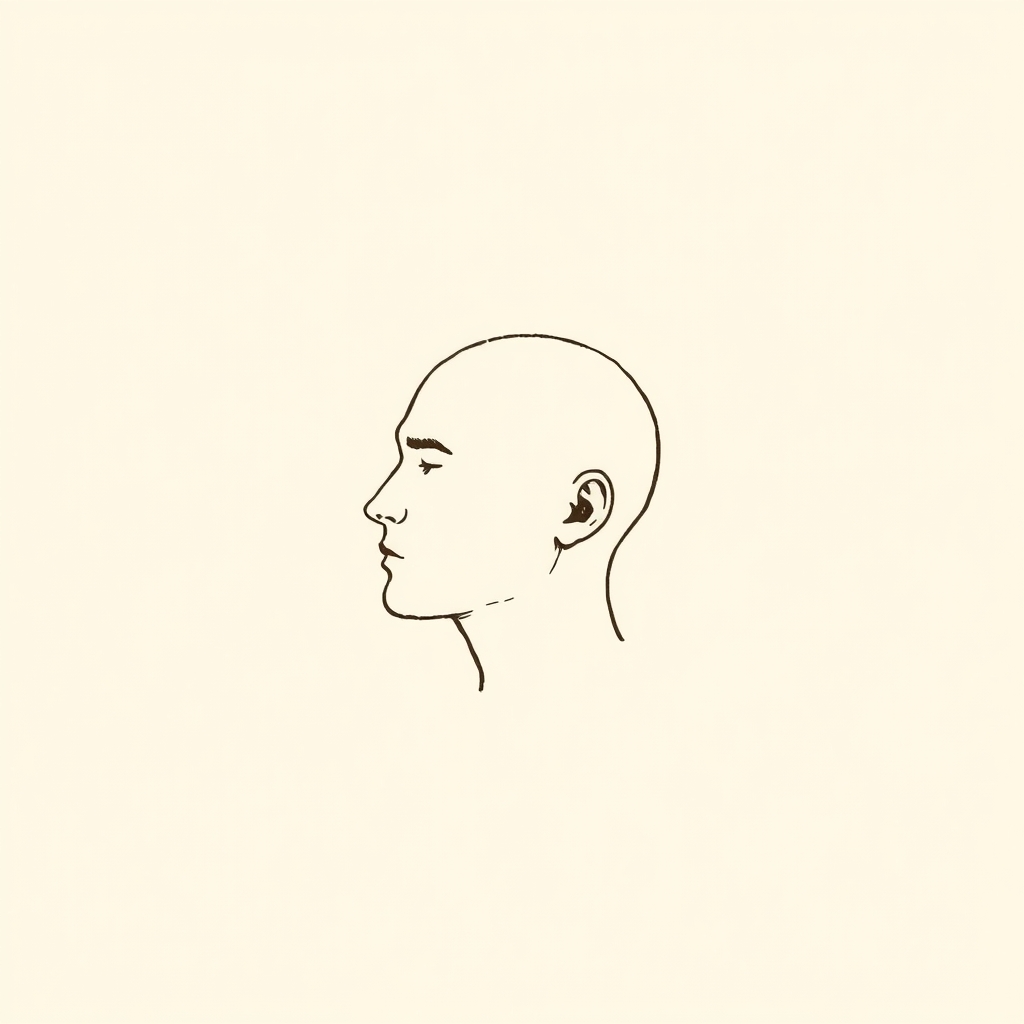
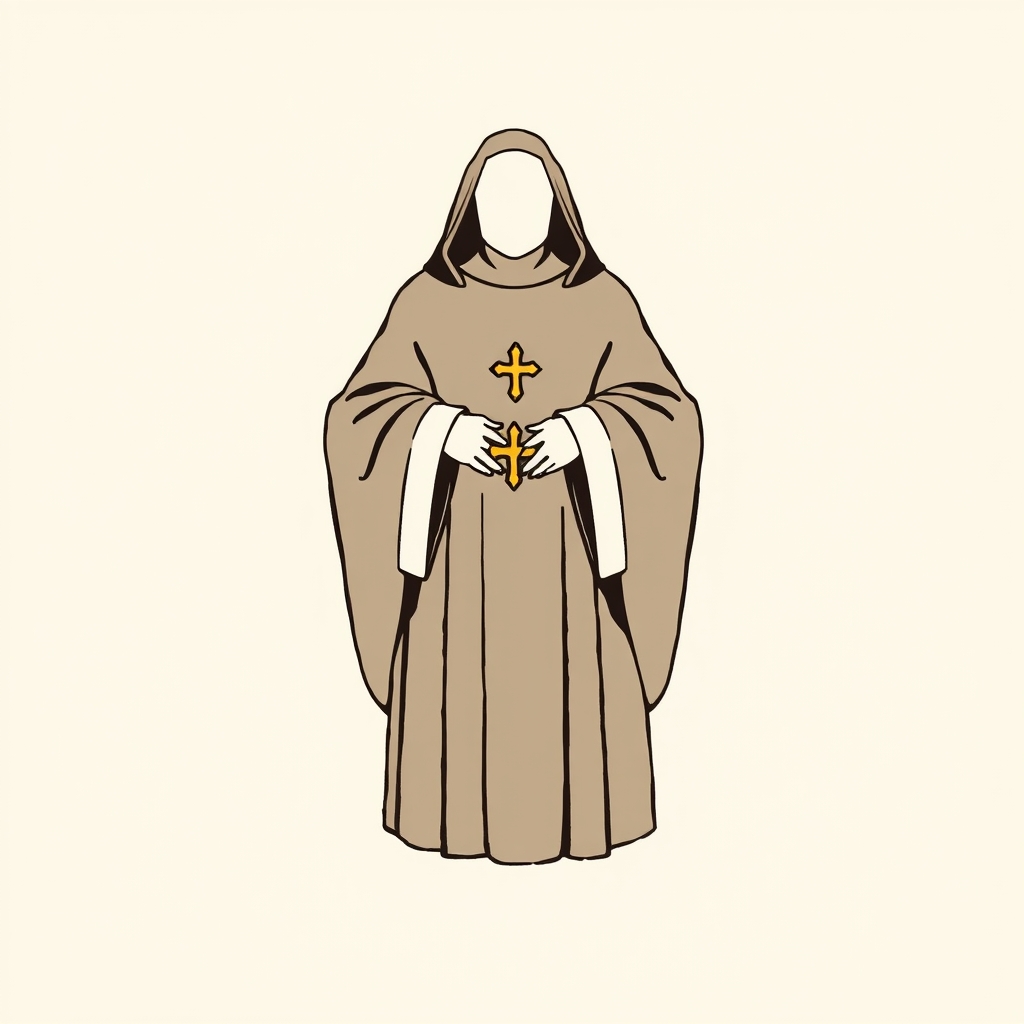
He has been given as an attribute birds that flutter on his shoulders or that he warms in his hands. His head is shaved. The long robe of the Benedictines descends in graceful folds to his feet.
Posthumous History and Relics
His relics underwent numerous translations and historical adventures before being largely destroyed during the French Revolution.
## CULT AND RELICS OF SAINT VALERY.
After his death, the community he led, forced to flee before unjust oppressors, dispersed, and Leuconais became an arid desert once more. Then Berchond, distressed that the Saint's body was no longer surrounded by the honors due to it, formed the plan to transport it to his cathedral in Amiens. But attempts to remove it from its tomb were in vain: an irresistible power paralyzed all efforts; it was impossible to lift it from the ground: the blessed Valery thus testifying that he still wished to inhabit after his death the places he had honored by his virtues.
However, some years later, the storm having passed, Blitmond, formerly miraculously heal ed by th e Saint and having retired to Bobbio since the death of his master, asked Abbot Attale for permission to return to Leuconaüs. The latter resisted for a long time. Finally, warned by a vision that such was the will of heaven, he allowed his disciple to carry out his project. Blitmond therefore returned to Leuconaüs around the year 627, and lived there for a year as a simple hermit. Then he obtained from King Clotaire and the Bishop of Amiens permission to build a vast monastery and a magnificent church, which soon became the goal of numerous pilgrimages. Heir to his master's zeal, he fought and destroyed the remnants of paganism in these regions, and deserved to be the second abbot of Leuconaüs. It is unknown how long he directed this monastery; but his virtues placed him in the rank of Saints, and a neighboring locality has perpetuated his name. Thus, the work of our Blessed one did not perish; for many centuries, his intercession and his memory brought forth Saints for the Church.
The name of Valery soon became popular; the memory of some of the many miracles performed at his tomb has been collected. A town even formed around it, which took the name of the Saint. Around the year 980, Arnulf the Elder, Count of Flanders, desirous of having holy bodies, had that of Saint Valery violently removed, which was deposited first at Montreuil, then at Sithiu. But Duke Hugh (later King of France) had it returned to the monks of Leuconaüs. It is even since that time that the monastery of Leuconaüs took the name of Saint-Valery.
Shortly after, Ingebrumme, Abbot of Saint-Riquier, composed chants in honor of our Saint and Archbishop Ulframme. Another monastery by the name of Saint-Valery also existed in Auvergne. A chronicler, prior to the 14th century, wrote of it: *Here rests the body of the holy confessor, and the inhabitants of the country attribute to his presence being often delivered from dangers*. But it is probable that this monastery is the one where Valery entered religious life, or simply a monument raised to his memory; for it is certain that his relics were never transferred there.
In 1197, King Richard, informed that ships from England were carrying provisions to his enemies and depositing them at Saint-Valery-sur-Somme, took revenge by setting fire to the town, dispersing the monks, and having the Saint's relics transported to Normandy, probably to the village which, since then, has taken the name of Saint-Valery-en-Caux, between Dieppe and Fécamp. But later they were brought back to the monastery of Saint-Valery-sur-Somme, later devolved to the Congregation of Saint-Maur, and were preserved there until recent times.
It seems, moreover, probable that Saint Valery evangelized the Pays de Caux and the entire coastline of the English Channel: such is at least the tradition.
Before the Revolution of 1793, the body of Saint Valery was enclosed in a magnificent reliquary, of the shape and size of a tomb. This reliquary was entirely covered with a silver plate which gave it a certain intrinsic value. It was more than enough to provoke the greed and impiety of the revolutionary sacrilegious of that lamentable era. Thus, this reliquary was removed, and the Saint's relics burned and reduced to ashes in the very middle of the church choir.
The pavement on which this act of savage impiety was accomplished still bears the traces and has been carefully preserved to this day.
However, a fairly substantial bone, thanks to the courageous piety of a woman, escaped destruction. This relic, the only one that remains, had been separated from the rest of the body and placed in the base of the bust of the body of Saint Valery, covered in silver, as was his reliquary in the past, to be honored and venerated in the chapel dedicated to the Saint, and where he had been buried. The location of the tomb is carefully marked in the said chapel.
Devotion to Saint Valery is still very much alive in the region. The chapel, which is outside the town walls, remains open every day from morning until evening, and it is rare not to meet people in prayer there. People come on pilgrimage from neighboring countries and others further away. They love to have the holy Sacrifice of the Mass celebrated on the tomb of our Saint, and a large number of candles are burned there.
Saint Valery is the patron of the whole town. His feast is celebrated with the rite of the first class, on April 1st. Since the Concordat, the solemnity is moved to the third Sunday of Advent, when the feast does not fall on that day.
Saint Valery is mentioned in the Roman Martyrology (April 1st) and in those of Usuard and Ado. Trithemius, du Saussay, H. Ménard, Bucelin, Molanus, Chatelain, etc., unanimously give him a place in their calendars. Sailors consider him their patron. Near the monastery that bore his name is a chapel where he liked to retire during his life, and where he was buried: it is there that sailors go to place themselves under his protection before embarking. William the Conqueror, on the point of leaving for England, had the Saint's body carri ed out of the chapel an d exposed to the light of day, in order to obtain a favorable wind through his intercession. Heaven granted his wishes according to the account of William of Malmesbury and Matthew Paris.
Les Saints de Franche-Comté, Besançon, 1854; and local notes.
Iconography
Signs and attributes

Entities
Narrative network
The names, places, and concepts most present in the entry, weighted by centrality in the text.
The supernatural in their life
The miracles of Saint Valery (Monk of Luxeuil and first abbot of Leuconaüs)
Frequently asked questions about Saint Valery (Monk of Luxeuil and first abbot of Leuconaüs)
Who was Saint Valery (Monk of Luxeuil and first abbot of Leuconaüs)?
Of humble origins in Auvergne, Valery became a monk at Luxeuil under Saint Columbanus before founding the abbey of Leuconaüs in Picardy. Renowned for his gentleness and numerous miracles, notably the resurrection of a hanged man and the destruction of pagan idols, he evangelized the English Channel coast. His relics, long venerated at Saint-Valery-sur-Somme, were largely destroyed during the French Revolution.
What is Saint Valery (Monk of Luxeuil and first abbot of Leuconaüs) the patron saint of?
Patronage of Saint Valery (Monk of Luxeuil and first abbot of Leuconaüs): Saint-Valery-sur-Somme, boatmen and sailors.
What is Saint Valery (Monk of Luxeuil and first abbot of Leuconaüs) invoked for?
Saint Valery (Monk of Luxeuil and first abbot of Leuconaüs) is invoked for: protection of sailors, obtaining a favorable wind, healing of eye diseases and deliverance of the possessed.
How is Saint Valery (Monk of Luxeuil and first abbot of Leuconaüs) depicted in Christian art?
In iconography, Saint Valery (Monk of Luxeuil and first abbot of Leuconaüs) is recognizable by: birds on shoulders or in hands, shaved head, Benedictine habit and sign of the cross.
What miracles are attributed to Saint Valery (Monk of Luxeuil and first abbot of Leuconaüs)?
7 miracles are attributed to this saint, notably: Prophecy / infused knowledge, Protection / deliverance, Resurrection and Healing.
Which saints were contemporaries of Saint Valery (Monk of Luxeuil and first abbot of Leuconaüs)?
Contemporaries include: Saint Priest (Prix), Saint Gregory the Great (Pope and Doctor of the Church), Saint Die (Didier, Deodat) and Saint Augustine of Canterbury.
When did Saint Valery (Monk of Luxeuil and first abbot of Leuconaüs) die?
Saint Valery (Monk of Luxeuil and first abbot of Leuconaüs) died around 700.
What are the other names of Saint Valery (Monk of Luxeuil and first abbot of Leuconaüs)?
Other forms of the name: Walaricus.
Who are the relatives of Saint Valery (Monk of Luxeuil and first abbot of Leuconaüs)?
Relatives of Saint Valery (Monk of Luxeuil and first abbot of Leuconaüs): Inconnu (father) and Inconnu (uncle).
Annexes & related entities
Structured data for exploration: events, miracles, quotes, places, attributes, patronages, and important entities cited in the text.
Key Events
- Youth as a shepherd in Auvergne
- Entered the monastery of Autun
- Stay at the monastery of Saint-Germain in Auxerre
- Arrival at Luxeuil under the guidance of Saint Columbanus in 594
- Evangelical mission in Neustria with Waldolenus
- Resurrection of a man condemned to death in Gamaches
- Foundation of the Abbey of Leuconaüs around 613
- Destruction of a pagan sacred oak at Ouste-Marais
Quotes
-
Omnia possum in eo qui me confortat.
Philippians, iv, 13 (cited motto) -
Let these innocent creatures eat their little grain in peace.
Words of the saint regarding the birds