
Saint Wiron
A regionary bishop originally from Scotland, Saint Wiron traveled to Rome before settling in Limburg under the protection of Pepin of Herstal. There, he founded the monastery of Sint Odiliënberg with his companions Plechelm and Otger. He was the spiritual advisor to the Mayor of the Palace and died around the year 700.
Contemporaries

Figures and markers around the normalized period for this entry.
Guided reading
6 reading sections
SAINT WIRON, REGIONARY BISHOP (c. 700).
Installation at Mont-Sainte-Odille
Saint Wiron receives from Pepin of Herstal the estate of Mont-Saint-Pierre, where he founds an oratory to the Virgin and then the Saint-Pierre monastery with his companions.
Roermond is a city in Dutch Limburg located at the confluence of the Roer and the Meuse. Now, one league upstream from Roermond, on the left bank of the Roer, is a village formerly called Mont-Saint-Pierre, and today Mont-Sainte-Odille. It is this then-solitary place, where the noises of the world did not reach, that Pepin of Herstal, Mayor of the Palace of the kings of France, ceded to Saint W iron, so th at he might grow heavenly fruits there. Saint Wiron first dedicated an oratory to the Virgin Mary there, so that this divine Mother might take possession of the territory. Later, he raised the Saint-Pierre monastery there, which was solidly built, says the chronicler. It is also there that, with his two companion s, Saint Plech elm, priest, and Saint O tger, deacon, he spent the last years of his life.
Origins and education in Scotland
Born in Scotland in the 7th century, Wiron received a Christian education and drew inspiration from the great Irish saints before becoming a regionary bishop.
As much as possible, let us go back to the beginnings of Saint Wiron. He was b orn in Scotland in the early years of the 7th century. In his childhood, he received a very Christian education, and combined with great success the study of letters with the exercises of piety. The desire he had to advance in virtue led him to choose as his models Saint Patrick and Saint Cuthbert, bishops, and Saint Columba, abbot, three of the most famous Saints of the British Isles. He was subsequently raised to the episcopate, without being apparently attached to any particular church, according to a custom that had become very common in these islands, where one saw a great number of these regionary bishops.
Journey to Rome and Consecration
Accompanied by Plechelmus and Otger, Wiron traveled to Rome where he was consecrated bishop by the Pope, before returning to exercise his ministry in the islands and then in Gaul.
Before allowing himself to be ordained, Saint Wiron undertook the journey to Rome, which he had long contemplated, and he did so accompanied by Saint Plechelmus, a priest, and Saint Otger, who was a deacon. The Pope, who according to some was Sai nt Sergius I, received them very well. He himself consecrated Saint Wiron and Saint Plechelmus as bishops, and all three returned to their country, where they each worked in their respective functions, relieving the bishops who had dioceses that were too vast. A few years later, all three returned to France, and Saint Wiron obtained for himself and his two companions the Mount of Saint Odile, a league from Roermond, through the generosity of Pepin, known as of Herstal, whom the mayoralty of the palace had made master of a considerable part of Gaul. They retired there with the resolution to lead a penitent life, entirely detached from
Spiritual Director of Pepin of Herstal
Wiron became the advisor and spiritual director of Pepin of Herstal while leading a life of prayer and the conversion of peoples.
commerce of the world. They built there a small church under the invocation of the Blessed Virgin, and some cells were erected there; they laid the foundations of the monastery that was built there in the following century under the name of Saint Peter. It is c laimed that Pepin was so filled with esteem for the wisdom and holiness of Wiron that he wished to have him as the director of his soul in the ways of salvation, and even as the advisor for his designs in his principal undertakings.
Death and history of the relics
After his death around 700, his relics underwent several translations between Roermond and Utrecht, escaping the Normans and the Calvinists.
This position did not prevent him from leading a life hidden from men in solitude, except for the time he devoted to the conversion of peoples. God finally withdrew him to Himself, to reward him for his fidelity and zeal. The exact year of his death is not known, nor is the day: it is thought to be around the year 700; it is only known that he was buried in the church of the Virgin on his mountain, towards the beginning of the mayoralty o f Charles Mart el. His companions, Saint Plechelmus and Saint Otger, having also happily completed their careers, were likewise buried there. Their bodies were preserved there in the monastery of Saint Peter, until in 1361 they were transported to Roermond, when the transmigration of the canons of the mountain of Saint Odilia took place. But long before, the canons of Utrecht had removed a considerable part of them during the incursions of the Norman s, which extended their cult to the depths of Holland and into Friesland. What had been transported to Roermond remained hidden for a long time under the high altar of the church, which later became a cathedral when the city was erected into a bishopric. This is what contributed to protecting them, in 1572, from the fury of the Calvinists. These relics were found in the year 1594, and raised from the earth with honor, and the feast of this translation is still celebrated every year, on the Tuesday after Trinity, under the title of their elevation. After the Peace of Nijmegen, the bishop of Roermond and the parish priest of Mount Saint Odilia, the former dwelling of Saint Wiron and his companions, undertook to rebuild his church, which had been ruined by the wars. The work was completed in the year 1686, and dedicated on May 10 under the name of Saint Wiron, as principal patron. But the feast of this dedication was moved to the first Sunday of September, so as not to be confused with that of the death of the Saint and his two companions, which is celebrated on May 10 in Roermond, although everywhere else it is held on the 8th, the day on which it is marked in the martyrologies, and in particular in the modern Roman one. T wo days after the consecration of this church, Bishop Reginald Cools transported there in great ceremony half of the relics of Saint Wiron, Saint Plechelmus, and Saint Otger, which were in the cathedral church of Roermond.
Documentary Sources
The sources mentioned include the works of Thyll Lorrain, Baillet, and the collections of the Bollandists.
See a work entitled *Pépin de Landen*, by Thyll Lorrain, Baillet, and in the *Bollandists*, vol. II of May, the ancient Life of Saint Wiron.
Iconography
Signs and attributes
Entities
Narrative network
The names, places, and concepts most present in the entry, weighted by centrality in the text.
Frequently asked questions about Saint Wiron
Who was Saint Wiron?
A regionary bishop originally from Scotland, Saint Wiron traveled to Rome before settling in Limburg under the protection of Pepin of Herstal. There, he founded the monastery of Sint Odiliënberg with his companions Plechelm and Otger. He was the spiritual advisor to the Mayor of the Palace and died around the year 700.
What is Saint Wiron the patron saint of?
Patronage of Saint Wiron: Sint Odiliënberg and Roermond.
How is Saint Wiron depicted in Christian art?
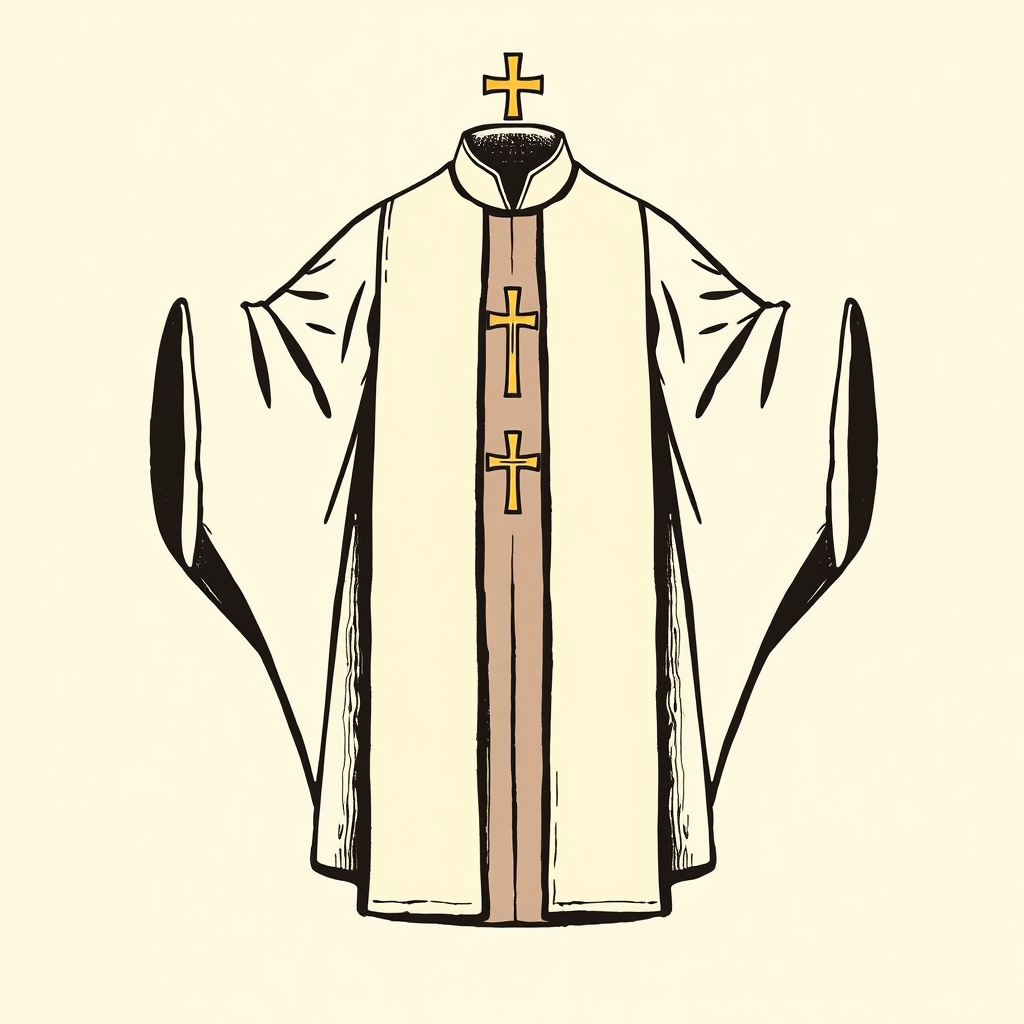
In iconography, Saint Wiron is recognizable by: episcopal vestments.
Which saints were contemporaries of Saint Wiron?
Contemporaries include: Saint Priest (Prix), Saint Gregory the Great (Pope and Doctor of the Church), Saint Die (Didier, Deodat) and Saint Augustine of Canterbury.
When did Saint Wiron die?
Saint Wiron died around 700.
Annexes & related entities
Structured data for exploration: events, miracles, quotes, places, attributes, patronages, and important entities cited in the text.
Key Events
- Born in Scotland in the early 7th century
- Journey to Rome with Plechelm and Otger
- Episcopal consecration by the Pope (possibly Sergius I)
- Return to Scotland to serve as a regional bishop
- Settled in France (Limbourg) on the Mount of Saint Odile thanks to Pepin of Herstal
- Foundation of an oratory to the Virgin and a monastery
- Spiritual director of Pepin of Herstal