
Saint Galdinus
From the illustrious house of della Scala, Gaudin became Archbishop of Milan and a cardinal in the 12th century during a period of schism and war. He supported Pope Alexander III against Emperor Frederick Barbarossa, worked on the reconstruction of his destroyed city, and fought against the Cathar heresy. He died of exhaustion in the pulpit after delivering a passionate sermon in 1176.
Contemporaries

Figures and markers around the normalized period for this entry.
Guided reading
6 reading sections
SAINT GAUDIN OR GALDIN,
Origins and early ministries
Galdin, from the illustrious della Scala family in Milan, dedicated himself early to the service of the Church and became archdeacon and chancellor under Archbishops Bibald and Hubert.
Galdin was born in Milan, of the illustrious house of della Scala, very famous in the history of Italy. He attached himself early to the service of the altars; he had prepared for it by the study of the Holy Scripture, by a great innocence of manners, and by the practice of all Christian virtues. Having been ordained a priest, he became successively archdeacon and chancellor of the church of Milan. Archbishops Bibald and Hubert unburdened themselves upon him of a part of the administration of the diocese, which was then filled with troubles and confusion.
The Schism and the Destruction of Milan
The election of Alexander III provoked a schism supported by Emperor Frederick Barbarossa, who besieged and destroyed Milan in 1162 for its loyalty to the legitimate pope.
After the death of Pope Adrian IV, which occurred in 1159, a man equally versed in theology and canon law was elected to succeed him: this was Alexander III. Five cardinals, who disapproved of this election, gave their votes to Octavian, who took the name Victor: from this came a schism that had disastrous consequences. Emperor Frederick Barbarossa declared himself for the schismatics who supported his interests in Rome.
This prince held a grudge against the city of Milan, which claimed to have the exclusive right to choose its magistrates; but his resentment knew no bounds when he saw it recognize Alexander III as the legitimate pope. He came to attack it with a numerous army, and forced it to surrender at discretion after a ten-month siege. He carried vengeance to the last extremes. The inhabitants barely had their lives spared. The city was destroyed; the victor had the plow passed over it, and salt sown in the furrows, as a mark of curse. It was in 1162 that the emperor seized the city of Milan. He had three holy bodies transported to Cologne that were in the church of Saint-Eustorgius, and which were said to be those of the three kings who came to adore Jesus Christ.
Elevation to the Episcopate
Elected Archbishop of Milan in 1166, Galdin was consecrated by Pope Alexander III, who named him cardinal and legate to restore the Church in Lombardy.
Robert, Archbishop of Milan, having died in 1166, Galdin, although absent, was elected to succeed him. The Pope consecrated him himself, made him a cardinal, and appointed him legate of the Holy See. The new archbishop did everything in his power to provide help and consolation to the sad remnants of his flock. He worked with ardor to extinguish the schism, and he succeeded throughout Lombardy.
Reconstruction and pacification
Galdin supports the reconstruction of Milan and the Lombard resistance against the emperor, leading to the Peace of Venice and the end of the schism in 1177.
The inhabitants of Milan, assisted by the money and troops of Lombardy, worked to rebuild their houses and their walls. The work being completed, they returned to their city on April 27, 1167. The emperor set out to attack them; but his army was defeated by the Milanese. This disaster made him more tractable, and he did not dare to draw upon himself the combined forces of Lombardy, the Republic of Venice, Sicily, and all of Italy. He thought seriously about peace. He subsequently consented to have a conference with the Pope, who was in Venice. Things reached the point where he abjured the schism and was perfectly reconciled with the sovereign Pontiff in the year 1177.
Struggle against the Cathar heresy
The archbishop strives to restore ecclesiastical discipline and actively combats the influence of the Cathars who had established themselves during the unrest.
However, Galdin fulfilled with exactitude all the duties of a worthy pastor. He assiduously taught the word of God; he relieved the unfortunate with a truly paternal kindness, and even anticipated their various needs. He restored the discipline, which had suffered greatly.
He stifled all seeds of division, and showed himself very zealous in destroying the errors of the Cathars. These heretics were a species of Manichaeans who had taken advantage of the troubles caused by the war to introduce themselves into Lombardy.
Death in the service of the Word
Exhausted by his zeal, Galdin died on April 18, 1176, after delivering a final, passionate sermon during the octave of Easter.
Among the virtues that shone in the holy archbishop, one noted a profound humility that led him to regard himself as the greatest sinner in his flock. His love for prayer was no less admirable. He ceaselessly beseeched the Lord to bless his labors and to pour out His graces upon both the shepherd and the flock. Upon leaving prayer, he appeared a man entirely divine. His words were accompanied by a strength and an unction to which nothing could resist; they brought trouble and contrition even into the most hardened hearts.
The zeal with which the Saint was consumed for the salvation of souls prevented him from perceiving the exhaustion of his strength. Although he was too weak to celebrate Mass on the Sunday of the octave of Easter, he still wished to preach. He climbed into the pulpit after the reading of the Gospel and delivered a sermon with great fire; but no sooner had he finished than he fell into a faint from which he did not recover. He was left in the rood screen for the remainder of the Mass, and he expired toward the end of the holy sacrifice, in the midst of his clergy and his people, on April 18, 1176. His death was universally mourned.
Godesca: d. ed. of Lille.
Additional passages recovered from the sources
These passages from Les Petits Bollandistes supplement the entry. The references identify their context in the original volume.
Read the supplementary notes and passages (1)
Note on the Alleged Humiliation of Frederick Barbarossa by Pope Alexander III
Historical supplement to Les Petits Bollandistes, transcribed from the image of the 19th-century edition. Traditions, assessments, and expressions describing a "present" situation are those of the source in its own time; they do not constitute contemporary verification.
1. Some modern writers have said, regarding this reconciliation, that Pope Alexander III put his foot on the emperor's throat at the entrance of the Church of Saint Mark in Venice. A fact of this nature would deserve to be proven, and it undoubtedly would have been, if proof had been found; but it is a calumny invented out of an itch to blacken the reputation of the Popes. One can see what several very judicious writers have said on this matter, among others Cardinal Baronius, in sæc. 12, art. 9, in Alex. III, and especially Father Barre, who discusses this fact at great length at the end of his fifth volume of the Histoire générale d'Allemagne. These writers base themselves mainly on the silence of contemporary authors, such as Matthew Paris, William of Tyre, Roger of Hoveden, and Romuald, Archbishop of Salerno. The latter wrote the history of Alexander III, as well as that of the agreement made between this Pope and the emperor. He was present at this agreement, as well as at the council held in Venice and at the absolution of Frederick. Moreover, the conduct attributed to Alexander is entirely contrary to reason; it is even belied by the remarkable gentleness that was always observed in this Pope. It is known that he treated the antipope John of Struma with great humanity when he renounced the schism in 1178. But there is, it is said, a painting in the Senate of Venice depicting the humiliation of Frederick, as well as the victory won at sea by the republic over Otto, son of this prince, and the triumph of the cities of Lombardy over his land army. To this we answer: 1. that the painting in question is by no means ancient; 2. that painters, like poets, often have recourse to fictions and emblems, without anyone finding fault with it, and that, consequently, nothing would be more unreasonable than to base one's judgment regarding the truth of a fact upon the imagination of painters. The Protestant historian Iselin, who will not seem suspect in this matter, perfectly refutes these dreams that are mixed into history. Regarding the painting in Venice, he says: “It must be observed that at that time it was customary to express through paintings of this kind the advantage that one party had gained over the other. Thus we read that Callixtus II, having taken the antipope Burdinus prisoner, had him depicted lying under his feet in one of the rooms of his Lateran Palace; although it is known that Callixtus never put his foot on Burdinus's throat. It is the same with the painting of Frederick Barbarossa in Venice. Add to this not only the silence that all writers of that time keep on this subject, but even the contradiction between their accounts and the fact being asserted, for all agree in stating that the emperor and the Pope showed each other every imaginable courtesy; that the former received from the Holy Father the osculum pacis, that he gave him his right hand, that he accompanied him to the church, that, according to the custom of that time, he held his stirrup, and that, at the first moment, he threw himself at his feet, but that the other raised him up immediately and embraced him. Everything said about Prince Otto, his son, is likewise groundless, since this prince was still a child.” Such are the words of a Protestant writer, who moreover refers to the following sources: Acta Alex. III, apud Baronium, ad an. 1177, n. 27 and 199; Otto de S. Blas, c. 23; Godefr., Viterb., par. 17, p. 619; Roger de Hoveden, Annal. Anglic. sub Henric. II, p. 568, 199; Arnold, Lubec, l. II, c. 17; Albert, Stad. et chron. Mont. Seren., ad an. 1177; Ursperg. ad an. 1176, p. 227; Labbeus, Bibl., t. II; Remus-Hoffmannus, Majus, Heumannus, Peccul. Dissertat.; Bernegger. Quæstion. hist. polit.; Rupertii, Observat in Sinops.; Besold. N. B. It was Alexander III who reserved the canonization of Saints to the Sovereign Pontiff. Metropolitans previously enjoyed this right. The canonization of Saint Walter of Pontoise, performed in 1153 by the Archbishop of Rouen, is the last example provided by history of Saints who were not canonized by the Pope.
Paul Guérin, Les Petits Bollandistes, volume 4, p. 483. Bibliothèque nationale de France: https://gallica.bnf.fr/ark:/12148/bpt6k30734t
Iconography
Signs and attributes
Entities
Narrative network
The names, places, and concepts most present in the entry, weighted by centrality in the text.
Frequently asked questions about Saint Galdinus
Who was Saint Galdinus?
From the illustrious house of della Scala, Gaudin became Archbishop of Milan and a cardinal in the 12th century during a period of schism and war. He supported Pope Alexander III against Emperor Frederick Barbarossa, worked on the reconstruction of his destroyed city, and fought against the Cathar heresy. He died of exhaustion in the pulpit after delivering a passionate sermon in 1176.
What is Saint Galdinus the patron saint of?
Patronage of Saint Galdinus: Milan.
What is Saint Galdinus invoked for?
Saint Galdinus is invoked for: extinction of schisms and protection against heresies.
How is Saint Galdinus depicted in Christian art?
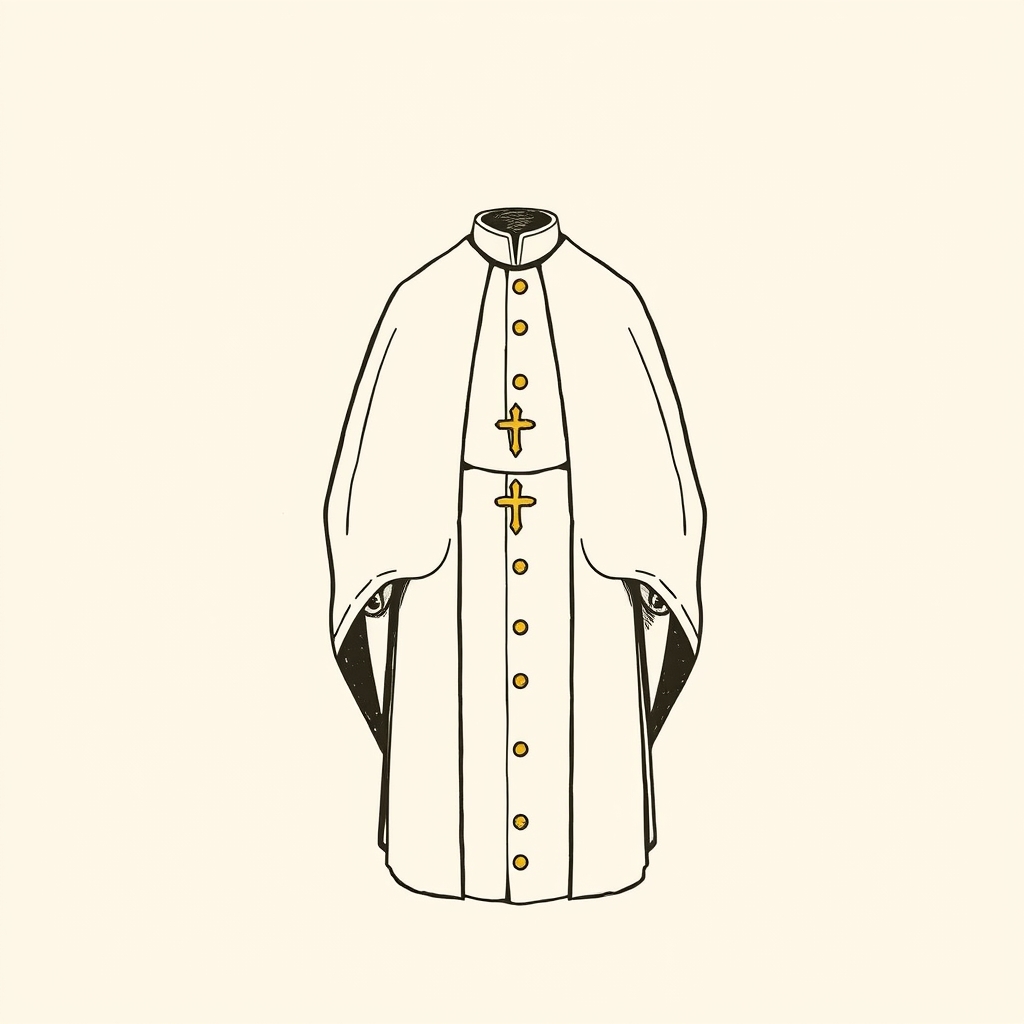
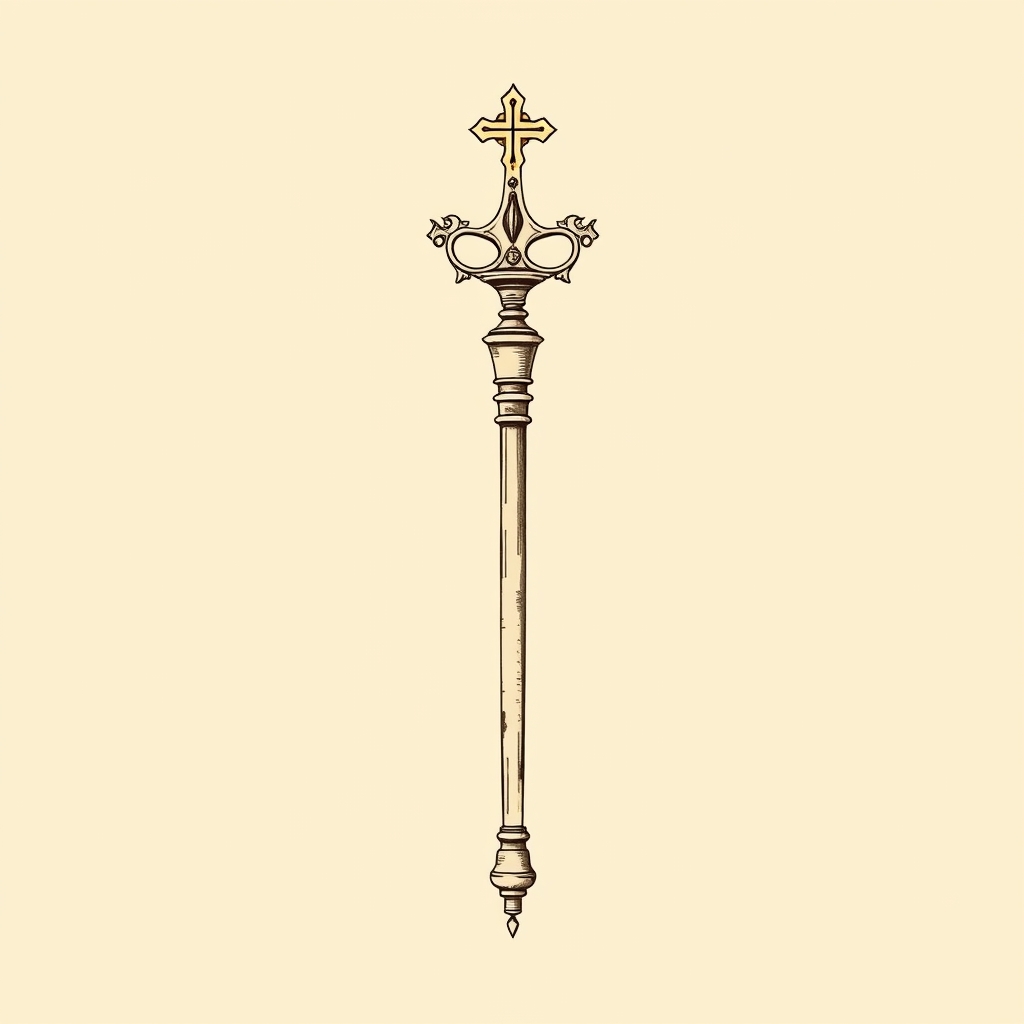
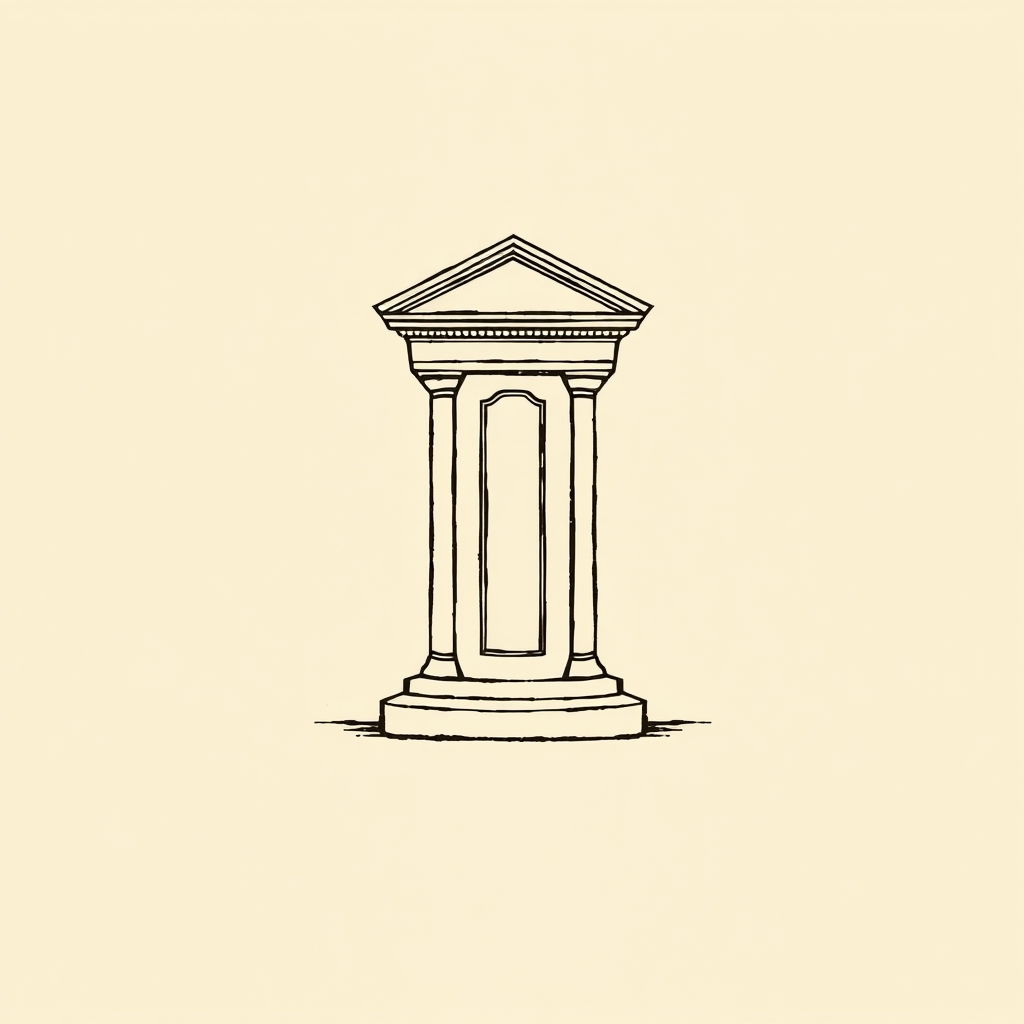
In iconography, Saint Galdinus is recognizable by: cardinal's robes, archbishop's crosier and pulpit.
Which saints were contemporaries of Saint Galdinus?
Contemporaries include: Saint Norbert of Magdeburg, Saint Bernard of Clairvaux, Saint Stephen of Hungary and Saint Arthaud of Belley.
When did Saint Galdinus die?
Saint Galdinus died around 1200.
What are the other names of Saint Galdinus?
Other forms of the name: Galdin and Galdinus.
Who are the relatives of Saint Galdinus?
Relatives of Saint Galdinus: Maison de la Scala (family of origin).
Annexes & related entities
Structured data for exploration: events, miracles, quotes, places, attributes, patronages, and important entities cited in the text.
Key Events
- Born in Milan in the house of the Scala
- Appointed archdeacon and chancellor of Milan
- Destruction of Milan by Frederick Barbarossa in 1162
- Election as Archbishop of Milan in 1166
- Created cardinal and legate by Alexander III
- Reconstruction of Milan and return of the inhabitants in 1167
- Struggle against the Cathar heresy
- Died in the pulpit after a sermon on the Sunday of the octave of Easter 1176