
Venerable Anthony Mary Zaccaria
FOUNDER OF THE CONGREGATION OF THE CLERICS REGULAR OF SAINT PAUL, KNOWN AS BARNABITES
A physician by training who became a priest in Cremona, Anthony Mary Zaccaria founded the Congregation of the Barnabites and the Order of the Angelics in Milan in 1530. Consumed by intense apostolic zeal and immense charity toward the poor, he worked for the reform of the clergy and morals before passing away at the age of 36 in 1539.
Contemporaries

Figures and markers around the normalized period for this entry.
Guided reading
8 reading sections
THE VENERABLE ANTHONY MARY ZACCARIA,
FOUNDER OF THE CONGREGATION OF THE CLERICS REGULAR OF SAINT PAUL, KNOWN AS BARNABITES
Youth and medical training
Anthony Mary Zaccaria studied philosophy in Pavia and then medicine in Padua before dedicating himself to theology under the influence of his spiritual director.
THE VENERABLE ANTHONY MARY ZACCARIA . 463 passion for the poor, to whom he was happy to distribute the alms of which his mother made him the custodian. Upon reaching the age for stud y, Anth ony was placed in a college where he soon distinguished himself by his precocious intelligence, his diligence in study, and the purity of his morals. After finishing his literary s tudies in Cremona, he was sent to Pavia to pursue his philosophy, and then in 1520, to the U nivers ity of Padua to study medicine. Although left to his own devices, he knew how, amidst the dangers that surrounded him on all sides, to preserve his innocence through the frequenting of the sacraments and the practice of mortification. His course completed, he was received as a doctor of medicine around the year 1524, and returned to Cremona to practice his art. But God, who had destined him to heal the diseases of the soul rather than those of the body, changed his heart so much that the young doctor first postponed his plans, and finally renounced them completely. On the advice of his director, Fr. Marcel, a religious of the Order of Saint Dominic, Anthony Mary gave himself over to the study of theology. As he combined a love of study with a great purity of morals, and was furthermore gifted with superior talents, he promptly distinguished himself by very noticeable progress in science as well as in virtue and was soon in a state to receive Holy Orders and finally the priesthood. When he offered the holy sacrifice for the first time, with an angelic face, burning with love and bathed in tears, completely absorbed in the conviction of his own nothingness and the meditation of the great mystery of the altar, he was seen suddenly surrounded by a celestial light and a multitude of angels who, forming a circle, respectfully assisted at the august sacrifice. The report of this prodigy, which spread immediately throughout Cremona, further increased the reputation for holiness that Anthony Mary had already acquired in the eyes of all, and contributed to earning him the name of angelic man, of angel of God, which was commonly given to him thereafter.
Priesthood and ministry in Cremona
Ordained a priest, he manifested an angelic piety and devoted himself to the poor and the sick of Cremona, leaving a lasting impression through a miracle during his first Mass.
Scarcely did he see himself thus invested with the priestly dignity, than he forgot, following the example of Saint Paul, all that he had done until then for God, and henceforth regarded it as a duty to do greater things for the glory of the divine Master and the salvation of souls. All the time he did not give to prayer and the exercise of the holy ministry was devoted to the study of theology. Recognizing himself as a debtor to everyone, he strove through his works of charity to win all men to Jesus Christ by becoming all things to all men, following the example of the Apostle. He often visited the sick in hospitals and the inmates in prisons, bringing to both the balm of consolation, not only by exhorting them to bear their sufferings patiently, but also by distributing to them all kinds of aid. His house became, so to speak, the asylum of the poor, the inn of pilgrims, the meeting place for all those who, attracted by the odor of his holiness, turned to him as to the father and benefactor of all. Kind and affable toward everyone, he welcomed everyone with the heart of a father, helped according to his power, and sent everyone away consoled.
Antoine-Marie perhaps showed nowhere a charity more vivid and more fruitful than in preaching; thus the benefit that the city of Cremona derived from it was immense. This city, as a result of wars and internal dissensions, was then in the most deplorable state, both in terms of misery and corruption. But the greater the spiritual evil, the more Antoine-Marie strove to remedy it, mainly by means of preaching. As he united the power of the word to that of the
Foundation of the Clerics Regular of Saint Paul
In 1530, he founded a new congregation in Milan with Ferrari and Morigia to reform the morals of the clergy and the people.
LIVES OF THE SAINTS. — VOLUME XV. 30 prayer and great purity of morals, God blessed his ministry and enabled him to produce admirable fruits of conversion. The city of Cremona was not to be the only one to benefit from the beneficent charity of Anthony Mary. At that time, the relaxation of discipline and the grave disorders that followed in its wake had been introduced into the clergy and the cloisters: hence the ignorance, superstition, and license of morals among the people, who had nothing but contempt for these unfaithful pastors, when they did not use their public scandals to excuse their own conduct and give an air of propriety and honesty to their own corruption. To remedy such great disorders, Anthony Mary conceived the project of instituting a Congregation of priests for the reform of morals. Having gone to Milan, he becam e ass ociated in that city with Bartholomew Ferrari and James Anthony Morigia, who soon felt the ardent desire to unite with him to form the Congregation he had planned. This took place in the year 1530, and was the beginning of the Congregation of the Clerics Reg ular of Saint Paul. Anthony Mary wanted his com panions to be distinguished above all by humility, poverty of spirit, self-denial, and the practice of prayer. He opened a school of Christian perfection in Milan for all those who wished to come to him; crowds flocked every day to the spiritual conferences and religious exercises he gave, so that his house soon became too small to contain the multitude of listeners.
Some companions having come to join him, he requested and obtained, on February 18, 1533, the canonical institution of his Order, under the name of Clerics Regular. In 1534, he admitted his first disciples to take the regular habit, and gave them rules which were subsequently increased and definitively confirmed by Pope Gregory XIII in the bull of November 4, 1579. In instituting a new Congregation, Anthony Mary had prop osed, above all, t o work for the reform of the morals of the clergy and the people of Milan. To achieve this double goal, he invited ecclesiastics to spiritual conferences, and established for men the Congregation of Married Men, in which spiritual conferences were also held. Besides the particular care that Anthony Mary and his religious gave, in their community, to the ecclesiastics and laypeople who came there in great numbers, they were also actively employed in the preaching of the divine word and the administration of the sacraments. All these works not being enough for their zeal, they began to visit the hospitals, and there exhausted towards the sick all the help that charity imposes, not only for the relief of souls, but also for that of the body. But what is most to be admired is the zeal with which Anthony Mary strove to bring back to the path of salvation those who had had the misfortune of straying from it for a long time and who no longer frequented the house of the Lord. To bring back the poor lost sheep, he understood that one had to devote oneself to searching for them. To the energy of the word he joined the virtue of example, so capable of touching hearts. Burning with zeal for the glory of God and the salvation of souls, he could not contain the fire that consumed him inwardly. With a crucifix in his hand, he went out into the city, traveled through the streets and public squares, and in the midst of the crowd that the novelty of the spectacle attracted, he preached the opprobrium and sufferings of Jesus Christ, and the necessity of penance, of which he himself gave the example.
Persecutions and expansion of the work
Despite opposition, he founded the Angelic Sisters and established his community near Saint-Ambrose thanks to the Countess of Guastalla.
In the presence of the prodigious fruits, which grew more abundant day by day in Milan under the auspices of the new Congregation established by the Venerable Zaccaria, the enemy of salvation, exasperated by the loss and shame caused to him by these zealous servants of God, stirred up a violent persecution against them, making some see as madness, and others as an intolerable scandal, that which, in these religious, was the effect of their great love for Jesus Christ and their ardent zeal for the salvation of souls. In the midst of all these contradictions, far from letting himself be cast down, Anthony Mary, joyful and calm, placed in God a trust all the greater as the persecutions of men continued to grow. This storm having been calmed, he continued with more fervor and activity the work begun for the reform of morals, and God blessed the works of his zeal, by multiplying his companions and causing him to win a greater number of souls.
The Venerable Zaccaria also established in Milan an Order of nuns who took the name of Angelics of Saint Paul, a name which was confirmed to them by Pope Paul III in 154 5. After having established their monastery near the parish of Saint Euphemia, he moved with his companions, towards the end of 1535, into a house located next to Saint-Ambrose, which the Countess of Guastalla had given him; he arranged there in honor of Saint Paul a small oratory which became a public church in 1542. Once installed in this new dwelling, the Venerable Zaccaria gathered his religious in chapter so that they might elect a superior. Upon his insistence, Fr. Morigia was named, on April 15, 1536, the first superior of the Order of Clerics R egular of Saint Paul.
Monastic Reform in Vicenza
Called by Cardinal Ridolfi, he reformed several monasteries in Vicenza and introduced the devotion of the Forty Hours there.
The reputation for holiness of the two Institutes having spread to other cities in Lombardy, Cardin al Niccolò Ridolfi, who was administering the diocese of Vicenza , begged the Venerable Anthony Mary to come to Vicenza with some of his most experienced religious women, in order to assist him in the reform of two women's monasteries, where discipline appeared very lax. The venerable servant of God, seeing the will of God in this call, went to Vicenza towards the end of May 1537, accompanied by some of his religious and some Angelicals. The reform he first occupied himself with was that of the convent of the Convertite. This house was composed of women who had led a bad life in the world and who were there to do penance for their past disorders. Thanks to his persevering efforts, his vivid exhortations, and the help lent to him by the Angelicals, he managed to completely change the hearts of these poor stray sheep. In order to make the good he had wrought in this convent stable, he gave its direction to some Angelicals. He then reformed a monastery of virgins, called the nuns of Saint Sylvester, who, completely neglecting the observance of the Rule, had abandoned themselves to all sorts of vanities and licenses little in harmony with the perfection of their state. The virtues and zeal of the venerable Zaccaria soon triumphed over all these obstacles and brought back the most exact discipline among these nuns. But he did not limit his zeal and great charity to that; he also established in Vicenza all the exercises of piety that he had introduced in Milan, and especially the spiritual conferences which contributed powerfully to bringing a great number of people back to the practice of Christian virtues. He also introduced there the pious custom of exposing the Most Blessed Sacrament to the adoration of the faithful, with all possible solemnity, for forty hours.
Last mission and passing
Exhausted by his labors, he died in Cremona in 1539 after a mission in Guastalla, leaving behind the Barnabite order.
Upon returning to Milan, the Venerable Zaccaria, despite his failing health, worked with ardor during the last two years of his life on all the works he had undertaken. Seeing his Order developing more and more, he resolved to acquire a more suitable location than the one he occupied. He was offered an old church dedicated to Saint Barnabas, which was located outside the Tosa gate, in a secluded and peaceful place. But death took him before the conclusion of this matter; for the Clerics Regular were not definitively established there until 1547. Such was the origin of the name Barnabites, which is still generally given to them today. Another thing that the Venerable Zaccaria had greatly at heart was the profession of his solemn vows, which he had deferred until then. However, it is not known with certainty if death allowed him the time to make his vows. Towards the end of May 1539, the Venerable, who recoiled before no work of charity, went to Guastalla to conduct a mission. But the fatigues he had imposed upon himself, joined to the rigors of his mortifications, soon caused him to fall into such languor and such weakness that he became a victim of his excessive charity. At the first onset of the fever, he did not delay in knowing that he was reaching the end of his pilgrimage. Transported to Cremona, to his mother's home, the illness made rapid progr ess, an d the Venerable, provided with the last sacraments, fell asleep peacefully in the Lord on July 5, 1539.
Recognition and relics
His relics were transferred to the Cathedral of Milan and his heroic virtues were recognized by successive popes in the 19th century.
The body of the venerable servant of God was transported to Milan, deposited in the monastery, and placed provisionally under the altar of a chapel located beneath the choir of the Angelic sisters, where it remained for twenty-six years, preserved intact and without corruption. In 1566, it was buried at the foot of the altar where it remained until 1664. At that time, his remains were enclosed in a coffin covered in brass and placed in a niche near the same altar. They rested there until the year 1806, when Pope Pius VII permitted the introduction of the cause for his beatification. It was then that the holy relics were, at the request of the metropolitan chapter, transferred to the Cathedral of Milan and placed at the entrance of the underground chapel of Saint Charles. Pope Gregory XVI, on June 20, 1833, pronounced affirmatively on the virtues of the venerable Zaccaria practiced to a heroic degree, and Pope Pius IX issued the decree, while he was in exile in Gaeta, in 1849.
Sources and local commemorations
The biography is based on the works of Rev. Fr. Toppa and mentions various martyrs of the French Revolution.
We have extracted this biography from the Life of the Venerable Zaccaria, by the Rev. F r. Toppa.
---
### ANNIVERSARIES AND COMMEMORATIONS.
Joseph Desjardins, born in Hénin-Liétard (Pas-de-Calais, arrondissement of Béthune, canton of Carvin), lay brother and surgeon of the abbey of Sept-Fonds (diocese of Autun); deported to distant shores in 1793, for refusal of the oath; died in exile on July 6, 1794. — Suzanne Gaillard, religious of the Blessed Sacrament at the convent of Bollène (Vaucluse), under the name of Sister Saint-Mathieu; arrested on May 2, 1794, and thrown into the prisons of Orange; condemned to death for refusal of the oath, by the popular tribunal of that city; executed at the age of thirty-one. 1794. — Garnier, a sexagenarian priest of the diocese of Coutances; imprisoned, for refusal of the oath, in the fort of Mont-Saint-Michel, on the coasts of Normandy; remained there prey to great sufferings until 1796; was released and returned to his diocese; assassinated by drunken soldiers at the moment he was returning from administering to a sick person. 1797. — Gaudaire, a young ecclesiastic of the diocese of Saint-Malo (today of Rennes); arrested in Méneac (Morbihan, arrondissement of Paimbœuf, canton of La Trinité) by soldiers of a mobile column, and massacred on the spot. 1797. — Gaultier, a sexagenarian priest of the diocese of Cavaillon (today of Avignon), assassinated in his home, for his attachment to the Catholic faith. 1791. — Françoise Gaudronneau, a religious of the diocese of Angers, retired to Vezins (Maine-et-Loire, arrondissement of Beaupréau, canton of Cholet) during the suppression of her cloister; arrested in that town and thrown into the prisons of Angers; died in chains. 1794. — Geoffroy, parish priest of Fleury-la-Tour (Nièvre, arrondissement of Nevers, canton of Saint-Benin-d'Azy); expelled from his parish for refusal of the oath of 1791; arrested and placed in seclusion in a cloistered house in Nevers; transported to Nantes to be deported; died as a result of mistreatment on the hold of the port of that city. 1794. — Georgelin, priest of the diocese of Saint-Brieuc; arrested by revolutionary troops at the moment he was assisting a dying person; led to the public square of Plouec (Côtes-du-Nord, arrondissement of Guingamp, canton of Pontrieux) and shot, at the age of twenty-seven. 1798. — Bonne Gérard, Hospitalier religious of the house of charity of Arras; arrested and sent to Cambrai; condemned to death by the revolutionary tribunal of that city, and executed at the age of forty-seven. 1794.
Iconography
Signs and attributes

Entities
Narrative network
The names, places, and concepts most present in the entry, weighted by centrality in the text.
The supernatural in their life
The miracles of Venerable Anthony Mary Zaccaria
Frequently asked questions about Venerable Anthony Mary Zaccaria
Who was Venerable Anthony Mary Zaccaria?
A physician by training who became a priest in Cremona, Anthony Mary Zaccaria founded the Congregation of the Barnabites and the Order of the Angelics in Milan in 1530. Consumed by intense apostolic zeal and immense charity toward the poor, he worked for the reform of the clergy and morals before passing away at the age of 36 in 1539.
What is Venerable Anthony Mary Zaccaria the patron saint of?
Patronage of Venerable Anthony Mary Zaccaria: Barnabites and Angelic Sisters of Saint Paul.
What is Venerable Anthony Mary Zaccaria invoked for?
Venerable Anthony Mary Zaccaria is invoked for: healing of the diseases of the soul and moral reform.
How is Venerable Anthony Mary Zaccaria depicted in Christian art?
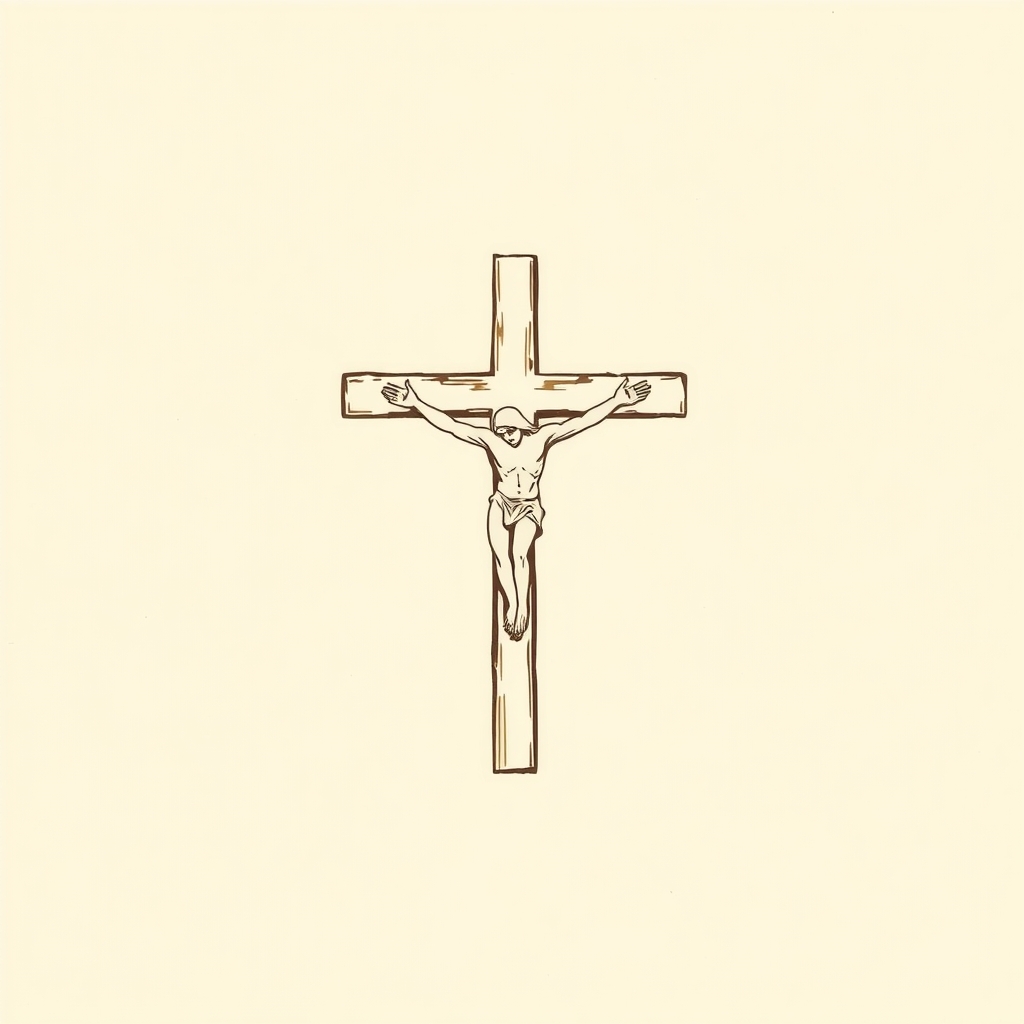
In iconography, Venerable Anthony Mary Zaccaria is recognizable by: crucifix, angelic face and celestial light during Mass.
What miracles are attributed to Venerable Anthony Mary Zaccaria?
2 miracles are attributed to this saint, notably: Vision / apparition, Eucharistic, Sign / wonder and Incorruptibility.
Which saints were contemporaries of Venerable Anthony Mary Zaccaria?
Contemporaries include: Blessed John of Jesus-Mary, Ana de Jesús, Venerable Anne of Jesus and Saint Francis de Sales (Bishop and Prince of Geneva).
When did Venerable Anthony Mary Zaccaria die?
Venerable Anthony Mary Zaccaria died around 1539.
What are the other names of Venerable Anthony Mary Zaccaria?
Other forms of the name: Homme angélique and Ange de Dieu.
Who are the relatives of Venerable Anthony Mary Zaccaria?
Relatives of Venerable Anthony Mary Zaccaria: Sa mère (non nommée) (mother).
Annexes & related entities
Structured data for exploration: events, miracles, quotes, places, attributes, patronages, and important entities cited in the text.
Key Events
- Medical studies in Padua (1520-1524)
- Ordination to the priesthood in Cremona
- Foundation of the Congregation of the Clerics Regular of Saint Paul (1530)
- Canonical institution of the Order (February 18, 1533)
- Foundation of the Angelic Sisters of Saint Paul (Milan)
- Reform of monasteries in Vicenza (1537)
- Mission in Guastalla (1539)