
Saint Hippolytus the Jailer
A Roman soldier and jailer converted by Saint Lawrence, Hippolytus was martyred under Emperor Valerian for burying his master. After refusing to renounce his faith despite torture and offers of pardon, he was dragged to death by wild horses. His relics, transferred to Saint-Denis under Charlemagne, were the object of great royal devotion.
Contemporaries

Figures and markers around the normalized period for this entry.
Guided reading
5 reading sections
SAINT HIPPOLYTUS THE JAILER,
Conversion and First Act of Faith
A witness to the martyrdom of Saint Lawrence, Hippolytus asks to share his fate and secretly buries the body of the martyr in the Veran field, thus revealing his faith to the emperor.
258. — Pope: Saint Sixtus II. — Roman Emperors: Valerian and Gallienus. Idibus Hippolytum comitem Laurentius astris Pro Christo parili recipit certamine passum. You might have seen, on the ides of August 258, the heavens open wide, and Lawrence receive and present to his God Hippolytus his disciple, who had just died, but for Jesus Christ, by the same death as the Hippolytus of ancient Greece. Acta Sanctorum.
Saint Hippolytus, of whom we have already spoken in the life of Saint Lawrence, was a Roman knight, and received from the emperor Valerian, successor to Decius, the order to guard this blessed deacon, and to do his utmost to lead him to reveal the treasures of the Church that were believed to have been entrusted to him by Pope Saint Sixtus. He therefore brought him with him, and put him in prison with several others, both Christians and idolaters; but he soon became his captive himself, for, seeing the great miracles that he performed in the name of the true God, admiring above all that, by the sole imposition of his hands, he restored sight to the blind, he believed in Jesus Christ, and, submitting to the salutary yoke of faith, he wished to be baptized. His example was followed by all those of his household, nineteen in number. During his baptism, he had a vision in which he was shown the innocent souls of the Christians who had been martyred for religion; they enjoyed an incomparable happiness, which confirmed him in the hope of eternal life, which Saint Lawrence had promised him if he converted.
Shortly thereafter, Valerian, who burned with the desire to seize the treasures of the Church, commanded that the holy deacon be brought before him. Hippolytus brought him before his tribunal, with the intention of declaring himself a Christian if it were useful for the glory of God and for the honor of religion. He witnessed the strength and nobility with which this brave soldier of Jesus Christ answered all the demands made of him; and, as the emperor gave him a further delay of three days to gather the alleged treasures, he was handed back into the hands of Hippolytus, and committed once more to his custody and faith. Hippolytus received him with joy, no longer to torment him and subject him to torture, but to give him more freedom to carry out what he had planned. He even worked with him to gather the poor, the sick, the blind, the crippled and the paralytic, who are the true treasures of the Church, and he lodged and fed them in his house, while waiting for Lawrence to lead them before this cruel and ambitious prince. He was also present at this most famous and august action, and had the grief of seeing this dear master in the hands of the executioners, who tore him with scorpions, beat him with blows of rods, and applied burning plates to his sides. The following night, knowing that even sharper torments were being prepared for him, he began to weep bitterly, and asked the martyr for permission to cry aloud that he was himself a Christian, so as to share in his suffering and his triumph. Saint Lawrence told him that it was not yet time, but that he would soon have the satisfaction he desired. Indeed, Hippolytus having removed the body of this illustrious martyr from the place of his execution, buried him with honor in the Veran field, in the cemetery of Cyriaca. The emperor saw by this that he had become a Christian, had him arrested, and wished to examine him himself.
The trial before Valerian
Before the Emperor Valerian, Hippolytus refuses to renounce his faith despite the tortures and rejects the honors of Roman knighthood to remain faithful to Christ.
When he was before his tribunal, he said to him: "Have you then become a magician as well as that wretch whom we had burned, and to whom you gave burial?" — "I am no magician," replied Hippolytus, "any more than he was; but I have become a Christian, and I take more glory in this quality than in all the finest titles in the world."
Valerian, at this answer, had his mouth bruised with stones; then he was stripped of his clothes, which were those with which he had been clothed at baptism; he was broken with several blows of a stick, and he was cruelly rubbed with thistles. This torture, which left him all bloody, could not shake his constancy nor draw any complaint from his mouth; he courageously told the tyrant that he would gain nothing from him by all these torments, and that he would give even the last drop of his blood for Jesus Christ, whom Lawrence had made known to him. Valerian, then changing his methods, wanted to win him over with gentleness. He therefore had him given the clothes of a Roman knight, and, seeing him splendidly dressed, he said to him: "Be now our friend, continue the office you held with us, enjoy in peace the goods that fortune has given you, and do not amuse yourself any longer with this vain superstition that has deceived you."
Hippolytus replied that he no longer recognized any master but Jesus Christ, nor any knighthood other than fighting for the sovereign Lord of heaven and earth.
The final torment
After the massacre of his nurse Concordia and his servants, Hippolytus dies dragged by untamed horses on August 13.
The emperor, more irritated than ever, handed him over to a provost to conclude his trial and have him put to death. The latter first went to his house to seize all his goods by right of confiscation; but, finding all his people Christian and entirely resolved to follow his example unto death, he began by discharging all his fury upon them. He therefore had Concordia, that pious woman who had been the nurse and governess of Hippolytus, stripped, and had her whipped with such barbarity that she expired under the lashes in the hands of the executioners. Then he himself led the other eighteen outside the Tiburtine Gate, where he had them beheaded. Finally, all these executions having served no purpose in changing the resolution of Hippolytus, who was present for them all, he had him tied by the feet to the necks of several untamed horses, which dragged him with fury along paths covered with pebbles, brambles, and thorns, which tore all his flesh and bruised his whole body with inexplicable pain. Thus this generous soldier of Jesus Christ rendered his very pure soul, still adorned with the robe of innocence that it had received at the sacrament of regeneration, to go and receive in heaven the sweetness of immortality; this occurred on August 13, three days after the execution of Saint Lawrence.
Translation of relics and royal devotion
His remains, transferred from Rome to Saint-Denis under Charlemagne, were the object of great devotion by King Robert the Pious, marked by military miracles.
His body, broken as it was, was taken by the priest Justin, who had previously helped him bury that of Saint Lawrence, and was buried quite near him, in the same field, named Véran. But, more than five hundred years later, Pope Leo III gave it as a rich gift to Charlemagne, Emperor and King of France, who placed it in the monastery of Lièvre, from where it was later transferred to the Abbey of Saint-Denis, in France, in a chapel of his name where God performed several miracles through his intercession. It is said that the very pious King Robert, son of Hugh Capet, was extremely devoted to him. When he was besieging the castle of Avallon, in Burgundy, seeing the feast of Saint Hippolytus approaching, he secretly slipped away from his camp to come and solemnize it at Saint-Denis. His devotion was not without reward, for during this journey the walls of this fortress, which was stubbornly resisting his arms, miraculously fell of their own accord, and the news was brought to the King when he was finishing hearing Mass in the Saint's chapel, on the day of this feast. Several 18th-century historians do not approve of this miracle, and claim that this prince took Avallon by famine and entered it through a breach that was made by his machines. This is a fact upon which the glory of Saint Hippolytus in no way depends, and which is much less than what he can do through the all-powerful virtue of God. We report it only on the faith of those who wrote the acts of King Robert, who must be the guarantors of it. Du Saussay, in his Martyrology, placed the siege of Melun in place of that of Avallon. He adds in his supplement that Pope Alexander III, having entered the chapel of Saint Hippolytus at Saint-Denis, did not want to believe that his bones had been brought there from Rome; but that at the same hour they were heard to move and make noise in their reliquary, as if to complain of this incredulity, which caused His Holiness to exclaim: Credo, Domine Hippolyte, credo; jam quiesce: "I believe, My Lord Hippolytus, I believe; rest now." The inhabitants of Cologne also claim to have his body in the church of Saint Ursula: but if it is our Blessed Roman knight, and not some other martyr of the same name, they can only have parts of it. A parish was dedicated in Paris, in the Saint-Marcel suburb, under the patronage of this glorious Martyr. Several other churches and chapels in France have been erected in his honor. There are relics of this Saint in the church of Bay (diocese of Langres). They undoubtedly come from the old abbey of Auberive, which is nearby. People go there on pilgrimage to be cured of weakness of the limbs.
Representations and textual origins
The saint is traditionally represented with horses or in soldier's armor, his acts being derived from the tradition of Saint Lawrence.
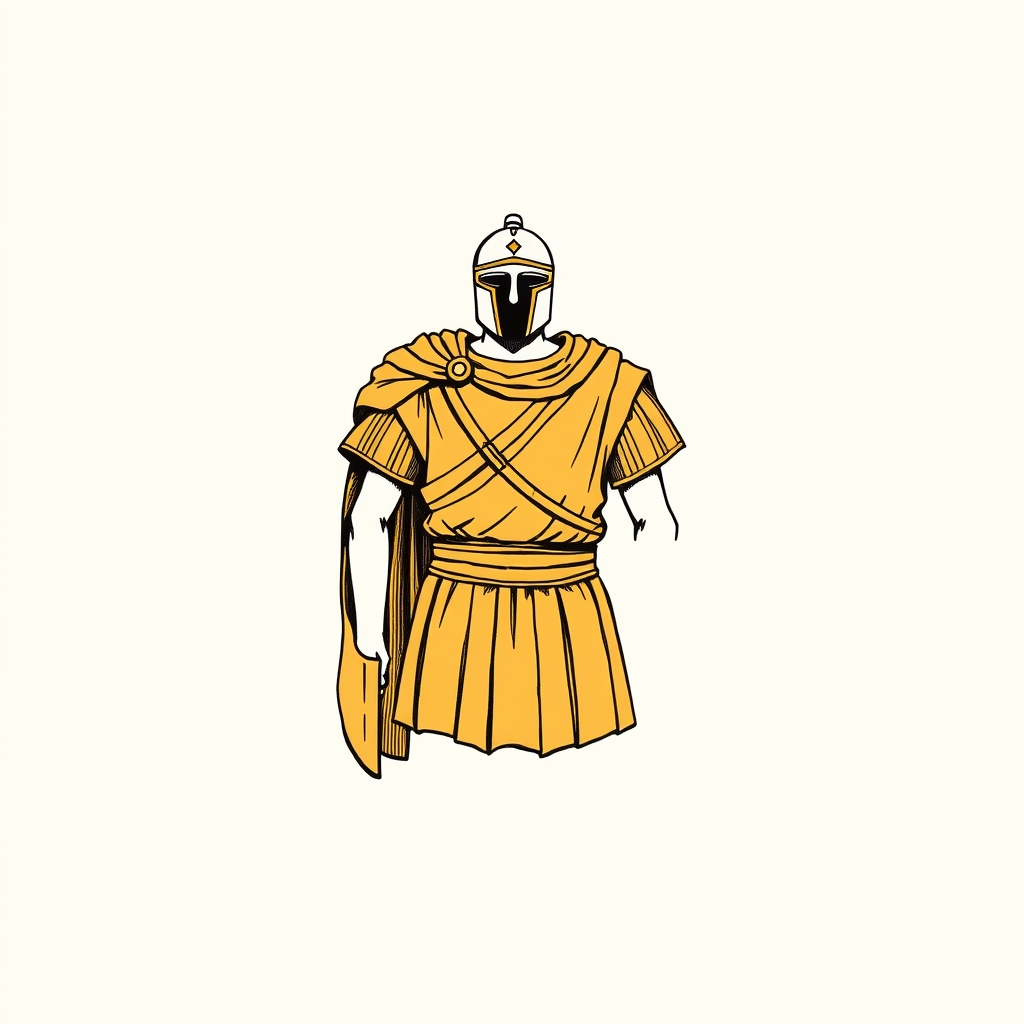
Saint Hippolytus is represented: 1° dragged by spirited horses that tear his flesh to shreds; 2° in the habit and armor of Roman soldiers; 3° in the company of Saint Lawrence, his spiritual father.
His life is drawn from the acts of Saint Lawrence.
Additional passages recovered from the sources
These passages from Les Petits Bollandistes supplement the entry. The references identify their context in the original volume.
Read the supplementary notes and passages (1)
Source and restoration of the beginning of the entry
The beginning of this entry had been omitted during extraction. The recovered page is joined to the existing body, preserving the wording and chronology of the historical source.
Paul Guérin, Les Petits Bollandistes, volume 9, p. 489, 490. Bibliothèque nationale de France: https://gallica.bnf.fr/ark:/12148/bpt6k30739j
Iconography
Signs and attributes


Entities
Narrative network
The names, places, and concepts most present in the entry, weighted by centrality in the text.
The supernatural in their life
The miracles of Saint Hippolytus the Jailer
Frequently asked questions about Saint Hippolytus the Jailer
Who was Saint Hippolytus the Jailer?
A Roman soldier and jailer converted by Saint Lawrence, Hippolytus was martyred under Emperor Valerian for burying his master. After refusing to renounce his faith despite torture and offers of pardon, he was dragged to death by wild horses. His relics, transferred to Saint-Denis under Charlemagne, were the object of great royal devotion.
What is Saint Hippolytus the Jailer the patron saint of?
Patronage of Saint Hippolytus the Jailer: Saint-Hippolyte Parish (Paris) and Jailers.
What is Saint Hippolytus the Jailer invoked for?
Saint Hippolytus the Jailer is invoked for: healing of limb weakness.
How is Saint Hippolytus the Jailer depicted in Christian art?
In iconography, Saint Hippolytus the Jailer is recognizable by: spirited horses, Roman soldier's uniform, armor and company of Saint Lawrence.
How did Saint Hippolytus the Jailer die?
Saint Hippolytus the Jailer suffered martyrdom for the Christian faith (3rd century).
What miracles are attributed to Saint Hippolytus the Jailer?
2 miracles are attributed to this saint, notably: Sign / wonder.
Which saints were contemporaries of Saint Hippolytus the Jailer?
Contemporaries include: Saint Irenaeus of Lyon, Saint Ausonius of Angoulême, Saint Firmin of Pamplona and Saint Baudilus.
What are the other names of Saint Hippolytus the Jailer?
Other forms of the name: Hippolytus.
Who are the relatives of Saint Hippolytus the Jailer?
Relatives of Saint Hippolytus the Jailer: Concorde (nurse and governess).
Annexes & related entities
Structured data for exploration: events, miracles, quotes, places, attributes, patronages, and important entities cited in the text.
Key Events
- Conversion to Christianity by Saint Lawrence
- Burial of Saint Lawrence's body at Campo Verano
- Arrest by Emperor Valerian
- Refusal to resume his duties as a Roman knight
- Martyrdom by being drawn and quartered by wild horses
Quotes
Credo, Domine Hippolyte, credo ; jam quiesce
Pope Alexander III