
An eminent monk and scholar at Condat, Viventiole became Archbishop of Lyon around 514. A great scholar and friend of Saint Avitus, he played a major role in the Councils of Agaune and Epaone to reform ecclesiastical discipline. He died in 524 after defending Christian morality before King Sigismund.
Contemporaries

Figures and markers around the normalized period for this entry.
Guided reading
6 reading sections
SAINT VIVENTIOLE OR JUVENTIOLE,
MONK OF CONDAT, IN THE DIOCESE OF SAINT-CLAUDE, 24TH ARCHBISHOP OF LYON
Monastic life at Condat
A distinguished monk at the monastery of Condat under the direction of Saint Oyend, Viventiole served as schoolmaster there at the beginning of the 6th century.
Saint Viventiole was at once the ornament of the monastic state and the glory of the episcopate. The place and time of his birth are unknown, but he was one of the most distinguished monks of Con dat (a lso called Grand-Saint-Claude and Saint-Oyend-de-Joux, Condatescense, Order of Saint Benedict, diocese of Saint-Claude), when Sain t Oyend gov erned this monastery. At the beginning of the 6th century, this holy abbot had founded a school at Condat which became one of the most famous in Gaul, and Viventiole was tasked with teaching letters there. The function of schoolmaster was one of the most important in the monastery. Viventiole possessed a knowledge as varied as it was profound.
Renown and writings
Renowned for his profound scholarship, he maintained a friendship with Saint Avitus of Vienne and left behind works later admired by Agobard.
This is the testimony rendered to him by one of the greatest prelates of his c entury, Sai nt Avitus, Bishop of Vienne, whose esteem and affection he had managed to earn. He composed learned works which the ravages of time have destroyed, but which still existed three centuries after him, and which led A gobard, one of the greatest bishops of Lyon, to say: "Viventiole was famous for his own works and celebrated by those of others."
Accession to the See of Lyon
After a stay in Lyon to avoid a possible abbatial election, he succeeded Saint Stephen on the episcopal see of Lyon around 514.
After the death of Saint Oyend, which occurred on January 1, 510, some disturbances arose in the monastery of Condat, perhaps due to the appointment of his successor. Viventiole, who may have feared that the votes would be cast for him, chose the time of the election to undertake a journey to Lyon. He was in that city when he received a letter from Saint Avitus, Bishop of Vienne, thanking him for a wooden stool that had been very artistically crafted. Saint Avitus, in gratitude, wished him an episcopal chair soon, and exhorted him to take over the government of the monastery of Saint-Oyend, in order to prepare himself for the fullness of the priesthood. This wish of Saint Avitus was a kind of prediction. The Church of Lyon having shortly after lost its bishop Saint Stephen, Viventiole was placed on the see o f that city, around the year 514, and the friendship that united him with Avitus became even closer. It was Avitus himself who had chosen and designated him to be Bishop of Lyon. Saint Viventiole attended the Council of Agaune, today Saint-Maurice in Valais (Switzerland), which assembled on May 1, 516, through the efforts of Sigismund, King of Burg undy, in the monastery newly built by that prince. He delivered, in this Synod, a speech which has been preserved for the most part, and which attests to the deep knowledge the holy bishop had of the ways of God and monastic discipline, and the zeal with which he sought to keep ignorance and the slightest disorders away from the cloisters.
Conciliar activity and discipline
He participated in the Council of Agaune in 516 and convened the Council of Epaone in 517 to reform ecclesiastical discipline and morals.
In concert with Saint Avitus, he convened th e Council of Epa one, which assembled on September 6, 517. Twenty-four bishops of Burgundy were seen gathered there, among whom was Claudius I, Bishop of Besançon. Forty canons were made there regarding ecclesiastical discipline and the rule of morals. The thirtieth canon condemned marriages between a brother-in-law and a sister-in-law. It applied to Stephen, steward of the finances of King Sigismund, who had married Palladia, the sister of his first wife. Sigismund took up the defense of the culprit, but the resistance of the bishops could not be overcome, and in another council held in Lyon (518) by Viventiolus, eleven bishops confirmed the thirtieth canon of Epaone. Sigismund exiled the bishops, but without gaining anything, and they returned to their churches shortly after.
Conflict with King Sigismund
He firmly opposed King Sigismund regarding an incestuous marriage, which earned him a brief exile before his return to Lyon.
Viventiole died in Lyon in the year 524, according to the most probable opinion. He was buried in the Church of the Apostles, which became that of Saint-Nizier, where an altar was later erected over his tomb. An ancient manuscript, discovered by Severt, a historian of the Church of Lyon, reports part of the inscription engraved on the tomb of the holy bishop. It read: "Our pontiff Viventiole, a man powerful in his works, rests in this tomb. He was the organ of the Church, the preacher of the Word, the honor of his brothers, the example of the peoples, and knew how to fulfill with merit all the degrees of the ministry... May this feast day be one of the most solemn for you among the feasts of the Saints of Lyon. Good Father, crown of all bishops, be propitious to our prayers, and remember us who invoke you."
Death and burial
Died around 524, he was buried in the Church of the Apostles (Saint-Nizier) where his tomb became a place of veneration.
Excerpt from the Lives of the Saints of Franche-Comté and the Gallia christiana nona.
Iconography
Signs and attributes


Entities
Narrative network
The names, places, and concepts most present in the entry, weighted by centrality in the text.
Frequently asked questions about Saint Viventiolus (Juventiolus)
Who was Saint Viventiolus (Juventiolus)?
An eminent monk and scholar at Condat, Viventiole became Archbishop of Lyon around 514. A great scholar and friend of Saint Avitus, he played a major role in the Councils of Agaune and Epaone to reform ecclesiastical discipline. He died in 524 after defending Christian morality before King Sigismund.
What is Saint Viventiolus (Juventiolus) the patron saint of?
Patronage of Saint Viventiolus (Juventiolus): Lyon.
How is Saint Viventiolus (Juventiolus) depicted in Christian art?
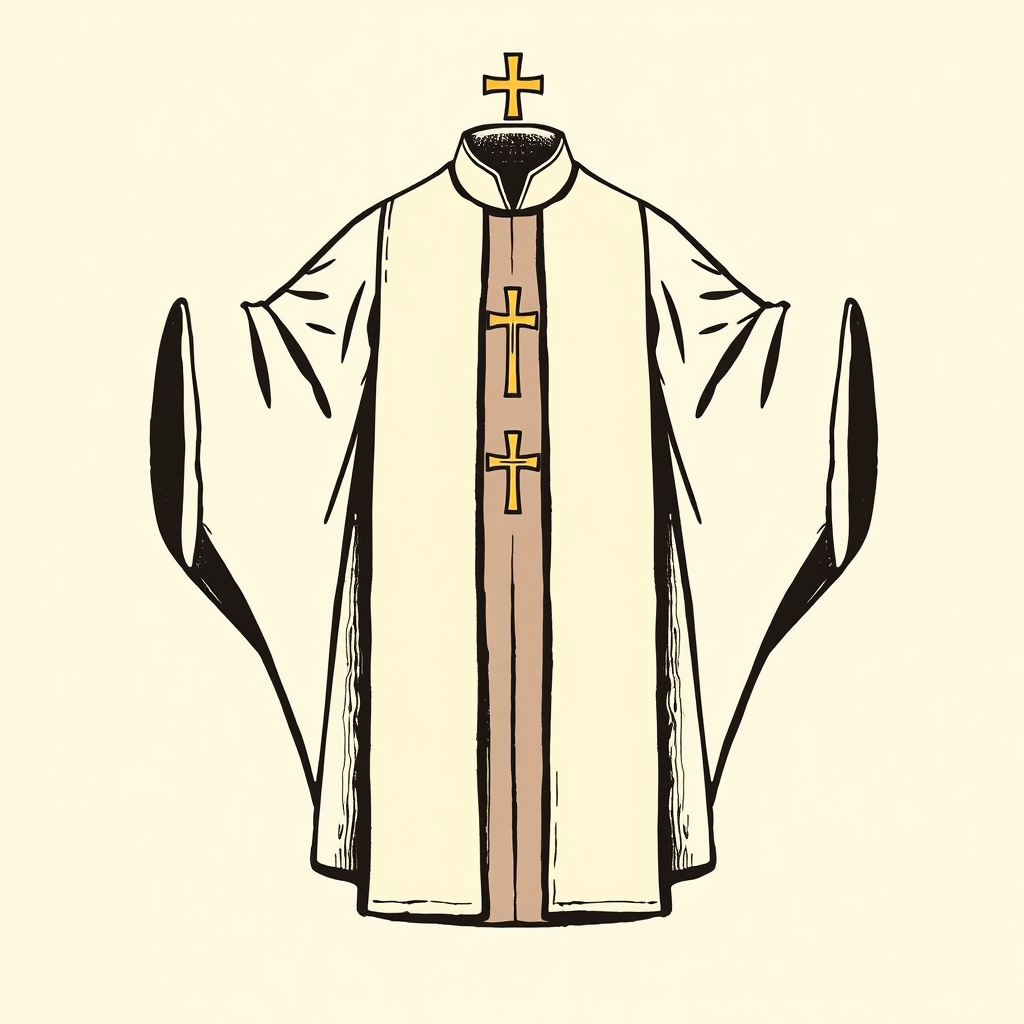
In iconography, Saint Viventiolus (Juventiolus) is recognizable by: episcopal vestments, book (author of works) and carved wooden stool.
Which saints were contemporaries of Saint Viventiolus (Juventiolus)?
Contemporaries include: Saint Remigius (Apostle of the Franks), Saint Antide of Besançon, Saint Eugene of Carthage and Saint Nicaise of Reims.
When did Saint Viventiolus (Juventiolus) die?
Saint Viventiolus (Juventiolus) died around 600.
What are the other names of Saint Viventiolus (Juventiolus)?
Other forms of the name: Juventiole and Viventiolus.
Annexes & related entities
Structured data for exploration: events, miracles, quotes, places, attributes, patronages, and important entities cited in the text.
Key Events
- Monk and schoolmaster at the monastery of Condat under Saint Oyend
- Travel to Lyon for the election of Saint Oyend's successor (after 510)
- Elevation to the episcopal see of Lyon around 514
- Participation in the Council of Agaune in 516
- Convocation and presidency of the Council of Epaone in 517
- Council held in Lyon in 518 against incestuous marriages
- Temporary exile by King Sigismund
Quotes
-
Viventiole was famous for his own works and celebrated by those of others
Agobard, Bishop of Lyon -
Our pontiff Viventiole, a man powerful in his works, rests in this tomb. He was the organ of the Church, the preacher of the word, the honor of his brothers.
Funerary inscription (Severt Manuscript)