
An Irish monk and companion of Saint Columbanus, Sigisbert lived at Luxeuil before settling as a hermit in the Swiss Alps, at the source of the Rhine. He founded the Abbey of Dissentis there with his disciple Placidus, establishing the Columbanian rule. He died around 615, after evangelizing the region and miraculously surviving an assassination attempt.
Contemporaries

Figures and markers around the normalized period for this entry.
Guided reading
7 reading sections
SAINT SIGISBERT OR SIGEBERT,
MONK OF LUXEUIL AND FIRST ABBOT OF DISSENTIS, IN SWITZERLAND.
Origins and companionship with Saint Columbanus
Originally from Ireland, Sigisbert joined Saint Columbanus at Bangor and accompanied him on his missions throughout Gaul, notably staying for twenty years at Luxeuil.
Saint Sigisbert was Irish by birth, and was serving God at Bangor, when Saint Columbanus formed the plan to go into Gaul. He had the honor of being one of the twelve religious whom the Saint took with him. He therefore accompanied the illustrious apostle everywhere, and shared all his tribulations and all his joys. Having entered Luxeuil with him, he lived there for twenty years under his guidance, and left it before the persecutions of the King of Burgundy. He always accompanied his master in his wanderings through France, and thus spent three years at Bregenz. He was following Columbanus into Italy, when, in the middle of the Alps, he separated from him, perhaps by reason of illness, or by a secret inspiration from heaven. Advancing towards the east, through the heights of Mount Crispalt, he arrived at the source of the Rhine, and from there descended into a vast solitude, called in Latin Disertina, and in French Dissentis. There, stopping at the foot of a mountain by the name of Vaccareccia, near a spring of clear water, he built himself a cell of tree trunks and branches, and a small oratory to the Virgin, then led the life of a hermit. An angel, tradition says, came each day to bring him bread from heaven. The inhabitants of the country were for the most part idolaters; the holy man strove by word and example to bring them to the worship of the true God. He had the joy of seeing his efforts crowned with success. On all sides, woods and temples consecrated to false gods were being torn down. At his prayer, they even resolved to cut down a tree of prodigious height, which was more especially the object of the superstitious worship of the region. But this act of vigor nearly cost the hermit his life. An idolater, irritated by what he considered a dreadful sacrilege, was about to strike him on the head with his axe, when he diverted the blow by merely making the sign of the cross. This striking miracle, and above all the holiness of his life, spread the reputation of Sigisbert far and wide.
Retreat and foundation at Dissentis
After parting ways with Columbanus in the Alps, Sigisbert established himself as a hermit at the source of the Rhine, founding the oratory of Dissentis.
Not far from there, in a castle called Tremisium, lived a rich and powerful man named Placidus. Attracted by curiosity, he one day attended the Saint's preaching, and was so struck by it that he threw himself at his feet in tears and begged him to make him a Christian. Sigisbert welcomed him with paternal tenderness, instructed him, and baptized him. Soon the rich lord felt urged by the desire for a more perfect life, offered all his possessions to God and to Mary, and took the monastic habit under the direction of the Saint.
Evangelization and the struggle against idolatry
The saint converted the local populations, had sacred trees cut down, and miraculously escaped an assassination attempt by an idolater.
As the number of his disciples increased every day, Sigisbert erected another oratory, which he dedicated to Saint Martin, and built cells all around it to house his monks. He had consecrated these immense solitudes to God and to Mary. One then saw the spectacle so common in those centuries of faith reproduced: a congregation of brothers united by the bonds of the closest charity, and vying with one another in practicing the most sublime virtues. Sigisbert animated them even more by example than by voice; and, with God seconding his efforts, he succeeded in establishing and maintaining in his institution the rule and spirit of Columbanus, his illustrious master.
Conversion and commitment of Placid
Placid, a wealthy local lord, converts after hearing Sigisbert preach and offers his goods for monastic life.
However, tribulations were not spared him. The demon, jealous of his successes, stirred up a powerful enemy against him in the person of a count or judge of the land, named Victor, who took it upon himself to persecute him in every way, and carried his injustice so far as to seize the properties with which Placid had endowed the monastery. The latter, having traveled to Willinga, where Victor lived, reproached him for his injustice, and, with the freedom of a new John the Baptist, dared to rebuke him for the shameful affair he was carrying on with a woman. Victor felt deeply wounded by this reproach; but, in his turn, a new Herod, he ordered his servants to wait for Placid in the middle of the road, to kill him, and, so that nothing would be missing from the comparison, to cut off his head, as was done formerly to the Forerunner of Jesus Christ. The order was executed point by point. However, the barbaric murderer did not long enjoy the fruit of his crime: for, shortly after, while crossing the Rhine on a bridge, he fell with his horse and his servants, and was carried away by the waters.
Development of the community
Faced with the influx of disciples, Sigisbert erected an oratory dedicated to Saint Martin and established the rule of Saint Columbanus.
Sigisbert did not survive his faithful disciple Placid for long. Around the year 615, the very year his glorious master Columbanus died, he fell asleep peacefully in the Lord. He was buried in the same tomb as Placid, so that death would not separate those whom friendship had so closely united on earth. Numerous miracles attested to the holiness of the servants of God: to such an extent that Dissentis soon became the destination of a very popular pilgrimage. The greatest personages and even kings considered it an honor to visit. A magnificent church was erected at the very place where Placid had been killed; it remained until these last centuries, when an enormous avalanche buried it, and with it the inhabitants of the land and the very memory of the holy martyr.
Persecution and martyrdom of Saint Placid
Judge Victor, irritated by Placid's reproaches regarding his moral conduct, orders the latter's beheading.
As for the abbey of Dissentis, it perpetuated itself throughout the ages, and still existed at the time when the scholar Mabillon wrote this short notice, based on ancient manuscripts communicated by Dom Albert Funsi, abbot of this monastery.
Death of Sigisbert and posterity of the abbey
Sigisbert died around 615 and was buried with Placid; their tomb became a famous place of pilgrimage throughout the ages.
According to Bucelin, the feast of Saints Sigisbert and Placid was celebrated solemnly throughout the diocese on July 11.
Vies des Saints de Franche-Comté.
Additional passages recovered from the sources
These passages from Les Petits Bollandistes supplement the entry. The references identify their context in the original volume.
Read the supplementary notes and passages (2)
Note on Mount Crispalt
Historical supplement to the Petits Bollandistes, transcribed from the image of the 19th-century edition. Traditions, assessments and expressions describing a "current" situation are those of the source in its time; they do not constitute a contemporary verification.
Crispaltæ montis. Northernmost summit of Saint-Gothard.
Paul Guérin, Les Petits Bollandistes, volume 8, p. 248. Bibliothèque nationale de France: https://gallica.bnf.fr/ark:/12148/bpt6k307386
Note on Willinga
Historical complement of the Petits Bollandistes, transcribed from the image of the 19th-century edition. The traditions, assessments and expressions describing a "current" situation are those of the source in its time; they do not constitute a contemporary verification.
Castle located on the other side of the Rhine, not far from the monastery, and today in ruins.
Paul Guérin, Les Petits Bollandistes, volume 8, p. 249. Bibliothèque nationale de France: https://gallica.bnf.fr/ark:/12148/bpt6k307386
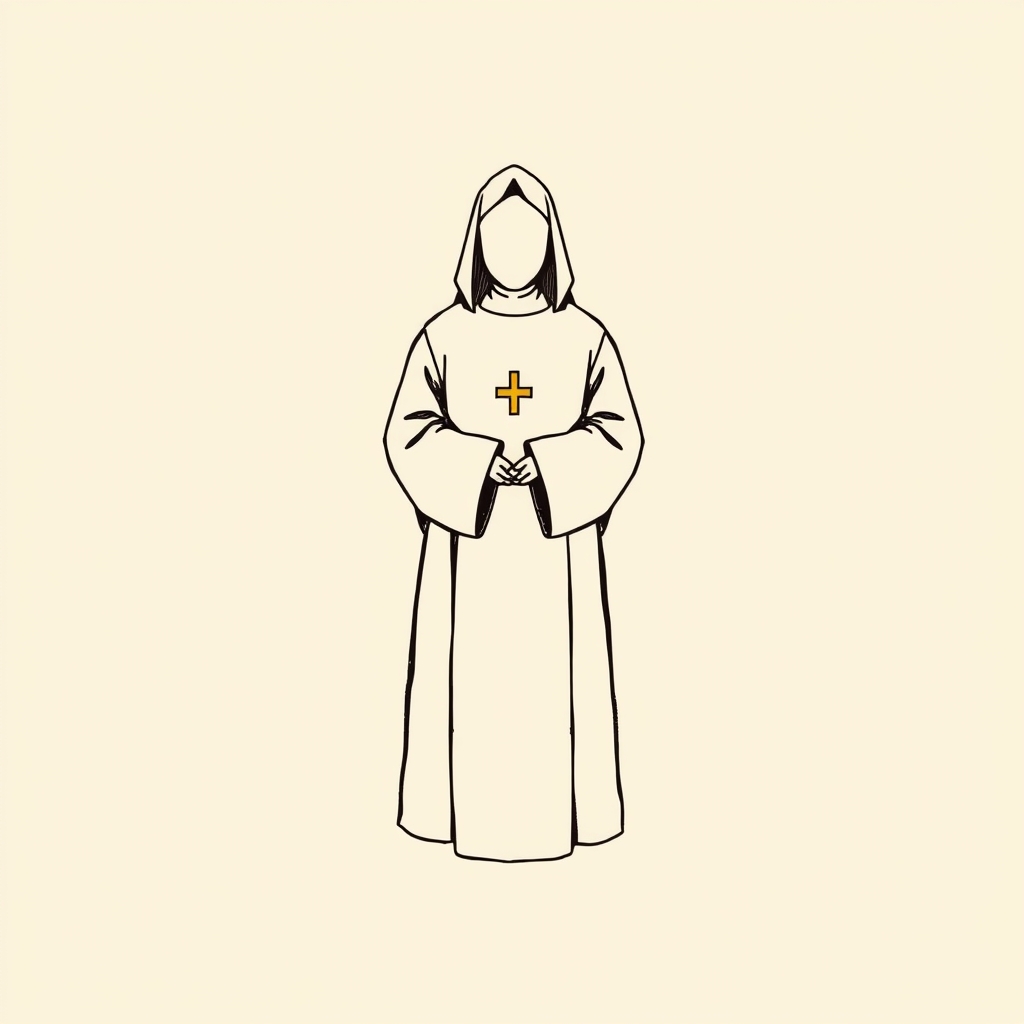
Iconography
Signs and attributes


Entities
Narrative network
The names, places, and concepts most present in the entry, weighted by centrality in the text.
The supernatural in their life
The miracles of Saint Sigisbert (Sigebert)
Frequently asked questions about Saint Sigisbert (Sigebert)
Who was Saint Sigisbert (Sigebert)?
An Irish monk and companion of Saint Columbanus, Sigisbert lived at Luxeuil before settling as a hermit in the Swiss Alps, at the source of the Rhine. He founded the Abbey of Dissentis there with his disciple Placidus, establishing the Columbanian rule. He died around 615, after evangelizing the region and miraculously surviving an assassination attempt.
What is Saint Sigisbert (Sigebert) the patron saint of?
Patronage of Saint Sigisbert (Sigebert): Disentis Abbey and Diocese (unspecified, mentioned by Bucelin).
How is Saint Sigisbert (Sigebert) depicted in Christian art?
In iconography, Saint Sigisbert (Sigebert) is recognizable by: monastic habit, sign of the cross (stopping an axe) and bread brought by an angel.
What miracles are attributed to Saint Sigisbert (Sigebert)?
3 miracles are attributed to this saint, notably: Multiplication / provision, Vision / apparition, Protection / deliverance and Sign / wonder.
Which saints were contemporaries of Saint Sigisbert (Sigebert)?
Contemporaries include: Saint Priest (Prix), Saint Gregory the Great (Pope and Doctor of the Church), Saint Die (Didier, Deodat) and Saint Augustine of Canterbury.
When did Saint Sigisbert (Sigebert) die?
Saint Sigisbert (Sigebert) died around 700.
What are the other names of Saint Sigisbert (Sigebert)?
Other forms of the name: Sigebert.
Annexes & related entities
Structured data for exploration: events, miracles, quotes, places, attributes, patronages, and important entities cited in the text.
Key Events
- Departure from Ireland with Saint Columbanus
- Twenty-year stay at Luxeuil
- Three-year stay in Bregenz
- Foundation of a hermitage in Dissentis (Switzerland)
- Conversion and baptism of Placidus
- Foundation of the Abbey of Disentis under the Rule of Columbanus
- Died in the same year as Saint Columbanus
Quotes
Sie te amabilem exhibeas et imitabilem, ut tota conservatio tua ædificet alios ad salutem.
Peter of Blois (as an epigraph)