
An Egyptian anchorite of the 5th century, Sisoes lived for seventy-two years in the desert, notably on the mountain of Saint Anthony, whose rigorous imitator he was. Renowned for his profound humility, his gentleness toward sinners, and his mystical ecstasies, he passed away around 429 surrounded by heavenly visions.
Contemporaries

Figures and markers around the normalized period for this entry.
Guided reading
6 reading sections
SAINT SISOES OR SISOY,
ANCHORITE IN THE DESERT OF SCETIS, IN EGYPT
Origins and life in the desert
A native of Egypt, Sisoes retired to the desert of Scetis under the direction of Abbot Hor before settling on the mountain where Saint Anthony died to imitate his virtues.
Saint Sisoes was one of the most brilliant lights of the deserts of Egypt after the death of Saint Ant hony. He was Egyptian by birth. Having left the world in his youth, he retired to the desert o f Scetis, in Lo wer Egypt, west of the Delta, near the Nitrian mountains, and lived for some time under the guidance of Abbot Hor. The desire to find an even more solitary place having made him cross the Nile, he went to hide on a mountain where Saint Anthony had died shortly before. The very recent memory of the virtues of this great man wonderfully sustained his fervor; he imagined seeing him and hearing from his mouth the instructions he had given to his disciples. He therefore applied himself with all his strength to imitate his most fervent practices. His penance was very austere, his silence rigorous, his prayer ardent and almost continuous. His holiness acquired for him such a reputation that he earned the trust of all the solitaries in the vicinity. There were even some who came from very far away to ask him for advice on the interior paths of perfection; and despite the care he took to hide himself, he was compelled to make his love of silence and retreat yield to charity. Often he would go two days without eating; he was so mortified and absorbed in God that he would forget to take his food; it was necessary for Abraham, his disciple, to warn hi m when the time to e at had come; even then he was sometimes astonished, believing he had already done so, so little attention did he pay to the needs of the body.
Spiritual Life and Charity
Renowned for his silence and ecstasies, he reconciled a life of intense prayer with welcoming the brothers who came to seek his counsel on perfection.
His prayer was so sublime that it frequently reached the point of ecstasy. At other times his heart was so strongly inflamed with the fire of divine love that, being almost unable to bear its vehemence, he found relief through frequent sighs that escaped him without his noticing and even against his will. He held it as a maxim that a solitary should not choose the manual labor that pleases him most. Ordinarily, he occupied himself with making baskets. One day, while selling the fruit of his labor, he was tempted to anger; immediately he threw his baskets on the ground, left them there, and fled. By dint of conquering himself, he acquired a gentleness that nothing could alter. He was not astonished by the faults of his brothers; and instead of reproaching them with indignation, he helped them to rise again with a truly paternal tenderness. When he wished to recommend to others gentleness and exactitude in observing the rules, he would tell the following story:
« Twelve brothers were on a journey when night overtook them, and they noticed that their guide was losing his way. They did not, however, warn him
VIES DES SAINTS. — TOME VIII. 4 of it, for fear of breaking the silence, thinking to themselves that he would see his mistake when day had come and that he would then put them back on the true path: they therefore followed him in patience and traveled up to twelve miles. When day came, the guide, noticing that he had gone astray, offered them great apologies; and as it was permitted to speak, the brothers replied to him calmly: "We saw well that you were leaving the path, but we did not wish to say anything." This man admired their patience and was greatly edified by their exactitude in keeping the rule ».
Confrontation with Arianism
Faced with Arians who came to preach their dogmas on his mountain, Sisoes used the writings of Saint Athanasius to confound them with gentleness.
Some Aria ns, ha ving come to his mountain, dared to preach their dogmas among the brothers. The Saint answered them nothing; but he ordered his disciple to read in their presence a treatis e by Saint Ath anasius against Arianism, which closed their mouths. After having confounded them, he sent them away with his customary gentleness.
Humility as a Foundation
Sisoes teaches radical humility, considering himself inferior to all creatures and refusing praise to remain focused on divine mercy.
Saint Sisoes was also an accomplished model of humility; he always returned to this virtue in the advice and instructions he gave to others. A solitary having said to him one day: "My father, I consider myself as being always before God"; he replied: "That is not enough, my son, you must also consider yourself as being below all creatures: this serves effectively to acquire humility." He walked unceasingly in the presence of God, concentrated on his nothingness and his lowliness. "Become small," he said to a brother, "renounce the satisfactions of the senses, detach yourself from the vain anxieties of the world, and you will find peace of heart." He said to another who complained of not yet having attained the perfection of Saint Anthony: "Ah! if I had in my heart a single one of the sentiments of that great man, I would be all embraced by the fire of the love of God." He had such low opinions of himself that, despite the austerity of his way of life, he regarded himself as a sensual man, and wanted others to have a similar idea of him. If by chance charity for strangers obliged him to advance the hour of a meal, he would compensate for it afterwards by a long fast, and would, so to speak, make his body pay for a condescension whose motive had been so praiseworthy. He feared praise so much that, sometimes praying with his hands raised toward heaven, he would lower them as soon as he thought someone might see him. He was always ready to excuse himself. He saw nothing good in others without taking the opportunity to condemn himself.
Three solitaries having come to see him, one of them said to him: "My father, what shall I do to avoid the fire of hell?" And he answered nothing. "And I," continued the second, "how shall I be able to avoid the gnashing of teeth and that worm which will not die?" The third added: "What shall I do also? for every time I imagine the outer darkness, I am seized with a mortal fear." Then the Saint, taking the word, answered them: "I confess to you that I do not think of these things; and as I know that God is full of goodness, I hope that He will have pity on me. You are very happy," he added, "and I envy your virtue. You speak of the pains of hell, and you are so penetrated by them that they can help you powerfully to avoid sin. Ah! what shall I do then, I who have a heart so insensible that I do not even think that there is after death a place of torment destined to punish the wicked? which is without doubt the cause for which I commit so many faults." The three solitaries, edified by this answer, returned to their homes.
The Saint said that for thirty years he had been making the following prayer to Jesus Christ: "Lord Jesus, do not allow me to sin today by my tongue; and yet," he added, "I always commit some fault in that regard." This discourse could only be an effect of his humility: for he kept exactly to his retreat and silence; he kept the door of his cell always closed, in order to be less interrupted; and when he was consulted, he never answered except in a few words.
Last days and passing
After a short stay near the Red Sea, he died in his solitude surrounded by celestial visions, his face becoming luminous at the moment of his agony.
The servant of God, being worn out by old age and infirmities, finally yielded to the advice of his disciple Abraham, and went to dwell for some time at Clysma, a city situated on the shore or at least in the vicinity of the Red Sea. Ammon or Amun, abbot of Raithu, came to visit him. Seeing him afflicted because he had left his solitude, he consoled him by representing that, being broken by old age, he needed help that he would not find in the desert; but the Saint cast a look of sadness upon him and replied: "What are you saying to me? Was the freedom of spirit I enjoyed there not enough for me?"
Sisoes returned to his solitude. When he had reached the end of his course, the solitaries gathered around him. Rufinus says that, being in his agony, he cried out: "Behold, Abbot Anthony, the cho ir of the Prop hets, and the Angels are coming to take my soul." At the same time, his face became luminous; and after conversing interiorly with God, he cried out again: "See Our Lord who is coming to me." He expired while pronouncing these words, and his cell was perfumed with a celestial fragrance. His death occurred around the year 429, at least seventy-two years after he had retired to the mountain of Saint Anthony. His feast is marked in the Greek menologies under July 6, and in some Latin calendars under the 5th of the same month.
Distinction between homonyms
The text specifies not to confuse Sisoes of Scetis with Sisoes the Theban or Sisoes of Petra, reporting anecdotes on forgiveness and obedience.
This saint must not be confused with two other Sisoes who lived in the same century. One, surnamed the Theban, lived at Calamon, in the territory of Arsinoe; the other had his cell at Petra. It is of Sisoes the The ban that the foll owing anecdote is told, which some authors have mistakenly attributed to Saint Sisoes of Scetis.
A solitary, who had been offended by another, came to find Sisoes and told him that he was resolved to take revenge. The holy old man implored him to leave the care of vengeance to God, to forgive his brother, and to forget the injury he had received; but seeing that he gained nothing over his spirit, he said to him: "Let us at least both address the Lord together." And then, rising, he prayed aloud: "My God, it is no longer necessary that You henceforth take care of our interests and that You be our protector, since this brother maintains that we must take revenge ourselves." The solitary was so singularly touched that, throwing himself at the feet of Sisoes, he asked for his forgiveness and promised him to forget from that moment the injury he had received.
The same saint loved retreat so much that, when he was at the church of the solitaries, he would leave as soon as the sacrifice was finished, and hasten to return to his cell. In this, he was only following the Spirit of God, and his taste for silence and prayer. On occasion, he knew how to lend himself to the duties of society, especially if charity required it. He was not attached to his practices with that stubbornness which comes from self-love.
Ordinarily, he did not eat bread. When the brothers invited him during the Easter holidays to take part in the small meal they were having at this holy time: "I will eat," he told them, "either bread or the other things that you have prepared." Upon their reply that they would be content if he ate bread, he ate some immediately, contrary to his custom.
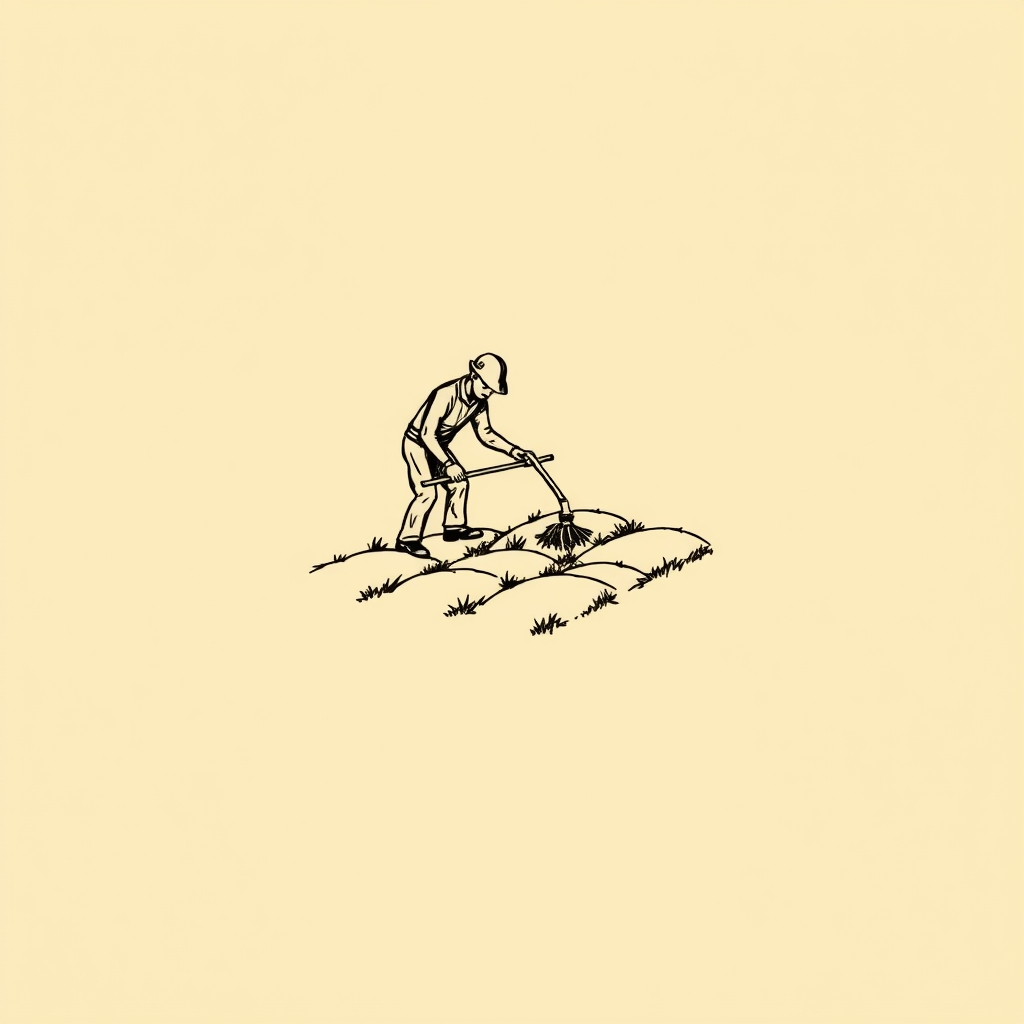
He is represented working the land: this is the ordinary characteristic of the Fathers of the deserts of the East.
We have borrowed this life from Godeseard. — Cf. Bulteen, Hist. monast. Orient., I, I, c. 5, n. 7; Tillemont, t. xii, and Pinius, one of the continuators of Bollandus, under July 6.
Iconography
Signs and attributes



Entities
Narrative network
The names, places, and concepts most present in the entry, weighted by centrality in the text.
The supernatural in their life
The miracles of Saint Sisoes (Sisoy)
Frequently asked questions about Saint Sisoes (Sisoy)
Who was Saint Sisoes (Sisoy)?
An Egyptian anchorite of the 5th century, Sisoes lived for seventy-two years in the desert, notably on the mountain of Saint Anthony, whose rigorous imitator he was. Renowned for his profound humility, his gentleness toward sinners, and his mystical ecstasies, he passed away around 429 surrounded by heavenly visions.
How is Saint Sisoes (Sisoy) depicted in Christian art?
In iconography, Saint Sisoes (Sisoy) is recognizable by: tilling the land, wicker baskets, luminous face and hands raised to heaven.
What miracles are attributed to Saint Sisoes (Sisoy)?
3 miracles are attributed to this saint, notably: Vision / apparition and Sign / wonder.
Which saints were contemporaries of Saint Sisoes (Sisoy)?
Contemporaries include: Saint Augustine of Hippo, Saint Honoratus of Arles, Saint James of Tarentaise and Saint Jerome of Stridon.
When did Saint Sisoes (Sisoy) die?
Saint Sisoes (Sisoy) died around 500.
What are the other names of Saint Sisoes (Sisoy)?
Other forms of the name: Sisoy and Sisoès.
Annexes & related entities
Structured data for exploration: events, miracles, quotes, places, attributes, patronages, and important entities cited in the text.
Key Events
- Retreat to the desert of Scetis under the guidance of Abba Hor
- Settled on the mountain of Saint Anthony after the latter's death
- Temporary stay in Clysma due to old age
- Return and death in his solitude
- Vision of Saint Anthony and the prophets at his agony
Quotes
-
Become small, renounce the satisfactions of the senses, free yourself from the vain anxieties of the world, and you will find peace of heart.
Saint Sisoes -
Lord Jesus, do not let me sin today with my tongue.
Daily prayer of Saint Sisoes