
Saint Hilary of Poitiers
Bishop of Poitiers and great defender of the faith against Arianism, Saint Hilary died in 368. His relics, lost following the barbarian invasions, were found by Saint Fridolin thanks to a vision and with the support of Clovis after the victory of Vouillé. After being transferred to Le Puy to escape the Normans, a portion of his remains was returned to Poitiers in the 19th century.
Contemporaries

Figures and markers around the normalized period for this entry.
Guided reading
7 reading sections
THE FEAST OF THE TRANSLATION OF THE RELICS OF ST. HILARY, BISHOP OF POITIERS (368).
Burial and first miracles
After his death in 368, Saint Hilary was buried in a suburban church in Poitiers according to his wishes, where his tomb immediately became a place of miracles.
After the death of Saint Hilary, th e city of Poitier s was undecided as to where his body should rest. Some wanted it to be in an oratory he had raised himself near his home; others preferred the basilica of Saint John and Saint Paul, outside the walls, built by the holy Doctor over the burial place of his family. This latter sentiment prevailed as being more in accordance with his final wishes. The venerable remains were therefore carried to the suburban church and enclosed in a marble tomb. Numerous miracles occurred on this occasion. This took place around the middle of January 368.
The respect that the populations had for the holy Bishop during his lifetime only increased through the wonders with which it pleased God to surround his tomb. Thus, it can be said that his cult began from the day of his death, and it soon made the small church that owed its existence and glory to him famous from afar.
Destruction and loss of the tomb
The invasions of the Vandals and Goths in the 5th century led to the ruin of the church and the forgetting of the exact location of the relics for nearly a century.
But the misfortunes of the times came to disturb this filial devotion. The 5th century saw Gaul flooded by the military expeditions of the Vandals and Goths, who reduced the most flourishing cities to ashes and condemned the countryside to a long and ruinous sterility. Poitiers also fell into their hands; three times in that same century the city saw its walls overturned, its monuments torn down, and the church that protected the remains of Saint Hilary, reduced among the first to a state of complete ruin, buried under its rubble, along with a host of precious objects, the holy deposit that public piety had honored there for more than a hundred years. The impossibility of approaching this lost treasure brought pilgrimages to an end; it was forgotten to such a degree that after nearly an entire century during which the city was several times retaken and invaded, people became accustomed to seeing these ruins without interest, as they were not being rebuilt, and as continuous alarms did not even allow them to be examined.
The intervention of Clovis
During his campaign against Arianism, Clovis benefits from a miraculous sign in the form of a globe of fire rising from the ruins of Saint Hilary's church.
However, an event occurred that, by strengthening the French monarchy in the hands of a powerful king, was to restore the sacred walls and revive the memory of the holy Confessor.
Clovi s, res olved to drive Alari c from Aquitaine and with him the Visigoths over whom the conqueror reigned, came to camp a few leagues from Poitiers and prepared, while observing the enemy army, to fight a decisive battle. In this circumstance, the vigilant Doctor seemed to come back to life to fight once more against the Arianism professed by the Visigoths, for in the middle of the night a globe of fire rose from the ruins of his church and went to extinguish itself seven leagues away above the tent of
Clovis. This prodigy, which manifested itself on the eve of a battle that was regarded as the final one, seemed a presage of victory; and, indeed, one would have said that Saint Hilary, the most illustrious enemy of the Arians of his time, continued to pursue them on a territory he had forbidden to them. Be that as it may, the event confirmed these hopes. The very next day, Alaric was defeated and killed by the husband of Saint C lotilde, and the plains of Vo uillé, or Voulon, buried the fortune of the Visigoths.
Vision of Saint Fridolin and reconstruction
Abbot Fridolin receives in a vision the location of the relics; with the help of Bishop Adelphius and Clovis, he reconstructs the edifice and proceeds to a solemn translation.
The monastery of Saint-Hilaire, which had risen near his tomb, had not been swept away in the loss of the church, or else it had risen from its very ruins and had not ceased to exist, although frequent vicissitudes had come to disturb its peace. At the time of the great event we have just recalled, Saint Fridolin was it s abbot and ha d contributed singularly by his care to the restoration of the monastic dwelling. But one happiness was still lacking: his ardent vows, which aspired to discover the sacred remains that he venerated in his heart, were not yet granted. The events of which he had just been a witness, and also no doubt that sort of intuition that God gives to the Saints of the great things He prepares for His glory, began to bring back his hopes, and he was conversing about them one night before the Lord when he received from Saint Hilary himself, in a vision, the precise indication of the place where his relics were buried, and of the one where he wished them to be kept in the future. Following this formal manifestation and the order to raise up the ruins of the holy place, Fridolin had gone, with the Bishop of Poitiers, A delphius, to solicit from Cl ovis an aid that the prince granted them. As a result of these royal generosities, which thus repaid the singular protection lent by the illustrious doctor to the first protector of the Church in France, one saw the new edifice rise rapidly and soon be embellished. However, this entirely princely enterprise was not only the work of royal munificence: this would not have been enough for such considerable expenses. Adelphius supplemented it with his own resources; and, when the temple was completed, they proceeded to a solemn Translation, which took place on the day indicated in advance with an immense gathering of clergy and people. The bishop, having accomplished the holy Sacrifice, entered with Saint Fridolin into the crypt finally rediscovered where the venerated body of the holy Pontiff had for so long been hidden from all eyes. This crypt had been reformed before the ceremony: at the moment it was opened, one saw a brilliant light spring forth from it, and a sweet odor escaped from it. It was in the midst of these consoling marks of divine assistance that the precious bones were removed from the crypt and deposited in the more worthy place that had been prepared for them.
This Translation was therefore, strictly speaking, only an elevation of the body, which was moved from one place to another without being transported from one building to another; for they had not wanted to touch the holy deposit immediately after having found it under the rubble. It had only been covered with care at that time; the new church, more vast and more magnificent, had been built on the same site; the ceremony that we are recounting must have consisted, as we have just seen, only in a sort of inauguration of these venerated remains. The authors of the life of our Saint report a great number of miracles performed during this religious journey. From that day on, the crowds of the faithful flocked from all parts toward the church, and each year the memory of this memorable fact was renewed there by a solemn feast.
Norman Invasions and Transfer to Le Puy
Faced with the Norman raids of the 9th century, the relics were transferred to Le Puy-en-Velay for their safety, where they remained forgotten until 1655.
It is not known how long the holy body remained without injury from the barbarians in the peace of its new and more worthy sepulcher; what is certain is that Poitiers still possessed it in 828. But the Normans had already made themselves masters of the city up to three times after the reign of Charlemagne, and, in one of these expeditions, the church of Saint-Hilaire having been burned, the relics suffered from these acts of violence: they were only saved from complete destruction with great difficulty. It was undoubtedly to protect them from new dangers that were threatened every day that they were transported, towards the beginning of the 10th century, to the city of Le Puy-e n-Velay, where they were rediscovered in 1655. This was after an oblivion of six or seven hundred years, which must be attributed, like so many others of this kind, to the events of the intervening eras. At the request of the chapter of Saint -Hilaire of Poitiers, Mgr H enri de Manpas du Tour, Bishop of Poitiers, having recognized the authenticity of these relics, kindly ceded a portion of them to our famous collegiate church: these are in part those that it still possesses today. The Chapter celebrated this other Translation as a feast on November 25th of each year.
Contemporary translations
In the 19th century, portions of the relics, notably of the saint's head, were returned to the Cathedral of Poitiers by the bishops of Le Puy.
Finally, in 1823, Mgr de Bouillé, Bishop of Poitiers, obtained from Mgr de Donald, Bishop of Le Puy, who later became Cardinal Archbishop of Lyon, a new portion of the head of our glorious Doctor, which is kept in the cathedral treasury and remains exposed each year in the sanctuary throughout the octave of his feast.
Source of the hagiography
The text is derived from the works of Abbé Aubur, historian of the diocese of Poitiers.
Excerpt from the Lives of the Saints of the Church of Poitiers, by M. Abbé Aubur, canon of the cathedral of Poitiers and historiographer of the diocese.
Iconography
Signs and attributes


Entities
Narrative network
The names, places, and concepts most present in the entry, weighted by centrality in the text.
The supernatural in their life
The miracles of Saint Hilary of Poitiers
Frequently asked questions about Saint Hilary of Poitiers
Who was Saint Hilary of Poitiers?
Bishop of Poitiers and great defender of the faith against Arianism, Saint Hilary died in 368. His relics, lost following the barbarian invasions, were found by Saint Fridolin thanks to a vision and with the support of Clovis after the victory of Vouillé. After being transferred to Le Puy to escape the Normans, a portion of his remains was returned to Poitiers in the 19th century.
What is Saint Hilary of Poitiers the patron saint of?
Patronage of Saint Hilary of Poitiers: Poitiers and Diocese of Poitiers.
What is Saint Hilary of Poitiers invoked for?
Saint Hilary of Poitiers is invoked for: struggle against Arianism.
How is Saint Hilary of Poitiers depicted in Christian art?
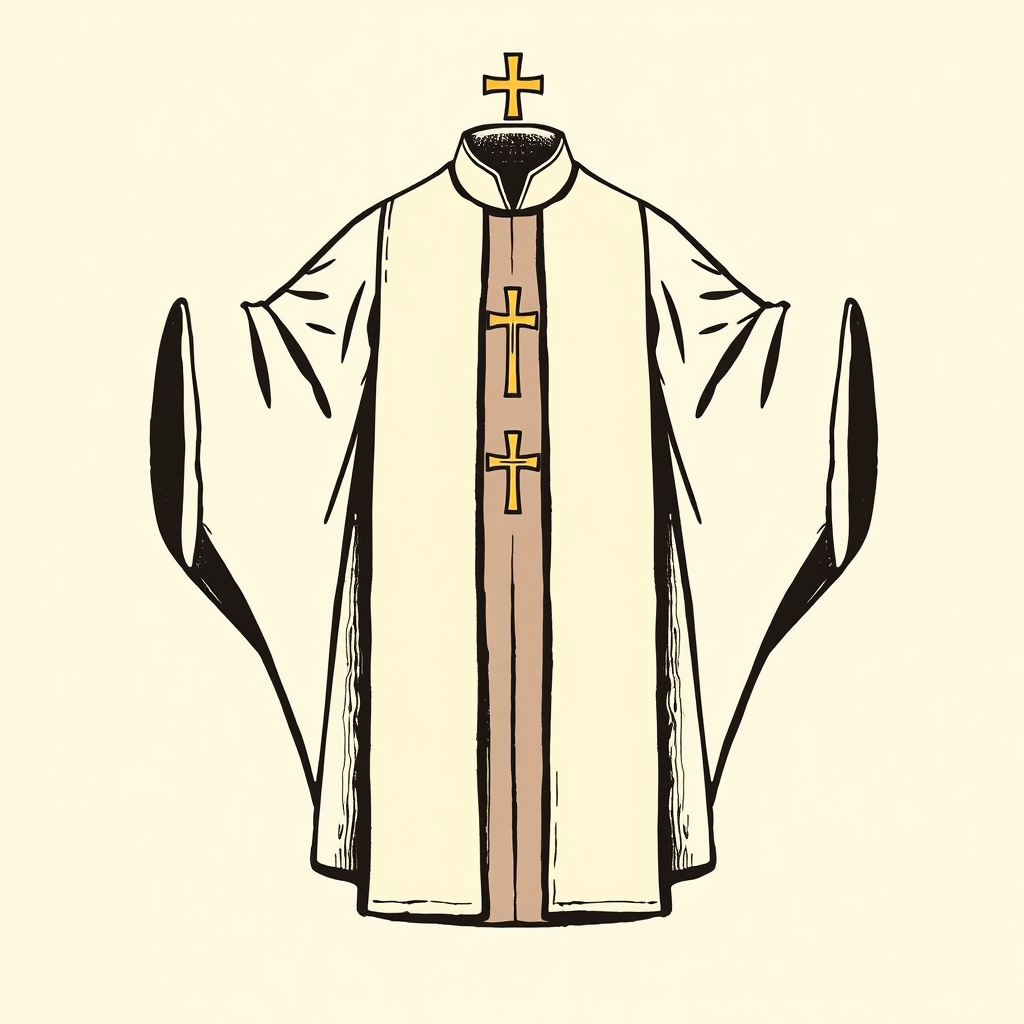
In iconography, Saint Hilary of Poitiers is recognizable by: globe of fire, episcopal vestments and book of a doctor.
What miracles are attributed to Saint Hilary of Poitiers?
3 miracles are attributed to this saint, notably: Sign / wonder.
Which saints were contemporaries of Saint Hilary of Poitiers?
Contemporaries include: Jesús María Echavarría Aguirre, Pauline of the Agonizing Heart of Jesus, Narcisa de Jesús and Juan de Jesús López y González.
When did Saint Hilary of Poitiers die?
Saint Hilary of Poitiers died around 1900.
What are the other names of Saint Hilary of Poitiers?
Other forms of the name: Hilaire de Poitiers and Hilarius.
Annexes & related entities
Structured data for exploration: events, miracles, quotes, places, attributes, patronages, and important entities cited in the text.
Key Events
- Death and initial burial in the Basilica of Saints John and Paul (368)
- Destruction of the church by the Vandals and Goths in the 5th century
- Appearance of a globe of fire above Clovis's tent before the Battle of Vouillé
- Vision of Saint Fridolin indicating the location of the relics
- Solemn translation and elevation of the body during the reign of Clovis
- Transfer of relics to Le Puy-en-Velay in the 10th century to escape the Normans
- Rediscovery of relics at Le Puy in 1655
- Restitution of a portion of the relics to Poitiers in 1823