
Saint Ursus of Aosta
FOUNDER OF THE COLLEGIATE CHURCH OF SAINT-PIERRE AND SAINT-OURS
Originally from Scotland, Saint Ursus became archdeacon of Aosta in the 6th century after evangelizing Meyronnes. A defender of orthodoxy against Arianism, he founded the collegiate church that bears his name to remain faithful to the Catholic faith. Renowned for his charity toward the poor and his miracles related to water, he remains the co-patron of the Diocese of Aosta.
Contemporaries

Figures and markers around the normalized period for this entry.
Guided reading
8 reading sections
SAINT URSUS, ARCHDEACON OF AOSTA
FOUNDER OF THE COLLEGIATE CHURCH OF SAINT-PIERRE AND SAINT-OURS
Origins and arrival in Aosta
Originally from Ireland or Scotland, Urs settled in Aosta at the turn of the 6th century after having evangelized Meyronnes against Arianism.
Saint Urs was born on the island of Scotland. All the authors who have written about him agree on the country of his origin, but they do not agree on the precise time of his life; however, it seems certain that he lived towards the end of the 5th century or the beginning of the 6th. It was at this time that he left his homeland and cam e to settle in Aosta. The motive that guided his steps was zeal for the glory of God and the salvation of souls, the desire to support the wavering faith, and to propagate the Christian and religious virtues that shone in his time on the Island of Saints. It was the same motive that, in the same century, led Saint Gall, Saint Columbanus, and their twelve companions to leave Ireland to come first to Britain, then to Switzerland, and finally to Italy, where they brought about a multitude of conversions and founded establishments in the shadow of which a prodigious number of saints flourished.
Saint Urs, upon leaving Ireland, sto pped for some time in Meyronnes, in the diocese of Digne. This valley was then devastated by Arianism. He hastened to announce the word of truth to the people, and he had the consolation of bringing back to the true faith those who were in error. After having evangelized this region and having left such deep traces of his passage that they still persist after more than thirteen centuries, he arrived in Aosta, where he displayed such a superiority of genius, science, and virtue that not only did he find a place in the ranks of the clergy, but he was soon raised to the dignity of archdeacon.
The Archdeacon and the Pastor
Raised to the dignity of archdeacon, he assisted the bishop Saint Jocundus in the administration of the diocese and the struggle against heresies.
He responded perfectly to his sublime vocation, for it was in the exercise of the functions and the fulfillment of the duties attached to this dignity that he won the admiration and confidence of the people, and that he earned the glorious title of Saint. Indeed, he embraced in his solitude all parts of the pastoral ministry, announcing the word of God with an apostolic zeal and with the success that ordinarily accompanies holiness, giving counsel to some, encouragement to others, sometimes rebuking vice with a severity tempered by charity, sometimes giving to virtue the praise and rewards it deserves, visiting the parishes of the diocese to strengthen the faithful and to snatch from paganism or heresy those souls who had not yet opened their eyes to the light of the Gospel, or who had been led into error; watching over the pastors and the flocks, over the young levites as well as the elders of the sanctuary.
However arduous the labors of his ministry were for Saint Ours, they were bearable while he was only seconding the zeal and solicitude of the holy bishop who then governed the diocese of Aosta; this was the pious Jocundus, honored in Aosta under the name of Saint Jocundus I. This worthy pastor also deployed, in concert with his archdeacon, the m ost ardent, activ e, and industrious zeal for the salvation of souls; but the times were evil. The heresy of Arius, supported by those who then disposed of temporal power and favors, was insinuating itself everywhere like a subtle poison. It was already infecting some members of the clergy. Unable to accommodate the measures adopted by the holy bishop to preserve or restore the purity of faith and morals, they stirred up the most terrible persecution against him; they accused him of felony, treason, and the crime of royal lèse-majesté. They knew so well how to give calumny the appearance of truth that they succeeded in having Jocundus expelled from the episcopal see with the deprivation of all the revenues attached to the bishopric. This setback caused, by rebound, the greatest pain to the heart of the archdeacon Saint Ours and at the same time brought him an increase of work and solicitude.
Resistance to Arianism
After the death of Jocundus, Ursus opposed the Arian bishop Plocean and withdrew near the church of Saint Peter to found a community of faithful priests.
Divine Providence often provides men whom it wishes to raise to a high degree of holiness with certain trials, which, by purifying their virtue, provide them with the opportunity to make it shine forth more brightly, and form, so to speak, the core of their sanctity. Such was the circumstance for Saint Ursus which we are about to recount.
While Saint Ursus worked ceaselessly for his sanctification through the practice of works of piety, charity, and penance, and while he zealously pursued the exercise of the holy ministry, the see of Aosta became vacant upon the death of Saint Jocundus. The Arian faction, then numerous and intriguing, and moreover favored by Theodoric, King of Italy, himself an Arian, moved with such vigor that it succeeded in raising to the see of Aosta a certain Plocean , infec ted with the dominant heresy and who was, moreover, of a harsh, violent, and even cruel character, lashing out against anyone who dared to resist him. Not content with professing a doctrine contrary to the teaching of the Church himself, he employed every means to propagate the venom of heresy within his flock.
Saint Ursus, in his capacity as archdeacon, was the first to oppose the enterprises of the false shepherd. He spared nothing to draw him away from error himself and to preserve at least the flock under his care; remonstrances, prayers, exhortations, preachings, everything that the most ardent and charitable zeal can suggest as a means to ward off the scourge of heresy, all was put into action. But, while his efforts succeeded in preserving or withdrawing from error a multitude of people docile to his voice, nothing could overcome the obstinacy of Plocean.
It was then that Saint Ursus, to remove any suspicion of connivance with this heretic, and to be himself more free in the exercise of his pastoral zeal, decided to withdraw outside the city walls, to the place where there was an ancient church built in honor of the apostle Saint Peter. He was followed in his retreat by a third of the cathedral canons, with whom he began the service of this church.
This is the origin of the Collegiate Church of Saint Peter and Saint Ursus, the oldest of all the collegiate ch urches and religious establishments of the Sardinian States.
In founding his Congregation of priests who remained faithful in the midst of the harshest trials, he subjected them to a rule, because there is no common life possible without some rule. In his new position, Saint Ursus continued his exercises of piety, mortification, and charity, and his companions, or rather his disciples, strove to follow the examples of the one they respected as their master and model.
Saint Ursus did not lose sight of the obligations imposed upon him by his office of archdeacon; for it was to attend to them more freely and with more success that he had separated himself from Plocean. Wherever the glory of God and the salvation of souls called him, he was to be found, either personally or through his companions, who were so many missionaries dependent on his will.
Miracles and Charity
The saint performed several miracles, notably the calming of the Buthier torrent and the springing forth of a fountain at Busseia.
All virtues shone in the life of our Saint. But there is one that was a true necessity for him; it is beneficence. In him, this noble disposition did not only embrace spiritual ills, he extended it also to all the public and private calamities that afflict our humanity. We are going to reproduce some traits of it.
The Buthier torrent, which has its source in the Pennine Alps and passes near the city of Aosta, swelled one day to the point that not only the riverside properties, but the city itself and its inhabitants were about to be its victims. The church of Saint-Pierre especially, served by Saint Ours and the priests of his Congregation, was so invaded by the waters that no one could enter it anymore, and those who had taken refuge there as in a place of safety could no longer leave. Then Saint Ours, seeing that all human aid was useless, addressed himself with the liveliest faith to Him who commands the elements, and, after arming himself with the sign of the cross, he addressed to Him this prayer that tradition has preserved for us:
"Lord, who, after having created the world, continue to govern it; who, during the universal deluge, saved from the waters the human race, the race of all animals, and the seed of all the productions of the earth; who opened a path through the Red Sea to deliver the children of Israel from the captivity in which they groaned under the reign of Pharaoh; who saved the prophet Jonah from the abyss of the sea and the belly of the whale; who, at the prayer of the prophet Elijah, suspended the benefit of rain for three years and six months; who gave your hand to your faithful apostle Saint Peter to preserve him from shipwreck; who, by the power of your word, calmed the fury of the winds and the sea, cast now a favorable look upon this people who invoke you, do not disappoint the hope they have placed in you. According to your mercy, hear my prayer, command that the rain cease and that the river return to its bed."
Saint Ours had no sooner finished his prayer than the clouds dissipated, the rain ceased, the sky reappeared, and the river, withdrawing its waters, resumed its ordinary course. This event seemed too striking and bore too obviously the stamp of the almighty hand of God not to perpetuate its memory. That is why a special commemoration was made of it every day at Matins until the year 1608, the time when the Chapter of Saint-Ours left the Aosta rite to adopt the Roman one.
During the summer season, Saint Ours, finding himself at the hamlet of Busseia, a short distance from the place of his residence, heard peasants complaining of the extreme heat and the thirst they were enduring. And, as he took delight in exercising works of mercy, he remembered the word of the Gospel: "Everything is possible to him who has faith"; he struck with his staff the rock he had under his feet, and immediately there gushed forth a spring of clear and limpid water which has continued to flow and still flows in our days, without ever ceasing, whatever the weather. This fountain bears the name of Saint-Ours Fountain in very ancient acts. There exists in the archives of the chapter a title from 1290 by which a certain Jacquemet gives to the church of Saint-Ours twelve pieces of land, the first of which was situated at the place called the Saint-Ours Fountain.
One sees a great number of people flocking to this fountain to drink there or carry away the water that flows from it, in the confidence of receiving relief for their infirmities, a confidence often justified by success.
The Prophecy and the Passing
Ours prophesies the tragic death of Plocean after the latter mistreated a servant, before passing away himself shortly thereafter.
Saint Ours, full of charity for his neighbor, never missed an opportunity to be of service to the unfortunate who sought his help. Here is a striking example:
A servant of Bishop Plocean had been guilty of a grave fault for which he feared he had incurred the indignation of his master, whom he knew to be of a very irascible temper. To escape the punishment that awaited him, he took refuge in the church of Saint-Pierre, where, according to canonical laws, he was to enjoy sanctuary. Saint Ours, having seen him at the foot of the altar with the demeanor of a troubled and disconcerted man, approached him and begged him to reveal confidentially the subject of his alarm. This servant, who asked for nothing better than to find a compassionate heart and a protector, naively told him the story of his crime and begged him to intercede for him with the bishop. Saint Ours, who never let slip any opportunity to be of service to the unfortunate, willingly yielded to the desire and prayer of the servant, went immediately to the bishop and said to him: "My Lord and my father, one of your servants, knowing that he has gravely offended you, has come to seek asylum in the church of Saint-Pierre; I pray you, for the love of Him in whose temple he has taken refuge, to forgive him." Plocean, believing the occasion favorable to satisfy his anger and to exercise his vengeance against his servant and especially against Saint Ours, cleverly concealed his design, and, affecting an air of benevolence, he said to the Saint: "Go, my brother, and tell my servant to present himself to me with perfect assurance; no harm will be done to him." Saint Ours was eager to go and announce to this servant the success of his embassy. "Go," he said to him, "and present yourself to your master; I promise you that no harm will come to you." But, in measuring the heart of Plocean by his own, Saint Ours had been greatly mistaken, for he had barely left the bishop's house when the latter ordered his men to go immediately to wait for the unfortunate servant as he left the church, and to bring him to him under pain of suffering themselves the punishments he reserved for him. This order was punctually executed. The servant, who, on the word of Saint Ours, had counted on the indulgence of his master, was seized at the door of the church and conducted immediately to Plocean, who, in a fit of fury, had him cruelly scourged from head to foot, to the point that he nearly expired under the lash. He then had his hair shaved and boiling pitch poured on his head, and sent him back in the most pitiful state. This unfortunate man, imagining that Saint Ours had deceived him, found enough strength in his indignation to go to him, and, in the bitterness with which his heart was broken, he addressed this reproach to him: "Why, my father, have you deceived me so? Was it necessary to pull me from the church where I had taken refuge, only to make me fall under the hand of this cruel tyrant? Instead of excusing me, you have delivered me to a traitor, to my most cruel enemy. May the sovereign Judge pronounce between you and me!"
So bitter a reproach, joined to the heartbreaking appearance presented by the servant and the flagrant bad faith of Plocean, excited in the generous heart of Saint Ours the deepest feeling of compassion and indignation, and, feeling himself animated by a prophetic spirit, he said to this unfortunate servant: "Go find Plocean and tell him on my behalf: Know that in a few days you will die suffocated by demons and dragged by them into hell. It is just that you be received by those whom you have served by not fearing to violate the temple of the Lord." Then he said to the servant: "As for you, prepare yourself for death, for you will not delay in following your master to receive, both of you, from the sovereign Judge what you have deserved; as for me, I will follow you closely, and I will perhaps be the witness of the judgment that will be pronounced on your altercation."
The event indeed justified the prediction of the Saint. Plocean died the very night that followed, thrown from his bed by an invisible hand, and he thus expired miserably. The servant, according to the word of Saint Ours, died the same day. As for the Saint, after having prepared himself for death by a redoubling of piety and fervor, and by fasting and prayer, he did not delay in rendering his soul to Him whom he had served with such fidelity.
Iconographic representations
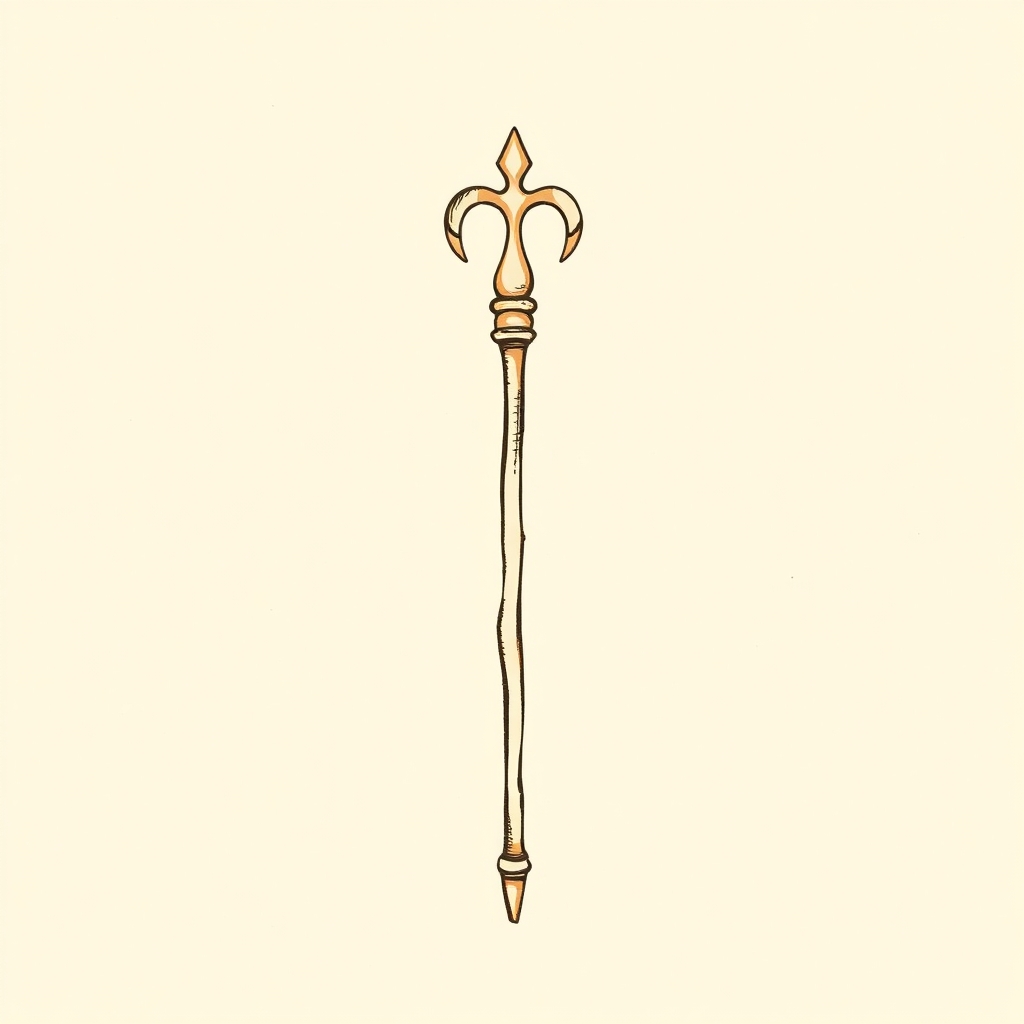
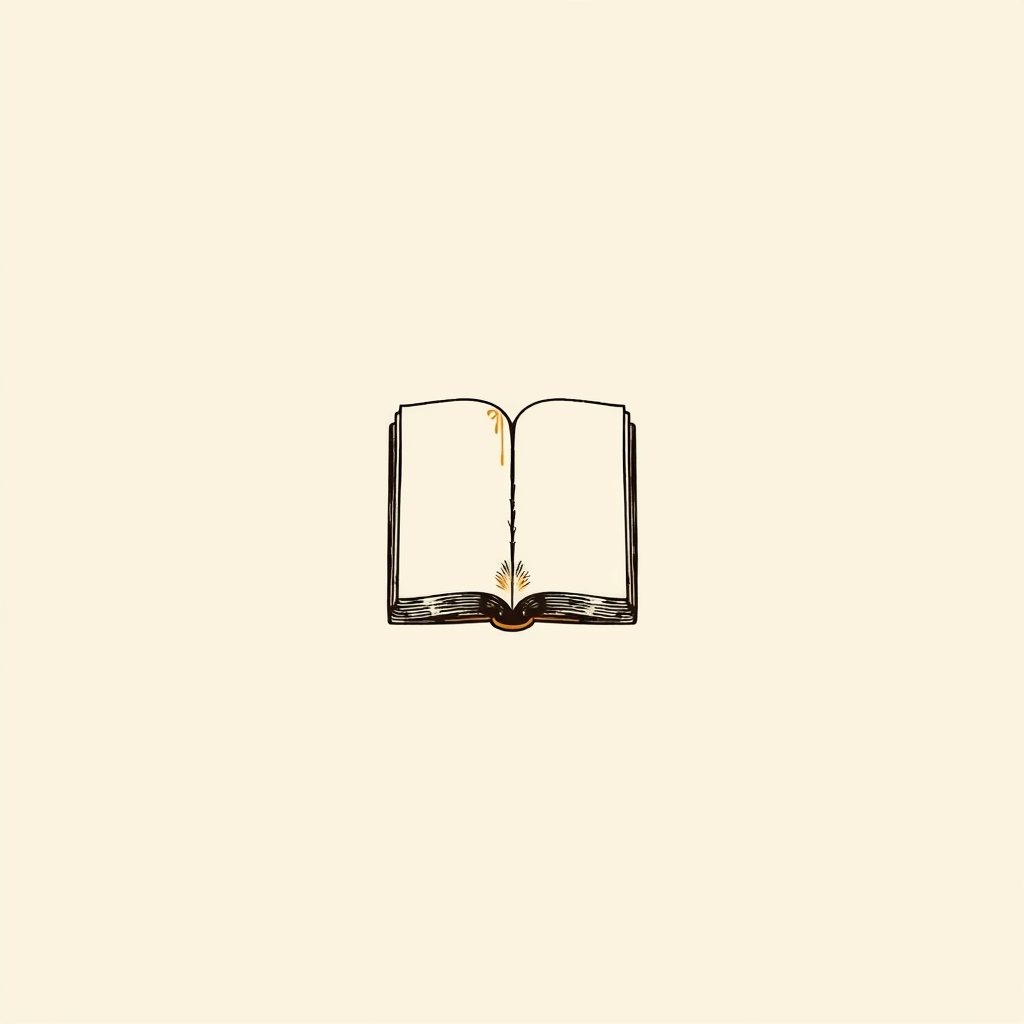
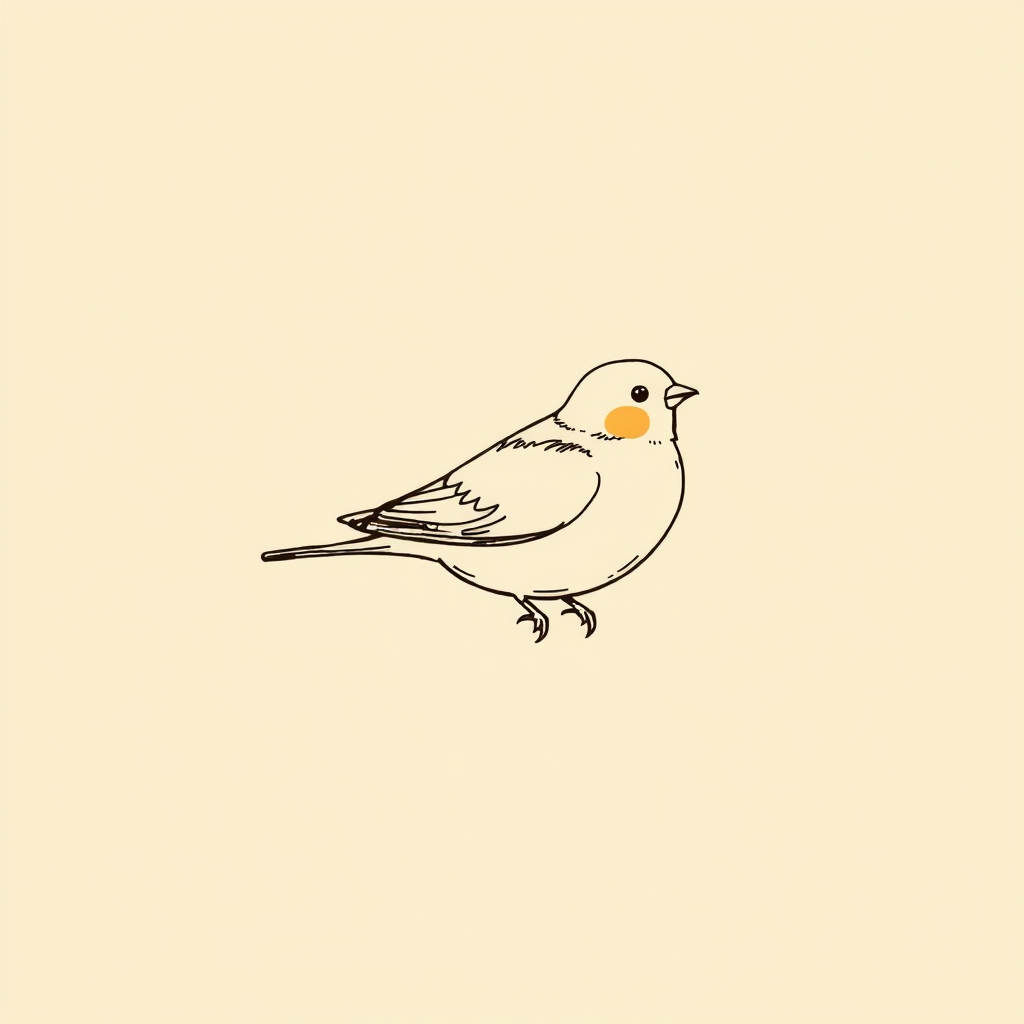
The saint is traditionally represented with a staff, a book, and birds, symbols of his knowledge and gentleness.
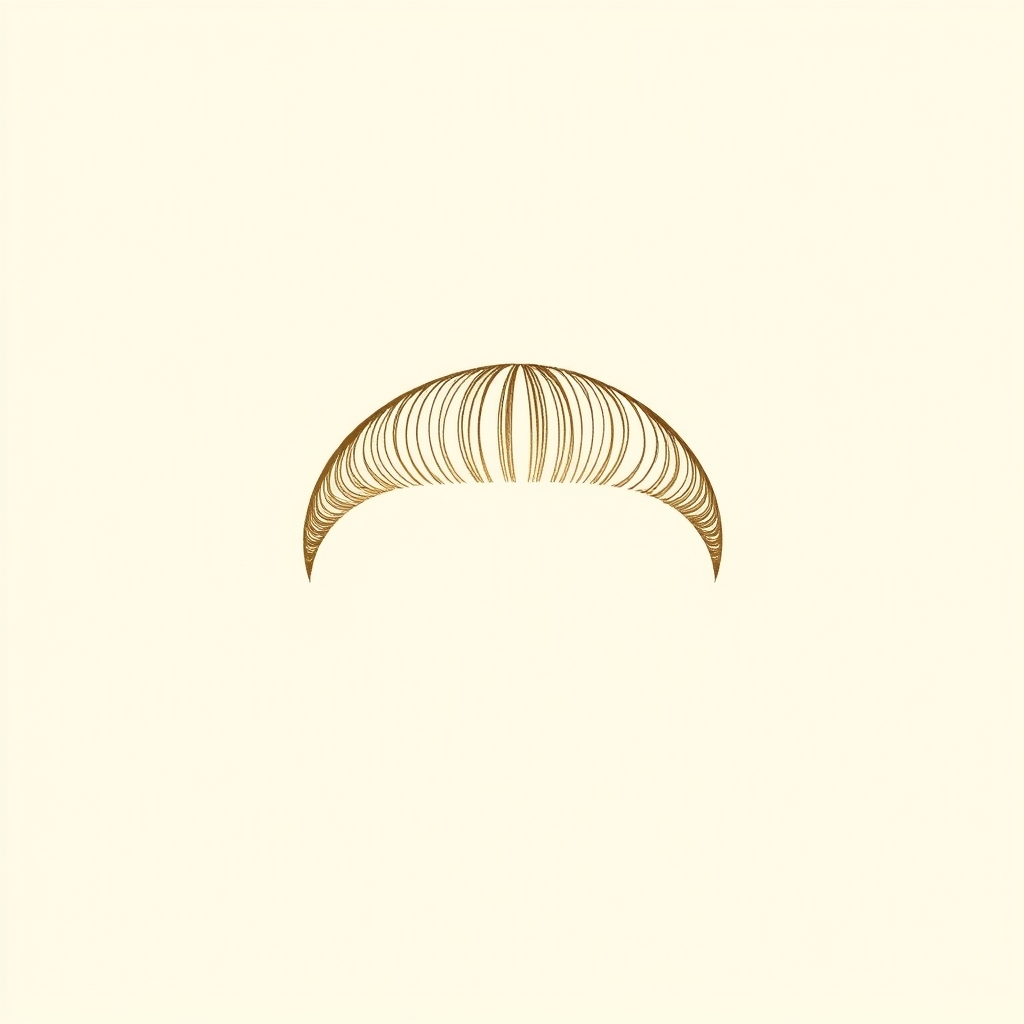
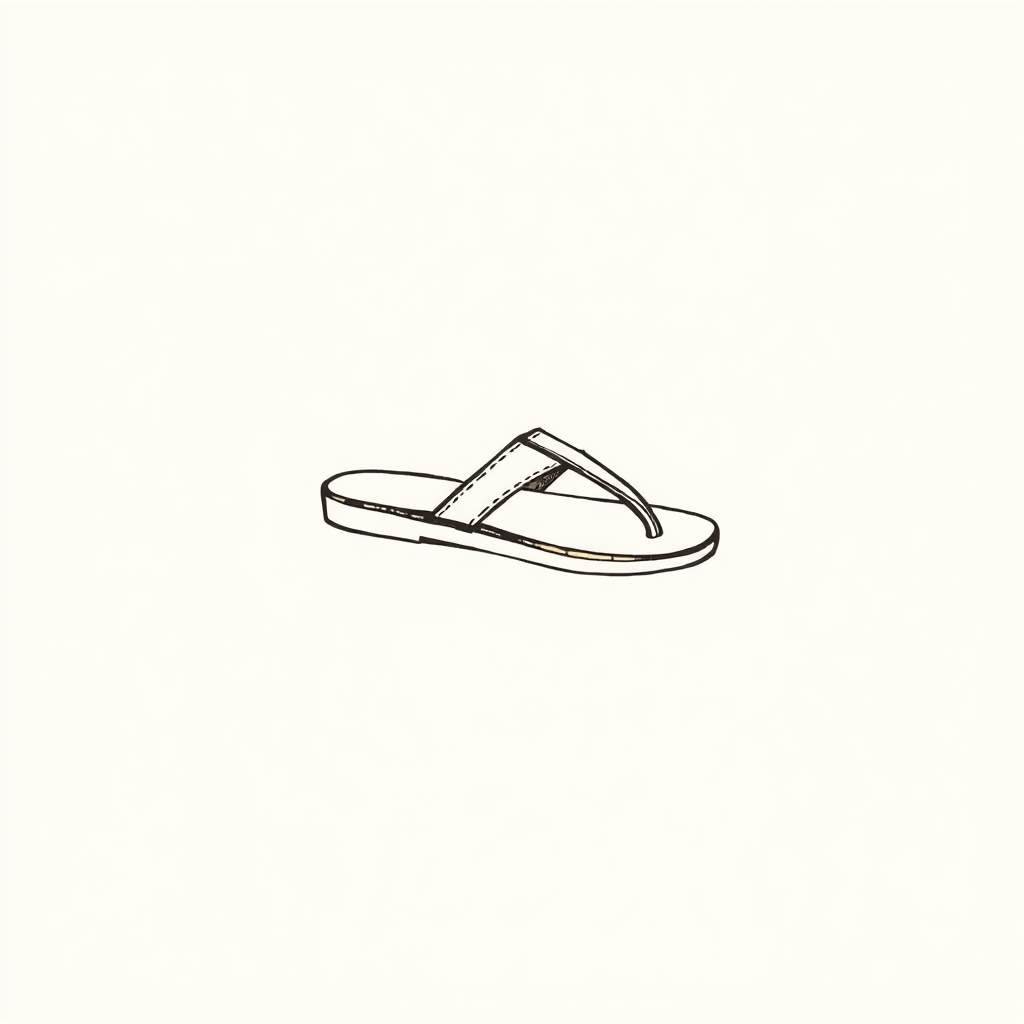
All paintings and statues of Saint Ours, both ancient and modern, represent him with the insignia of an archdeacon, that is to say, holding in one hand the staff as the emblem of authority and jurisdiction, and, in the other hand, clutching a book to his chest, as the symbol of the religious knowledge that he himself must have possessed eminently and communicated to the faithful. — He is also represented with birds on his shoulders or on his arms. — He is very often seen in religious attire, wearing short hair and a wide tonsure, which reduces his hair to a kind of crown similar to that of the Reverend Capuchin Fathers. He is sometimes painted with sandals, and a kind of skin garment that is kept in a large reliquary wrapped in a cloth with the inscription: Vestimenta S. Ursi, garments of Saint Ours. — He is also depicted striking with his staff, or a stick, the rock from which a miraculous water gushes. This is how he is represented in the capital of a 12th-century marble column, placed in the cloister of the Collegiate Church, with the inscription: Fons S. Ursi. — A few years ago, a carved wooden altar frontal was discovered in a small room of the church of Saint-Christophe, representing Saint Ours, surrounded by the poor and distributing shoes to them.
Expansion of the Cult
The cult of Saint Ours extends from Aosta to Savoy, Piedmont, and as far as France, notably in Meyronnes and Montbard.
[APPENDIX: CULT AND RELICS.]
The name of Saint Ours has remained attached not only to the Congregation of priests he founded, but to the place of his residence; it is the village of Saint-Ours, so named from time immemorial. It is found in an act of 1119, and in another of 1174. In the 11th century, there existed, and one does not know since when, the noble family of Porta Sancti Ursi, which gave a bishop to Aosta.
Not only the village, which formed around the place of Saint Ours' residence, took his name, but also the adjacent territory, and this territory had become famous. For, in the act passed publicly on October 20, 1026, between Bishop Burchard and Katelme, mention is made of a property located in the territory of Saint-Ours, in Italy. This land was already mentioned in the act passed in 1013, by which the priest Létard gave to the Canons of Saint-Ours certain properties contiguous to the land of Saint-Ours.
All this proves that at least at the beginning of the 14th century, Saint Ours was in full possession of the title of Saint, and consequently the object of a religious cult.
Throughout the diocese of Aosta, Saint Ours is venerated from time immemorial; but he has been, in a special way, by a large number of parishes.
We have before our eyes a bull of Alexander III dated April 20, 1176, in which he mentions the parish of Saint-Pierre and Saint-Ours of Donnas.
Donnas therefore had at that time Saint Peter and Saint Ours as titulars. Now, Donnas then included the two current parishes of Vert and Pont-Saint-Martin, and thus the populations of these three parishes were under the patronage of Saint Ours, in the year 1184. Act III counts Perlo and Lasime among the parishes that belonged to the Chapter of Saint-Ours. Perlo then included the two current parishes of Lillianes and Fontainemore, and Lasime the two parishes of Gressoney; these five parishes could not fail to be especially attached to the cult of Saint Ours.
The very ancient parish of Derby, which, from 1040, was under the patronage of the Chapters of the cathedral and of Saint-Ours, also had Saint Ours as patron.
The old parishes of Cogne and Jovençan have always had and still have Saint Ours as patron.
The Blessed Eméry of Quart, in his constitution of 1307, enumerates among the holy days of obligation of the diocese, that of Saint Ours.
Saint Ours, co-patron of the diocese of Aosta, is celebrated under the first-class rite with an octave throughout the diocese.
In Meyronnes, in the dioce se of Dig ne, the cult of Saint Ours dates back to the most remote times. But there, as in Aosta, it is infinitely to be regretted that the archives of the famous sanctuary were dispersed by the revolutionary wind. How many things they would teach us!
There was, at the place called Vieux Saint-Ours, a chapel which, according to the ancients, was very vast. It fell into ruin at the beginning of the 17th century. For the greater convenience of pilgrims and the inhabitants of the place, it was rebuilt one kilometer away, at the place called Pion Saint-Ours, in the middle of a charming village which became the chief town of the parish of Saint-Ours, since the imperial decree of April 4, 1835, by which this section of Meyronnes was erected into a succursal. The cult of Saint Ours will have much to gain from this circumstance, for pilgrims are now assured of finding a priest in the sanctuary which is the term, the goal of their pilgrimage, and it will be easier for them to perform their devotions there, not only on the day of the main feast, but all year round.
An oratory built on the site of the old chapel and a cut-stone cross are there to perpetuate its precious memory. There is also a fountain that pilgrims regard as a souvenir of the miraculous fountain of Saint Ours.
Here is what the historian of the diocese of Embrun says about this pilgrimage. After speaking of the origin of the parish of Meyronnes, he adds:
« The place of Meyronnes is renowned because of a chapel under the title of Saint-Ours, which is in its territory. Saint Ours, sanctus Ursus, had been provost (he should have said founder) of a Chapter in the Aosta Valley. His memory is in great veneration, not only in the Barcelonette valley, but also in several valleys in Piedmont. There has always been, from time immemorial, a chapel dedicated in his honor in the district of Meyronnes. It was moved and rebuilt in 1773. It is currently in the hamlet called Pion de Saint-Ours. The faithful flock there on June 17, for the feast of this Saint. The Piedmontese rush there from the Val de Maire, the Val de Stura, and the Val de Sanpeire. The French do not yield to the Piedmontese on this point. One sees a multitude of people there not only from Barcelonette, but also from the Embrunais and the Gapençais. What attracts such a large crowd are the miracles that have taken place there.
« The legend of Saint Ours teaches that, in the year 1653, inquiries were made, by the authority of the archbishop of Embrun, into the miracles performed at the chapel of Saint-Ours, in Meyronnes, and that it was proven that those named Jean Bovis of Meyronnes, Pierre Pautriers of Les Saunières, a hamlet of Jousiers, and Boniface Pascal of Allas, all three afflicted with paralysis and abandoned by doctors, had been miraculously cured by the intercession of Saint Ours, after having made a vow to this chapel. In the year 1719, on June 17, the day of the feast of the same Saint, a child aged eight, from the parish of Risout, in Dauphiné, paralyzed for four years, was carried by his parents to this solemnity; he was cured there, stood up instantly, and walked freely. Of which the parish priest of Meyronnes had a report drawn up which is carefully kept in the chapel ». Here is the account from the history of the diocese of Embrun.
It follows that in Meyronnes, as in Aosta, the cult of Saint Ours is immemorial.
In France also, in the diocese of Langres, the town of Montbard, on the Brenne, left a multitude of Saints to attach itself to Saint Ours and honor him as its patron.
In Guill erire (H autes-Alpes), Saint Ours also has a chapel which, under the direction of the zealous Canon Garnier, will be increasingly visited by the inhabitants of the place and the surrounding area.
In Savoy, in the diocese of Annecy, province of Chablais, the parishes of Bernex and Vacheresse have had, from time immemorial, Saint Ours as titular and patron. These two parishes are very ancient. Bernex is, by its position, very exposed to floods; this is probably the reason that led the population to place itself under the special protection of Saint Ours.
Saint Ours is also known and honored in the parish of La-Thuile, dependent on the same diocese of Annecy.
In the diocese of Ivrea, from time immemorial, Saint Ours has been honored, not only as an ordinary Saint, but as patron of the city. There was a church erected in his honor a short distance from the city. There was also a benefice under the title of Saint-Ours.
In the same diocese, the very ancient parish of Campiglia, from which were dismembered, at various times, all the churches of Valseana (Vallis Soquanae), honors, from time immemorial, Saint Ours as its patron and Apostle.
In the diocese of Vercelli, there existed already, before the 13th century, a convent of Saint-Ours outside the city walls, called sometimes the hospital of the Scots or the Irish, sometimes the convent of Saint-Ours. This hospital was especially intended for the service of pilgrims from Ireland and Scotland. It is found mentioned as existing until towards the middle of the 12th century. It results from contemporary titles that it was united to the great hospital of Vercelli on August 27, 1343. The place where this hospital was is still shown.
In the diocese of Vercelli, the office of Saint Ours is not performed; but the name and invocation of the Saint appear in the very ancient litanies used before the introduction of the Roman rite. In a necrology of the church of Vercelli from the 12th century, on February 1, Saint Brigid and Saint Ours are mentioned.
There is, however, in the diocese of Vercelli, a parish that has Saint Ours as patron, it is Rongio, near the large village of Manserano. The parish priest of the place, questioned about the cult of Saint Ours in Rongio, replies that the cult is immemorial in this parish and that a lively confidence in his protection is nurtured there.
In the famous collegiate church of Saint-Gaudens, in Novara, Saint Ours is also venerated.
In the diocese of Turin, the office of Saint Ours is performed, and in the metropolis there is an altar where there is a very ancient painting at the bottom of which one reads sanctus Ursus. Formerly, in Turin, Saint Ours was the patron of the tanners.
In Sion, in Valais, Saint Ours already appeared on a 13th-century missal, on February 4, as in Aosta.
The Relics and the Confession
His body rests in the 'Confession' beneath the Collegiate Church of Aosta, in a silver shrine, while portions have been distributed throughout Europe.
The ancient church dedicated to Saint Peter, which Saint Ours had served, was the place of his burial. His body was deposited in an underground chapel, which still exists, and which took the name of the Confession of Saint-Ours. It is located below the great choir of the current church of the Collegiate of Saint-Ours. One descends into it by two staircases, each having twelve marble steps already well worn by visitors. This double entrance, common to monuments of this kind, serves to avoid the meeting and confusion of those entering and those leaving. Nine stone columns, each of a single block, support the vault of the chapel. These columns are all of Roman form, similar to several others that have been discovered at various times; but they differ almost all from one another in the shape and nature of the stone. Some are round, others square, there are two pentagons, there are some of Aymavilles marble, others of sandstone, one of tuff. There is an altar where the Holy Mass is often celebrated. The bust of Saint Ours is exposed there under a pavilion supported by six columns of Aymavilles marble, of the Doric order.
The Confession of Saint-Ours has been from time immemorial the title of a prebend or a benefice that has its rector.
The archives of the Collegiate Church preserve a large number of parchments attesting to the donations made at various times to the chapel of the Confession of Saint-Ours. This proves the great devotion of our ancestors for the place that was the repository of the body of our patron saint.
It is in this underground space that the body of Saint Ours remained enclosed in a wooden shrine with his clothes and sandals, until the Prior Guillaume de Lyôles had a rich silver shrine built at his own expense in 1358, intended to contain this precious treasure. This shrine was first placed in a fairly high niche, made on purpose in the reredos of the old high altar, and remained there until 1738. Then the great marble altar that exists now was built, and a void made in the altar itself was reserved for the great reliquary of Saint Ours.
At all times, the faithful have professed a great veneration for this sacred deposit. They value it more than a treasure of gold or silver.
It is to this arrangement that the Collegiate of Saint-Ours owes the happiness of possessing almost the entire body of its saintly founder. We say almost entirely, because, at various times, the Chapter of Saint-Ours has been willing to accede to the urgent requests made to it to have some portion of these precious relics.
Thus, in 1273, at the request of His Eminence Cardinal Anchéros, passing through Aosta on his way to the Council of Lyon, and that of Mgr Aymon de Chaltand, Bishop of Aosta, the venerable Chapter of Saint-Ours, assembled in July of the same year, deliberated to grant to the Reverend Jean, of the monastery of Saint-Jean, chaplain to the said cardinal and parish priest of the church of Saint-Ours in Montbard, diocese of Langres, relics of Saint Ours, whom this city has adopted from time immemorial as its patron. Then, with the greatest respect, in the presence of the whole convent, a particle of the head of Saint Ours was detached. A certificate provided with the seal of the Chapter was attached to it to attest to its authenticity, and it was thus handed over to the Reverend parish priest of Montbard. The authentic act is kept in the archives of the Collegiate Church, which, in attesting to the fact, further proves the respect that was professed five hundred years ago for the relics of Saint Ours. On the reliquary of Saint Ours, in the church of Montbard, one reads: Reliquiæ sancti Ursi patroni hujus urbis e manibus commissariorum. Montbard is a small town in Burgundy, on the Brenne (Côte d'Or), chief town of the canton.
The famous sanctuary of Saint-Ours, of which we have spoken, which has existed from time immemorial in Meyronnes (Basses-Alpes), where a prodigious number of pilgrims flock, received a rib of the Saint; but this precious treasure was taken and brought back to Aosta, then returned to the shrine of Saint Ours. However, the Chapter of Saint-Ours, to console the inhabitants of Meyronnes for the loss they had suffered, did not delay in sending them a relic of the Saint. At the Revolution, one was forced to hide it from the fury of the new Vandals and to conceal it under the floor of the chapel, where the humidity reduced it to dust. In 1835, M. Caire, parish priest of Meyronnes, obtained a new relic; it is a rib, probably the same one that had been granted and taken back in 1676.
In Guillestre (Hautes-Alpes), they possess a small reliquary containing relics of Saint Ours, which were brought from Aosta in 1862.
We can also include among the relics of Saint Ours the chalice to which his n ame has remained attached, because tradition holds that it is the one he used himself for the celebration of the holy mysteries.
This silver chalice is twenty centimeters high, sixteen centimeters in diameter; the knot and the foot are decorated with eight precious stones. One sees fleur-de-lis on it as one notices in the mosaic of the cathedral, which is from the 6th century. It is customary to present this chalice to women whose difficult childbirth exposes their life and that of their children.
The Collegiate Church possesses very precious relics.
In the year 1481, on the 28th and 29th of the month of December, under the po ntificat e of Sixtus IV, the most illustrious George de Chaltand, prior of the Collegiate Church, with the assistance of the Chapter, proceeded to the recognition of the relics contained in the sacristy. Most were provided with their authentic; they were enclosed in reliquaries, and a census was made of them which was also inserted there.
Here are some items from this census:
We have a tooth and some other relic of the body of Saint Peter, in whose honor this basilica was instituted. These relics are enclosed in the silver bust built in apostolic form.
The body of Saint Ours, patron of our Collegiate Church, rests in the large silver shrine, partly gilded. His head is enclosed in the newly built silver statue. There are relics of him in several places in the diocese and elsewhere.
Abridgment of the Life of Saint Ours, Archbishop of Aosta, by a member of the Collegiate of Saint Peter and Saint-Ours. Aosta, 1868.
Iconography
Signs and attributes
Entities
Narrative network
The names, places, and concepts most present in the entry, weighted by centrality in the text.
The supernatural in their life
The miracles of Saint Ursus of Aosta
Frequently asked questions about Saint Ursus of Aosta
Who was Saint Ursus of Aosta?
Originally from Scotland, Saint Ursus became archdeacon of Aosta in the 6th century after evangelizing Meyronnes. A defender of orthodoxy against Arianism, he founded the collegiate church that bears his name to remain faithful to the Catholic faith. Renowned for his charity toward the poor and his miracles related to water, he remains the co-patron of the Diocese of Aosta.
What is Saint Ursus of Aosta the patron saint of?
Patronage of Saint Ursus of Aosta: Aosta, Montbard, Cogne, Jovençan, Bernex, Cowherd, Campiglia and curriers (in Turin).
What is Saint Ursus of Aosta invoked for?
Saint Ursus of Aosta is invoked for: flooding, bad weather threatening harvests, difficult childbirth, baptism of stillborn children, kidney pain, rheumatism and protection of children.
How is Saint Ursus of Aosta depicted in Christian art?
In iconography, Saint Ursus of Aosta is recognizable by: pilgrim's staff, book on his chest, birds on shoulders or arms, wide tonsure, sandals and fur garment.
What miracles are attributed to Saint Ursus of Aosta?
5 miracles are attributed to this saint, notably: Healing, Mastery of the elements, Sign / wonder and Prophecy / infused knowledge.
Which saints were contemporaries of Saint Ursus of Aosta?
Contemporaries include: Saint Remigius (Apostle of the Franks), Saint Antide of Besançon, Saint Eugene of Carthage and Saint Nicaise of Reims.
When did Saint Ursus of Aosta die?
Saint Ursus of Aosta died around 600.
What are the other names of Saint Ursus of Aosta?
Other forms of the name: Ursus.
Annexes & related entities
Structured data for exploration: events, miracles, quotes, places, attributes, patronages, and important entities cited in the text.
Key Events
- Born in Scotland (or Ireland)
- Evangelization of Meyronnes against Arianism
- Elevation to the dignity of Archdeacon of Aosta
- Support for Bishop Jocundus against slander
- Opposition to the heretical bishop Plocéan
- Foundation of the Collegiate Church of Saint-Pierre and Saint-Ours outside the walls of Aosta
- Miracle of the Buthier torrent
- Creation of the miraculous fountain with a strike of his staff
Quotes
-
Lord... command that the rain cease and the river return to its bed
Local tradition of Aosta