
Saint Philip the Deacon
A 1st-century deacon and evangelist, Philip is famous for baptizing the eunuch of the Queen of Ethiopia. Settled in Caesarea with his four prophetess daughters, he is said to have ended his days as Bishop of Tralles in Asia Minor. His exemplary life concluded around the year 58 in great holiness.
Contemporaries

Figures and markers around the normalized period for this entry.
Guided reading
6 reading sections
SAINT PHILIP, DEACON, AND HIS FOUR DAUGHTERS
The conversion of the Ethiopian eunuch
On the road from Jerusalem, Philip meets a minister of Queen Candace reading Isaiah and explains to him the mysteries of the Incarnation.
from Jerusalem and who was reading the prophet Isaiah. He was a eunuch, or one of the chief ministers of Candace, queen of the Ethiopians, and superintendent of her finances, who had come to worship God in that great city. Then, the Spirit who g uided Ph ilip said to him: "Approach this carriage, and join this man who is inside"; he approached him, and heard that he was reading this passage from chapter 53: "He was delivered to death like a sheep and like a lamb that does not cry out in the hands of the one who shears it; he did not open his mouth; by his humility he was judged against all justice. Who will be able to tell of his generation?"
Thereupon, he asked him if he understood well what he was reading; the eunuch replied that he was not enlightened enough to understand it without someone explaining it to him; and, recognizing in him something divine, he begged him to get into his carriage with him to reveal its meaning to him, saying to him: "Of whom does this prophet speak? Of himself, or of another?"
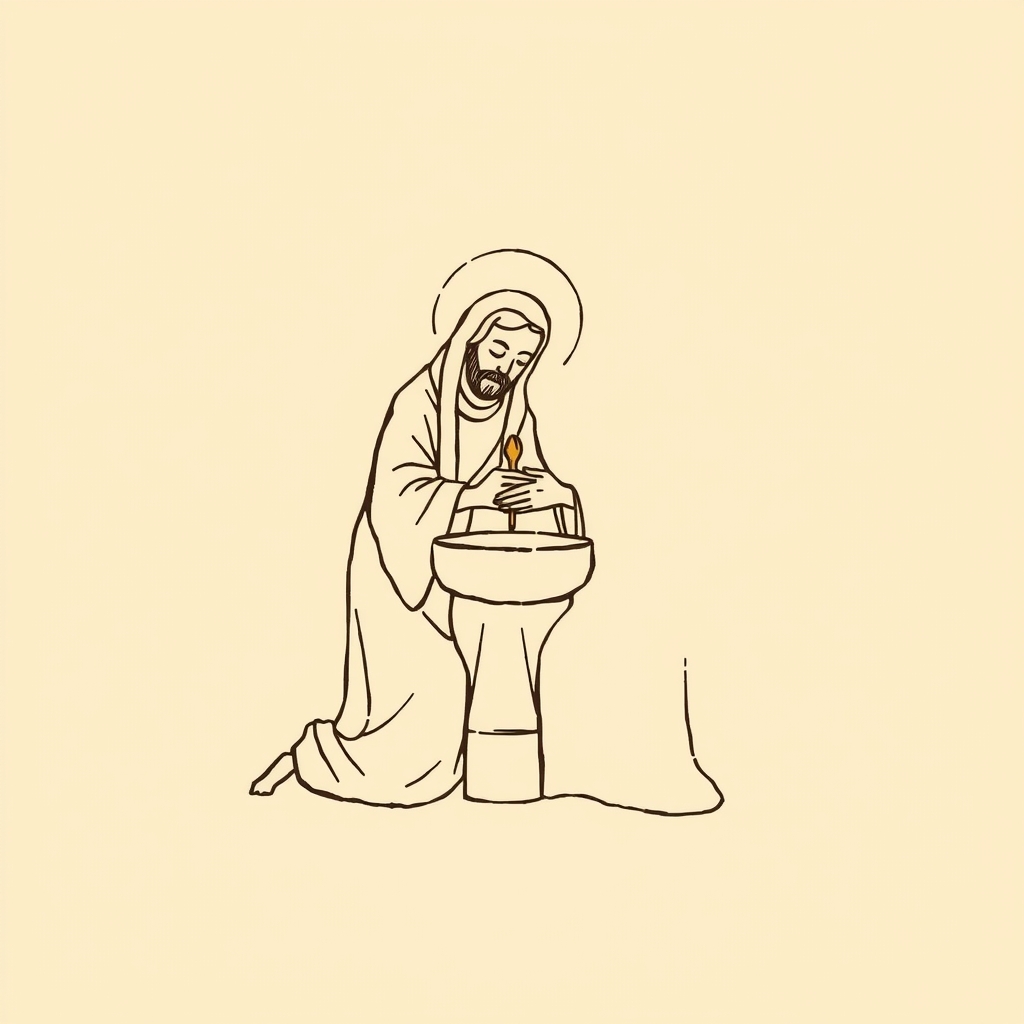
Saint Philip explained to him the mysteries of the Incarnation of the Son of God and of his mission among men, of his passion and his death, the necessity of believing in him and of being baptized in his name to be saved. Grace concurred with the word of the great Evangelist, and touched the heart of this infidel so powerfull y that, havi ng caught sight of a fountain on the road, he said to Philip: "Here is water: what prevents me from being baptized?" — "If you believe with all your heart in Jesus Christ," the Saint replied, "nothing prevents it." Thus, they both got down from the carriage, and Philip baptized the eunuch.
Ministry in Palestine and family life
After baptizing the eunuch, Philip preached from Azotus to Caesarea, where he settled with his four daughters and received Saint Paul.
After this celebration, the Spirit caught Philip away, and the eunuch saw him no more; but he was thereby confirmed in the belief that this man had been sent to him extraordinarily by God to put him on the path of salvation. As for our holy deacon, he found himself in Azotus, a city in the land of the Philistines, which the sojourn of the Ark of the Covenant made very famous; and he continued to preach Jesus Christ in all the cities of the region, until he finally arri ved at Caesarea in P alestine, the place of his birth and his dwelling. The wife he had, before being called to the school of Our Lord, of whom he was a disciple, had left him four daughters; he remained the rest of his life with them. He had the honor of receiving Sai nt Paul in to his home during the journey he made from Asia to Jerusalem. The manner of his death is not certain; it is only assured that it was very holy and in conformity with the innocence and purity of his life. It is placed in the year 58 of Our Lord.
The Episcopate at Tralles according to Greek tradition
Greek sources assert that Philip was bishop of Tralles in Lydia, where he founded a church and performed many miracles.
The Greeks assure that this blessed disciple was bishop of the Trallian s, in Asia Minor, in the province of Lydia. They recount that he performed many miracles there, that he founded a church there, and that he subsequently went to the Lord to receive his crown. The city of Tralle, or Trallium, is situated on the banks of the Meander: it was one of the most opulent cities of Asia. What demonstrates the antiquity of the church of Tralle is the ve ry letter th at Saint Ignatius, disciple of Jesus Christ and the Apostles, addressed to the Christians of that city.
If the city of Tralle possessed, in the course of the centuries, the relics of Saint Philip, deacon, it is because they were transported there from Caesarea in Palestine, where tradition says he was buried beside his daughters.
Missions in Abyssinia and Arabia
A tradition reports his travels in Abyssinia and Ethiopia, as well as the appointment of Narcissus to lead the Church of Arabia.
Another tradition reports that this illustrious disciple made a journey to Abyssinia to proclaim the Gospel there, and to a part of Ethiopia, where he is said to have confirmed the preaching of the eunuch of Candace. These peoples invoke him in a very special way.
According to this same tradition, Philip is said to ha ve place d Narcissus at the head of the Church he founded in Arabia, which is contiguous to Ethiopia and Abyssinia.
The four daughters of Philip
His four daughters, virgins and prophetesses mentioned in the Acts of the Apostles, lived and were buried with him in Caesarea.
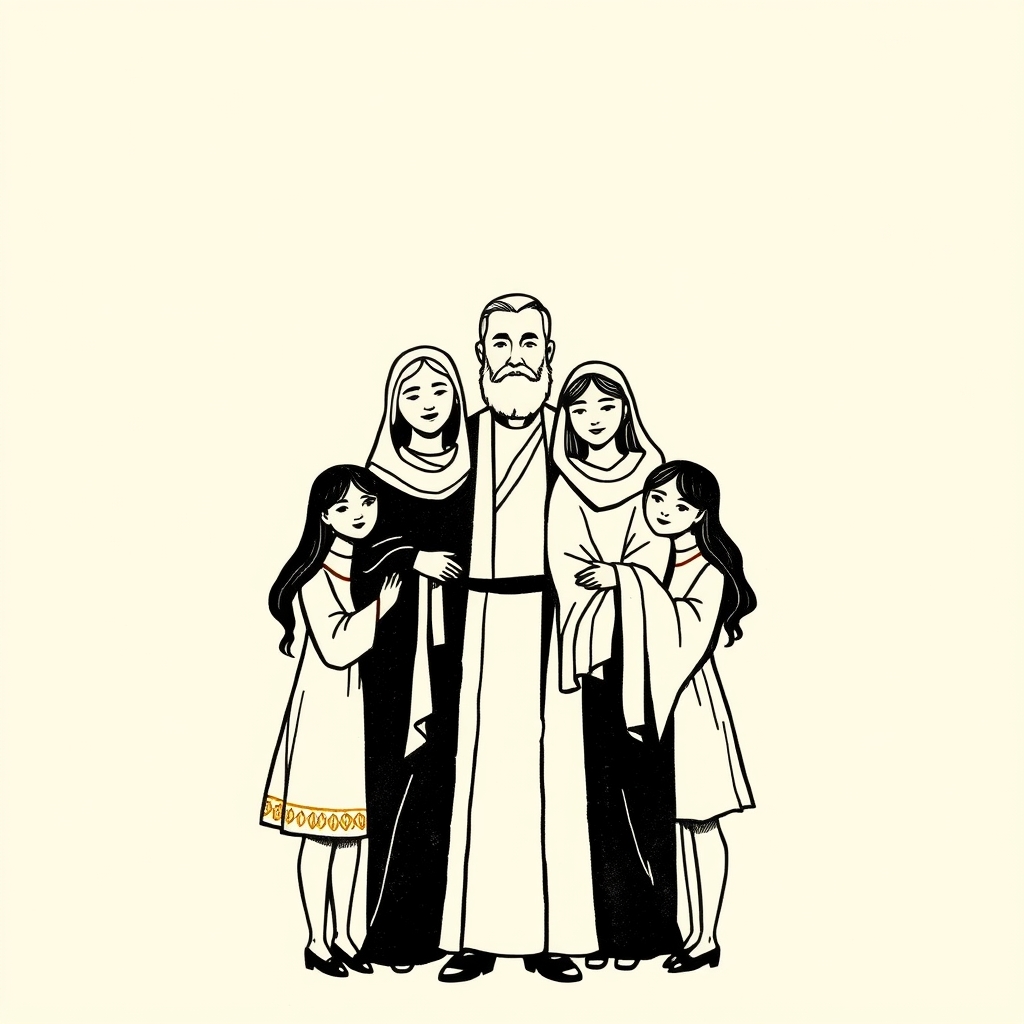
As for his four daughters, one cannot deny them the prerogative of virginity and prophecy; Saint Luke, in chapter 21 of the Acts of the Apostles, attributes both to them: this is why Saint Jerome, writing agai nst Jovinian, says "that they consecrated in their bodies the first fruits of virginity"; and in one of his epistles, the twenty-seventh to Eustochium, he assures that, in his time, one could still see in Caesarea their small chambers and that of their father, and that Saint P aula, while passing through there, visited them with devotion. Some authors say that they predicted to Saint Paul, just as Agabus did, the persecutions he would endure from the Jews in Jerusalem. Their names are unknown. Thus, all that remains for us to say is that, having died in great holiness, they were all four buried in the sepulcher of Saint Philip. As for Saint Hermione, who is spoken of in the Menologion of t he Greeks, who endured martyrdom under Trajan and was buried in Ephesus, we believe that she was a daughter of Saint Philip the Apostle, rather than of Saint Philip the Deacon.
Representations and references
The saint is traditionally depicted baptizing the eunuch or surrounded by his daughters, drawing on the texts of Saint Luke and Saint Jerome.
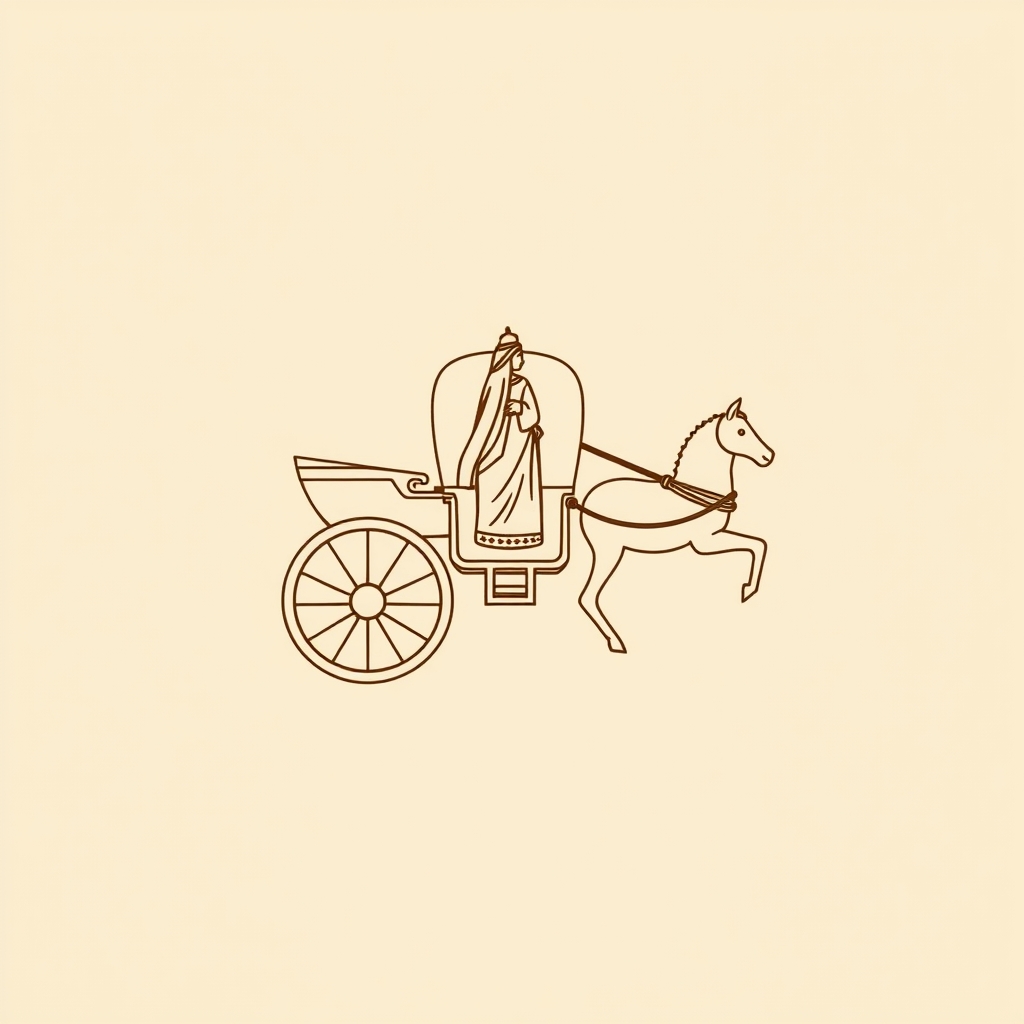
He may be depicted baptizing the Ethiopian eunuch, or in the chariot of the Ethiopian queen, in the company of his neophyte; or in a group featuring his four daughters.
Cf. Acts, VIII, XXI; Tillassant, etc. — History of the Seventy-Two Disciples, by Abbé Malaire.
Iconography
Signs and attributes
Entities
Narrative network
The names, places, and concepts most present in the entry, weighted by centrality in the text.
The supernatural in their life
The miracles of Saint Philip the Deacon
Frequently asked questions about Saint Philip the Deacon
Who was Saint Philip the Deacon?
A 1st-century deacon and evangelist, Philip is famous for baptizing the eunuch of the Queen of Ethiopia. Settled in Caesarea with his four prophetess daughters, he is said to have ended his days as Bishop of Tralles in Asia Minor. His exemplary life concluded around the year 58 in great holiness.
What is Saint Philip the Deacon the patron saint of?
Patronage of Saint Philip the Deacon: Tralles, Ethiopia and Abyssinia.
How is Saint Philip the Deacon depicted in Christian art?
In iconography, Saint Philip the Deacon is recognizable by: baptizing the eunuch, chariot of the Ethiopian queen and accompanied by his four daughters.
What miracles are attributed to Saint Philip the Deacon?
2 miracles are attributed to this saint, notably: Levitation / bilocation and Sign / wonder.
Which saints were contemporaries of Saint Philip the Deacon?
Contemporaries include: Saint Martial, Apostle of Aquitaine, Saint James the Greater (Apostle), Saint George of Velay and Jesus Christ (Relics of the Passion).
When did Saint Philip the Deacon die?
Saint Philip the Deacon died around 58.
What are the other names of Saint Philip the Deacon?
Other forms of the name: Philippe l'Évangéliste.
Who are the relatives of Saint Philip the Deacon?
Relatives of Saint Philip the Deacon: Inconnu (wife) and Quatre filles (noms inconnus) (daughters).
Annexes & related entities
Structured data for exploration: events, miracles, quotes, places, attributes, patronages, and important entities cited in the text.
Key Events
- Baptism of the eunuch of Queen Candace on the road to Jerusalem
- Preaching in the cities between Azotus and Caesarea
- Reception of Saint Paul in Caesarea
- Episcopate in Tralles, Lydia (according to the Greeks)
- Appointment of Narcissus as head of the Church of Arabia
Quotes
-
See, here is water! What prevents me from being baptized?
Candace's eunuch (Acts of the Apostles)