
Saint Reverian of Autun
A missionary bishop sent from Rome by Pope Felix in the 3rd century, Saint Révérien evangelized Autun during a period of great calamities. He was beheaded under Emperor Aurelian along with the priest Paul and ten other companions. His cult is particularly vibrant in the Nivernais and Autunois regions, where he is invoked against drought.
Contemporaries

Figures and markers around the normalized period for this entry.
Guided reading
7 reading sections
SAINT RÉVÉRIEN, BISHOP OF AUTUN
The three periods of the Church of Autun
The Christian history of Autun is divided into three phases: apostolic, Greco-Oriental with Saint Pothinus, and then Roman with the arrival of Saint Reverianus under Pope Felix.
Blessed are you when men hate you, when they exclude you and insult you and reject your name as evil, because of the Son of Man.
Three periods are distinguished in the primitive history of the Church of Autun. The apostolic period begins with the first explosion of the Gospel at the Cenacle. Apostles and disciples divide the world among themselves, invade it, cross paths on every road, traverse the Gauls, and already cast the evangelical seed even into the senatorial families of Augustodunum. The second period, or Greco-Oriental period, begins with the arrival of Saint Pothinus and his companions. A Greek Church forms in Gaul and grows rapidly amidst persecutions. Its center is first in Lyon, until the great persecution that carried off Saint Irenaeus, and then in Autun, which gathers the fugitives from the unfortunate city drowned in blood, becomes the Augustal city, opens its bosom to apostles as well as to rhetoricians, speaks the language of the Hellenes, and takes on, in a way, an Oriental physiognomy. Then, this Church seems to fade from history: the series of known bishops is interrupted in Autun as in Lyon, until Saint Reverianus, sent from Rome by Pope Felix, in the time of Aurelian. This is the third period, or more specific ally, the Roman period. According to all written traditions, the Latin origin and the immediately Roman mission of the men of zeal who came to this country toward the latter half of the third century are perfectly distinct from the Ionian origin of the first founders of this Church.
Calamities and social revolts
Between 260 and 267, Autun suffered through the wars between Aurelian and Tetricus, as well as the peasant revolts of the Bagaudae caused by fiscal pressure.
Several military usurpers fought for the possession of Autun from 260 to 267. The city was sacked and partially destroyed in the war between Aurelian and the usurper Tetricus. To make matters worse, the peasants had been pushed to the last extremity by the demands of the treasury; bands known as the Bagaudae descended from their rocks, seized the unfortunate city already a victim of so many disasters, and passed back and forth over the debris left by Tetricus. Excessive taxes, exhausting the last resources, brought these calamities to a peak. Autun, guilty like Lyon of the murder of the just, was thus struck in its turn, and persecution came once again to demand its blood.
The Apostolate and Martyrdom
Despite the unrest, Reverianus and his companions evangelized the region before being executed by Emperor Aurelian during his campaign against Tetricus.
The habits of luxury and corruption, which until then had made the inhabitants of this city deaf to the voice of truth, having been violently broken by recent calamities, the action of Christianity was able to develop from then on with fewer obstacles. The ministers of Jesus Christ, faithful to their mission of charity, endeavored at the same time to calm the fury of the rebels, to console the vanquished, by initiating both in the sublime doctrines of the Gospel, to confirm the faithful in the faith, and to prepare them to await, like them, the combat with a firm footing. The hour of the struggle did not wait: the terrible Aurelian, having succeeded in re-establishing his unrecognized authority in the Gauls, included in his vengeance both those who had insulted the majesty of the empire and those he called the enemies of his gods. After crushing the army of his competitor on the Catalaunian Plains (Châlons-sur-Marne), he made Lyon, already so horribly mistreated not long ago by the fierce Severus, suffer harsh treatment, also passed through Autun, and headed toward Rome, dragging after him the emperor of the Gauls, the unfortunate Tetricus, to make him serve, along with the queen of Palmyra, the heroic Zenobia, to adorn his triumph and to feed his pride as a victorious Roman. Irritated by resistance, intoxicated by his anger as well as his victories, he marked his passage everywhere with the blood of martyrs. It was said of him that no one had drunk as much wine as he had shed blood; but it was even less the blood of his enemies than that of the Christians for which he seemed thirsty. By his orders were slaughtered, at Sens, the sweet and pure virgin Columba; at Troyes, the bishop Savinian; at Auxerre, Saint Priscus. A t Autun, Reverianus gave his life for his flock and for his God. At the same time were cro wned Paul, the worthy priest who so well seconded the zeal of the missionary bishop, and ten other missionary collaborators of this new apostolate. These glorious successors of the disciples of Saint Polycarp, after having worked like their illustrious predecessors, like them also watered with their blood the land they had cultivated with so much fatigue and in the midst of so many perils. Reverianus, the worthy leader of these valiant soldiers of Jesus Christ, set the example and was struck first. The priest Paul and his ten other companions followed him successively to heaven. "It is believed," says the old hagiographer, "that the heads of the holy martyrs were already rolling on the ground while their tongues were still pronouncing the name of the divine Master."
Debate on the place of martyrdom
An uncertainty remains regarding the exact location of the martyrdom, divided between the city of Nevers and the village of Saint-Révérien.
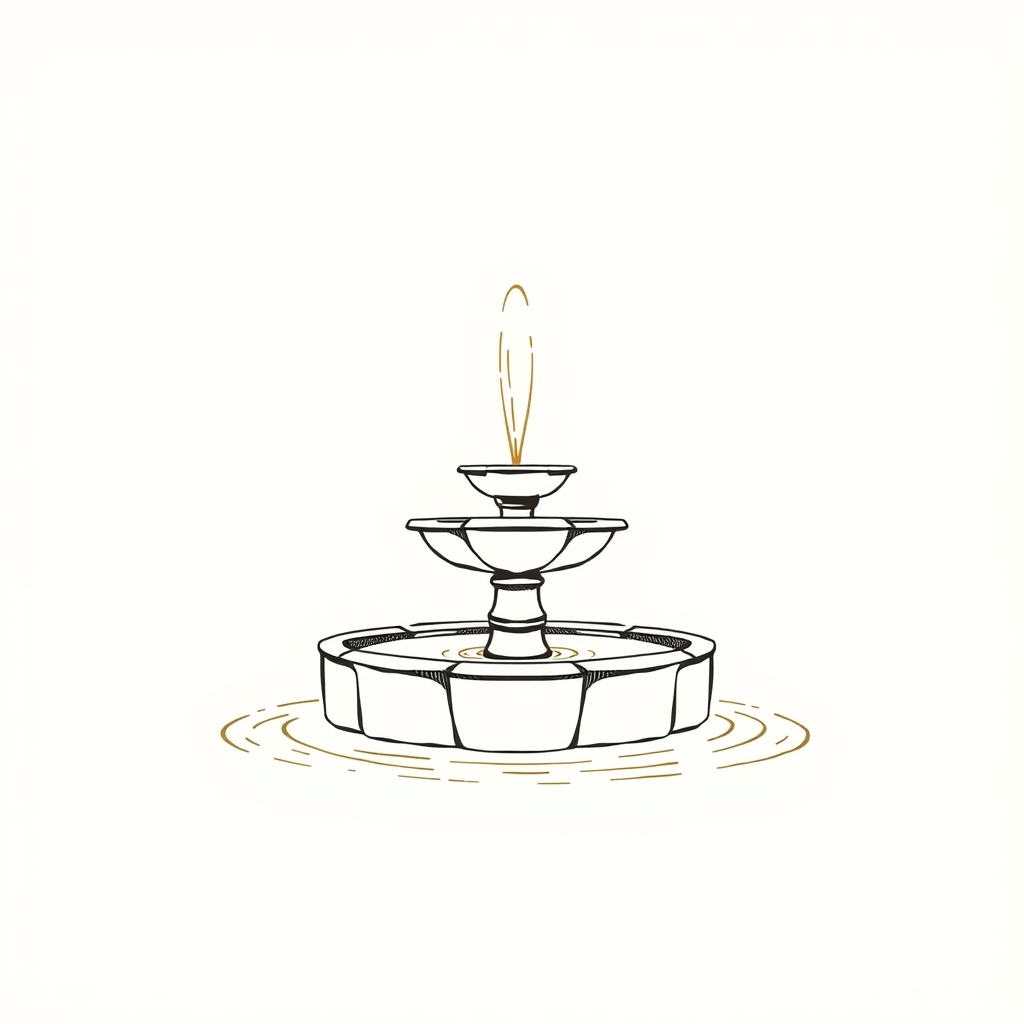
In all probability, Saint Révérien suffered martyrdom in the diocese of Nevers: some say in the village that bears his name, eight leagues from Nevers, where a fountain is still shown near which he is said to have endured his torture, as well as the path he traveled; others say at the very gates of Nevers. Before the Revolution, a chapel dedicated to the Saint was shown in the Benedictine abbey of that city, supposedly occupying the site where the Martyr was beheaded, along with the stone upon which his head was severed. There, too, is a fountain that bears the name of the Saint and near which it is claimed he was put to death. A tower and the street adjacent to this fountain bear the same name. How can these two opinions be reconciled? A conjecture has been ventured, suggesting that Saint Révérien was immolated in Nevers, but that his body was hidden in the village that bears his name.
Expansion of the cult in Burgundy
The cult of Saint Révérien extends from the Morvan to the Châlonnais, with notable relics kept in Villy and invocations against drought.
## CULT OF SAINT RÉVÉRIEN
FAMOUS 3RD-CENTURY INSCRIPTION OF AUTUN, SUMMARIZING THE ENTIRE CATHOLIC DOGMA.
The cult of Saint Révérien has always been dear, not only to the parish that bears his name today, Saint-Ré vérien in the Morvan, in the current diocese of Nevers, but also to the church of Autun, which has never ceased to honor him as one of its Martyrs and one of its pontiffs, and even in the Bourbonnais, the Châlonnais, and the Beaunois.
The parish of Savianges (Saviampa villa), where there was, as early as the 9th century, a property given by Count Eccard to the monastery of Perrecy, has always been under the patronage of Saint Révérien. The church of Villy, near Nuits, also recognizes him as patron and "possesses one of his relics, the upper part of the head, kept in a beautiful gilded reliquary," says Courlepée, "by Madame de Cléram, lady of Villy, who also gifted several ornaments and a silver censer. Throughout the neighborhood and in Beaune, there is great devotion to Saint Révérien, whom one invokes with confidence in times of drought."
Burial and links with Rome
Gregory of Tours links the resting place of Reverianus to a miracle involving relics of Saint Peter and Saint Paul brought from Rome near Autun.
Now, one might ask where the bodies of Saint Reverianus and his companions were buried? Gregory of Tours recounts that monks coming from Rome and bringing the relics of Saint Peter and Saint Paul were forced by a miracle to stop at the place where the body of Saint Reverianus had been deposited, and consequently, in all appearance, not far from Autun. Now, near this city and the tomb of Saint Symphorian, in the parish placed today under the patronage of this glorious Martyr, is the village known for a long time by the name of Saint-Pierre, and possessing since ancient ages a church dedicated in honor of the prince of the Apostles. It is therefore not unlikely that it was these same relics brought from Rome by religious men that caused this place to be given the name of Saint-Pierre and the church to be built and consecrated under the title of the visible head of the Church. The word of the new missionaries had not been sterile in Autun; it had sustained and developed there the faith brought in the previous century by the Greek Apostles. We have proof of this in an interesting episode that must have followed quite closely the martyrdom of Saint Reverianus.
The Inscription of Pectorius
The discovery in Autun of a 3rd-century Greek inscription using the IXTHYS symbol confirms the presence of a structured Christian community.
Then, that is to say in the second half of the 3rd century, there lived in Autun a Christian family whose existence was revealed to us by a famous inscription found a few years ago in the ancient cemetery of Saint-Pierre-l'Étrier.
The holy house of which we speak had for its head the venerable Ascandius, and the young Pectorius for its hope. The mother's name has not reached us. Pectorius died in the flower of his youth and himself composed the funerary inscription that was to adorn his tomb.
In the primitive Church, the Greek word ΙΧΘΥΣ, which means fish, was ingenuously chosen as an abbreviated sym bol o f the faith, because each of the letters of this word is the initial letter of the following words: ΙΧΘΥΣ Ιησούς Χριστός Θεού Υιός Σωτήρ, that is to say, Jesus Christ, Son of God, Savior. "Si primas (horum verborum) litteras jungas erit ΙΧΘΥΣ, id est piscis, quo nomine intelligitur Christus." S. August. De civit. Dei, XVII, 23.
A pious and useful practice of the first centuries dictated that the rallying sign, the watchword of the Catholics, the five-letter anagram containing the summary of the faith and the radical refutation of all heresies, the divine fish (ΙΧΘΥΣ), should be everywhere in sight, engraved on vases, on urns, and even on rings, just as it was on tombs and baptisteries. Many rings bearing the image of the divine Fish, the ΙΧΘΥΣ, an abbreviated refutation of the Gnostics and a symbol containing all the most important and most attacked points of the faith, have been found in the ancient polyandrum of the Vie-sirotis. There is also, in Autun, an ancient statue where the ΙΧΘΥΣ is likewise represented on a chalice. There exists in the Autun museum a glass vase whose shape represents a fish. This curious object was found in a burial dating from the first centuries of the Christian era. These monuments of the ancient faith and our inscription serve as mutual commentary.
This precious inscription is kept at the Autun museum where it can be seen. M. Haze, so well known for his great works on the Greek language, thinks that one can without error fix its date to the 3rd century, and consequently the family of Ascandius existed at that time. The learned Benedictine, Dom Pitra, who has studied it extensively, thinks as he does. M. Raoul-Rochette regards it as very ancient. M. Letronne cannot believe that it is more recent than the century of Constantine. Father Secchi, MM. Lenormand, Franz, Dorret, Leemans, etc., all finally place it in the 3rd century or at the latest at the beginning of the 4th. Only M. Rossignol (of the Institute) considers it more recent. Here is the reading he gives of it:
ΙΧΘΥΣΙ ΑΙΔΡΩΠΙΟΥ ΑΓΜΩΝ ΓΕΝΟΣ, ΑΤΑΡΤ ΑΚΜΥΑ ΙΡΑΝΑΙ, ΛΑΘΥΣ ΙΝ ΖΩΟΝ ΑΡΑΡΤΟΥΝ ΕΝ ΗΙΡΟΤΕΟΙΣ ΘΕΟΠΤΟΙΩΝ ΙΔΑΤΟΥΝ' ΤΗΝ ΟΥΡ, ΦΙΛΕ, ΘΑΛΠΑΝ ΨΥΧΑΝ ΗΔΟΣΙΝ ΑΚΝΙΟΙΣ ΠΛΟΥΤΟΔΟΤΟΥ ΑΟΡΙΟΣ. ΣΩΤΗΡΟΣ ΑΓΛΟΝ ΜΙΛΙΦΩΝ ΛΟΜΒΩΝ ΕΡ[ΑΟΙΝ]' ΕΝΔΙΕ, ΠΛΩΣ ΚΑΘΩΝ, ΙΧΘΥΣΙ ΕΓΩΝ ΠΩΛΟΜΟΥΣ. ΙΧΘΥ, ΧΕ[ΡΟΙΟ Σ' ΑΡΜΩΝ ΛΙΛΟΥΕΙ, ΑΙΠΟΤΑ ΟΥΣΕΡ], ΕΝΘΥ ΑΠΟΣΙΤΗΡ, ΕΙ ΛΕΤΥΖΟΜΟΣ, ΦΩΣ ΤΟ ΘΑΝΟΝΤΩΝ. ΙΝΧΑΝΔΕ [ΠΑΤ]ΕΡ, ΤΑΜΥΣ ΑΥ[ΧΟ]Ρ[Ι]ΣΡΕΟΣ ΘΥΜΗ, ΣΕΝ Μ[ΑΤΡΙ ΓΛΥΑΕΡΟ ΚΑΙ ΠΥΣΕΙ Τ]Ν[Ι]ΝΙΝ ΕΜΕΙΣΕΙ, Ι[ΑΝΟΥΜΑΙ ΟΤ, ΤΕΥΣ] ΜΙΝΑΓΟΥ ΙΛΛΕΤΟΡΙΟΥ.
In the holy [waters] of the celestial fish, [take] a heart filled with respect, after having received in this mortal world the immortal life of the divine waters. Warm your soul, O friend, in the inexhaustible waters of wisdom, source of wealth, and take the delicious food offered to you by the memory of the saints. Eat, drink, holy one with religious respect, while holding the fish in your hands.
Fish, I have taken you in my hands; hasten, master savior, be promptly accessible to me; I beseech you, O you the light of the dead. Ascandius, my father, so dear to my heart, I pray you, remember, with my sweet mother and all my kin, your Pectorius.
Pectorius, from the depths of his tomb, thus proclaims first the divinity of Jesus Christ, the sublime dignity of the Christian, the marvelous efficacy of the principal mysteries or Sacraments of the evangelical law, the respect they deserve, and invites his brothers to them in a friendly manner. After this homage and this fraternal imitation, he implores in the name of these two great Sacraments, of the Baptism he has received, of the Eucharist with which he has been nourished, the grace and mercy of Christ, Son of God and Savior. Then, addressing a father and a cherished mother, as well as all his relatives or friends whom he will soon leave, he conjures them to remember him. This last touch of eloquent simplicity makes it understood that the young and pious Christian claims the help of their prayers, as well as a place in their memory and in their heart for the one they have loved. It is the entire Catholic dogma of which one can say, as of Jesus Christ its principle: it was yesterday, it is today, it will be tomorrow.
Let us reflect, at the sight of this sacred marble, in a deep feeling of gratitude, and say with the venerable Father Secchi: "May the Lord our God grant that the descendants of the alleged reformers examine with a little of their proverbial sang-froid, with a frank desire to learn, the monument of Autun and so many others that attest to the ever-green age of the Catholic Church! They will recognize, they will detest the pride of those superb leaders who tore them from the bosom of their ancient mother; they will return with happiness to her arms, admiring the indelible permanence of her dogmas, under the shock of the centuries and among the storms of human revolutions or passions..."
Cf. Saint Symphorien et son culte, by Father Direct.
Iconography
Signs and attributes

Entities
Narrative network
The names, places, and concepts most present in the entry, weighted by centrality in the text.
The supernatural in their life
The miracles of Saint Reverian of Autun
Frequently asked questions about Saint Reverian of Autun
Who was Saint Reverian of Autun?
A missionary bishop sent from Rome by Pope Felix in the 3rd century, Saint Révérien evangelized Autun during a period of great calamities. He was beheaded under Emperor Aurelian along with the priest Paul and ten other companions. His cult is particularly vibrant in the Nivernais and Autunois regions, where he is invoked against drought.
What is Saint Reverian of Autun the patron saint of?
Patronage of Saint Reverian of Autun: Saint-Révérien in Morvan, Savianges and Villy.
What is Saint Reverian of Autun invoked for?
Saint Reverian of Autun is invoked for: drought.
How is Saint Reverian of Autun depicted in Christian art?
In iconography, Saint Reverian of Autun is recognizable by: severed head and miraculous fountain.
How did Saint Reverian of Autun die?
Saint Reverian of Autun suffered martyrdom for the Christian faith (3rd century).
What miracles are attributed to Saint Reverian of Autun?
3 miracles are attributed to this saint, notably: Sign / wonder.
Which saints were contemporaries of Saint Reverian of Autun?
Contemporaries include: Saint Irenaeus of Lyon, Saint Ausonius of Angoulême, Saint Firmin of Pamplona and Saint Baudilus.
Annexes & related entities
Structured data for exploration: events, miracles, quotes, places, attributes, patronages, and important entities cited in the text.
Key Events
- Sent from Rome by Pope Felix
- Evangelization mission in Autun
- Support for Christians during the Bagaudae invasions and civil wars
- Martyrdom by beheading under Emperor Aurelian
Quotes
-
It is believed that the heads of the holy martyrs were already rolling on the ground while their tongues were still pronouncing the name of the divine Master
Old hagiographer cited in the text