
Bishop of Bourges in the 9th century, Aigulfe (or Aout) distinguished himself by his solitary piety before being elected against his will in 811. Faithful to Louis the Pious, he participated in the councils of Toulouse and Thionville. He died in 835 after an episcopate of twenty-four years marked by wisdom and rigor.
Contemporaries

Figures and markers around the normalized period for this entry.
Guided reading
5 reading sections
S. AIGULFE, VULGAIREMENT S. AOUT, ÉV. DE BOURGES (835).
Youth and eremitic vocation
From his childhood, Aigulf distinguished himself by his piety and his study of the Scriptures before withdrawing into solitude to lead a life of rigorous asceticism.
This Saint began from childhood to give, through his piety and virtuous inclinations, the hope that he would attain eminent holiness. Raised with care in human and divine letters, he preserved, thanks at least in part to this knowledge, the purity of his morals, and devoted himself particularly to the service of God. When he saw himself in a position to choose a way of life, he left the world to follow Jesus Christ. He withdrew into a solitude, where he gave himself entirely to the exercises of penance and prayer, and to the meditation of the Holy Scriptures. He studied to imitate, as much as was possible for him, the conduct of the prophet Elijah and that of Saint John the Baptist, through his great abstinences and his withdrawal from the company of men. But God, who was to make him an example for His people, did not wish for such rare virtue to remain forever hidden. The brilliance of his merit made him known and attracted to him many people who came to commend themselves to his prayers or to receive his instructions. The archiepiscopal see of Bourges having become vacant, around the year 811, by the death of Ebroin, whom others call Elban or Elboin, Ai gulf wa s elected by the unanimity of the votes. He refused for a long time to leave the sweetness and obscurity of his solitude; finally, after long insistence, he allowed himself to be dragged rather than go where he was called. When he was consecrated, he applied himself to fulfilling all the duties of this sublime ministry, with the same ardor and fidelity that he brought to the service of God in the exercises of solitude.
Election to the See of Bourges
Despite his reluctance to leave his retreat, he was elected Archbishop of Bourges in 811 to succeed Ebroin.
We know nothing of the beginning of this episcopate, except through the eulogy made of it by Theodulf, Bishop of Orléans, in his prison at Angers. The Saint continued to lead his people on the true path to heaven, both by his examples and by his instructions, watching ceaselessly over himself and over the flock entrusted to him. These cares also extended to the cities subject to his metropolis, whose primacy was qualified with the title of patriarchate. He attended, in the year 829, the Council of Toulouse, one of the four held that year in the principal cities of the kingdom, to remedy the disorders that had drawn the wrath of God upon France, then devastated by the scourges of famine, plague, and other misfortunes. When several prelates of the kingdom, forgetting what they owed to their legitimate prince, Louis the Pious , inconsiderately e mbraced the revolt of his sons, Aigulfe did not allow himself to be led astray by this bad example. Ebo, Bishop of R eims, who, abusing his gentleness and his submission to the Church, had dared to degrade this prince, was finally obliged to declare himself guilty. He chose the holy Bishop of Bourges as one of his judges at the Council of Thionville, wher e the prel ates met at the beginning of Lent in the year 835, for his case and that of the other rebels, after having solemnly replaced the crown on the head of the emperor, at Metz, on the Sunday preceding the forty-day fast.
Political engagement and councils
Faithful to Louis the Pious during the revolt of his sons, he participated in the councils of Toulouse and Thionville, notably judging the rebellious Archbishop Ebbes of Reims.
Aigulf could not help but condemn the conduct of this brother and work toward his deposition with the others. He returned to his church before Easter, but the consolation it had in seeing him again was not of long duration, for he died the following May 22, the Saturday preceding the Rogation litanies, after twenty-four years of episcopate. The place of his death was a solitude in his diocese, where he had retired for reflection. He was buried there, and a church in his name has since been built over his tomb, the seat of a parish in the archpriestship of Châteauroux . Some of his relics were transported to Champagne and the Low Countries. Jean de Suil li, Archbishop of Bourges, performed a solemn translation of his body into the very church of his burial on Sunday, the 16th day of April, in the year 1279, and he had a report drawn up which he enclosed in the reliquary. Archbishop Roland Hébe rt, wishing t o visit these relics in the year 1623, had the reliquary opened in his presence on May 22, the day of his feast, and found therein the record of his translation, where he was qualified as a Martyr, without the reason being known.
Death and posthumous cult
He died in 835 in a solitude of his diocese; his body was the subject of several translations and persistent veneration until the 17th century.
Cf. Acta Sanctorum , Balllet, etc.
Sources
The information is based on the Acta Sanctorum and the works of Baillet.
Cf. Acta Sanctorum, Baillet, etc.
Iconography
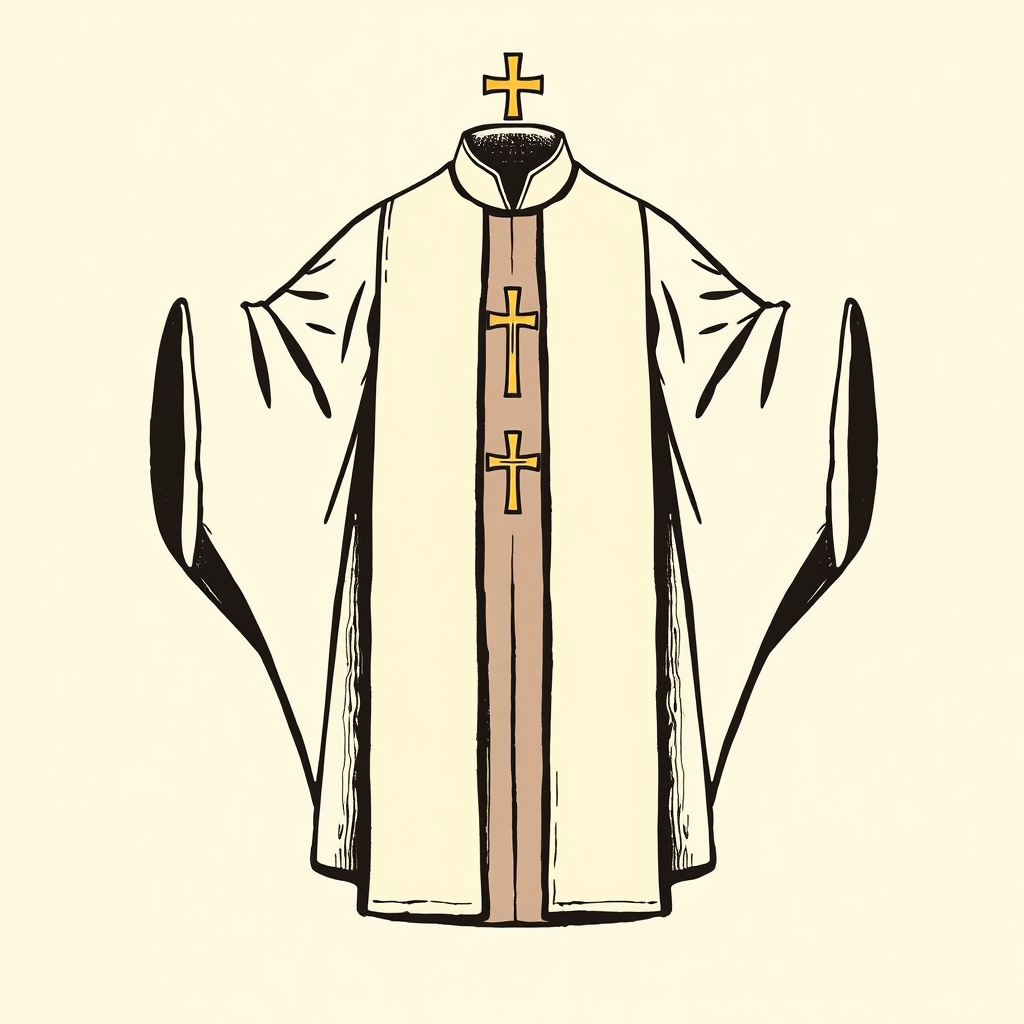
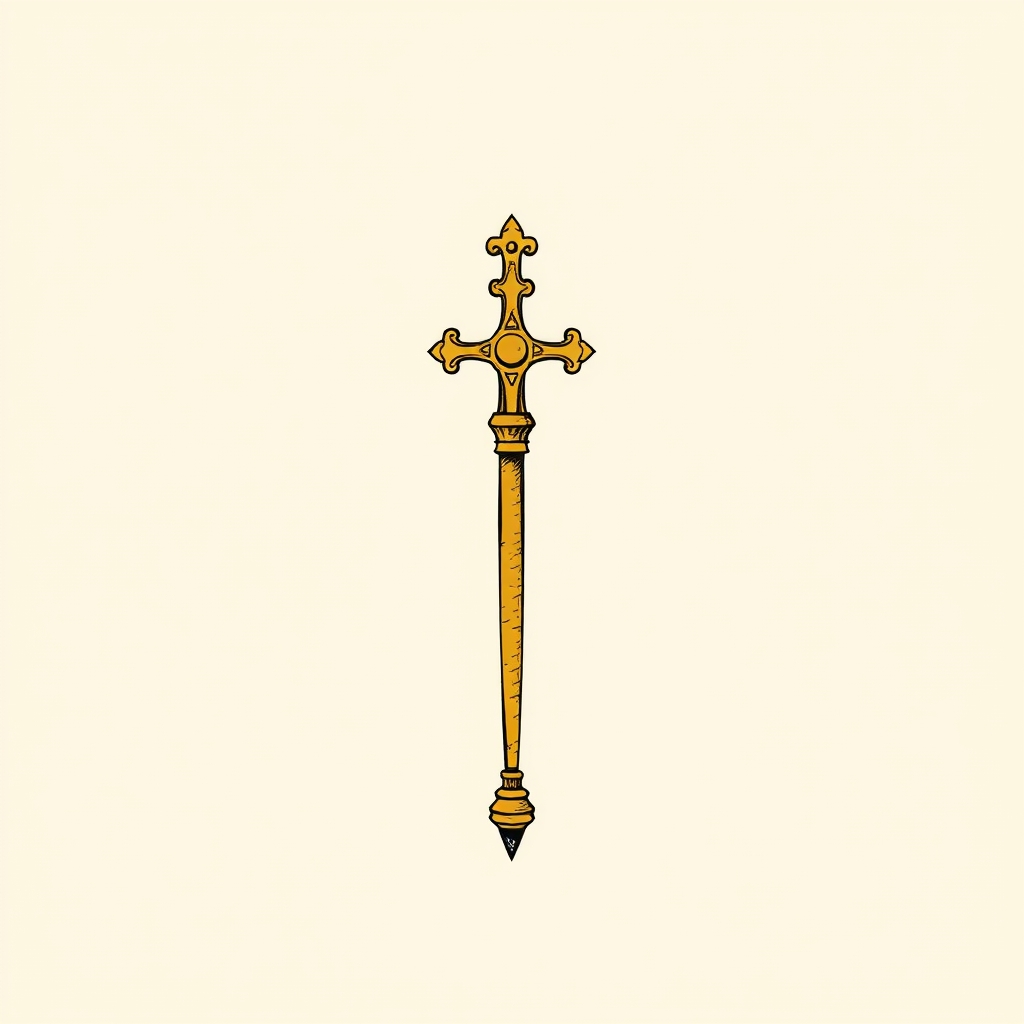
Signs and attributes
Entities
Narrative network
The names, places, and concepts most present in the entry, weighted by centrality in the text.
Frequently asked questions about Saint Aigulf (Aout)
Who was Saint Aigulf (Aout)?
Bishop of Bourges in the 9th century, Aigulfe (or Aout) distinguished himself by his solitary piety before being elected against his will in 811. Faithful to Louis the Pious, he participated in the councils of Toulouse and Thionville. He died in 835 after an episcopate of twenty-four years marked by wisdom and rigor.
What is Saint Aigulf (Aout) the patron saint of?
Patronage of Saint Aigulf (Aout): Bourges and Châteauroux (parish).
How is Saint Aigulf (Aout) depicted in Christian art?
In iconography, Saint Aigulf (Aout) is recognizable by: episcopal vestments and crozier.
Which saints were contemporaries of Saint Aigulf (Aout)?
Contemporaries include: Saint Ansgar (Apostle of the North), Saint Bernard of Menthon (Apostle of the Alps), Saint Rumold (Rombaud) and Saint Zachary, Pope.
When did Saint Aigulf (Aout) die?
Saint Aigulf (Aout) died around 900.
What are the other names of Saint Aigulf (Aout)?
Other forms of the name: Aout and Aigulfus.
Annexes & related entities
Structured data for exploration: events, miracles, quotes, places, attributes, patronages, and important entities cited in the text.
Key Events
- Retreat into solitude to imitate Elijah and John the Baptist
- Unanimous election to the see of Bourges around 811
- Participation in the Council of Toulouse in 829
- Judge at the Council of Thionville in 835 for the case of Ebbes of Reims
- Died after twenty-four years of episcopate