
An Anglo-Saxon scholar of the 8th century, Alcuin was the advisor and tutor to Charlemagne, playing a key role in the Carolingian Renaissance. He directed the Palace School and the Abbey of Saint-Martin of Tours, where he dedicated himself to the correction of sacred texts. Renowned for his piety and erudition, he died in Tours on Pentecost in 804.
Contemporaries

Figures and markers around the normalized period for this entry.
Guided reading
9 reading sections
BLESSED ALCUIN,
TUTOR TO CHARLEMAGNE, ABBOT OF SAINT-JOSSE-SUR-MER, ETC.
Origins and education in York
Alcuin was born around 735 in Northumbria and received a scholarly education in York under the direction of Archbishop Egbert, a student of Bede the Venerable.
Alcuin was born around the year 735, in Northumbria, in the archiepiscopal ci ty o f York. His family, whose name is unknown, was of noble race and a relative of Saint Willibrord. "Saint Willibrord," says M. Ampère, "was descended from Hengist, the first of the Saxon chiefs who conquered Great Britain, and Hengist claimed to be descended from Odin. The peaceful Alcuin did not suspect this mythological illustration. Satisfied to be the relative of a holy martyr, he did not know the warrior god, father of the race to which he belonged."
Alcuin received his first lessons from a student o f Bede, Egbert, brother of the King of Northumbria and Archbishop of York. The literary studies propagated in England by the Romans, interrupted later by the incursions of the Saxons and the Danes, had since flourished again through the care of Pope Saint Gregory the Great. Egbert, consecrated Archbishop of York in 734, was passionate about the sciences: despite his royal origin and the elevation of his rank, he did not disdain to teach the elements of grammar and the liberal arts to the young people who were raised in his episcopal monastery. He cherished Alcuin, not only because of his rapid progress in the study of Greek, Latin, Hebrew, and all the sciences that were taught then, but above all because of his frankness and his trusting simplicity.
Egbert had associated Alcuin in his teaching, when he died in the year 766, bequeathing to his cherished disciple the care of the library with which he had enriched the church of York. Alcuin, in one of his poems, informs us that this collection, besides the principal writings of the Fathers and ecclesiastical writers, contained the works of Aristotle, Pliny, Cicero, Virgil, Lucan, Statius, etc.
Mystical vision and ecclesiastical beginnings
Having become a teacher at York, Alcuin experiences a mystical vision of the blood of Christ and receives the diaconate in 768.
Elbert, who ascended to the see of York in 767, followed the example of his predecessor by entrusting Alcuin with the direction of public instruction. One day, as the young teacher was interpreting the passage of the Gospel where it is recounted that Saint John rested his head on the Savior's breast, he suddenly fell into an ecstasy before the entire audience, and believed he saw the entire universe bathed in the divine blood that gushed forth at Golgotha. Bishop Elbert had Alcuin's slumber respected; but, later, he pressed him to reveal the vision with which he had been favored, while recommending silence to him regarding others. Alcuin received the diaconate in 768, and from then on administered a small monastery in Yorkshire, built by the blessed Wilgis, father of Saint Willibrord: it was a family inheritance.
The meeting with Charlemagne
On a mission to Rome in 781, he met Charlemagne in Parma; the monarch invited him to his court to lead the intellectual renaissance of the empire.
Archbishop Elbert died in 780, after having predicted to the learned professor his glorious destinies and the triumphs he would win over heresy. His successor, Eambald, charged him with going to Rome to bring back the pallium for him. It was while returning from this mission, in the year 781, t hat he met Charlemagne in Parma. The powerful monarch, who greatly appreciated the gifts of the intellect and who sought to surround himself with elite scholars, made Alcuin promise to return to him when he had fulfilled his mandate. The latter, provided with temporary authorization from the King of Northumbria and the Archbishop of York, came to settle at the court of Charlemagne with some of his Anglo-Saxon disciples at the beginning of the year 782. He remained for eight years the literary tutor of the one who was then filling the universe with the sound of his exploits.
The Palace School and the Academy
Alcuin reorganized the palace school and founded a literary academy where the members, including Charlemagne, adopted ancient pseudonyms.
The palace school, which already existed in the previous century but had been nearly dissolved, was reconstituted by Alcuin. Instruction was given there in reading, writing, singing, grammar, arithmetic, rhetoric, dialectic, and astronomy. It has been questioned whether this school was stationary or itinerant: it is probable that the library annexed to it remained at Aachen, Charlemagne's most ordinary residence, but that the professors transported their courses to the monarch's successive residences in Thionville, Worms, Regensburg, Mainz, Frankfurt, Paris, etc. No one seconded Charlemagne more than Alcuin in reawakening a taste for study, and he thereby earned the title given to him as the restorer of letters in Gaul.
It was on Alcuin's advice that Charlemagne founded an academy in his palace, which should not be confused with the public school, and whose members met on certain fixed days to discuss scholarly matters. They all took a literary pseudonym in harmony with their predilections. Charlemagne called himself David; Alcuin, Flaccus, after the name of Horace; Angilbert, Homer; Adalard, Augu stine ; Theodulf, Pindar.
Charlemagne would have liked to bring forth literary glor ies with t he same command with which he decreed his victories. Let us listen to the monk of Saint Gall on this subject: "The great king was distressed not to see those who surrounded him attain the sublimity of genius of the ancient Fathers of the Church. In his sorrow, forming wishes beyond those of a simple mortal, he exclaimed: 'If only I had eleven clerics as learned and as deeply versed in the sciences as Jerome and Augustine!' — The learned Alcuin, rightly considering himself very ignorant in comparison with those Fathers, was suddenly seized with indignation, could not help but let it burst forth, and, daring more than any mortal would have dared in the presence of the terrible emperor, cried out: 'The Creator of heaven and earth has not made other men like those two, and you, you would like to have a dozen!!'
Moreover, the illustrious Anglo-Saxon did not share the ardent illusions of the king, who would have liked to transform the entire civilization of his time in a few years. 'It does not depend on you or on me,' he wrote to Charles, 'to make France a Christian Athens.' He nonetheless strove to stimulate a taste for study and the propagation of books everywhere.
Struggle against Adoptionism
Charlemagne tasked Alcuin with refuting the theses of Elipand and Felix of Urgel during the Council of Aachen in 799.
The main reason Charlemagne had for recalling Alcuin was the need to combat the heresies of two Spanish bishops, Elipand and Felix, who were renewing, in a mitigated form, the errors of Nestorius. Elipand, Bishop of Toledo, admitted that Jesus Christ is the Son of God, but only by adoption and not by nature; he drew into his opinion Felix, Bishop of Urgel, who had all the outward appeara nces of holiness; thi s doctrine soon caused threatening ravages in several provinces of Spain. At the Council of Aachen, held in 799, Alcuin played an important role. Charged by the king to sustain the discussion against the Bishop of Urgel, he deployed all the resources of his eloquence for six days. Felix, deposed from his see, ended up retracting in the most formal manner.
Alcuin, happy with this first triumph, also tried to bring back Elipand. The letter he addressed to him for this purpose obtained only an insulting response: it was then that he composed a work in four books, in which he rectified the falsifications that Elipand had subjected the texts of the holy Fathers to, in order to make it believed that they were favorable to his doctrine. Elipand had reproached Alcuin for the abundance of his wealth and the 20,000 serfs who depended on his abbeys. The latter repelled this accusation by writing to the Archbishop of Lyon: "Is Elipand unaware that the possession of wealth only becomes vicious through the attachment of the heart? It is one thing to possess the world, another to be possessed by the world. There are those who keep their wealth, even though they are perfectly detached from it in heart; others, on the contrary, who are deprived of it, love and desire it."
Abbot of Saint-Martin of Tours
Appointed abbot of Saint-Martin of Tours in 796, he founded a famous school there and dedicated himself to monastic reform and teaching.
In 796, Charlemagne wished once again to reward Alcuin for his services by appointing him abbot of Saint-Martin of To urs and prior of Cormery in Touraine. The abbey of Saint-Martin was a true princely community that possessed farms and hamlets not only in Touraine, but in Normandy, Brittany, Provence, Burgundy, and Austrasia. The territory under its jurisdiction was as large as one of our current departments and included at least 60,000 inhabitants. That same year, we see the illustrious abbot taking a keen interest in the conversion of the Huns, which his friend Arnon was undertaking. He strongly urged him not to demand tithes from the new converts, and even wrote two letters on this subject to Charlemagne. His gentle tolerance is also revealed in his opinions on the conversion of the Saxons, where he does not appear to share the political and religious ideas of Charlemagne: "One can be drawn to the faith," he says in one of his letters, "but not forced into it. Being constrained to baptism does not profit the faith."
Alcuin, feeling the burden of years and infirmities weighing upon him, and wishing moreover to devote the rest of his life to retirement, asked Charlemagne for permission to go and embrace the monastic life at Fulda, of which his compatriot Saint Boniface was abbot, and begged the king to share among his disciples the benefices he owed to his munificence. The monarch would only grant the second of these wishes; and, compromising on the first request, he allowed him to retire to his monastery of Saint-Martin of Tours. Alcuin established there around 796 a famous school where he occupied almost all the chairs in turn.
The school of Tours was the last that Alcuin founded. It is wrongly that various historians have claimed that he taught publicly in Rome, Fulda, Saint-Gall, Cambridge, Soissons, and Saint-Riquier: disciples of Alcuin may have propagated his teaching in these various localities; but he himself never taught anywhere except at York, at Tours, and in the various palaces where Charlemagne resided successively.
Correction of manuscripts and liturgy
Alcuin leads a colossal work of revising sacred and secular texts, restoring Latin grammar and orthography.
Alcuin often retired to the monastery of the Desert, that is to say, to Saint-Paul de Cormery, a priory that depended on the abbey of Tours, and which he had populated with twenty-two monks of the reform of Saint Benedict of Aniane. During the stay that Charlemagne made in 800 at Tours, he took pleasure in conversing with Alcuin. One day, he asked him which of his children he thought would succeed him; Alcuin pointed out L ouis, King of Aquitain e, and, shortly after, he expressed the same foresight again, when Louis had kissed his hand before receiving the ablution of the communion that he presented to him: "Every man who humbles himself," he said, "shall be exalted: thus this young prince will be the master of all France, after the death of the king his father." Alcuin edified the whole community by his virtues. Except for feast days, he prolonged his fasts until the evening. On Sundays, he humbly fulfilled the office of deacon for the one among his disciples who celebrated the holy mysteries. He always showed himself charitable towards the poor and full of devotion for those whose spiritual progress he directed. He never remained idle: reading, the composition of his writings, and the transcription of the holy Books, whose altered texts he corrected, absorbed all his time.
M. Guizot has very well highlighted the importance of Alcuin's work for the correction of manuscripts of ancient literature: "Historians," he says, "speak only in passing and without attaching any importance to a fact that played a considerable role in the rebirth of intellectual activity at that time; I mean the revision and correction of sacred or secular manuscripts. From the 6th to the 8th century, they had fallen into the hands of owners or copyists so ignorant that the texts had become unrecognizable. A multitude of passages had been confused and mutilated; the pages were in the greatest disorder; all accuracy of spelling and grammar had disappeared; it already required true scholarship to read and understand, and it was lacking more and more each day. The repair of this evil, the restitution of the manuscripts, especially of grammar and spelling, was one of Alcuin's tasks, a task he occupied himself with all his life, which he constantly recommended to his students, and in which Charlemagne lent him the aid of his authority." We will add that it is highly probable that Alcuin was not without influence on the modification that was then taking place in the form of letters, and on the return to the use of the ancient Roman minuscule script.
Alcuin was always full of respect and devotion for the Holy See. The most learned critics have recognized that the Caroline Books, which are filled with insults towards Pope Adrian, had been falsely attributed to him. It would have sufficed, to do justice to this error, to listen to the language that Alcuin uses in his epistles: "I know," he wrote to Adrian, "that by baptism I belong to the fold of that Shepherd who gave his life for his sheep and who entrusted them to Saint Peter, by conferring upon him the power to bind and to loose on earth and in heaven. I recognize you, most excellent Father, as the vicar of this Holy See and as the depositary of this marvelous power. I am one of your sheep, but a sick sheep covered with the stains of sin. That is why I present myself to Your Holiness, so that by the medicinal power that you have received from Jesus Christ and which has been transmitted to you as an inheritance, through a long line of predecessors, you may heal me of my infirmities and break the chains of my sins."
Death and celestial signs
Alcuin died on the day of Pentecost in 804; his death was accompanied by luminous visions and miraculous healings.
It is probable that Alcuin kept the abbey of Tours until the year 801 and that, despite the presence of a nominal successor, he retained an effective superiority that the authority of his genius and his virtues earned him. Towards the end of his life, Alcuin went every day to recite the office of Vespers near the church of Saint-Martin, at the place he had chosen for his burial. It was there that he loved to meditate on the nothingness of the world and the teachings of death, repeating the antiphon of December 20: "O Key of David, and Sceptre of the house of Israel, that openest and no man shutteth, and shuttest and no man openeth, bring forth the captive from the prison, and him that sitteth in darkness and the shadow of death." Alcuin had always desired to die on the day the Holy Spirit descended upon the heads of the Apostles. His wishes were to be granted; he fell ill on Ascension Day, and died at the age of sixty-eight, on the day of Pentecost, May 19, in the year 804.
On the eve of May 19, a mysterious light had enveloped the entire monastery, so that, from three leagues around, it was assumed there was a fire. The next day, at dawn, a globe of flame was seen rising towards the heavens. At the same hour, as was learned later, a hermit from Italy who sometimes came to Tours, saw the venerable deacon, clothed in his dalmatic, entering the kingdom of heaven. His biographer adds that the two famous deacons of the Church, Saint Stephen and Saint Lawrence, served as his escort with a multitude of celestial spirits. The priest Sigulf buried his venerated master: he was then suffering from a violent headache; catching sight of Alcuin's comb, he suddenly felt confident that he would be healed by using it: this is indeed what happened. Another religious, named Eangist, adds the 9th-century biographer who serves as our guide, applied this same comb to his teeth and was immediately delivered from the pains he was experiencing there.
Two young cenobites, students of Alcuin, were walking at night in the enclosure of the monastery of Hirsauge. One of them saw a dove rising towards the heavens and at the same time heard a celestial harmony resound: — "Behold," he said to his companion, "the soul of our dear master Alcuin who is going to receive the crown due to his virtues and his learning." — Two days later, they learned that the death of Alcuin had coincided with this poetic apparition. Joseph, Archbishop of Tours, presided over the funeral of Alcuin, whose eyes he had closed, while shedding abundant tears. He did not want the illustrious abbot to be buried outside the church of Saint-Martin, at the place his humility had designated, but inside the temple itself.
The Intellectual Legacy
The text lists a vast production ranging from biblical exegesis to treatises on grammar, rhetoric, and poetry.
## WRITINGS OF BLESSED ALCUIN.
Alcuin's works were published in 1617 by André Duchesne; in 1777, by J. Froben; and in 1851, in Migne's *Patrologia*, of which it forms volume cxxv.
We shall limit ourselves here to briefly indicating the works attributed to Alcuin by the most authoritative critics, referring, for more details, to the *Histoire des auteurs sacrés* by D. Ceillier and the *Histoire littéraire de la France*.
1° *Questions on Genesis*. These are short answers given to the priest Sigulf, regarding the difficulties presented by the first book of Moses.
2° A small treatise on these words from Genesis: *Let us make man in our image*; a writing once attributed to Saint Ambrose or Saint Augustine.
3° Three explanatory opuscules on the Psalms, composed at the request of Arnon, Bishop of Salzburg.
4° A treatise on the Use of the Psalms. The author shows that, by delving into them, one finds not only proof of the principal mysteries of religion, but also advice for all the needs of life, and prayers for all states of the soul.
5° A kind of breviary where the psalms, hymns, and prayers to be recited are distributed according to the order of the series.
6° A mystical amplification on a verse of the Song of Songs.
7° A Commentary on Ecclesiastes, whose interpretations are mainly borrowed from Saint Jerome.
8° A Commentary on the Gospel according to Saint John, composed at Saint-Martin de Tours, at the request of Princess Gisela and Rictrude. The Laon library possesses a very beautiful copy from the 9th century.
9° A Treatise on the Trinity, drawn largely from the works of Saint Augustine.
10° Twenty-eight questions on the Trinity, once wrongly attributed to Saint Augustine.
11° A Treatise on the Procession of the Holy Spirit, where all questions are resolved by the testimonies of Holy Scripture, the Greek or Latin Fathers, and the councils. The Laon library possesses a copy of this work (9th century).
12° A letter on the Nature of the Soul, addressed to Princess Gundrada, designated under the name Eulalia.
Here is a passage from this writing, which is not lacking in depth. "The soul takes different names, according to the value of its operations. Insofar as it lives or gives life, it is the soul (anima). Insofar as it contemplates, it is the spirit (spiritus). Insofar as it feels, it is the feeling (sensus). Insofar as it reflects, it is the thought (animus). Insofar as it understands, it is the intelligence (mens). Insofar as it discerns, it is the reason (ratio). Insofar as it consents, it is the will (voluntas). Insofar as it remembers, it is the memory (memoria). But these things are not divided, as to substance, as they are in names: for all these things are the soul and one and the same soul."
13° Seven books of controversy on the nature of Jesus Christ, against the errors of Felix, Bishop of Urgel, written around the year 798.
14° Various polemical writings against Elipandus, Bishop of Toledo, where the same heresies of Adoptionism are combated.
15° Sacramentary or Collection of 32 votive masses which contain only the collects, secrets, prefaces, and post-communions.
16° Treatise on Virtues and Vices, addressed to Count Guy. It is one of the principal moral works that Alcuin composed.
17° Treatises on grammar and rhetoric, forming part of a Treatise on the seven arts, the rest of which is lost. It is known that the trivium or ethics included grammar, rhetoric, and dialectic. The quadrivium, a set of higher institutions, contained arithmetic, geometry, music, and astronomy. These seven liberal arts, which constituted philosophy, were the degrees by which one rose to theology.
18° A dialogue on rhetoric and virtues between the author and Charlemagne.
19° A dialogue of the same kind on dialectic.
20° A conversation between Pepin and Alcuin, on the first principles of philosophy.
Our readers will be able to judge the subtlety of Alcuin's genius by the following citation, which we extract from this dialogue, a kind of poetic catechism, where a memory of Saxon songs seems to revive.
PEPIN. What is writing? — ALCUIN. The guardian of history.
PEPIN. What is speech? — ALCUIN. The betrayal of thought.
PEPIN. What is language? — ALCUIN. The scourge of the air.
PEPIN. What is air? — ALCUIN. The guardian of life.
PEPIN. What is life? — ALCUIN. The joy of the happy, the sorrow of the unhappy, the expectation of death.
PEPIN. What is man? — ALCUIN. The slave of death, the guest of a place, a traveler passing through.
PEPIN. What is the sea? — ALCUIN. The path of audacity.
PEPIN. What never tires man? — ALCUIN. It is gain.
PEPIN. What is the dream of those who are awake? — ALCUIN. Hope.
PEPIN. What is friendship? — ALCUIN. The equality of two souls.
PEPIN. What is liberty? — ALCUIN. It is innocence.
21° Sermons on the life and death of Saint Martin of Tours.
22° A Life of Saint Vedast, Bishop of Arras; an amplified revision of an anonymous biography from the 7th century.
23° A Life of Saint Riquier, which he composed at the abbey of Centula, at the prayer of Angilbert, who was then abbot.
24° The Life of Saint Willibrord, Bishop of Utrecht, followed by a homily. Alcuin himself valued this work little, which he had dictated at night, after the fatigues imposed on him by each day of assiduous work.
25° Letters on a multitude of subjects. They number one hundred and fifteen in the Duchesne edition, and two hundred and thirty-three in the Patrologia of Abbé Migne. Their entirety proves that, if Alcuin was deeply attached to Charlemagne, he was even more so to the Church and the rights of the Holy See.
26° Two hundred and seventy-two pieces of poetry, devoted almost entirely to subjects of piety; it is probable that the poem of Charlemagne should be restored to Saint Angilbert.
27° A profession of faith that D. Ceillier strives to demonstrate as authentic, while other critics reject it as apocryphal. Some have even attributed its authorship to Fr. Chifflet, who edited it in 1656.
Mr. Fr. Monnier discovered at the Imperial Library fragments of an unpublished commentary on Saint Matthew, and some other pieces, which he published at the end of his writing entitled: Alcuin and Charlemagne.
For a long time, the Treatise on the Antichrist, which is due to Adson, was falsely attributed to Alcuin; as well as an explanation of the canon of the mass, which has been recognized as belonging to Remigius, a monk of Saint-Germain d'Auxerre, and a large number of other works that we shall pass over in silence.
Grammarian, rhetorician, poet, philosopher, exegete, controversialist, and theologian, Alcuin was the most learned man of his century, and, in concert with Charlemagne, the restorer of letters in France. He had made a deep study of the Fathers and especially of Saint Augustine, from whom he made numerous borrowings. His style is far from irreproachable; his verses differ from prose only by the cadence of the measures; his overly verbose reasonings lack vigor; thus, it has been agreed to say that he had more genius than taste, more erudition than eloquence, and more breadth than depth in his conceptions.
The body of Blessed Alcuin was never raised from the earth: the only relics he left us are the manuscripts written by his hand, several of which were noted in the *Voyage littéraire* of two Benedictines. The library of the abbey of Saint-Riquier possessed and let go astray in the 18th century a manuscript entitled: Missal of Gregory and Gelasius, arranged by Alcuin. This is an irreparable loss for the history of sacred music.
Mr. Fr. Monnier thinks that the bible offered to Charles the Bald, in 845, by the religious of Tours, had been written by Alcuin. It is today in the Museum of Sovereigns.
The bible, written by Alcuin, which Charlemagne received on the first anniversary of his coronation, and which he mentioned in his will, was taken to the convent of Prüm in Lorraine, by Lothair I, when he took the monastic habit there. It was acquired in 1822, by Mr. de Speyr-Passavant, of Basel, who published a description of it. A controversy arose in the newspapers of 1829, between the principal bibliophiles of the time, over the authenticity of this manuscript. We do not know what became of it; could it not be the same one that, under the name of Alcuin's Bible, was sold in London, in 1836, for the sum of 37,500 francs?
We believe that no cult has ever been rendered to Alcuin. The qualification of Saint is given to him by Hugues Ménard, Flodoard, and the chronicle of Saint-Martin de Tours. He is inscribed as Blessed in the Martyrologies of Rabanus Maurus, Ghinies, Wien, Molanus, Bucolin, etc.
Alcuin is represented writing, or holding a book, or teaching before an attentive audience. The portraits we have of him, in various collections of prints, are certainly fanciful. At the town hall of Aachen, Alcuin appears in a modern fresco representing Charlemagne, who presides over the construction of the cathedral of that city. The Benedictines of the monastery of Einsiedeln preciously preserve an ancient portrait of Alcuin.
Cf. Hagiography of the diocese of Amiens, by Canon Corblat, whose work we have abridged.
Iconography
Signs and attributes


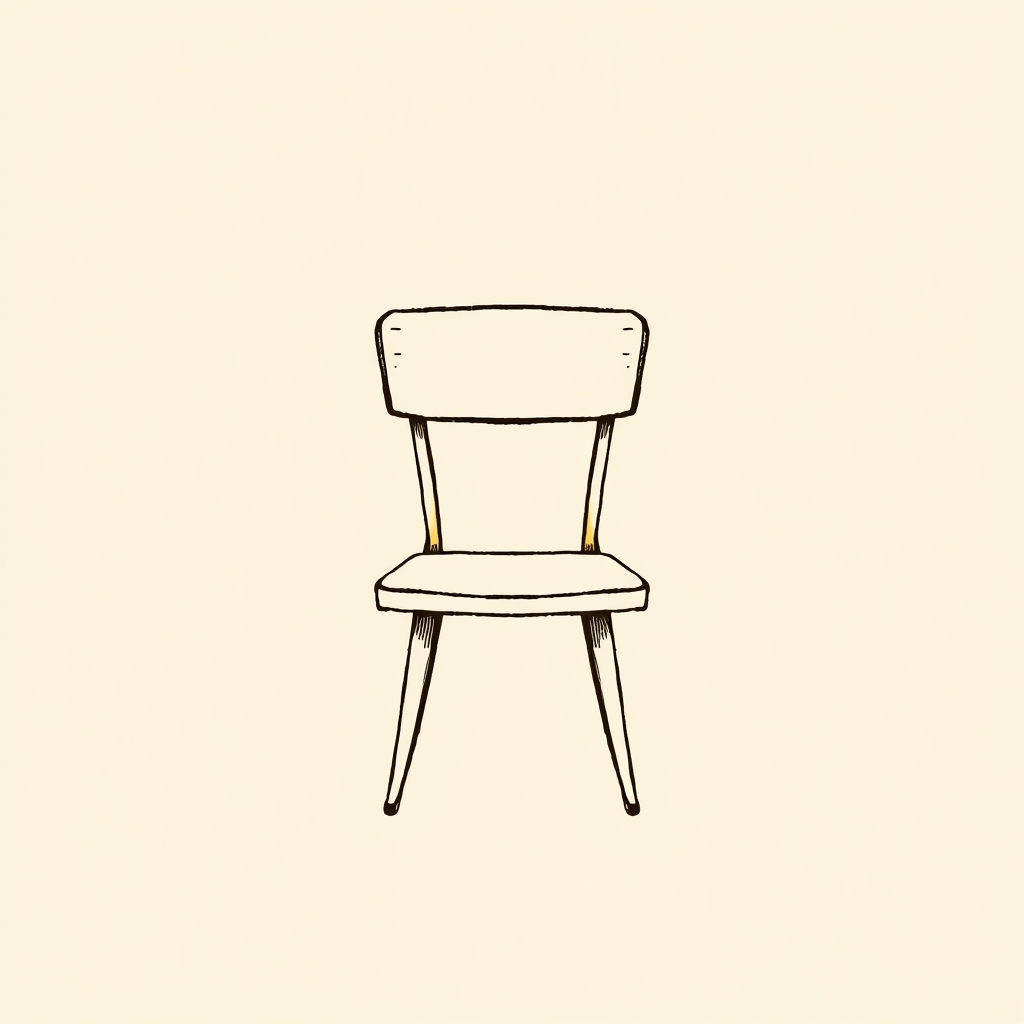
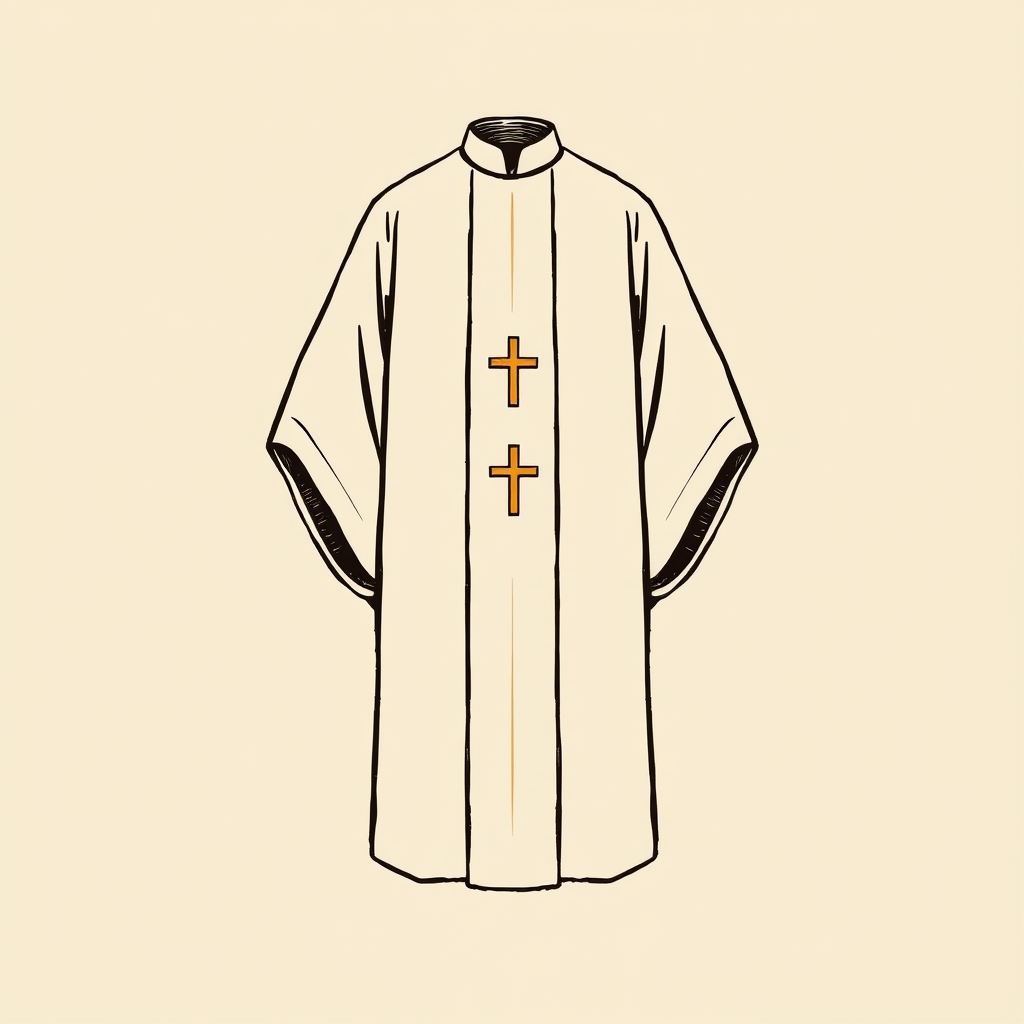
Entities
Narrative network
The names, places, and concepts most present in the entry, weighted by centrality in the text.
The supernatural in their life
The miracles of Blessed Alcuin
Frequently asked questions about Blessed Alcuin
Who was Blessed Alcuin?
An Anglo-Saxon scholar of the 8th century, Alcuin was the advisor and tutor to Charlemagne, playing a key role in the Carolingian Renaissance. He directed the Palace School and the Abbey of Saint-Martin of Tours, where he dedicated himself to the correction of sacred texts. Renowned for his piety and erudition, he died in Tours on Pentecost in 804.
What is Blessed Alcuin the patron saint of?
Patronage of Blessed Alcuin: palatine schools and scholars.
What is Blessed Alcuin invoked for?
Blessed Alcuin is invoked for: academic success and healing of headaches and toothaches (via his comb).
How is Blessed Alcuin depicted in Christian art?
In iconography, Blessed Alcuin is recognizable by: book, quill, teaching chair and deacon's dalmatic.
What miracles are attributed to Blessed Alcuin?
4 miracles are attributed to this saint, notably: Vision / apparition, Prophecy / infused knowledge, Healing and Sign / wonder.
Which saints were contemporaries of Blessed Alcuin?
Contemporaries include: Saint Ansgar (Apostle of the North), Saint Bernard of Menthon (Apostle of the Alps), Saint Rumold (Rombaud) and Saint Zachary, Pope.
When did Blessed Alcuin die?
Blessed Alcuin died around 804.
What are the other names of Blessed Alcuin?
Other forms of the name: Flaccus and Albinus.
Who are the relatives of Blessed Alcuin?
Relatives of Blessed Alcuin: Saint Willibrord (parent) and Bienheureux Wilgis (parent).
Annexes & related entities
Structured data for exploration: events, miracles, quotes, places, attributes, patronages, and important entities cited in the text.
Key Events
- Born in York around 735
- Student of Archbishop Egbert
- Meeting with Charlemagne in Parma in 781
- Director of the Palace School in Aachen
- Struggle against the Adoptionist heresy at the Council of Aachen (799)
- Retreat at the Abbey of Saint-Martin of Tours in 796
- Revision and correction of sacred and secular manuscripts
Quotes
-
One may be attracted to the faith, but not forced into it. Being compelled to baptism does not profit the faith.
Letter of Alcuin -
The Creator of heaven and earth did not make other men like those two (Jerome and Augustine), and you, you would like to have a dozen of them!
Dialogue with Charlemagne