
Leo Dupont
Léon Papin-Dupont (1797-1876), nicknamed the "Holy Man of Tours," is a French layperson recognized as Venerable, famous for his charity and the propagation of the devotion to the Holy Face.
Contemporaries

Figures and markers around the normalized period for this entry.
Guided reading
5 reading sections
Biography
The life of Léon Papin-Dupont, from his birth in Martinique to his settlement in Tours following the tragic loss of his wife and daughter.
Léon Papin-Dupont, nicknamed the "holy man of Tours," was born on January 24, 1797, in Le Lamentin, Martinique. Coming from a family of landowners of Breton origin on his father's side and Creole on his mother's, he lost his father in 1803. After studies in the United States, at Pontlevoy, and in law in Paris, he became a magistrate at the Royal Court of Saint-Pierre in Martinique. On May 9, 1827, he married Caroline d'Audiffredy, who bore him an only daughter, Marie-Caroline-Henriette, on October 4, 1832. His wife passed away on August 1, 1833. To preserve his daughter's health, he moved to Tours in 1834. Unfortunately, Henriette died in 1847 at the age of 15. Widowed and childless, he decided to dedicate his life as a layman to God and the poor.
Life and Work
The charitable commitment and role of Léon Papin-Dupont in the spiritual and liturgical renewal in Tours.
In Tours, Léon Papin-Dupont became actively involved in social Catholicism. As a man of independent means, he dedicated himself to works of mercy, notably within the Society of Saint Vincent de Paul. In 1846, his meeting with Jeanne Jugan led him to contribute to the establishment of the Little Sisters of the Poor in Tours. In December 1854, he founded the "Vestiaire des Pauvres" (Saint Martin Wardrobe). On a spiritual level, he launched the Work of Nocturnal Adoration for men in 1849 in the Lazarist chapel. He also played a major role in the rediscovery of the tomb of Saint Martin of Tours on December 14, 1860, and campaigned for the reconstruction of his basilica.
Path to Holiness
The spiritual conversion of Léon Papin-Dupont and the propagation of the devotion to the Holy Face.
Marked by an inner conversion at the age of 23, Léon Papin-Dupont led a life of asceticism and prayer. His spiritual encounter with Sister Mary of St. Peter, a Carmelite of Tours who died in 1848, was decisive. She had received revelations regarding the reparatory devotion to the Holy Face of Jesus. During Holy Week of 1851, Léon received a reproduction of the Holy Face, which he placed in his living room with an oil lamp kept burning permanently. As of Holy Saturday in 1851, the first unexplained healing occurred following an anointing with oil from this lamp. His house became a place of global pilgrimage, from which he sent oil throughout the world.
Beatification and canonization
The death of Léon Papin-Dupont, the creation of the Oratory of the Holy Face, and the recognition of his venerability.
Léon Papin-Dupont died in Tours on March 18, 1876, crippled by gout and paralysis. On June 29, 1876, Archbishop Collet of Tours transformed his living room into a chapel, creating the Oratory of the Holy Face. The informative process for his beatification opened in 1883. On March 21, 1983, Pope John Paul II promulgated the decree recognizing the heroic nature of his virtues, conferring upon him the title of Venerable. His cause for beatification is still ongoing.
Spirituality and legacy
The pillars of Léon Papin-Dupont's spirituality and his lasting influence, notably on Saint Thérèse of Lisieux.
The spirituality of Léon Papin-Dupont is based on reparatory love for the Holy Face and active charity. His motto was 'Speak of God or be silent.' He practiced intense Eucharistic adoration and daily communion. His work greatly influenced Saint Thérèse of Lisieux, who would associate the Holy Face with her religious name. The Oratory of the Holy Face in Tours, now entrusted to the Dominican friars, remains an active center of prayer.
Iconography
Signs and attributes
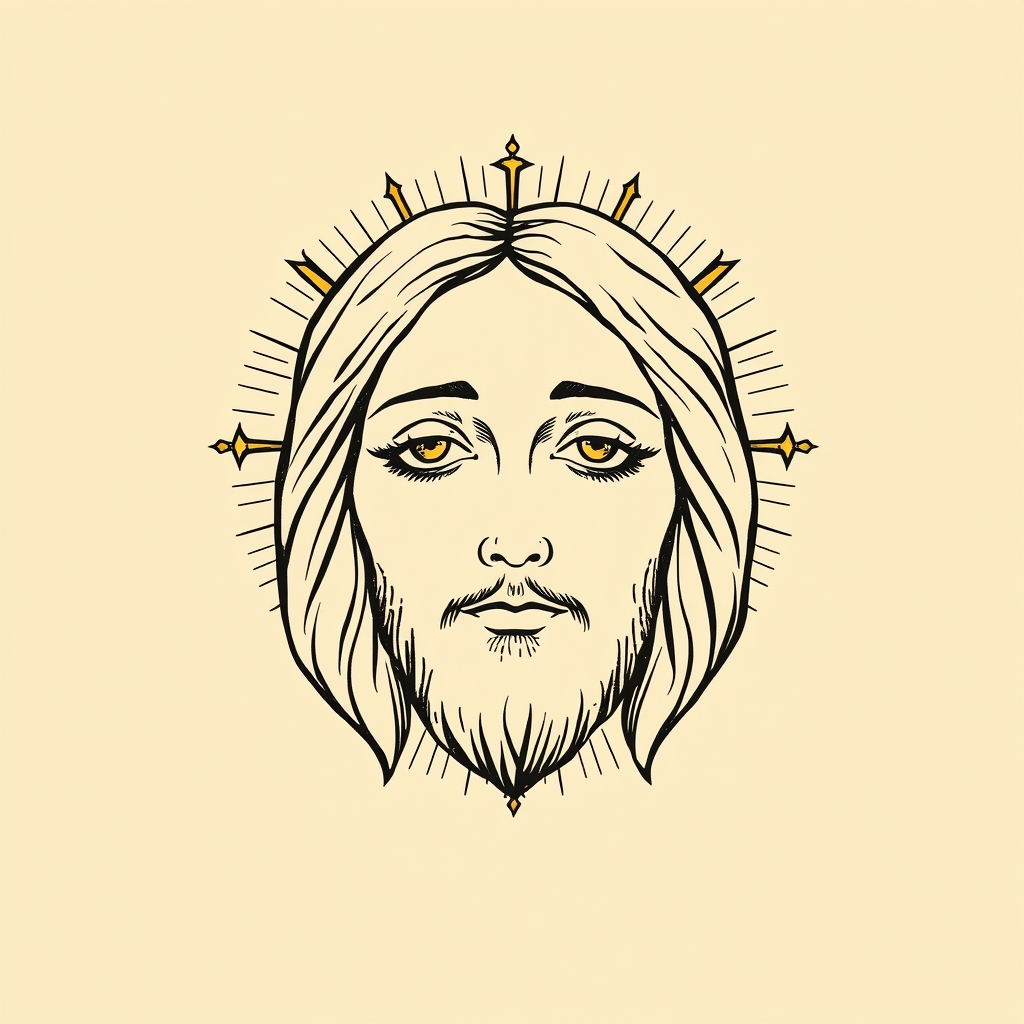
Frequently asked questions about Leo Dupont
Who was Leo Dupont?
Léon Papin-Dupont (1797-1876), nicknamed the "Holy Man of Tours," is a French layperson recognized as Venerable, famous for his charity and the propagation of the devotion to the Holy Face.
How is Leo Dupont depicted in Christian art?
In iconography, Leo Dupont is recognizable by: Holy Face.
Which saints were contemporaries of Leo Dupont?
Contemporaries include: Venerable Agnes of Jesus, Blessed Mary Anne of Jesus, Saint Alphonsus Liguori and Saint Mary Frances of the Five Wounds of Jesus.
When did Leo Dupont die?
Leo Dupont died around 1797.
What are the other names of Leo Dupont?
Other forms of the name: Léon Papin-Dupont and Le saint homme de Tours.
Who are the relatives of Leo Dupont?
Relatives of Leo Dupont: Caroline d'Audiffredy (wife) and Marie-Caroline-Henriette (daughter).
Annexes & related entities
Structured data for exploration: events, miracles, quotes, places, attributes, patronages, and important entities cited in the text.
Key Events
- Era / death: 1797-1876
- Decree of venerability by John Paul II