
Antoni Kowalczyk
A Polish Oblate brother and missionary in Canada, Antoni Kowalczyk was distinguished by his humility, his courage in the face of his disability, and his deep Marian devotion.
Contemporaries

Figures and markers around the normalized period for this entry.
Guided reading
5 reading sections
Biography
Birth in Poland, modest youth, emigration to Germany, and entry into the Oblates of Mary Immaculate.
Antoine Kowalczyk (Antoni Kowalczyk) was born on June 4, 1866, in Dzierżanów, Poland, into a poor but deeply pious farming family. He was the sixth of twelve children. After his primary education, he first worked on the family farm before beginning an apprenticeship as a blacksmith in Krotoszyn. At the age of 24, he emigrated to Germany to find work, first in Hamburg and then in the Rhineland. In the steel mills of Hamburg, he faced hostility from his colleagues because of his Catholic faith. It was during this difficult period that he suffered from a serious eye condition that threatened to leave him blind. He was inexplicably healed during a fervent prayer and a Stations of the Cross in a church. He then settled in Cologne, where he was welcomed by the Prummenbaum family. It was through them that he discovered the Congregation of the Missionary Oblates of Mary Immaculate (OMI). Desiring to become a missionary without being a priest, he entered the Oblate novitiate in Saint-Gerlach (Houthem), in the Netherlands, on October 1, 1891. He pronounced his first vows there on October 2, 1892. He then worked at the juniorate in Valkenburg until 1896, when his wish to be sent on a mission was finally granted.
Life and Work
Missionary in Canada, amputation of his right arm, and humble service as a handyman in Edmonton.
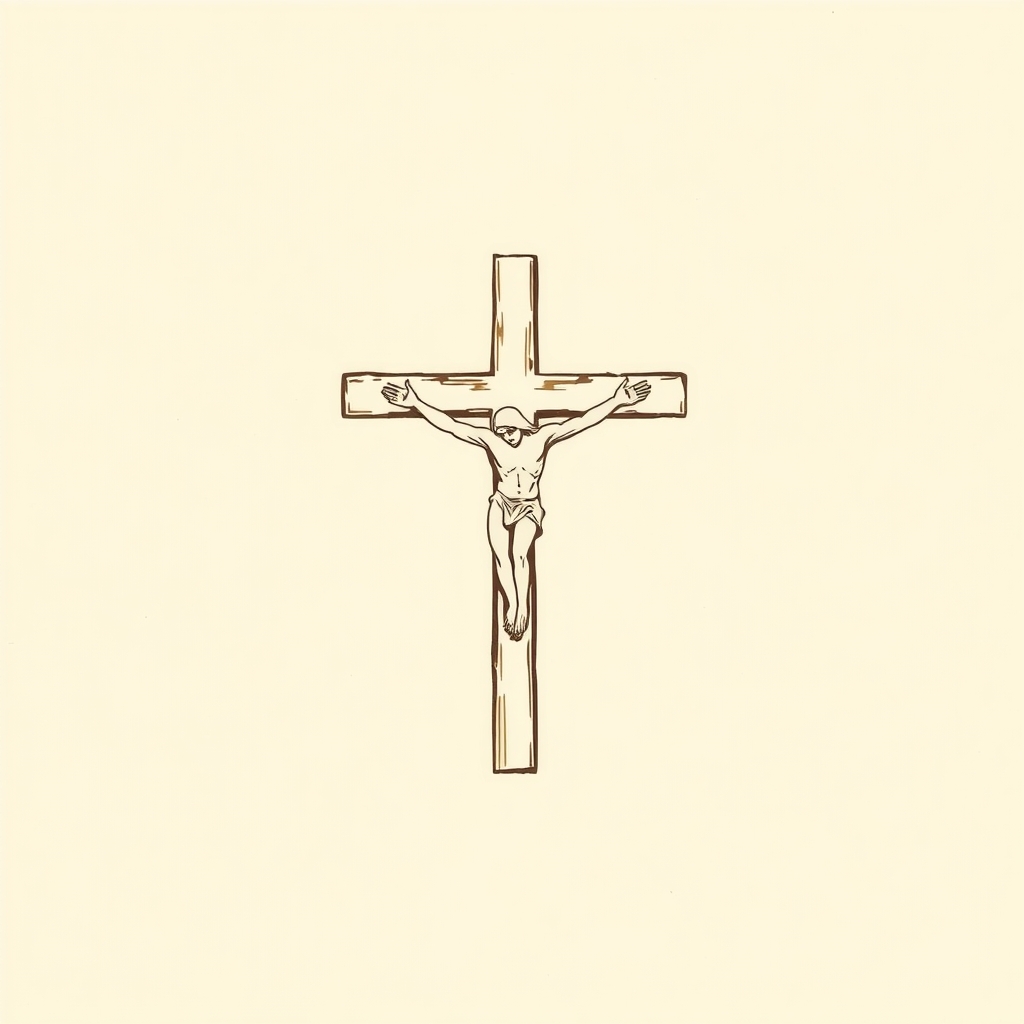
In 1896, Brother Antoine was sent to the Canadian Northwest. His first assignment was the mission of Notre-Dame des Victoires in Lac-La-Biche, Alberta, located about 200 kilometers north of Edmonton. He worked actively there with the Indigenous populations (Cree) and the Métis, notably taking care of manual labor and the mission's sawmill. On July 15, 1897, a terrible accident occurred at the sawmill: his right arm was caught in a machine and severely crushed. On July 22, it had to be amputated at the Edmonton hospital. According to historical accounts, the amputation was performed without general anesthesia; Brother Antoine endured the pain by clutching his crucifix firmly and praying. Despite the loss of his right arm, he refused to be considered useless or to ask for privileges. Equipped with a rudimentary prosthesis fitted with a metal hook, he continued to perform heavy manual tasks. He was sent to the mission of Saint-Paul-des-Métis (Alberta), where he worked for fourteen years (until 1911). In 1911, he was transferred to Edmonton, to the Collège Saint-Jean (a juniorate for future missionaries). He spent the last 36 years of his life there as a janitor, gardener, boiler operator, and handyman. He notably built a replica of the Lourdes grotto in the courtyard of the establishment. His benevolent presence, his diligence at work, and his spiritual advice left a deep mark on generations of students and religious.
Journey toward holiness
Reputation for holiness, death in 1947, and introduction of his cause for beatification.
Throughout his life, Brother Antoine Kowalczyk enjoyed an immense reputation for holiness, both among his Oblate confreres and among the lay faithful and students. His heroic patience in the face of his disability and his life of continual prayer impressed all who knew him. He passed away on July 10, 1947, in Saint-Albert, Alberta, at the age of 81, while participating in his community's annual retreat. He was buried in the Oblate cemetery of Saint-Albert, on Mission Hill. His grave quickly became a place of pilgrimage frequented by many faithful, particularly from the Polish community in Canada. Given the popular fervor and the numerous testimonies of graces obtained through his intercession, the Archdiocese of Edmonton introduced his cause for beatification at the diocesan level in 1952. The cause was officially introduced to the Holy See in Rome on June 1, 1979, under the pontificate of John Paul II, thereby conferring upon him the title of Servant of God.
Beatification and canonization
Recognition of heroic virtues by Pope Francis in 2013.
The process of examining his heroic virtues progressed over the decades. On March 27, 2013, Pope Francis authorized the Congregation for the Causes of Saints to promulgate the decree recognizing the heroic nature of his virtues. Since that date, Antoine Kowalczyk has been officially declared Venerable. For his beatification to be pronounced, the Catholic Church requires the official recognition of a miracle attributed to his intercession after his death. Several files of favors and unexplained healings are regularly studied by the postulation of the cause.
Spirituality and legacy
Spirituality of work and humility, Marian devotion, and tributes in Canada.
The spirituality of Brother Antoine Kowalczyk is based on deep humility, the joyful acceptance of suffering, and absolute trust in Divine Providence. Nicknamed the "Blacksmith of God" in reference to his first trade, he considered manual labor a form of prayer and a means of elevating the soul toward God. He is also characterized by an exceptional Marian devotion. He constantly repeated the Hail Mary (Ave Maria) prayer during his daily tasks, which earned him the affectionate nickname of "Brother Ave" or "Brother Ave Maria." His legacy remains alive in Canada and Poland. In 2013, a monument in his honor was unveiled in Edmonton. A Catholic elementary school in Edmonton bears his name: École Frère Antoine. Furthermore, the Knights of Columbus of Canada have named one of their councils in his honor (the Brother Antoine Council).
Iconography
Signs and attributes
Frequently asked questions about Antoni Kowalczyk
Who was Antoni Kowalczyk?
A Polish Oblate brother and missionary in Canada, Antoni Kowalczyk was distinguished by his humility, his courage in the face of his disability, and his deep Marian devotion.
How is Antoni Kowalczyk depicted in Christian art?
In iconography, Antoni Kowalczyk is recognizable by: metal hook and crucifix.
Which saints were contemporaries of Antoni Kowalczyk?
Contemporaries include: Pauline of the Agonizing Heart of Jesus, Felipe de Jesús Munárriz and 50 companions, Mariano de Jesús Euse Hoyos and Teresa of Jesus of the Andes.
When did Antoni Kowalczyk die?
Antoni Kowalczyk died around 1947.
Annexes & related entities
Structured data for exploration: events, miracles, quotes, places, attributes, patronages, and important entities cited in the text.
Key Events
- Era / death: 1947
- Decree of venerability in 2013 by Francis